We must be doubly grateful that The English Concert’s recent Theodora was so quickly followed by the American Classical Orchestra’s fine Samson on Tuesday evening at Alice Tully Hall.
parterre box has obtained a memo sent to artists’ managers in which AGMA Executive Director Alan Gordon warns singers contracted to sing at the Met in the 2014-2105 season that due to unpromising developments in upcoming labor negotiations the company may be dark for part or all of the season.
I am grateful to Sony for this new release of the Metropolitan Opera’s latest production of Parsifal and I hope I’m not the only one who discovers what a rich experience this opera can be because of it.
My impossible wish would be to hear one of the great castrati who dominated opera for most of the 18th century.
Life is not fair. There are rules that apply to Jonas Kaufmann, and rules that apply to everyone else.
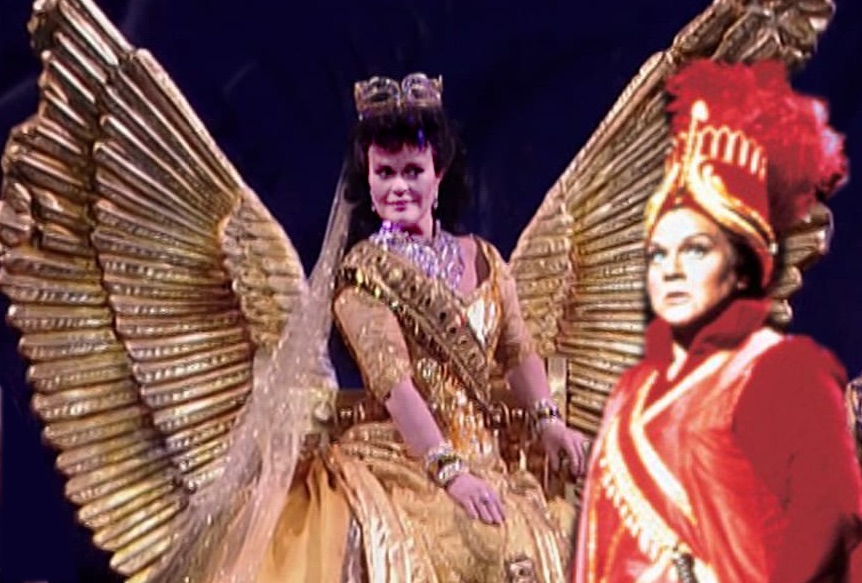
Our Own Jungfer Marianne Leitmetzerin (not pictured) takes us back to the turbulent 1970s at the Met for the spectacular company debut of electrifying Elena Obraztsova as Amneris.
When Winston Churchill was First Sea Lord, the story goes, an indignant admiral accused him of violating British naval tradition, to which Churchill replied that the only traditions of the British Navy were rum, sodomy and the lash.
Well, “extreme” is such an, oh, how shall I put it… extreme word, my dears; really La Cieca is no more than the humble intermediary here between Mike Richter‘s CD-ROMs and you, the cher public. This time our treat from the trove is Eugene Onegin, a selection from his disc devoted to the Metropolitan Opera…
The legend of the mermaid is ancient, and recently scientists have theorized that these legends might have arisen when humans encountered marine mammals such as whales, seals, or sea lions.
The experience of watching Wagner’s final opera Parsifal is frequently elevated to a spiritual occurrence, and productions have historically emphasized the religious dimension of the opera’s core themes of redemption and the dangers of temptation.
Each year, Leon Botstein leads the American Symphony Orchestra in a concert opera or two.
Falstaff, Verdi’s final opera, is exuberantly inventive, bubbling and roiling with ideas the 79-year-old composer was too impatient to develop.
Twenty years ago, a sad and lonely gay man sat down with a pair of scissors and a glue stick and said, “I think I’ll make a magazine.”
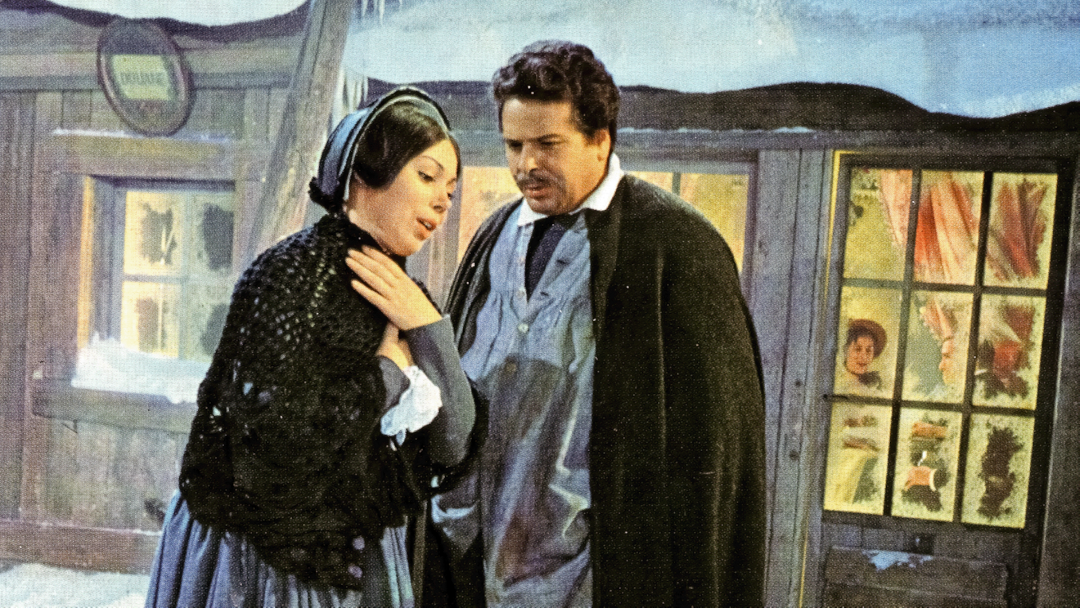
Ambiguity. That’s the theme of the operas of Benjamin Britten (ennobled as Baron Britten of Aldeburgh).
The simple fable at the heart of Die Frau ohne Schatten shouldn’t be difficult to parse, but Hugo von Hofmannsthal’s libretto juggles its vaguely Jungian, vaguely Arabian Nights symbolitry as if with intent to mystify and bewilder.
Whenever I encounter Eric Owens, he’s plotting to conquer the universe.
Before you depart the Met at the end of this season, Ms. Billinghurst, you have the chance to do some good for both the Met audience and James Levine.
It’s hard to come up with any sensible reason to dislike Joyce DiDonato.
While James Levine’s name might not immediately spring to mind when pondering the great Mozart conductors, he does have a long and distinguished career leading operas by the Austrian master.
Last night, the Met opened the 2013-14 season with a handsome, fairly conservative new production of Eugene Onegin by Deborah Warner that replaces the handsome, fairly conservative one by Robert Carsen. (The trend is clear.)
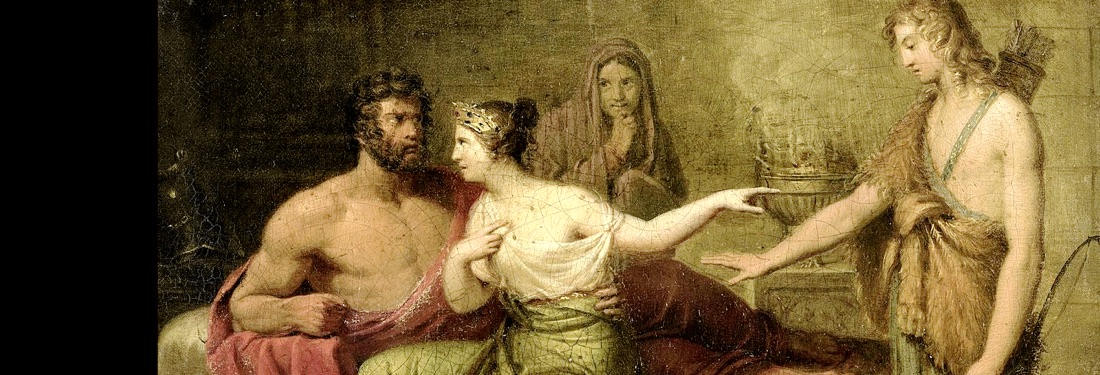
In the program for Opera Omnia’s production of Monteverdi’s Il ritorno di Ulisse, Crystal Manich, the company’s stage director, speaks of producing “baroque works in non-traditional ways.”
The 19th century could not cope with Così fan tutte, ossia La scuola degli amanti (Thus Do They All, or The School for Lovers) with a libretto by Lorenzo da Ponte and music by Mozart, first presented in Vienna in 1790.
There is a mighty appetite among both old Wagnerians and new ones to see a Ring that follows—if not too slavishly—the scenic requests of the libretto.
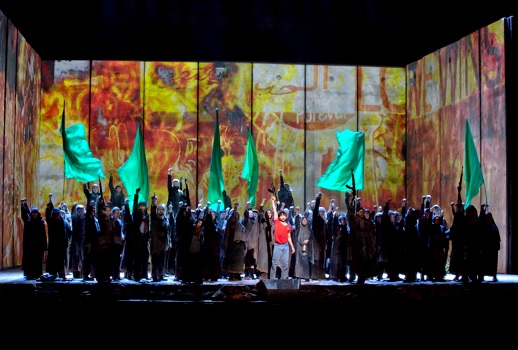
If Frank Castorf‘s work on Der Ring des Nibelungen at Bayreuth accomplishes nothing else, it should serve as a sort of loud disorganized reminder of the dangers of indulging in the intentional fallacy.
Tell us: Filth or dementia?
Hasten thee to feed another quarter of conversation for The Talk of the Town!
Sign up for our free Newsletter.
Support Parterre Box
Donate to keep opera's liveliest publication free and independent. No paywalls, no institutional backing, no bootlicking.
Get our free newsletter
Opera's top reads delivered to your email weekly…ish.
Join over 100k readers.
The best opera magazine on the web.
Reviews, breaking news, critical essays, and brainrot commentary on opera from those demented enough to love it.
Essentials
Copyright © 2026 Parterre Box.
All rights reserved.
Registration or use of this site constitutes acceptance of our Terms & Conditions and our Privacy Policy. Do Not Sell or Share My Personal Information.
Sign up for Parterre’s free newsletter.
Exclusive opera reviews, commentary, and top reads
delivered to your email weekly…ish.