If April is the cruelest month, it may be that spring’s arrival brings far too many things to do and see.
For those who relish 17th and 18th century vocal music, the annual visits to the Morgan Library by the singers and instrumentalists of the Boston Early Music Festival invariably guarantee delight
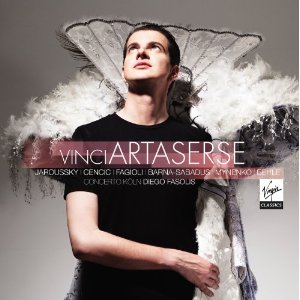
Philippe Jaroussky mentioned introducing his encores that he has not appeared in New York in 12 years.
Since my previous CD round-up review the onslaught of solo recital disks of 18th century (and sometimes also 17th) vocal music has continued unabated.
While isolated opera-lovers intently navigate the deluge of streaming videos being made available, I’ve been listening rather than viewing.
Over the past week New York City was blessed by two appealing 17th century presentations: John Blow’s Venus and Adonis from Opera Lafayette and La Storia di Orfeo courtesy of the Boston Early Music Festival.
Kudos to Opera Philadelphia for programming Handel’s Semele in its exceptionally interesting and wide-ranging Festival 2019; unfortunately, despite an extraordinary cast, James Darrah’s drably dull production doomed it.
“Trove Thursday” presents Purcell’s remarkably concise Dido and Aeneas in a pair of fascinatingly different interpretations.
Here’s a quick sprint through some recent (and a few maybe not-so-very-recent) Handel CDs that have been stacking up.
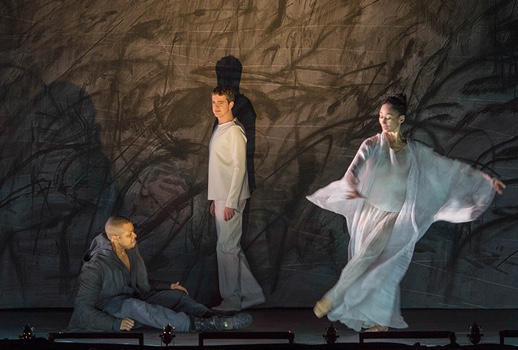
Only the Sound Remains introduced Americans to the latest collaboration between dazzling Finnish composer Kaija Saariaho and hirsute metteur-en-scène Peter Sellars.
While one sympathized with Matthew Aucoin’s urge to add his voice to the Orpheus canon it was difficult to figure out how his work complemented Gluck’s.
Iestyn Davies’s theatrical blandness combined with his vocal unsuitability for the role left a hole at the center of Rinaldo.
“Trove Valentine’s Day” further stokes Semiramis-fever with another of the celebrated works about the infamous queen: La Semiramide riconosciuta, a superb 1729 opera by Nicola Porpora.
While Farinelli and the King isn’t the only Broadway play to have explored castration (Sweet Bird of Youth, anyone?) it’s likely the first to concern a legendary 18th century opera star.
“It’s not easy being green”: especially if you’re the two greatest Italian opera composers.
William Christie’s Les Arts Florissants made a much-anticipated appearance at Lincoln Center’s White Light Festival Saturday performing Theodora.
Many large opera companies these days host valuable young artist programs dedicated to helping singers negotiate the difficult transition between leaving the conservatory and becoming full-time performing artists.
Who needs sets and costumes anyway?
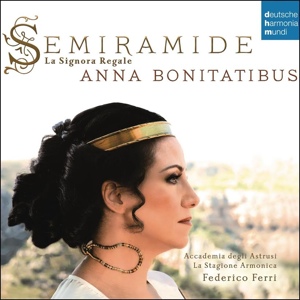
The last day of December a parcel arrived in the mail containing an absolute delight: “Semiramide—La Signora Regale.” One of best vocal recordings of 2014, this sumptuous 2-CD set on Deutsche Harmonia Mundi features the marvelous Italian mezzo-soprano Anna Bonitatibus and includes 90 minutes of rarely-heard music written for the legendary Babylonian queen.
His shaved head in striking contrast to his dark beard and glinting eyes, the implacable Tartar conqueror glowers at us from the CD cover, while the uncropped photo of countertenor Xavier Sabata (above) is even more disturbing, featuring his raised fist and forearm tightly wrapped in a leather belt.
For many in New York and around the world, if the name William Christie appears on a concert or opera program, it’s a must-attend.
Sunday afternoon’s intermittently involving concert performance of Handel’s Alcina at Carnegie Hall starred an unusually intense Joyce DiDonato as a powerful sorceress blinded by her romantic delusions.
My impossible wish would be to hear one of the great castrati who dominated opera for most of the 18th century.
“I’ve lived with mendacity!—Why can’t you live with it? Hell, you got to live with it, there’s nothing else to live with except mendacity, is there?”
Tell us: Filth or dementia?
Hasten thee to feed another quarter of conversation for The Talk of the Town!
Sign up for our free Newsletter.
Support Parterre Box
Donate to keep opera's liveliest publication free and independent. No paywalls, no institutional backing, no bootlicking.
Get our free newsletter
Opera's top reads delivered to your email weekly…ish.
Join over 100k readers.
The best opera magazine on the web.
Reviews, breaking news, critical essays, and brainrot commentary on opera from those demented enough to love it.
Essentials
Copyright © 2026 Parterre Box.
All rights reserved.
Registration or use of this site constitutes acceptance of our Terms & Conditions and our Privacy Policy.
Sign up for Parterre’s free newsletter.
Exclusive opera reviews, commentary, and top reads
delivered to your email weekly…ish.