The Met stage was filled with considerable magic Monday night when its dizzily effervescent revival of La Cenerentola starring Joyce DiDonato and Javier Camarena stirred a bewitched audience to some of the most ecstatic ovations heard this season.
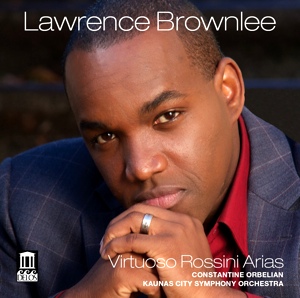
Lawrence Brownlee’s new album Virtuoso Rossini Arias demonstrate both how far the tenore di grazia has come in the operatic world.
My impossible wish would be to hear one of the great castrati who dominated opera for most of the 18th century.
On February 29, 1812 (thanks to Pope Gregory’s calendrical reforms), Gioachino Rossini celebrated his fourth birthday.
An impresario with a hit on his hands—Emanuel Schikaneder, for instance, after the initial run of Die Zauberflöte—will crave nothing so much as an opportunity to hit the same bell.
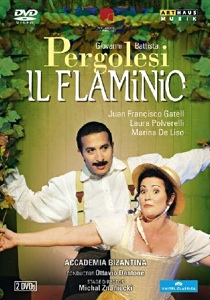
The Jesi foundation continues its tireless quest of making Pergolesi operas available on video.
Strange as it is to encounter two such disparate works presented with the identical production concept, it’s odder still that the opera you’d think would be the slam dunk is anything but.
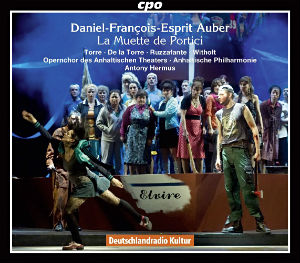
the strip on my first and, so far at least, only visit to Las Vegas a few years ago, I noticed what to me was a most unexpected sight and startled my companions by pointing out the window and shouting “Auber!”
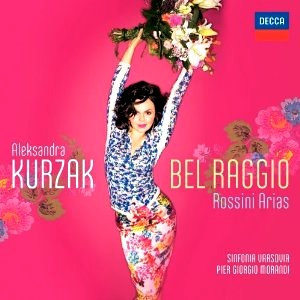
Everything about Aleksandra Kurzak’s new disc is a variation on the term “fioritura.”
Giovanni Battista Pergolesi’s only opera for Rome was written to an existing libretto by the great Pietro Metastasio, L’Olimpiade, which had already been set by Vivaldi the year previously.
Somewhere around the early 80’s, stage directors realized that the odious theatre practice of “audience involvement” was over.
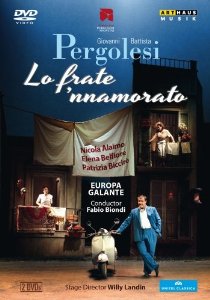
Giovanni Battista Pergolesi’s best known opera is La Serva Padrona, but the Neapolitan composer also composed several other works, which are now lovingly presented on video by the Fondazione Pergolesi Spontini at Jesi.
At the age of thirty, Donizetti was already the experienced composer of about eighteen operas, both serious and farcical, but as Olivo e Pasquale (currently undergoing its American premiere run at Amore Opera) makes clear, the comic works were no slight matter.
Camille Saint-Saëns was such a brilliant, facile musician that pals like Wagner and Liszt felt a distinct schadenfreude when he suffered composer’s block.
Karol Szymanowski’s 1926 King Roger was the sleeper hit of SFO’s season, not so much for its weird, mystical theme and feeble libretto but because the music is powerfully effective.
Beethoven expressed it best when he reportedly threw Rossini shade: “Any other other style than opera buffa would do violence to your nature.”
Unlike Mozart, the young Gioacchino Rossini seldom let his ambitions strain relations with employers.
Apparently, we learn very little in life; the follies we pursue with haste in youth are answered by the follies we commit in age with great deliberation.
Richard Wagner told Cosima he first got the idea of composing an opera about Tristan and Isolde while he was conducting Bellini’s I Capuleti e i Montecchi starring his muse, Wilhelmine Schröder-Devrient, in the trouser role of Romeo.
By the time Rossini was 20, he had produced six operas, most of them brief, comic and slight. He admitted to admiring Mozart (not then well known south of the Alps), but the melodies of his early works show more of the influence of Paisiello.
Oh, Rossini, Rossini! You mad, adorable fool! What power could you find in the theaters of Paris to keep you from Neapolitan arms? If you are fond of Rossini (or any other major composer), you will want to collect the whole set. Each piece of the jigsaw adds detail to the picture, but there are…
Giovanni Simone Mayr was one of the most important musical figures of his day, a man Rossini referred to as the “father of Italian opera” whom Napoleon personally lobbied to come work in Paris. Though he wrote nearly 70 operas and taught Donizetti and Bellini, the Bavarian-born composer had the misfortune of hitting his peak…
Handel’s Orlando is one of three operas Handel based on episodes from Ariosto’s best-selling sixteenth-century epic, Orlando Furioso. The story was, in 1733, well known throughout the Mediterranean world, and everyone set it to music—Vivaldi’s and Haydn’s settings have enjoyed recent revivals, and the libretto Handel set had originally been devised for Domenico Scarlatti. Intricate…
Trying to suggest erstwhile world-renown of Guillaume Tell to a 23-year-old who had never heard of it, a friend of mine mentioned The Lone Ranger. “What’s The Lone Ranger?” replied the youth. And the sun rises and the sun sets and all things must pass. But surely he knew Bambi Meets Godzilla, which also uses…
Tell us: Filth or dementia?
Hasten thee to feed another quarter of conversation for The Talk of the Town!
Sign up for our free Newsletter.
Support Parterre Box
Donate to keep opera's liveliest publication free and independent. No paywalls, no institutional backing, no bootlicking.
Get our free newsletter
Opera's top reads delivered to your email weekly…ish.
Join over 100k readers.
The best opera magazine on the web.
Reviews, breaking news, critical essays, and brainrot commentary on opera from those demented enough to love it.
Essentials
Copyright © 2026 Parterre Box.
All rights reserved.
Registration or use of this site constitutes acceptance of our Terms & Conditions and our Privacy Policy. Do Not Sell or Share My Personal Information.
Sign up for Parterre’s free newsletter.
Exclusive opera reviews, commentary, and top reads
delivered to your email weekly…ish.