
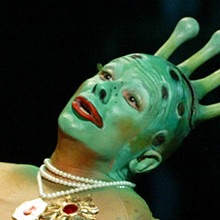
The man who would be nymph
Sometimes the fates conspire, preventing an artist from recording the role for which he is his generation’s touchstone.

Christopher Corwin began writing for parterre box in 2011 under the pen name “DeCaffarrelli.” His work has also appeared in , The New York Times, Musical America, The Observer, San Francisco Classical Voice and BAMNotes. Like many, he came to opera via the Saturday Met Opera broadcasts which he began listening to at age 11. His particular enthusiasm is 17th and 18th century opera. Since 2015 he has curated the weekly podcast Trove Thursday on parterre box presenting live recordings.
Sometimes the fates conspire, preventing an artist from recording the role for which he is his generation’s touchstone.

Lately “Trove Thursday” has been binging on prima donnas so the rest of August will be more tenor-centric. This week brings a double bill starring the marvelous Michael Spyres, a specialist in rarities: Rossini’s Ermione and that American obscurity Candide whose composer’s 100th birthday, by the way, is this Saturday.
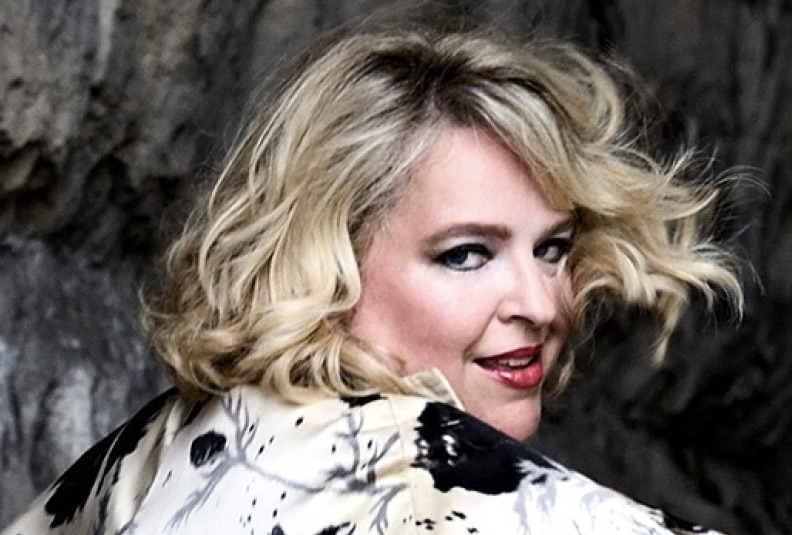
Armide with a superbly grand Francophone heroine in Karina Gauvin and conducted by the always excellent Ivor Bolton.

To heck with Bayreuth and Salzburg, Glimmerglass and Santa Fe as Rosa Feola sang Mozart at Lincoln Center Friday night and I wouldn’t have been anywhere else!
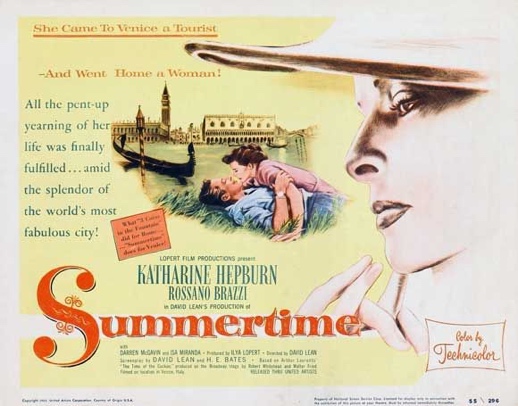
August on “Trove Thursday” begins with Midsummer Mezzo Madness featuring a sterling quartet of lower-voiced ladies
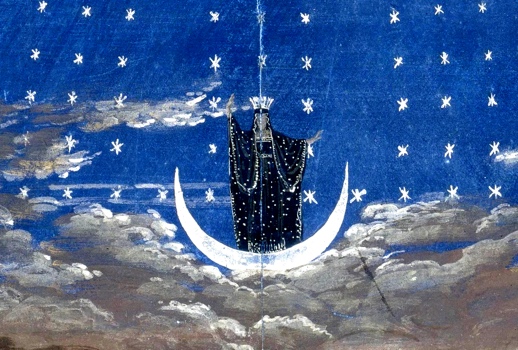
This year’s Salzburg Festival opens Saturday with a new production of Mozart’s Die Zauberflöte, an opera often performed elsewhere in translation, so “Trove Thursday” offers two for the price (!) of one.
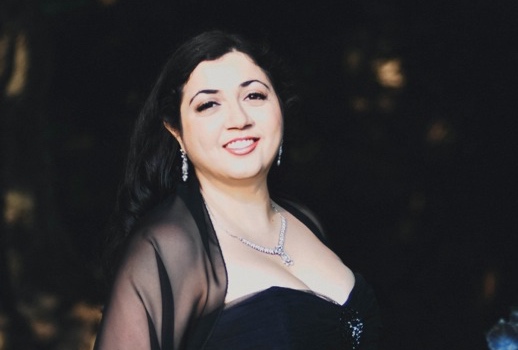
Caramoor imported the venerable West-Coast period orchestra Philharmonia Baroque to perform Atalanta, an obscure pastoral work by Handel.

What could go wrong? As it turned out: just about everything!

“Trove Thursday” salutes the thrilling Ursula Schröder-Feinen with a special double-bill: a complete Salome followed by a rare Siegfried Brünnhilde.

“Trove Thursday” goes modest with Donizetti’s domestic comedy Don Pasquale featuring Ileana Cotrubas, Alfredo Kraus, Vicente Sardinero and Wladimiro Ganzarolli.

This week’s star-spangled “Trove Thursday” offers the second crazy-quilt installment of divas in the wrong language.

“Trove Thursday”’s latest folie de grandeur is an overflowing three-part explosion of post-war divas in live performances of unexpected arias always in the “wrong language.”

“Trove Thursday” offfers Joseph Martin Kraus’s superb Aeneas i Cartago, eller Dido och Aeneas—in Swedish!—starring a luminous Elisabeth Söderström as the doomed Queen.

Trove Thursday wades into the murky musicological waters of Offenbach’s Les Contes d’Hoffmann..

“Trove Thursday” turns for the third of Verdi’s four Schiller adaptations to a recent I Masnadieri with risen stars Lisette Oropesa and Russell Thomas.

Arianna in Creta with Sandrine Piau, Kristina Hammarström and Ann Hallenberg conducted by Christophe Rousset.
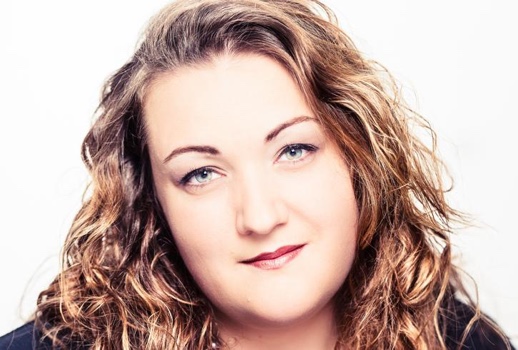
The old adage “the third time’s the charm” proved to be the case with me and Daphne, Richard Strauss’s ravishing bukolische Tragödie, when I recently heard it performed by Franz Welser-Möst and the Cleveland Orchestra.

“Trove Thursday” turns its Rossini-150 series to one of the composer’s least known but tastiest comic gems La Pietra del Paragone with Julia Hamari, Justino Diaz, Alessandro Corbelli, Claudio Desderi and Paolo Barbacini conducted by Roberto Abbado.

“Trove Thursday” salutes Barbara Hannigan with an eclectic triple bill.

While one sympathized with Matthew Aucoin’s urge to add his voice to the Orpheus canon it was difficult to figure out how his work complemented Gluck’s.

At “Trove Thursday” it’s May Night, Nikolai Rimsky-Korsakov’s 1880 comic opera, in a recent broadcast from Moscow led by pianist-conductor Mikhail Pletnev.
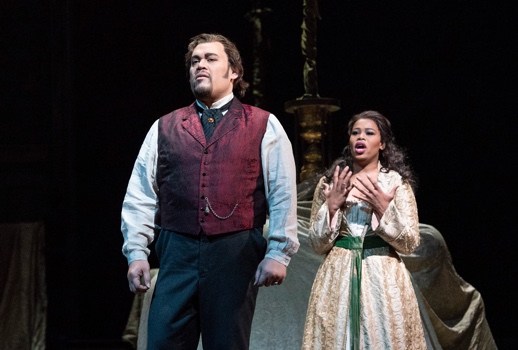
The new cast at the Met suggested an alliterative retitling of Lucia di Lammermoor was needed—perhaps Lost Loonies in Love or its Italian equivalent?

“Trove Thursday ” presents Heinrich Marschner’s Hans Heiling in a 2001 performance from Berlin featuring Alessandra Marc as the title character’s mom, the Queen of the Elves.

Like Julius Caesar before her, Anna Netrebko can rightly proclaim “Veni vidi vici” about her decisive Roman victory at the Metropolitan Opera where she took on her first-ever Tosca.

The days are getting shorter, but you can keep the prattle going this fall’s Talk of the Town! You will, you can, you must join in the discussion about: Great mezzo soprano performances (October),
Gained in translation (November), Teleport me back to… (December).
Exclusive opera reviews, commentary, and top reads
delivered to your email weekly…ish.