Knowing when to leave will never let you reach the point of no return
With San Francisco Opera’s orchestra on strike and bass Andrew Potter retiring at 43, Miles Greenberg sees opera’s ethics and economics of impracticality at a breaking point
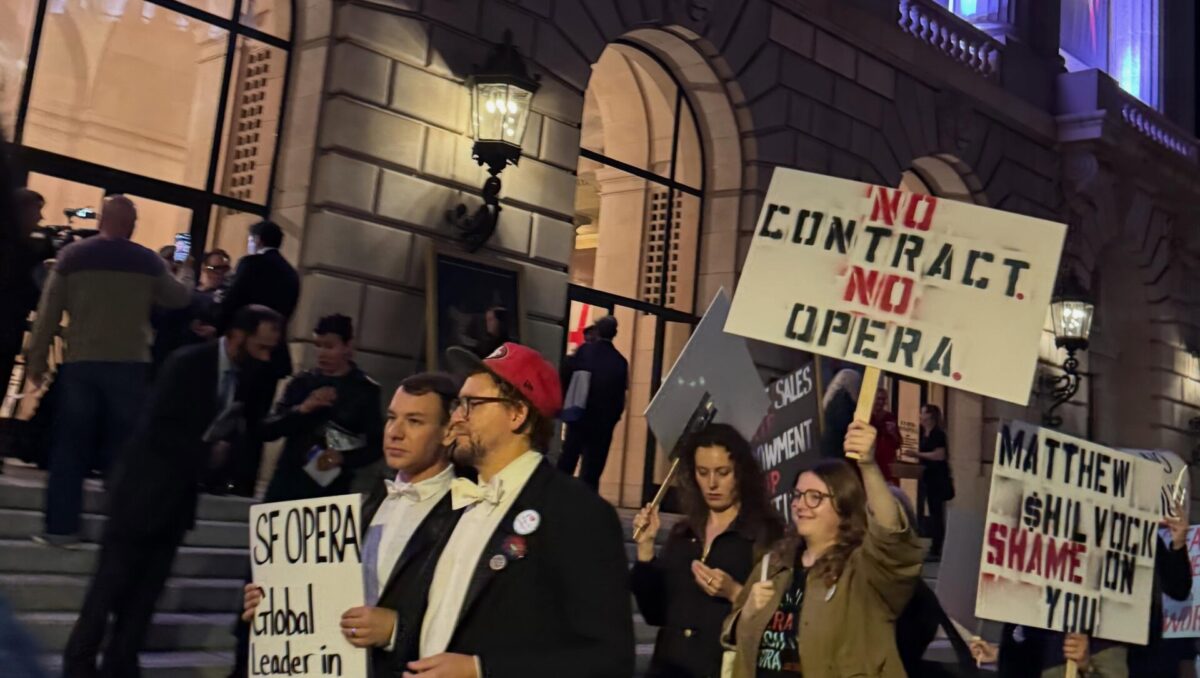
Orchestra musicians on strike in front of the San Francisco Opera building on September 10, 2026 / Photo: San Francisco Opera Orchestra Facebook
You might have assumed everything was going fine at San Francisco Opera. As fine as things can go for American opera these days, anyway. You almost certainly thought things were fine if you were following their social media over the summer as their annual Merola Opera Program once again took flight. Just like every other summer since 1957 (with the sole exception of 2020), a who’s-who of “Young Artists” descended on the Bay, some of them already enrolled in major year-round programs, many of them with an impressive array of awards adorning their CVs, nearly all of them holding multiple degrees in music (among other things) and every last one of them serious to the spine about singing opera.
For decades this program has served not only as a training ground for emerging talent but also as a kind of ritual celebration of continuity. In an art form that is occasionally maligned for being terminally antique, Merola gave its audience a promise of a future. A select few of the Merolini (as the 30-odd visiting singers are affectionately referred) would be invited to stay in San Francisco and join the year-round Adler Fellowship, where they would become familiar faces to the local audience through their frequent appearances in mainstage productions as well as the various outreach events, gala concerts and private home recitals that young artists are always tasked with fulfilling. Others would one day return in triumph as guest artists, and of course some would go on to do not very much at all. In every instance, the planting of seeds always gave way to the harvest – the Merola festival would conclude and the regular season would begin. Except this year it didn’t.
After failing to reach an agreement with the administration, orchestra musicians of the San Francisco Opera announced that they would be going on strike, forcing the house to cancel the beginning of their season (Verdi’s Simon Boccanegra and Thea Musgrave’s Mary, Queen of Scots). The orchestra made their reasons plain: the proposed budget required a 26% reduction of their salaries, effectively returning them to 2015 wages in a city and world that no longer has a 2015 cost-of-living. It need not be explained why this is an unsustainable proposition for musicians who are expected to live a reasonable distance from where they perform and rehearse full-time, but nevertheless the usual suspects in the usual places consider the decision to strike borne of selfish entitlement. (Truly, many opera fans really, really hate unions. Almost as much as they hate everything else about opera, but that is a discussion for another time.)
While the orchestra strike did not affect any of the Merola season, for the 2026 Merolini it undoubtedly serves as a chilling premonition to witness the regular season fail to materialize due to the company musicians’ rejection of a (realistically, life-altering) salary reduction. Duly so for the prospective participants in the 2027 festival, who have already sent in their pre-screening materials and are due to progress to live auditions in several weeks. And what an opera to open a season with, what a cast they assembled, what a shame.
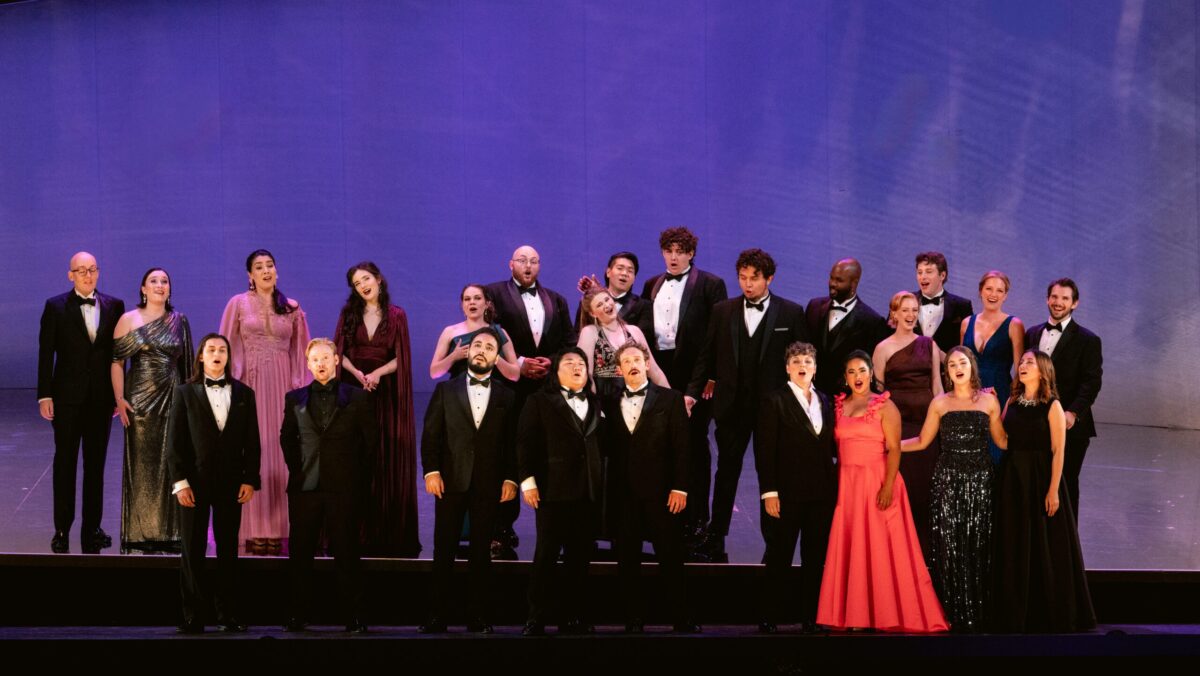
The 2025-2026 Merola Artists / Photo: Kristen Loken
While news of the Simon Boccanegra that never was circulated across the opera-net, another story began to pick up steam, this one in part concerning the opposite coast’s pillar of operatic continuity, New York’s Metropolitan Opera. However, this story did not concern the Met’s vast orchestra or chorus (both of which have been periodically involved in their own negotiation woes in recent decades), but rather one of their hundreds of guest soloists. At the same time administrators in San Francisco scrambled to find a solution to their opening production, American Bass Andrew Potter published an open letter to OperaWire announcing his retirement from the stage at age 43.
Potter’s essay was instantaneously striking. He got to the heart of it: he could no longer afford the life of a full-time opera singer with children at home. (Jonas Kaufmann made a similar declaration not too long ago.) The honor of making a living as a performing artist, achieving what 99% of his peers could not, was not enough to pay his bills, nor justify lost time with his family. That story itself is not entirely remarkable — working artists retire every day — and predictably the Facebook comments sections gave rise to debates among singers of all levels as to the relative industry-wide significance of Potter’s situation.
But to argue against the individual significance of Potter’s decision is to miss the point: most opera singers retire quietly for the exact same reasons as Potter, if they’re even lucky to work as much as he did. Some of them are quite wonderful – you probably enjoyed many of them, even remembered a few of their names for a while, until the annual Operalia-Laffont-Neue Stimmen machine recharged its batteries, fed you another buffet of young artists, and one day you realize it’s actually been quite a long time since you thought about that wonderful mezzo at all (let alone heard about anything she was doing).
Potter had reason to believe he would endure. For those familiar with the (often astonishingly degrading) world of opera casting, Potter registers as the closest to a sure-thing in career potential. Standing at a modest 6’10 with a voice like obsidian, Potter is what experts would call “extremely fucking hirable.” Which he was. His 2025-26 calendar proves it; in a seven-month span from September to April he appeared with six different opera companies across the U.S. (with a holiday Messiah thrown in for good measure). You need not imagine him towering over a battalion of soldiers in Verdi’s “Di due figli” or dragging Don Giovanni to hell; he already did it for you. He did all of that.
But the numbers, diva, the numbers.
The numbers didn’t add up. They haven’t for a long time, but because it’s generally considered extremely tacky to discuss fees (and it’s assumed everyone’s lying a bit anyway) these conversations have sat mostly dormant. But Potter lays it bare:
The contracts I signed in my 40s were, dollar for dollar, often less than many of the contracts my teachers described from the 1980s. And a 1980s dollar is not a 2026 dollar. Inflation has tripled the cost of everything a singer must buy – flights, coachings, lessons, health insurance, housing in the cities where opera lives – while the fee at the top of the contract sat still and even shrank, decade after decade.
These words are completely true and require little caveat. Even if you counter that Jussi Bjorling and Kirsten Flagstad were only earning $1,000 per performance in 1951 ($13,118 in 2026), you must contend with the fact that the average monthly rent in 1951 Manhattan was $56 ($720.50). The average monthly rent in 2026 Manhattan (where Potter was required to reside as a contracted cover artist) is currently trending at around $5,500 for a one-bedroom and $4,000 for a studio. Presumably you can do the rest of the inflation math yourself. No matter how you slice it, the material conditions for a working professional singer are untenable today, certainly in New York, where Potter recently found himself at the end of his wits.
You may read Potter’s essay for yourself for more detail on his experience covering Timur in the Met’s 2025 mounting of Puccini’s Turandot; perhaps you will find that the circumstances (bringing his son to New York with him, the fact that his engagement was a cover rather than performance) render the situation too layered and specific to extrapolate a general analysis of industry conditions. Nevertheless, the events are explanatory — much of Potter’s woes stem from the fact that the Met has had to dramatically reduce their once-vast administrative forces, who in earlier eras might have been better able to assist Potter in securing adequate housing. Lacking the residential accommodations of some opera companies, the Met cannot reasonably arrange housing for its bevy of artists within a 30-minute radius of Lincoln Center, but turning them loose into the New York City housing market feels especially unfortunate.
Potter outlines the conditions that must change to prevent singers such as himself from continuing to drop out of performing. They include raising fees to reflect modern living standards and covering all housing/travel costs for all contracted artists. “Oh wow, I’ll just hit the Pay People More button, never thought of that,” you say into your screen. And you’re right: the current operating conditions of the Met absolutely do not support such a colossal increase in artistic compensation. Variety has always been one of the Met’s topoi and under Gelb’s tenure the company’s desire to search far and wide for as many different, dazzling, and new singers as possible has only grown.
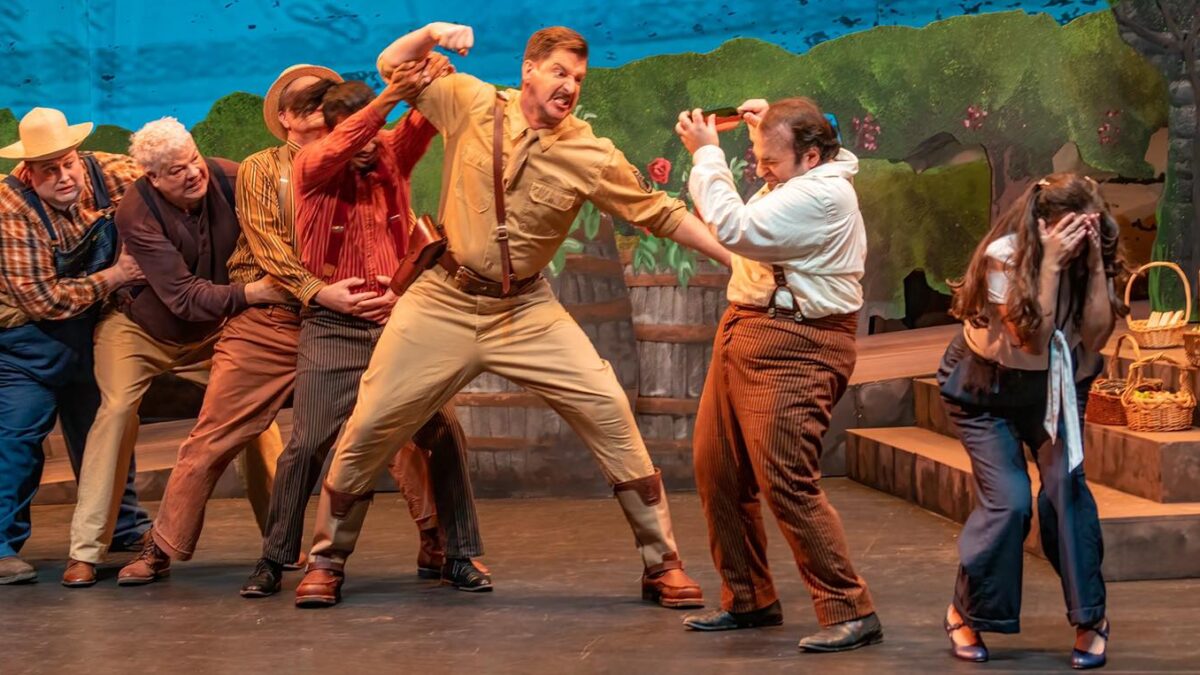
Andrew Potter in Livermore Valley Opera’s production of L’elisir d’amore / Photo: Barbara Mallon
Make no mistake – this is mostly a wonderful thing. I have always felt, for example, that the longstanding practice of flying in star replacements (rather than putting on covers) was exciting for audiences and totally justified, even if it foreclosed on a potential “star is born” moment for the covering artist. But it is prohibitively expensive. Raising the overall pay for singers would require a drastic reduction in the volume of contracted singers, the remainder of which would have to sing a far greater share of the available roles.
This is a sad irony that bears repeating: barring a miraculous windfall of funding (or a precipitous increase in ticket prices, which would likely be suicidal), such a scenario would require a collective culling of the overall available performing jobs. Singing opera would become a much more comfortable lifestyle on average, but far fewer people would be doing it overall. I don’t wish to take the hypothetical much further because I frankly doubt that such a world is ever possible here. We’ve all gone through the phase of wondering what it would be like if the U.S. adopted a European “ensemble” system, what it would be like if opera houses received state-funding, what it would be like if people liked opera a bit more, etc. No one is coming to opera’s rescue; not the federal government, not Saudi Arabia, certainly not Elon Musk.
With that said, opera is not going to die. At least not in our lifetimes, anyway. But there will assuredly be less of it. Perhaps that won’t fully deter prospective students from throwing in their lot and entering a conservatory (the rarity is prestige in itself). For every Potter — mature professional artists who cannot make ends meet — there are a dozen greener singers who would gladly take his fee (or less), if it meant a chance. There is little question that when Potter’s essay went semi-viral more than a few ambulance-chasing booking agents scoured the internet and their rolodex of contacts for evidence of what his 2027, 2028, even 2029 roles were slated to be and whether one of their singers might possibly be a fit. Perhaps someone younger, with less experience and perhaps fewer family obligations. Here’s a CV; in fact, here’s three. The pool is deep, as one says.
I hope the San Francisco audience gets to hear Simon Boccanegra this month. I am sure they eventually will and if they don’t, opera will at some point return to the War Memorial. It’s just another strike. Hell, I don’t even think about all the times the Met orchestra went on strike, until the next strike happens and I go “oh, right.” Likewise, I suppose Andrew Potter is just another bass. Realistically, you can’t expect one retirement to meaningfully alter the way everyone perceives the state of opera today.
There’s currently a popular neologism on the internet that goes something like this: nobody actually noticed the moment the Roman Empire ended, they just went about their lives while their roads, bridges and aqueducts fell into gradual disrepair. Presumably while this was going on, people found the time to complain about things that, in hindsight, would seem bafflingly petty given the broader circumstances. It’s certainly more entertaining to believe the problems with opera today are subsumed within the realm of timbre and technique rather than the material conditions the singers have to live and work in.

Miles Greenberg
Miles Greenberg is a PhD candidate in Historical Musicology at the University of Rochester - Eastman School of Music, where his research focuses on 17th-century Italian Vocal Music.
-
Topics: opinion, san francisco opera
-
People: Andrew Potter