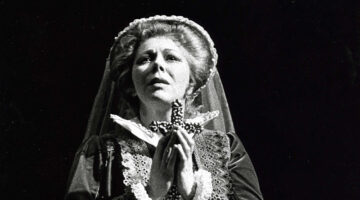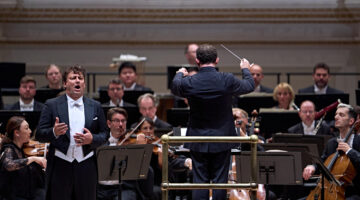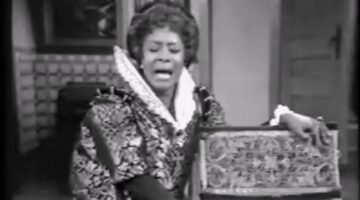
Rafael Kubelik was a great opera conductor
Opera conductors … my favorite subject!
They are the ones who will certainly make or break an opera performance, yet they don’t get mentioned enough in reviews.
Richard Wagner’s entire oeuvre most definitely tests a conductor’s mettle, so for this month’s selection, I chose his longest music drama, the problematic Die Meistersinger von Nürnberg. A conductor who can’t maintain a tight grip on almost six hours of music while moving the story forward shouldn’t even attempt this piece.
My introduction to classical music came through orchestral music, and from where I came from, it was mostly Herbert von Karajan. For years, I was von Karajan’s fanboy (I still am, in some pieces). But as I came to love more and more symphonies, I grew to love two particular symphonic composers, Gustav Mahler and Antonín Dvořák, neither of whom von Karajan had a great record with (he recorded only a few of Mahler’s, and his Dvořák cycle wasn’t exactly satisfactory). For both composers, another conductor emerged: Rafael Kubelik. And I’ve been a fan of Kubelik ever since.
My introduction to Die Meistersinger von Nürnberg was the fine Karajan recording with the Staatskapelle Dresden. Kubelik’s recording had a problematic past, with multiple short-lived labels (Myto, Calig, etc.). I was intrigued by it not because of Kubelik, honestly, but because of the appearance of Karajan’s muse, Gundula Janowitz, as Eva (see how predictable I am?). But OMG, just one listen, and I was a firm believer that this is the greatest recording of Die Meistersinger von Nürnberg ever, and it was all because of Kubelik’s amazing pacing.
Just listen to the way he conducts the prelude! It wasn’t slow, for sure, but he kept building and building the master-song leitmotif as if he were placing brick by brick to create a structure, and by the time the repeated notes climaxed, it was almost as if we were standing in front of a cathedral, just in time for the choir to join in! An extraordinary recording, with an absolutely marvelous cast top to bottom, and a testament to the Master Conductor, Rafael Kubelik!
Michael Anthonio
Michael Anthonio's love affairs with classical music and opera started in primary school, when his parents bought him an organ and he began taking lessons. During high school and college, he gave private organ lessons to some of his parents' friends' kids (for pocket money) and he was church organist and later, choir conductor. In 1999 he moved to Singapore where he got involved with the classical music online website "flying inkpot." His interest in opera became an obsession when he was transferred for work to US in 2008. In addition to enjoying world-class opera in SF, he indulges in opera tours in Europe. His favorite opera composer is Handel; at this point, Michael seen 24 of his operas , with hopefully three more coming next year.
-
People: Antonín Dvo?ák, Gundula Janowitz, Gustav Mahler, Herbert von Karajan, Rafael Kubelik, Richard Wagner
-
Places & Organizations: Staatskapelle Dresden