The anxiety of influencer
Constance: A Confession, presented in Brooklyn by Experiments in Opera, satirizes our digital age with style.
 By
Dawn Fatale
By
Dawn Fatale
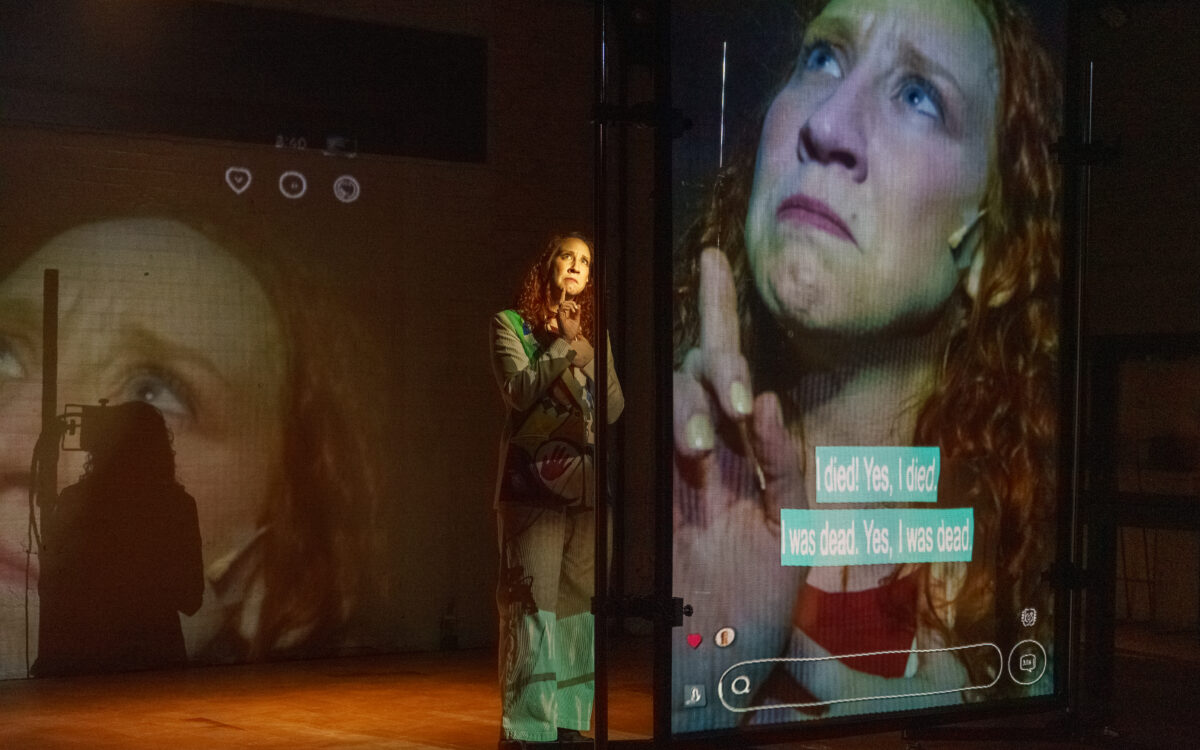
Photo: Silin Chen
Experiments in Opera is a Brooklyn based artist-led opera company that “opens up the boundaries of opera by supporting and guiding an inclusive group of artists, musicians, composers, and librettists to expand their craft.” As part of its mission it aims to produce work that is “adventurous and fun” and brought to the stage as quickly as possible.
They frequently develop their works using a collaborative “writer’s room” of multiple composers and/ or librettists. For their newest work, Constance: A Confession (seen at Here ARTS Center on May 18), four writer-librettist teams each contributed an act to this 90 minute work, a satiric tale of the rise and inevitable cancellation of the titular griftress. Constance works her way from desperate art student to online health influencer with her many “Rainbow Warrior” followers. While the humor is occasionally obvious (are we really still making Sheboygan jokes?), the work is refreshingly contemporary both in content and style. I can’t say that I’ve seen an Instagram live session in an opera before.
Overall, the piece is tightly crafted and coherent; the acts flow seamlessly into each other. Each act has its own distinct musical profile with the composers deploying the unusual ensemble of saxophones, guitar, keyboards, and percussion to their own striking effect. I was particularly taken with the brooding, ominous wall of sound that composer Jasmine Galante summoned in the final act. Music Director Dmitriy Glivinskiy found the proper tone and colors for each section while maintaining exemplary coordination with the singers. The orchestra is placed to the side and the singers and instrumentalists are all amplified. I complain a lot about bad sound design in amplified works. For once, the sound engineering by Nathaniel Butler was exemplary. He created a very naturalistic balance without overdoing the levels of singers or instrumentalists.
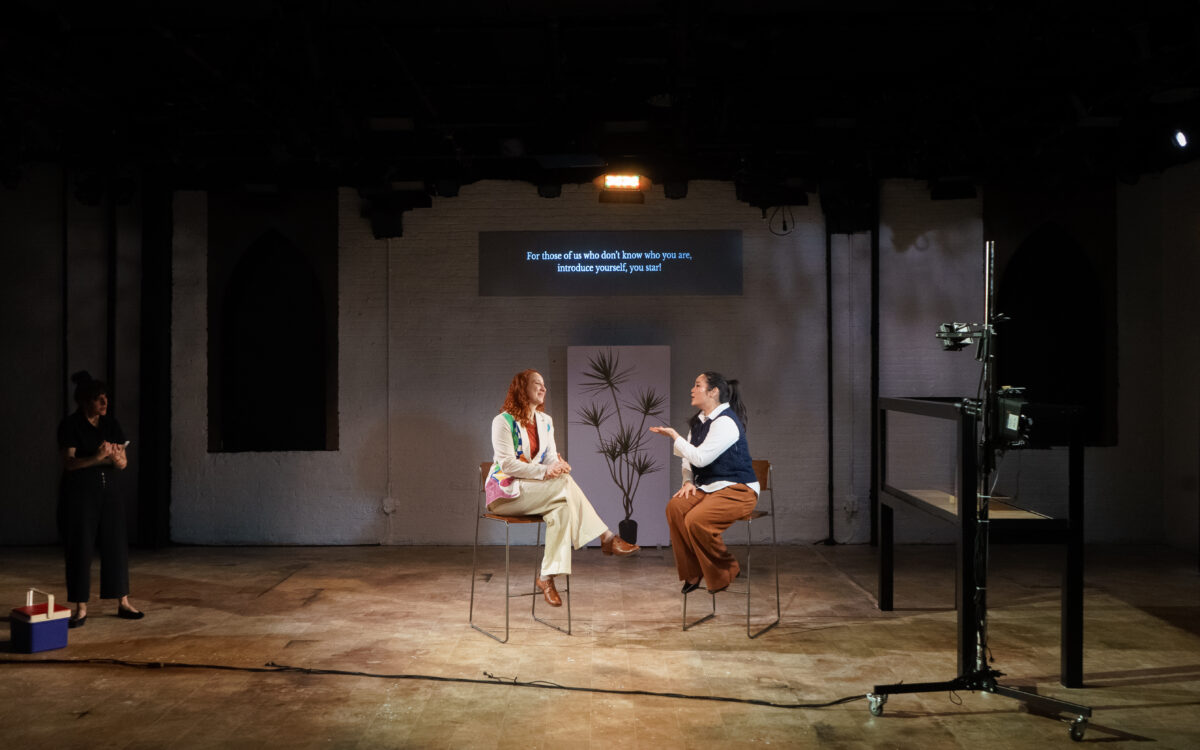
Photo: Silin Chen
The four singers were all very good. The title role is quite challenging, on a par with Berg’s Lulu or one of Ligeti’s soprano fever-dreams. Soprano Sydney Anderson tackled it with ferocity and admirable facility. Her acting chops were impressive; she let you see her character’s appeal and even managed to generate some empathy for the monstrous Constance. She stared directly at the audience and we eagerly locked in. In each episode of the story Constance must win over a mark, overcome a skeptic and find an enabler to move her machinations forward. Soprano Zen Wu was a compelling foil in the role of The Skeptic. She embodied each skeptic effectively and displayed impressive dramatic high notes when required.
Baritone Nathaniel Sullivan was The Mark. He has a sweet lyric baritone voice and an unforced, natural stage presence. He gave us four well-differentiated rubes rather than one hapless victim. Lastly, Sishel Claverie was The Enabler. It’s the most overtly satiric of the roles, and she thankfully resisted the many opportunities to be extra while rising to the more dramatic moments in the final section.
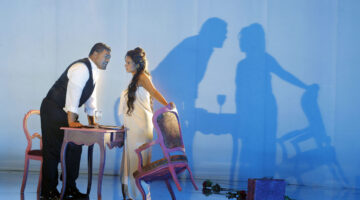
The work received an excellent production by the director Shannon Sindelar. It found the right tone for each of the sections and efficiently brought us into the different locations required by the acts. I particularly enjoyed the costumes by Krista Intranuovo Pineman and video contributions from David Pym which struck the right balance between plausibility and ridiculousness. Silin Chen was the Scenic Designer and Mary Ellen Stebbins provided the atmospheric lighting
Operas drawn from the headlines can feel dated by the time they make it to stage. This work was optimally timed for our ongoing scourge of dubious health influencers. I’m eager for their next experiment.
Dawn Fatale
Richard Lynn is a New York City based opera lover who writes at parterre box under the name Dawn Fatale. His love of opera started at a very young age when he used to listen to the Met broadcasts and obsessively read back issues of Opera News in lieu of socializing at family gatherings. In college, he majored in Chemistry while taking as many music and theater courses as possible. He worked at the Music Library to get access to the opera recordings that were off limits to undergraduates. Since the early 1990s he has been writing about opera at parterre box and other publications and is particularly interested the evolution of staging and performance practices.
-
People: Nathaniel Sullivan, Sishel Claverie, Sydney Anderson, Zen Wu
-
Works: Constance: A Confession
-
Places & Organizations: Experiments in Opera, HERE Arts Center