The poetry is in the pity
Klaus Mäkelä unexpectedly joins the foray for The Cleveland Orchestra‘s performances of Benjamin Britten’s War Requiem.
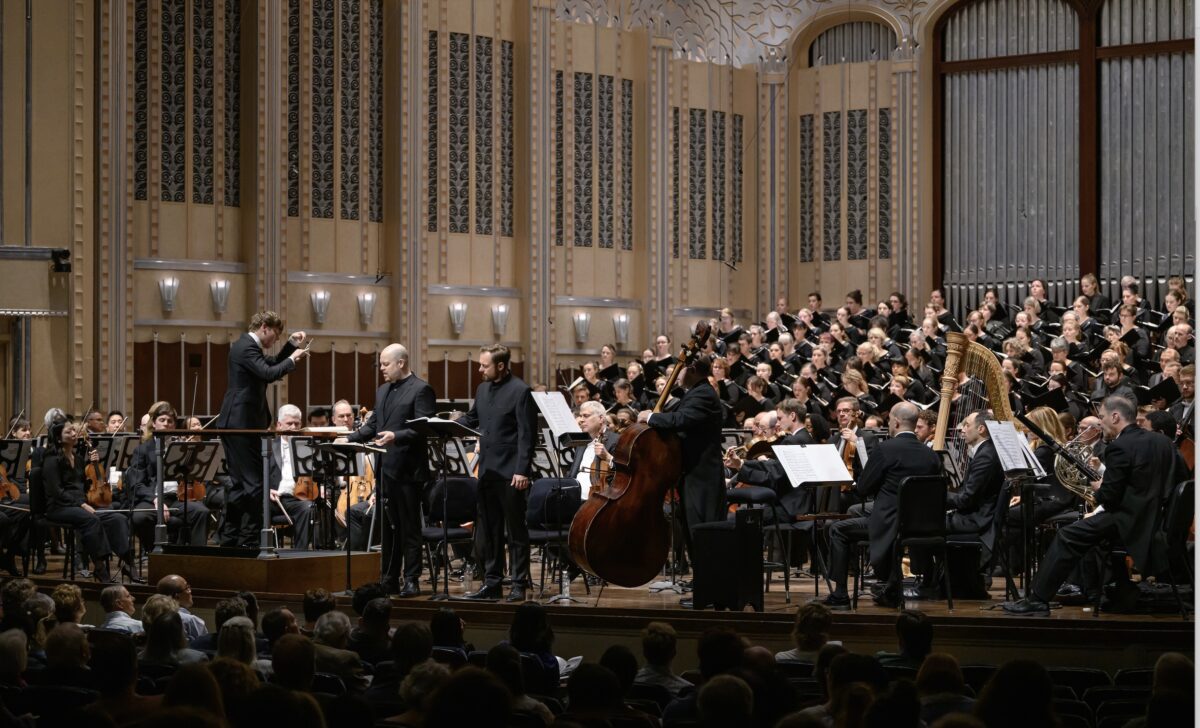
Photo by Yevhen Gulenko
This weekend at The Cleveland Orchestra, performances of Benjamin Britten’s War Requiem began and ended in silence. Before giving the downbeat, Klaus Mäkelä bowed his head, clasped his hands together, and seemed to offer a private prayer. After the music concluded, he held a hush for what felt like forever, as the musicians and soloists onstage wore expressions ranging from awe to terror and shell shock. The gestures seemed like appropriate bookends for the serious, principled work that took on even greater significance amid the latest round of global armed conflict.
What came between was raucous, chilling, and often arrestingly beautiful. Britten made no small demands for the orchestration of this 1962 work, commissioned for the reconsecration of Coventry Chapel, which had been badly battered during World War II. A performance requires a full complement on stage, plus a 12-player chamber orchestra, a mixed adult choir, an off-stage boys choir, and three vocal soloists. The sheer person-power may account for the work’s relative rarity, at least in this country. I’d only heard it live once before, a decade ago in Philadelphia.
Cleveland had the forces to spare, though, and while the end result wasn’t always perfect, it thoroughly captured the profound nature of the work. Start with The Cleveland Orchestra Chorus, which may well be the best volunteer choir in the country. Britten calls on them to bring thunder and lightning at times, but the work rises and falls on the quieter, harmonically complex passages that dominate.
Choral director Lisa Wong produced an ensemble that was confident, secure, and superbly intoned from Requiem aeternam to the final Amen. The chorus often entered with the clean precision of an organ. Jennifer Rozsa smartly placed the boys of The Cleveland Orchestra Children’s Chorus in the balcony, allowing their angelic sound to surround the audience; they seemed almost like emissaries from Heaven amid the horrors of war depicted in the text and music.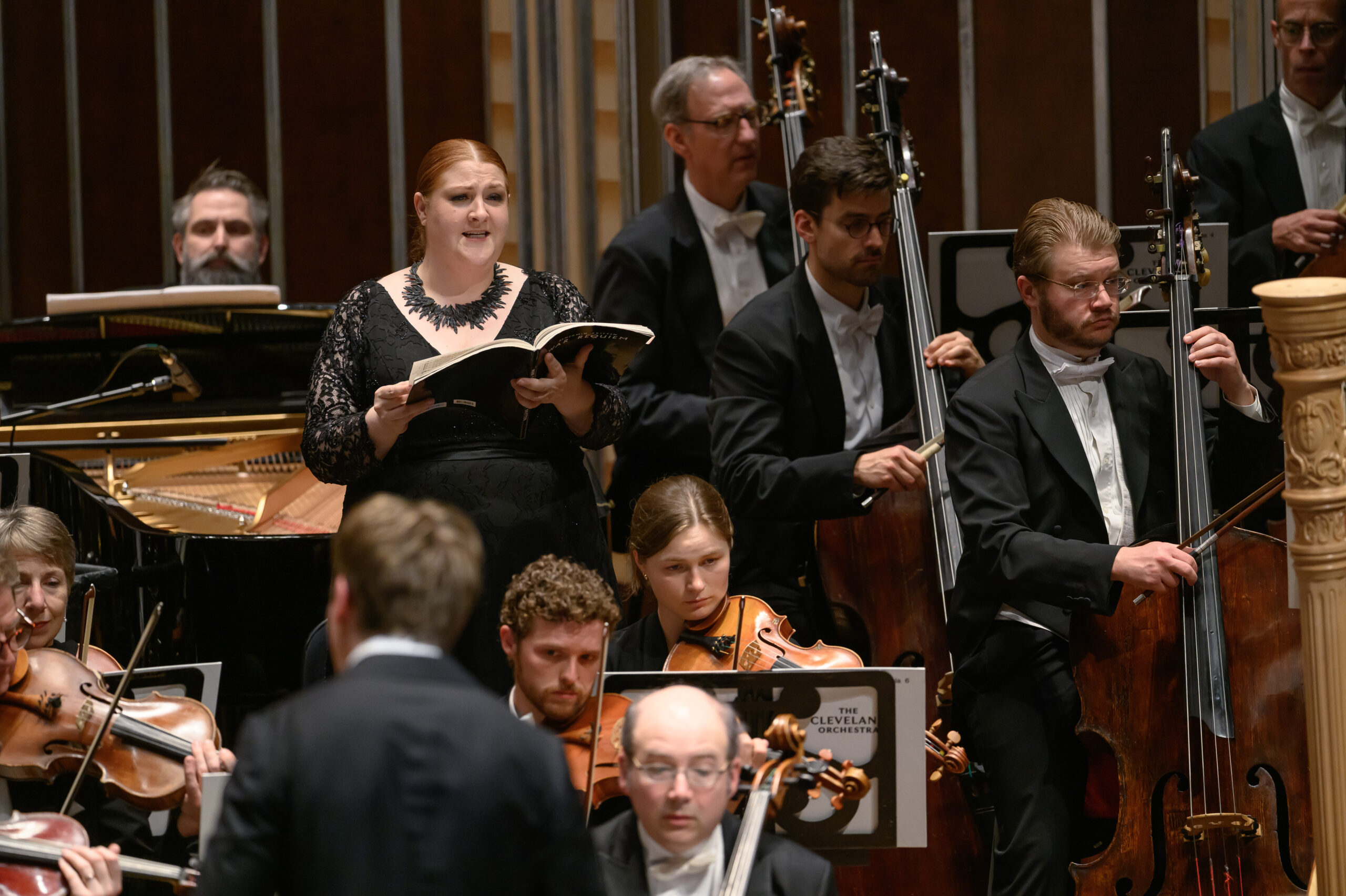
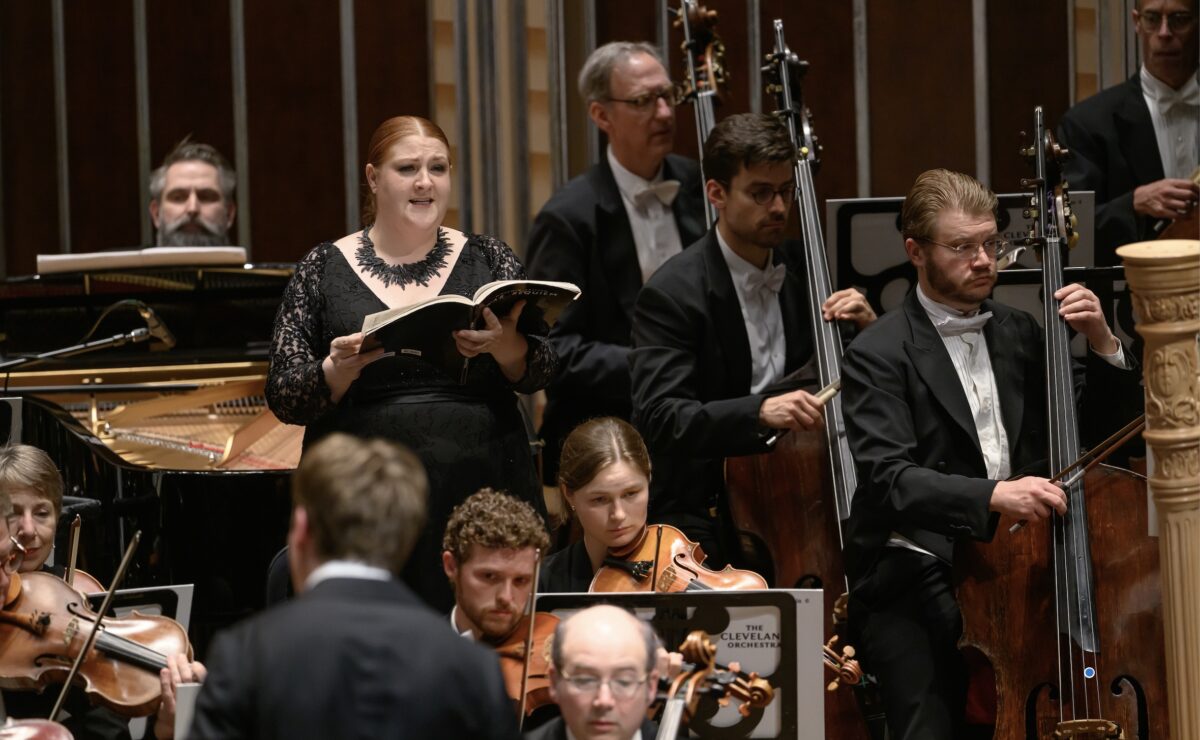
Photo by Yevhen Gulenko
Much of the vocal drama falls to the soprano, who supplements the choruses in the Latin texts. Tamara Wilson brought an ideal temperament to the assignment, fiery in the assertive Liber Scriptus and gunmetal-cool in the descending scales of Lacrimosa. Placed between the orchestra and adult chorus in the middle of the Severance Hall stage, she never struggled for volume, sailing effortlessly among the large, thorny forces. Her tone remained clear and beautiful in even the most difficult moments.
Britten juxtaposed the typical Latin text for the Mass of the Dead with poems by the English writer Wilfred Owen, a tragic figure who died in World War I, exactly one week before the Armistice. Tenor Andrew Staples and baritone Ludwig Mittelhammer voiced these interludes commandingly, putting the perspectives of the lost soldiers onstage. Staples’s ethereal, highly placed tenor suggested the tragedy of one already lost, particularly in the Britten setting of “Futility” at the end of the Dies Irae section. Mittelhammer often reminded this listener of his role’s creator, Dietrich Fischer-Dieskau, though with a feeling for legato that the older artist frequently lacked. Their duet on “Strange Meeting,” culminating in the hauntingly repeated phrase “Let us sleep now,” was shattering.
Mäkelä took over conducting duties from an indisposed Daniel Harding just two weeks ago, having never led this work before. Simply keeping all the balls in the air would have been admirable, but the busy young maestro delivered an interpretation that felt simultaneously seamless and deeply weighty. There was some overly wobbly brass playing in the first two movements, plus the occasional cue that came a moment too soon. But in total, Mäkelä drew playing both accomplished and ravishing, and totally in keeping with the tone of the piece. The woodwinds that frequently accompanied the Owen settings had an especially unsettling bite. The percussion sounded militaristic without turning kitschy. At the conclusion, the chamber orchestra came together with the full forces to produce a sound both tragic and exultant. The stunned silence Mäkelä demanded was earned.
Great art exalts humanity and stands as the ultimate contrast to the senseless destruction of war. Britten, a committed pacifist, felt this in his bones. After the premiere of War Requiem, the critic William Mann wrote that “it can only disturb every living soul, for it denounces the barbarism more or less awake in mankind.” Amid an eternal sense of war that still permeates, this performance held up a damning mirror while also giving a glimpse of our better selves. Nearly 65 years on, its power remains undiminished.
-
People: Andrew Staples, Benjamin Britten, Daniel Harding, Dietrich Fischer-Dieskau, Klaus Mäkelä, Lisa Wong, Ludwig Mittelhammer, Tamara Wilson, Wilfred Owen
-
Works: War Requiem
-
Places & Organizations: The Cleveland Orchestra