
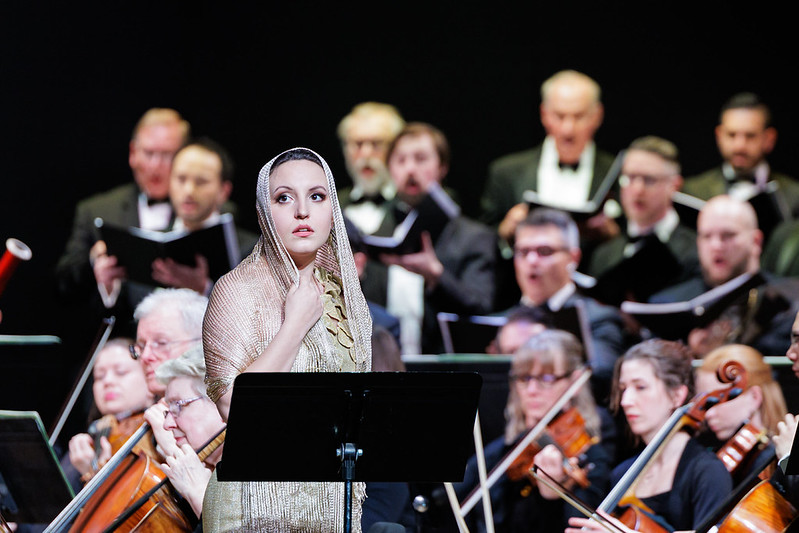
Photo by Yassine El Mansouri / Elman Studio
After exploring some of the lesser-performed works of Giuseppe Verdi and Giacomo Puccini in recent seasons, WCO revisited Pêcheurs, the first opera the company performed upon its founding in 1987, for a nearly sold-out performance on the eve of its 40th anniversary season. Bizet’s early opera most recently took the WCO stage in 2000 and has been absent from the nation’s capital since 2008, when it was presented by Washington National Opera. Bizet’s opera of a friendship between two men torn asunder by their love for the same woman has long languished in the shadow of Carmen yet has its own musical charms. WCO’s concert format brought Bizet’s harmonious score and enchanting vocal writing to the fore. While the libretto may be hokey, the beauty of the music and the economy of the work (the three acts zip by with nary a superfluous note) are strengths in my book.
Tenor Anthony Léon, a latecomer to the cast, replacing an indisposed Duke Kim, was an impressive Nadir. Sweet-toned with an elegant finish, Léon’s tenor boasted a smooth passaggio and graceful phrasing. His heartfelt “Je crois entendre encore,” with its high notes soft and clear, was a highlight of the evening and rightfully received thunderous applause. Léon’s vocal line struggled to compete with the orchestra in some moments, but he is still at the beginning of his career, and I am excited to watch his career continue to develop.
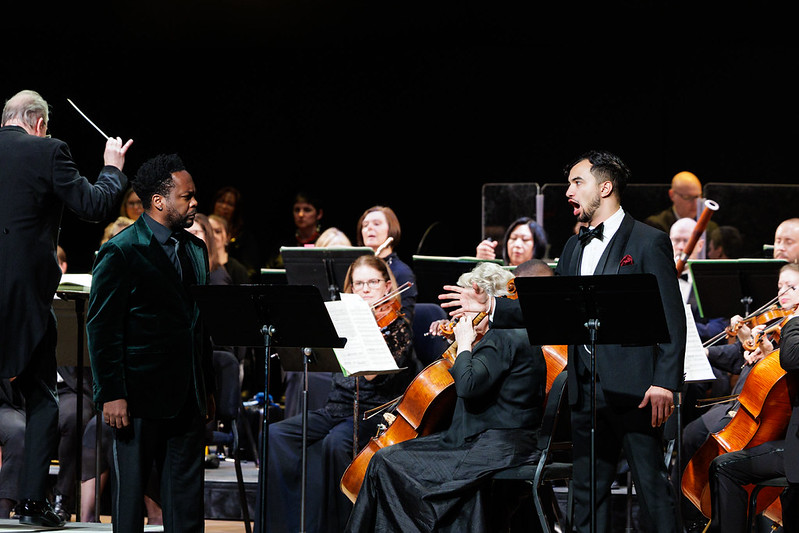
Photo by Yassine El Mansouri / Elman Studio
Returning to the nation’s capital after playing another character unsuccessful in romantic conquest, the Count in WNO’s fall production of The Marriage of Figaro, baritone Will Liverman sang a bold Zurga. His rich and lucid baritone sounded particularly fine in Act III, an emotional roller coaster for the character. He was riveting in his flip from lachrymose contrition over his condemnation of Nadir and Leïla to fiercely jealous rage, in which he darkened his tone and adopted a dramatically taut elocution. Liverman and Léon made a strong pair in the opera’s iconic tenor-baritone duet, “Au fond du temple saint,” their voices melding together well for a touching performance.
Soprano Emily Pogorelc sang beautifully as Leïla, the priestess at the center of Nadir and Zurga’s love triangle brought to the village for nightly prayer vigils to safeguard the pearl fishers. Light and limpid, Pogorelc’s lyric soprano excelled when left exposed by Bizet’s orchestration and when accompanied by the power of the full orchestra, though some of her coloratura was uneven. She effectively conveyed Leïla’s complex range of emotions, from her fear and apprehension of the weighty expectations thrust on her shoulders by the community, to her defiance of Zurga in the mold of a proto-Carmen.
Bass-baritone Christian Simmons made for a dignified, imposing presence as the priest Nourabad, his lines crisply delivered and his righteous anger compelling. The role doesn’t get much airtime vocally, so the production also gave Simmons some supernumerary functions, a good way to give the audience more time to enjoy his acting chops.
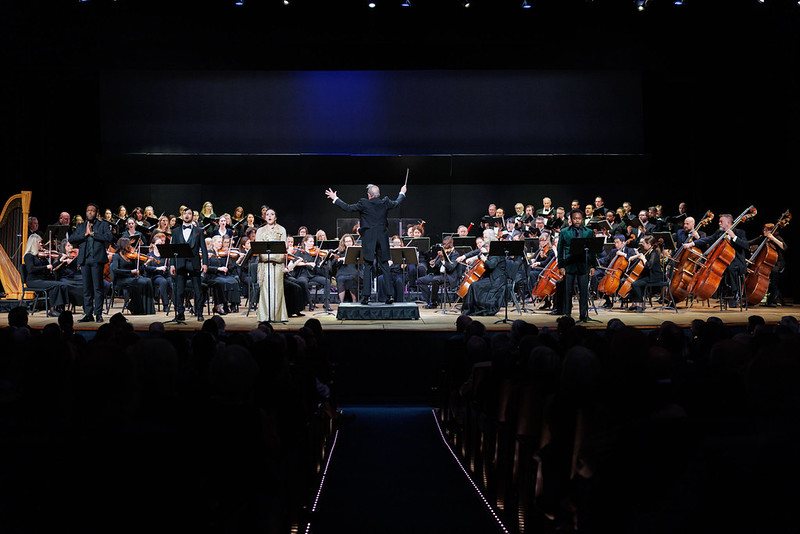
Conducted by WCO artistic director Antony Walker, the orchestra sounded a bit more ragged towards the beginning but hit its stride as the opera continued. Walker’s brisk conducting accentuated the excitement and drama of Pêcheurs and his handling of the tempo during “Au fond du temple saint” heightened the intensity of the famous duet. Harpist Susan Robinson’s ethereal playing glimmered during this scene. The chorus plays a crucial role in Pêcheurs by providing the vocal backdrop for the principal characters’ love triangle. Under the direction of David Hanlon, assistant conductor and chorus master, the WCO Chorus effectively set the scene and accompanied the central drama and sounded especially good in Act II’s condemnation of Nadir and Leïla.
Before the performance, WCO announced its 2026-27 season, which will include Joseph Haydn’s Armida (October 24), Jules Massenet’s Don Quichotte (March 14), and Vincenzo Bellini’s Il Pirata (May 2).