Photo: Scott Suchman
About 48 hours after the end of the longest federal government shutdown in US history, the curtain rose on WNO’s revival of Wolfgang Amadeus Mozart’s The Marriage of Figaro, giving the company’s Washington, DC audience some much-needed laughter. This revival of director Peter Kazaras’s production last seen in 2016 still packs a punch. Kazaras deployed physical comedy and gags, such as moving topiaries and a threatening moment with a chamber pot, to score laughs from across the house. Effective blocking kept the production moving fluidly and an entertaining segment of dancing and squabbling during the opera’s exquisite Act II finale sent viewers to intermission on a high note.
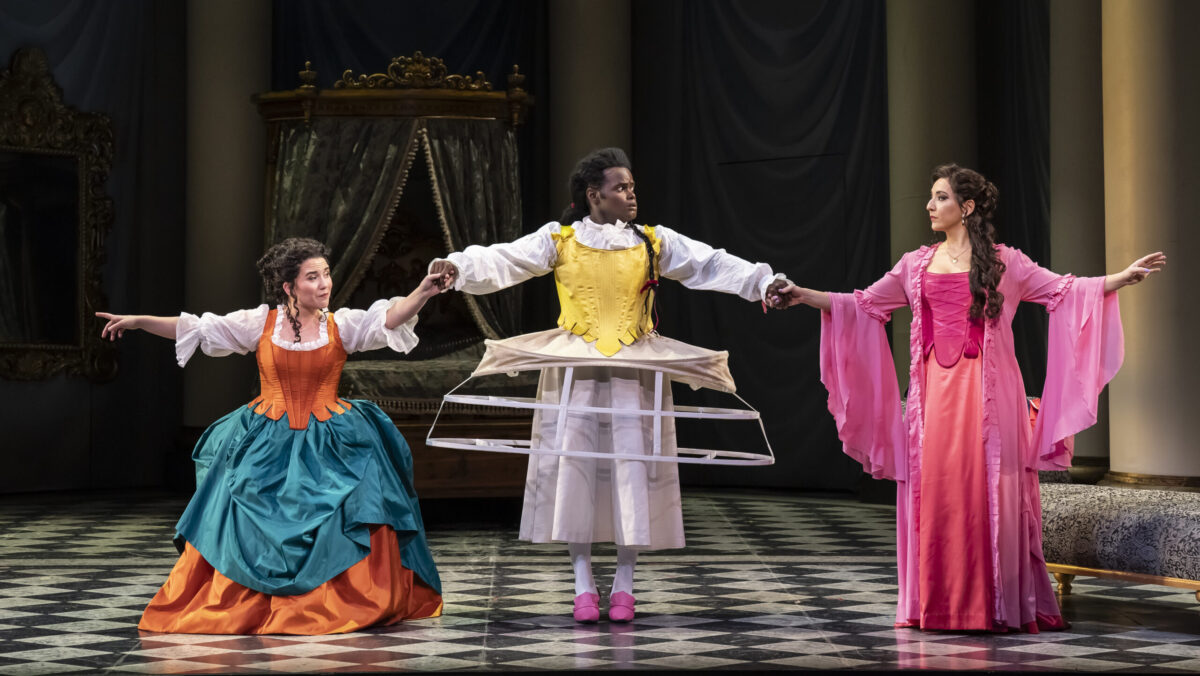
An eye-catching neoclassical set populated with Louis XVI-era furniture by the late Benoît Dugardyn provided a visually pleasing backdrop for the production’s antics. Lighting by A.J. Guban (Mark McCullough served as the original lighting director) effectively conveyed the passage of time key to the opera’s plot, unfolding over the course of a single day. Jewel-toned costumes by Myung Hee Cho added some sparkle and thoughtful choreography by Karma Camp enhanced the production.
WNO’s new music director, Robert Spano, conducted in his first appearance in the pit since officially taking on the role. Spano’s zippy handling of Mozart’s famous overture got the performance off to a strong start and the WNO Orchestra sounded cohesive and energetic under his baton. This auspicious start to his tenure gives WNO audiences reason for excitement.
In a showstopping debut performance as the Countess after many performances as Susanna, Rosa Feola anchored an all-around strong cast. Feola’s pure, shimmering soprano and regal bearing incarnated the lovelorn and long-suffering wife of Count Almaviva. Her mournful, deeply emotional renditions of the Countess’s two big arias fostered sympathy.
In the other major soprano role, Joélle Harvey replaced an unavailable Yaritza Véliz as Susanna. Harvey has previously sung the role at Glyndebourne and sang it with aplomb in DC. Harvey’s light, clear soprano was an excellent fit for the part and the success of the production owed a debt to Harvey’s magnetic stage presence and intuitive humor. Her sultry take on “Deh vieni non tardar” was a highlight of Act IV. Joélle, Joélle, Joélle, Joélle, I’m beggin’ of you, please don’t take my man…
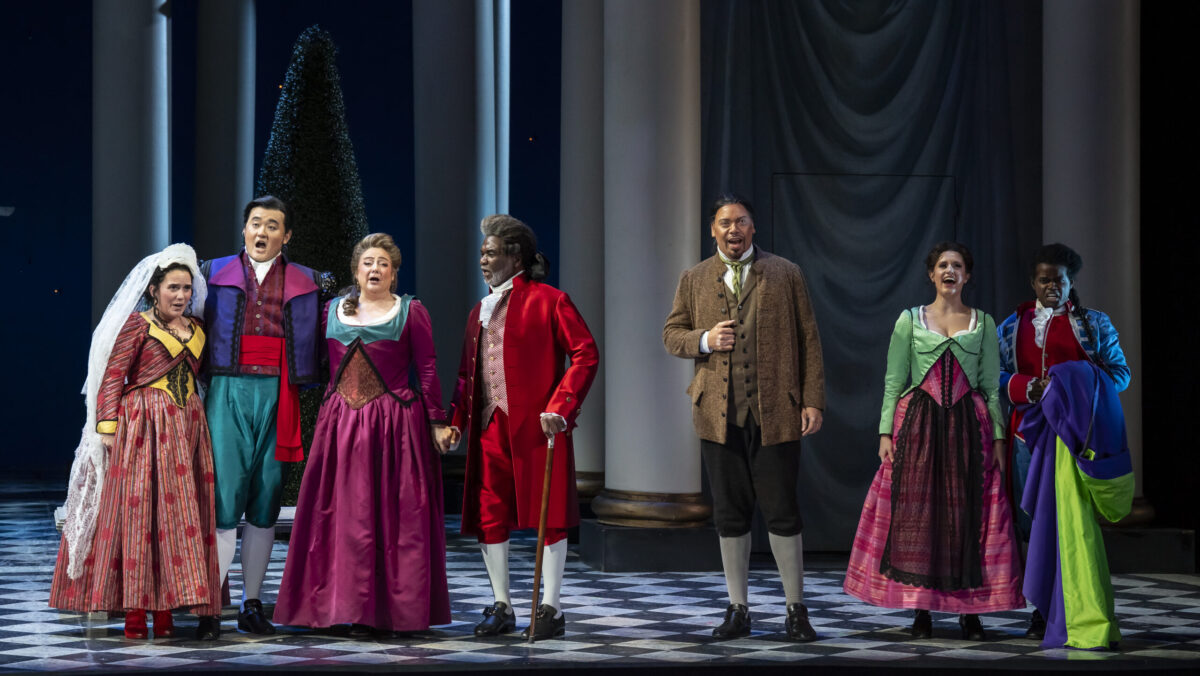
Photo: Scott Suchman
Bass-baritone Le Bu was excellent as Figaro and displayed strong control of his impressive instrument. He sounded particularly fine transitioning across his range and projected nicely as he shifted in tone from a whisper to a higher volume. A recent alum of Wolf Trap’s young artist program, Bu is a singer to watch. Will Liverman’s rich baritone made him an effective Count, convincingly jealous, though his vocal line was occasionally occluded by the orchestra.
This production made the non-traditional casting choice of tapping a countertenor for the role of Cherubino rather than the more typical mezzo-soprano. Countertenor John Holiday portrayed a naïve, randy Cherubino and boasted impeccable comedic chops and a bright, clear sound, though this casting choice may have left some viewers missing the warmer mezzo timbre, such as in moments with Susanna and the Countess.
Figaro wouldn’t be Figaro without the ensemble cast that completes the self-contained world conjured by Mozart and librettist Lorenzo da Ponte. This production’s cast fit the bill. Tenor Rodell Rosel sang a deliciously judgmental Don Basilio with terrific diction. Mezzo-soprano Elizabeth Bishop, reprising her role from WNO’s previous iteration of his production, was brilliantly haughty turned maternal as Marcellina. Bass-baritone Willard White, making his WNO debut after a lengthy career, gave viewers a delightfully vain Dr. Bartolo. Bass Kevin Thompson sang the role of the gardener, Antonio, with passion and sounded genuinely worked up over the crushed flowers that were the casualty of Cherubino’s jump from the window.