Brescia e Amisano
It’s a duet, but also a confession. It’s a confession, but neither the confessor nor the confessant are prepared for the truths being revealed. It’s a duet, but hardly any melodic material is shared. The melodies sit low but every phrase starts high. The phrases seem to rise in intensity while being made up of mostly descending figures. The cantabile section of Act I’s “O, rimembranza” is a perfect encapsulation of what makes Bellini utterly unique.
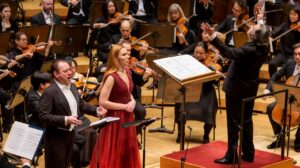
In an opera that has been noted for its variance in progressivism (some parts are thoroughly conventional; some, like “Casta Diva,” are totally sui generis), this duet showcases that quintessentially Bellinian way of fusing melodic shape with verbal meter to the extent that we can never tell which is driving the other forward. Bellini’s achievement – his solution to the ancient problem of texted music – was beautifully realized in this performance by Marina Rebeka and Vasilisa Berzhanskaya, the latter recounting her shameful tryst in hypnotic legato while the former floated discant lines that swelled with yearning. Fabio Luisi was in his best element — breathing along with his soloists, creating expansive, arching phrases that swirled through the sold-out Teatro alla Scala. For a brief moment, I forgot that I was sitting through one of the more frustrating stagings that I have witnessed in recent years.
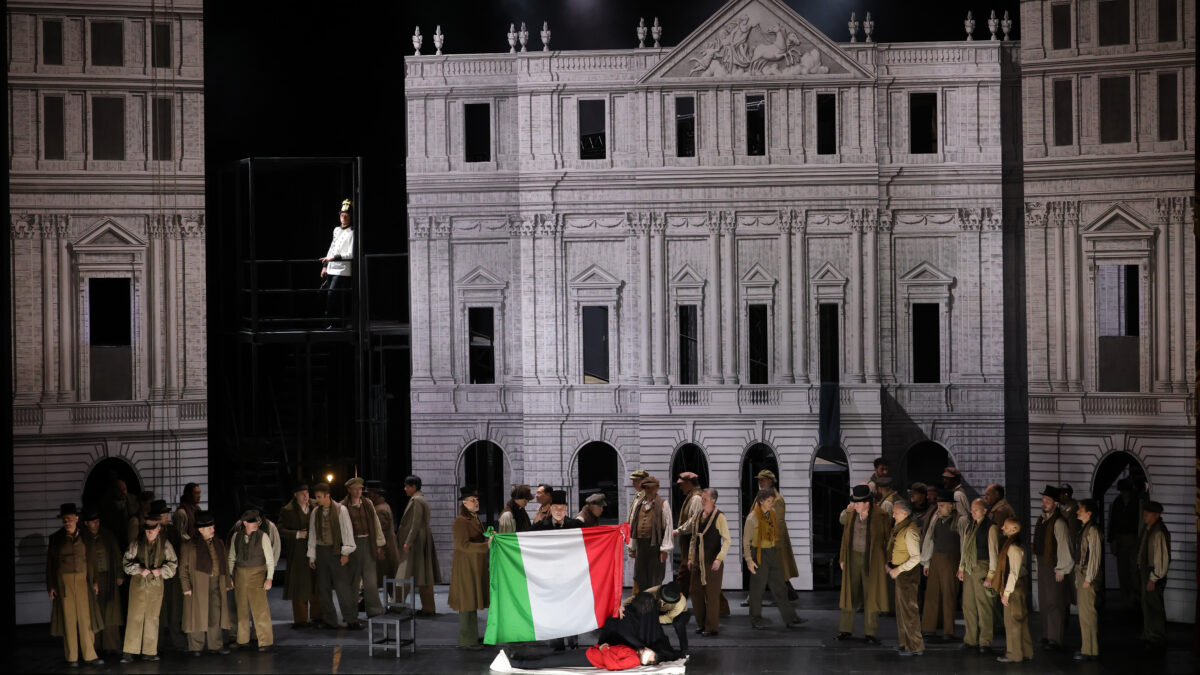
As someone who (clearly) loves to find increasingly complicated ways to talk about things I find interesting, I would like to come out in favor of the directorial addition of “historical context.” I love to “consider the time and place” that influenced the creation of various works of art. I would never dispense with such a marvelously rich way of approaching any musical work, particularly opera. But, naturally, there are limits to how much we can assume any opera will be explanatory of its creators’ time/place, and Olivier Py’s Risorgimento-flavored Norma staging at Teatro alla Scala (briefly – the Gauls are “Italians” and the Romans are “Austrians”) which I caught earlier this month left me feeling that the question of “what was Going On at the time this opera premiered” may be one of the less interesting things to wonder about Norma.
I’m being harsh and to be fair, Py is not necessarily tapping into something novel. Italian opera as a staging ground for idealized conceptions of Italian Nationhood…need we go further? (Should we throw a party? Should we invite Phillip Gossett?) The interest in any such production lies in the tension between these projections of nationhood and our own preconceived notions about the characters and/or events being projected upon. A successful example of this type of projection can be observed in the reception (as well as some directorial mountings) of Verdi’s Nabucco, in which the exiled Jews made for a neat analog of an emergent, yet-to-be unified Italian people.
Norma is a bit of a trickier fit for the Risorgimento treatment. On the one hand, the broadest strokes of the narrative correspond well. (In the way that “native population under occupation by an imperial power” is flexible to quite a number of times/places.) The challenge with setting it in *this* part of the world is that Italian nationalism notably did not view itself in opposition with its Roman history, but rather drew much of its impetus from that lineage. So, in other words, we are watching Gallic tribespeople take the form of scrappy, proto-”Italians,” in order to defiantly resist against “Austrians” who now inconveniently bear the names of the Romans, who those same Italian nationalists revered as ethnic and spiritual forebearers?
Brescia e Amisano
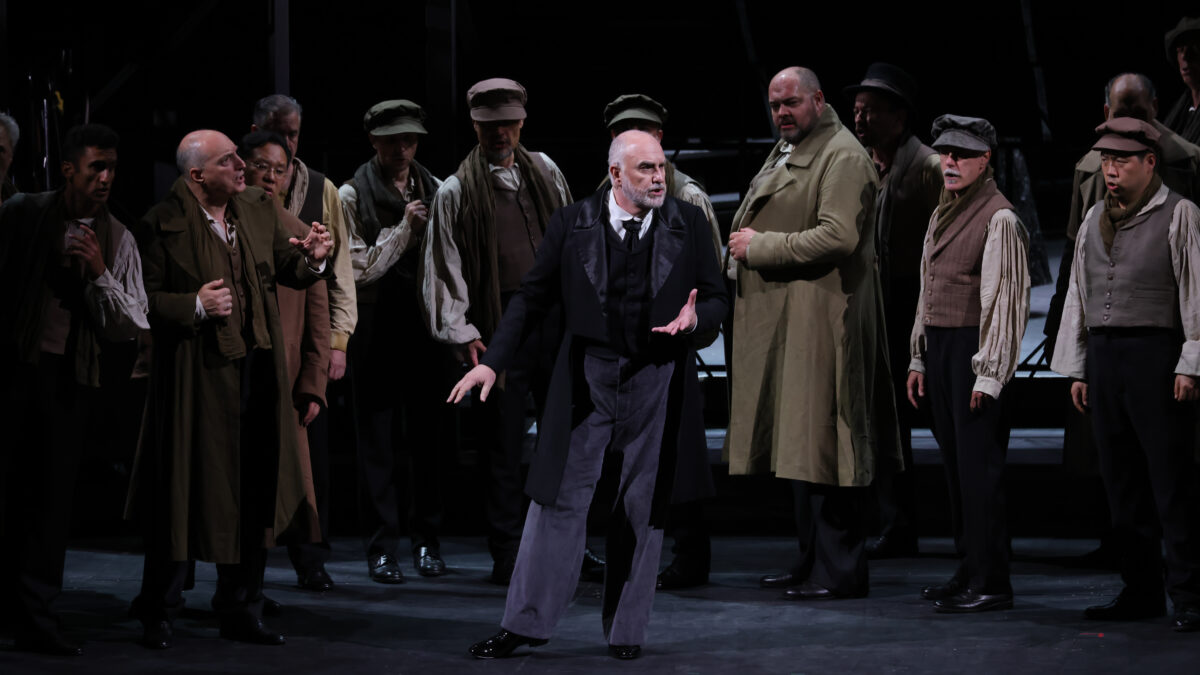
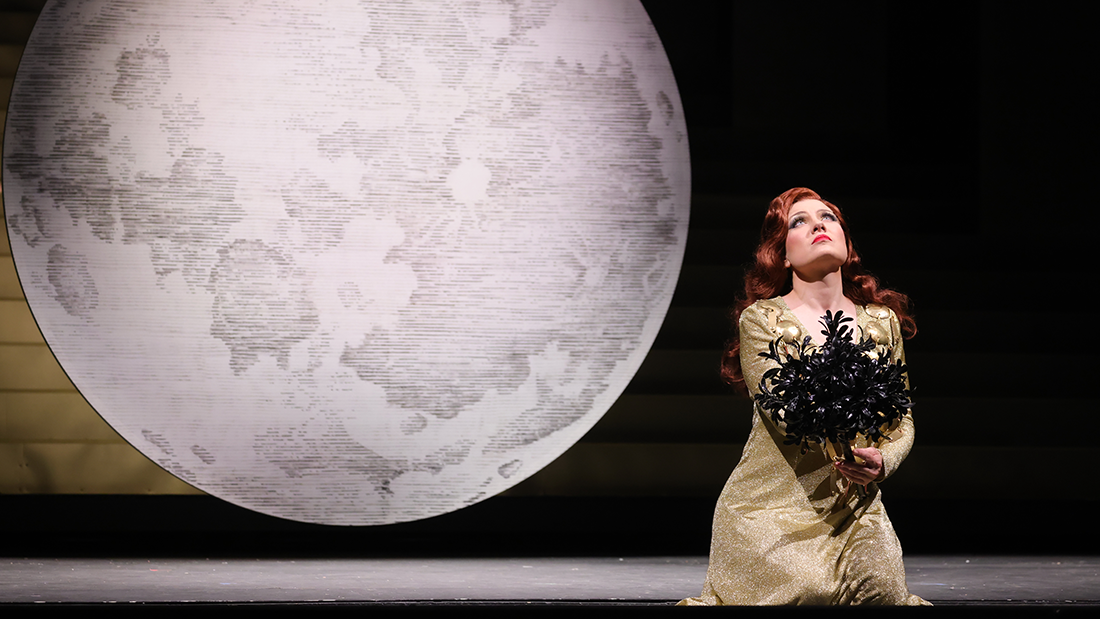
Interesting problem! One might ask, does “Rome” in a literary context always act as a stand-in for the metropole, the “imperial core,” therefore can the Habsburg empire be thought of as a “Rome” in contrast to occupied Italians? Unfortunately Py did not give space to such questions, preoccupied as he was with the rest of his concept, which presented Norma as a professional actress (opera singer?) with her “chamber” scenes taking place in front of two oversized makeup mirrors. Besides being gratingly familiar for stagings of operas with “diva” characters (makeup-mirror Norma was, also, the entire conceit of Guy Jooster’s 2005 Amsterdam staging), this approach confirms the shallower details of Norma’s character (she’s magnetic/passionate/ mercurial/extremely jealous of a younger and prettier colleague etc) without making her particularly vulnerable or knowable. I guess we figured out what her “job” would be. (No luck for her father Oroveso, sung by Michele Pertusi, in a completely nondescript costume).
In Py’s defense, there are few titles that collapse under their own reputations in the way Norma does. Consider that this production is the first seen at La Scala since 1977. (Yes that’s right – in the past 50 years at Teatro alla Scala there has been one production of Norma and four productions of Peter Grimes.) Everyone is scared of this show! Don’t take my word for it, La Scala’s website copy states Norma remained “on the sidelines [at La Scala] due to the difficulty of execution or the perils of comparison with epic performances.”

Brescia e Amisano
The opera also boasts a main character with one of the most intriguing performance histories in the operatic canon. A role that has attracted a full spectrum of voice types, from the deepest and darkest to the brightest and clearest, some brimming with youthful early-career abandon and others realized with the shrewd maturity of a veteran. I am of course speaking about Adalgisa, apex of the seconda donna repertory and possessor of some of the greatest melodies ever printed.
Too droll? But it feels warranted to make this point when the Adalgisa, Vasilisa Berzhanskaya, so thoroughly walked away with the evening as she did in this performance. It also feels apt because Norma, as a role, feels over-explained today. We’ve talked about this already! The Cs, the trills, Maria Callas, “Assoluta.” An entire discursive cottage industry has erected itself around the significance of Norma as a pinnacle of “bel canto” idealism and singerly achievement. It’s Norma, darling. We know.
As I touched on earlier, one of the great ironies of Norma’s reception history is the way its hagiography has contributed to its comparative rarity among fellow canonical staples. Unlike other primo-ottocento works that were maligned for their artistic backwardsness, Norma’s relative paucity from opera stages from the late 19th century through the mid 20th-century (and to a lesser extent, until today) was itself partly a symptom of the “protected” status afforded to the title role. The list of great singers who took on the Druid priestess is haunted by the list of great singers who stopped short of trying. Renée Fleming, Renata Tebaldi, Anna Netrebko, Kirsten Flagstad. Crucially, the role itself is never adjudicated; any failure to realize Bellini’s outrageous vocal demands belongs to the singer. (Not so lucky, much-maligned early Mozart and Verdi!)
Brescia e Amisano
It may be that one of the side-effects of Norma surviving the Wagnerian Moment is that its relative canonical significance was often debated within Wagnerian terms. Consider W.J. Henderson’s account of the first Norma to reach the Met in 1890. While “the old-fashioned Italian Opera can only maintain its hold as an excuse for exhibitions of vocal technique,” the German-translated performance succeeded due to “that devotion and earnestness which mark Teutonic labors in dramatic art.” Norma endured as a least-bad relic of a style that had rarely been sufficiently Romantic for the Romanticists, even in Italy.
These were unfair sentiments, but what followed in the 20th century amounted to a type of overcorrection. Rather than a romantic throwback, Norma was great because it was “classical.” As such, any elements that unfortunately reminded the listener of the unfortunate primo-ottocento style could be excised by Tullio Serafin. This seriousness casts an ambivalent shadow over the legendary Callas interpretations, which are marked by their fastidiousness, surgical preparation and musical imagination but can often seem anachronistically reverential towards the precise details of his vocal writing.
But Norma has been de-mystified since the mid-20th century. As a role it has been experimented on from every direction; in fac,t it has never seemed less applicable to speak of “a Norma” in the way Caballe and Tebaldi used to say they “could never be one.” It’s a role that has now been sung by Gwyneth Jones, Cecilia Bartoli, Maria Guleghina and Beverly Sills. The question, contrary to what La Scala prints on their own website (???), is not how “a Norma” compares to an ideal, but how she applies her skills to the vocal demands. Thankfully, it is now understood and expected that the soprano uses Bellini’s allowances for improvisation and adjustment to her advantage.
Marina Rebeka succeeded best in these improvisatory aspects of the vocal part. Her recapitulations featured exciting and creative ornaments, exploiting her upper facility and steering the music’s momentum towards the clearer parts of her scale. The treacherous Cs were reached with little effort. (She capped off the first act with a ringing D.) Lower phrases were well-tuned but undifferentiated in color and modestly projected. Rebeka had a tendency to access her top in an explosive manner, which served her well in more energetic passages (“Oh non tremare,” “Ah bello a me ritorna”) but created unwieldy moments in the blended high phrases of “Mira, o Norma” and the many cadenzas that dot the score. (For that reason, I often wished Rebeka would extend the same creativity shown in her recapitulatory ornamentation towards the cadenzas.)
Rebeka was warmly received for her efforts. It was, overall, a courageous and complete realization of a mammoth vocal part. Her performance, though, did not have the sheer sense of occasion as Berzhanskaya’s Adalgisa. There is something chaotic and exciting to the flexibility and fearlessness with which Berzhanskaya approaches her vocalism (and her repertoire selection). This was not an Adalgisa that was “secondary” to Norma – from a purely sonic standpoint, this was an evening where Adalgisa separated herself from the rest of the stage. There was a sense that Norma’s degradation was inevitable; Adalgisa was too bright of a star. One of Luisi’s better moments came during Adalgisa’s verse in “Vieni in roma,” in which he slowed the tempo down for Berzhanskaya to luxuriate in her lines. She already sings the title role in Norma, which lent an intertextual element to the evening’s affairs.
Freddie de Tommaso got booed. I know, I knowwwww. Look, I hate to say it, but someone has to: he didn’t deserve it and it was probably because he didn’t take the C in his first aria but he was pretty good. I was surprised it happened, because his performance was probably the most “conventional” of the leads, in the sense that he approached Pollione with the time-honored tradition of “Puccini guy trying something different.” He added some ambitious ornaments in his solo cabaletta and his piano singing blended well with his duo of opposing leads.
Perhaps this wasn’t the Norma that the Milanese had dreamed about for 48 years. But delivered some genuine musical thrills, as well as taught a few lessons about the limitations of reading Italy into everything Italian.