Paolo Mazzoni
Castell’Arquato, about 40 minutes away from the city of Piacenza and nestled in the undulating colli piacentini in Emilia, is likely not on your list of destination summer opera festivals.
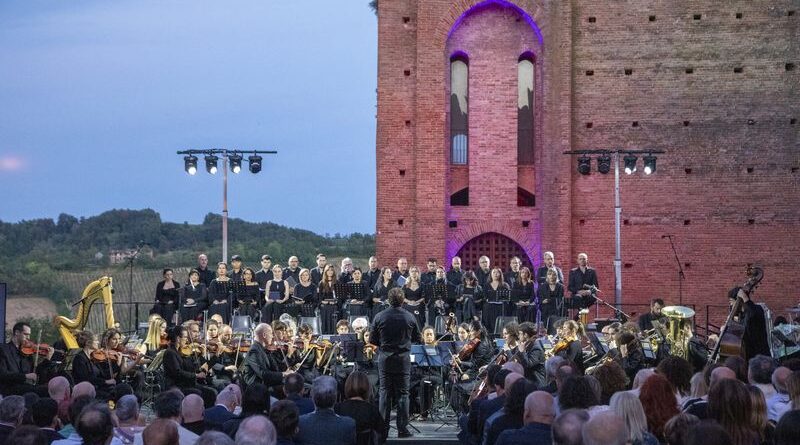
Yet each year since 2013 the town has hosted the Festival Illica, in honor of its native son librettist Luigi Illica, in addition to the awarding of the “Premio Illica” for achievements in opera which has been given in some form or another since 1961. The town itself is remarkable; picturesque, immaculately preserved, and seemingly exclusively uphill, it’s no wonder it was designated one of the hundred prettiest towns in Italy. The remaining parapet of a 14th century castle constructed by the Visconti family lords over the skyline and winding, vertiginous streets are dotted with restaurants, gelaterias, and scenic overlooks.
Illica, known mostly for being a librettist for Puccini, Mascagni, Catalani, and Giordano, amongst others, was born into a prominent family in Castell’Arquato—his disciplinarian father was the mayor—and spent his turbulent early years here before decisive periods in Milan and Bologna where he alternately fell in with the authors of the Scapigliatura movement as well as Giosuè Carducci, Italy’s first Nobel laureate whose resistance to fully aligning with either the Neoclassicists or the Romantics (to say nothing of the Decadents!) is quite palpable the unique tone of Illica’s libretti. But like many Italians even today, Illica did end up returning to the scene of his youth and lived in and around Castell’Arquato through his adulthood and up until his death in 1919. His famous collaborators, my tour guide told me as she insistently tried to show our group around a church that was actively hosting a wedding, all took it upon themselves to seek him out here.
Paolo Mazzoni
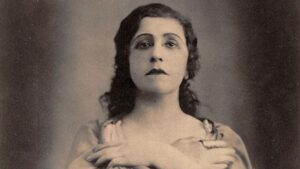
Illica is a fascinating figure even if his prolific artistic output varies in quality. A museum dedicated to his life and work stands next to his birthplace features some interesting artefacts like some original correspondence you’re just welcome to rife through (it’s a small museum, after all), manuscripts of his earliest plays, and kimonos worn onstage by Magda Olivero, Rosetta Pampanini, and, apparently, Fedora Barbieri. (That last one has to be a mistake, right?)
The Festival itself takes on a smart format, featuring two concert performances of a familiar Illica work (this year it was Madama Butterfly) and an Illica rarity (Pittori fiamminghi, a collaboration with Antonio Smareglia!) along with some other concerts, walking tours, a lecture or two, and, every other year, the awarding of the Premio Illica. (This year, it went to director Pier Luigi Pizzi, singers Eleonora Burrato and Michele Pertusi, music critic Angelo Foletto, and Giovanni Godi, president of the Fondazione Simonetta Puccini that owns Puccini’s Torre del Lago house-museum and archive, all of whom attended in-person.)
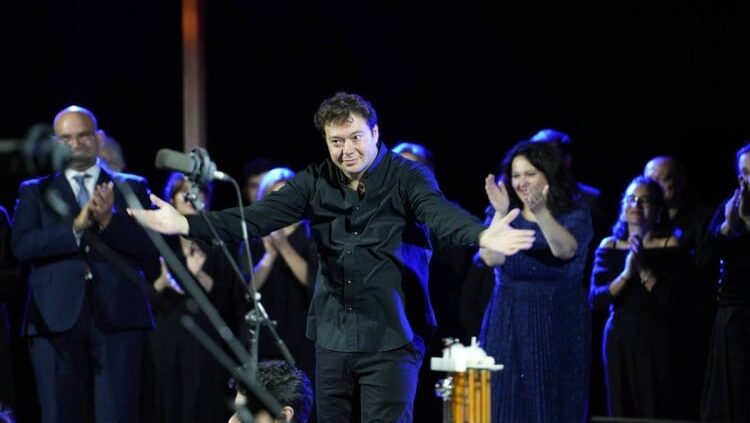
The affable young maestro Jacopo Brusa, who conducts on the Italian regional circuit, is the Artistic Director who oversees the competent and provincial musical forces of the Orchestra Filarmonica Italiana and the pick-up Chorus of Festival Illica. At both opera performances, his conducting was refreshingly strong and layered and his sense of affection and intellectual curiosity for this recherché giovane scuola is contagious.
Paolo Mazzoni
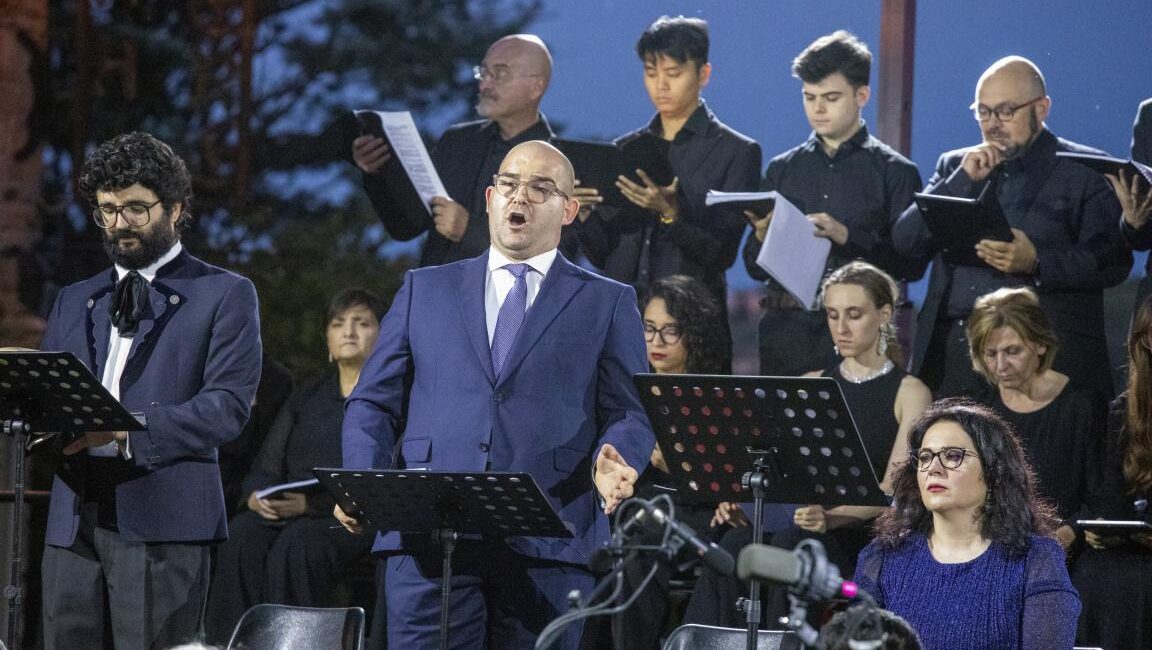
The Festival’s opening performance of Butterfly had some rough edges; Brusa’s rhythmically dynamic conducting never lit a fire underneath the Cio-Cio San, a sweetly brooding if somewhat opaque Daria Masiero, while Giuseppe Di Stefano (yes, that’s his name) was raw and ringing with occasional lapses in the words as Pinkerton. But the most magical moment of the evening was when the full moon crept over a clearing in the rolling hills visible from the outdoor piazza where the performance took place, climbing steadily into the sky during the Act I love duet. Though I can’t credit Brusa for that perfect timing, I would certainly like to.
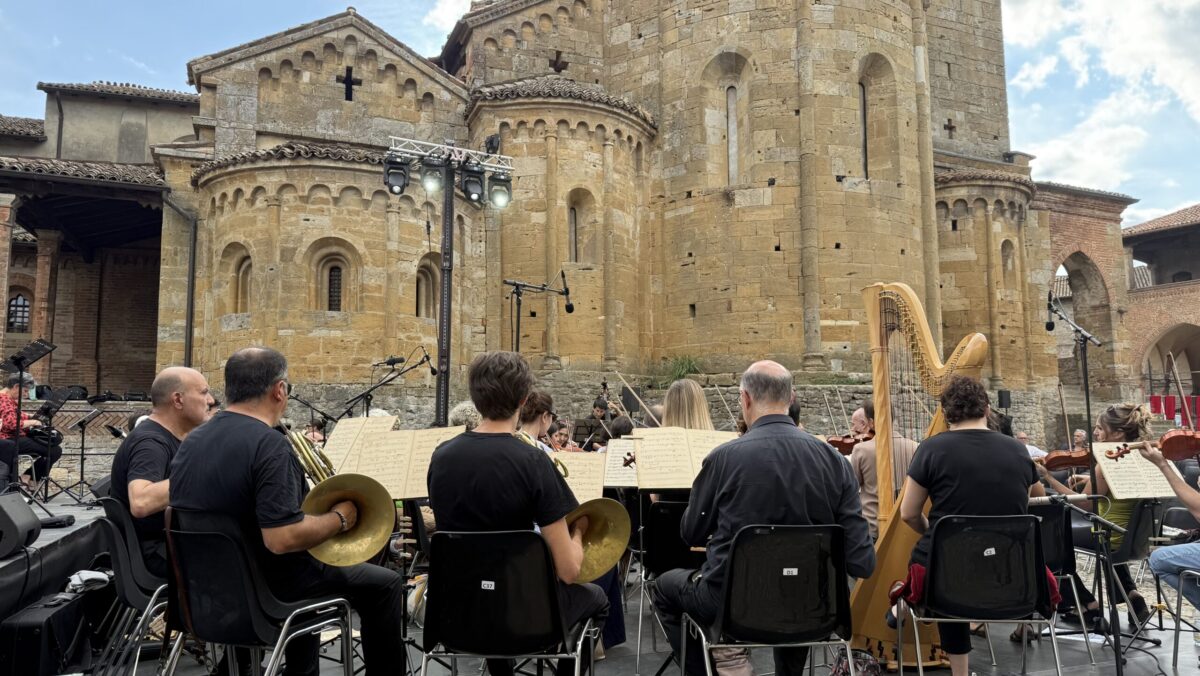
More intriguing was the weekend’s Pittori fiamminghi, performed for the last time anywhere since a production in Trieste in 1991 where the work had premiered in 1928 after some retouching following its premiere in Prague in 1893. Smareglia’s lack of notoriety is, I gathered over the course of the weekend, something of an ignominious inside joke amongst Italian musicologists. (I don’t think I had ever heard his name before the Festival announced their season; they also produced his somewhat more famous Nozze istriane in 2023.)
The Istrian composer, though respected in his lifetime, never quite caught on in Italy. (“I marvel at the fact that Antonio Smareglia, amongst the most serious musicians in Italy, is not performed in his own country,” Richard Strauss is purported to have said.) Though his Romantic, through-composed score smacks of the Italian Wagnerians (Ponchielli, Catalani, and, eventually, Puccini are all more famous exemplars), Smareglia’s more Bohemian character places him perhaps closer to someone like Smetana.
Pittori, set in 17th-century Antwerp, is not an undiscovered masterpiece, but it is a rollicking listen and the three Act preludes, which have gained somewhat more traction as a concert suite, nicely show off Smareglia’s sophisticated orchestral writing. But where Smareglia most obviously pails in comparison to his contemporaries is that the score almost entirely lacks atmosphere; the characters, many of them actual painters from the Dutch Golden Age including the title character Cornill (Cornelis Schut) and Frans Hals, might as well be anywhere as they surge through their philosophical trials and tribulations. (The piece has been unsuccessfully compared to Meistersinger.)
Such negotiations for Cornill include achieving artistic glory by way of painting a portrait of the Madonna and for the prima donna, Elisabetta van Thourenhoudt, the eternal question of, to use Illica’s own heavy-handed words, “amore o monastero?” There are many vicissitudes with the final one being the failed abduction of Elisabetta from a convent and the artist’s inevitable expiration as people finally widely acclaim his art.
The leading role is a demanding one, its existential aesthetic and religious fervor and declamatory demands giving it an air of Tannhaüser; Marco Miglietta sang tirelessly, demonstrating largely solid control across his wide range. His more brilliant timbre contrasted with Clarissa Costanzo’s more throaty soprano as Elisabetta while Masiero returned to provide contrast as Gertrud, Cornill’s long-time model and ex-flame. Francesco La Gatutta, who had also played Sharpless, was in fine and incisive voice as Cornill’s friend Craesbecke (Joos van Craesbeeck) while as Frans Hals, Cornill’s teacher, bass Giacomo Pieracci sounded constrained. Kettel, Elisabetta’s minder reminiscent of Rigoletto’s Giovanna, was played by the matronly Giovanna Lanza.
Harry Rose
Brusa, even more so than with Butterfly, gave a roiling reading of the score that made me curious about hearing more Smareglia even if I don’t feel drawn back to this particular work. It’s clearly a corner of the repertoire that piques his interest and the scholarly endeavor was admirably undertaken. (Some of the yellowed orchestral parts looked like they might even be the 1928 originals.) The proceedings would only have been improved with a slightly more robust prefacing to the opera—other than a brief panel discussion earlier that day, there was no available synopsis of this work that probably 99% of the audience had never heard before—and some more suggestive subtitles that showed off Ilica’s canniness at describing stage action in addition to the lines themselves. But the opportunity to hear this rare score under the stars on a crisp evening in a medieval piazza was itself an extraordinary treat and one that, unless you brave the cobblestones of Castell’Arquato, you aren’t likely to find anywhere else.