
I read somewhere -- a biography I think that (I paraphrase) ‘whereas Valkyrie is a work of the highest consistent inspiration, Siegfried is the fumbling product of a genius’s will’ -- a bit glib but rings true for me. I always feel that Act 2 runs out of steam -- the ‘Forest Murmurs’ somehow never quite clinch, and the dragon fight is manufactured -- it’s no surprise to me that he interrupted work on the ‘Ring’ at this point -- the Act 3 prelude of ‘Siegfried’ suddenly makes you sit up with its incredible energy and direction.
However, I get the impression that the music of Siegfried was probably the most influential on the next generations -- it sounds much more modern and uncompromising in places, than ‘Walkure’.
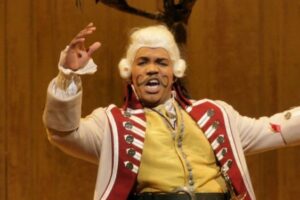
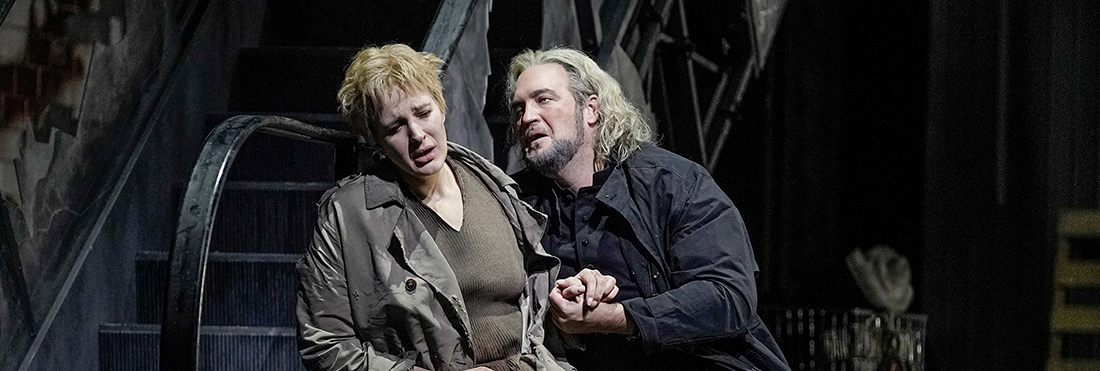
This was the most effective of the four. Great comic acting from Gerhard Siegel; JHMorris inhabited Siegfried’s raging hormones and adolescent arrogance and was a perfect foil for Mime’s whining.
A question for those in the house: In the movie theater and on tv, Brunnhilde looks as if she’s being awakened during an eclipse. Was it as dark in the house? She does sing Heil dir Sonne….
DA: There were a lot of in-person accounts last fall to that effect, with the staging of the awakening being compared to an eclipse or a coal mine, so I would say yes, second-hand.
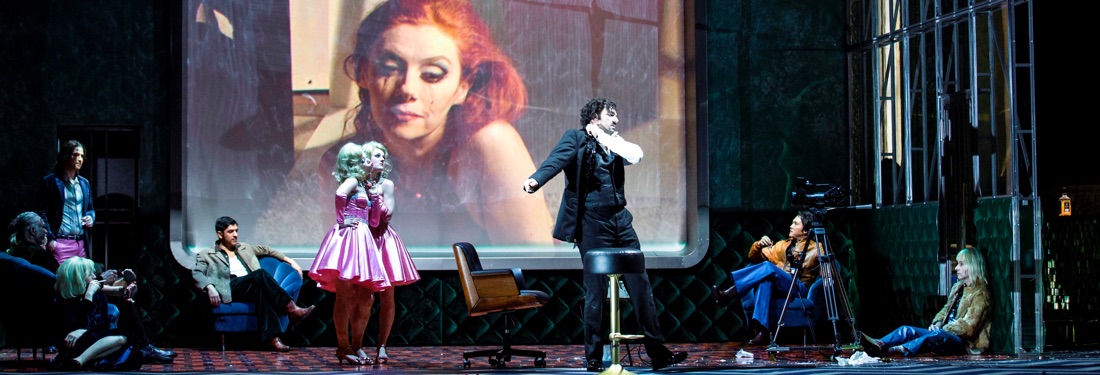
I too would nominate SIEGFRIED as the least bad of the Lepage cycle. The Machine was mostly giving us screensavers, but it was better used than in the other parts, and there was nothing as risible as the handling of the piling of the gold, the unbelievably flat and matter-of-fact Annunciation of Death, or Grane and the exploding gods.
Does anyone know for a fact where Wagner actually left off with the Ring during Siegfried and then took it up again?
Most sources say Act 3. But I could swear that something happens toward the end of Act 2, after Siegfried disposes of the Mime and Fafner corpses and sings “Heiss ward mir von der harten Last!”
The orchestration all of a sudden sounds more sophisticated, slightly more chromatic, and so much like the mature Wagner who had Trisan and Meistersinger under his belt.
That for me is another gem about Siegfried. In one night you go from middle to mature Wagner and it’s so thriling, especially the Act III prelude.
Barnabas, I’m pretty sure you’re right. It was centuries ago that I read it, but I believe Ernest Newman quotes a letter where Wagner says something to the effect that he had got his hero settled under a tree in Act II, and that’s where he was going to leave him for a while.
Yes, of course, there is that letter. Somewhere or another I have read a few more specifics but can no longer recall all that. I am sorry not to be able to recall more and here’s hoping someone will have a bit more informatio as I, too would like to know more. The third act is, for me, always a thrill.
For years all I knew about the composition of Act II of Siegfried was the letter mentioned in this thread. Somewhere (my aging brain can’t remember exactly where), I came across a further explanation of the composition of Act II in a more recent commentary on the Ring. Apparently someone (can’t remember who) convinced Wagner that, if he was going to set Siegfried aside for a while, that he should at least leave Act II complete. I gather that Wagner was convinced that if he came back to the Ring after many years (and further development as a composer), it was better to have a break in styles between acts, rather than within an act.
I read somewhere -- a biography I think that (I paraphrase) ‘whereas Valkyrie is a work of the highest consistent inspiration, Siegfried is the fumbling product of a genius’s will’ -- a bit glib but rings true for me. I always feel that Act 2 runs out of steam -- the ‘Forest Murmurs’ somehow never quite clinch, and the dragon fight is manufactured -- it’s no surprise to me that he interrupted work on the ‘Ring’ at this point -- the Act 3 prelude of ‘Siegfried’ suddenly makes you sit up with its incredible energy and direction.
However, I get the impression that the music of Siegfried was probably the most influential on the next generations -- it sounds much more modern and uncompromising in places, than ‘Walkure’.
This was the most effective of the four. Great comic acting from Gerhard Siegel; JHMorris inhabited Siegfried’s raging hormones and adolescent arrogance and was a perfect foil for Mime’s whining.
A question for those in the house: In the movie theater and on tv, Brunnhilde looks as if she’s being awakened during an eclipse. Was it as dark in the house? She does sing Heil dir Sonne….
DA: There were a lot of in-person accounts last fall to that effect, with the staging of the awakening being compared to an eclipse or a coal mine, so I would say yes, second-hand.
I too would nominate SIEGFRIED as the least bad of the Lepage cycle. The Machine was mostly giving us screensavers, but it was better used than in the other parts, and there was nothing as risible as the handling of the piling of the gold, the unbelievably flat and matter-of-fact Annunciation of Death, or Grane and the exploding gods.
the dopey dragon trumps them all
Does anyone know for a fact where Wagner actually left off with the Ring during Siegfried and then took it up again?
Most sources say Act 3. But I could swear that something happens toward the end of Act 2, after Siegfried disposes of the Mime and Fafner corpses and sings “Heiss ward mir von der harten Last!”
The orchestration all of a sudden sounds more sophisticated, slightly more chromatic, and so much like the mature Wagner who had Trisan and Meistersinger under his belt.
That for me is another gem about Siegfried. In one night you go from middle to mature Wagner and it’s so thriling, especially the Act III prelude.
Barnabas, I’m pretty sure you’re right. It was centuries ago that I read it, but I believe Ernest Newman quotes a letter where Wagner says something to the effect that he had got his hero settled under a tree in Act II, and that’s where he was going to leave him for a while.
Yes, of course, there is that letter. Somewhere or another I have read a few more specifics but can no longer recall all that. I am sorry not to be able to recall more and here’s hoping someone will have a bit more informatio as I, too would like to know more. The third act is, for me, always a thrill.
For years all I knew about the composition of Act II of Siegfried was the letter mentioned in this thread. Somewhere (my aging brain can’t remember exactly where), I came across a further explanation of the composition of Act II in a more recent commentary on the Ring. Apparently someone (can’t remember who) convinced Wagner that, if he was going to set Siegfried aside for a while, that he should at least leave Act II complete. I gather that Wagner was convinced that if he came back to the Ring after many years (and further development as a composer), it was better to have a break in styles between acts, rather than within an act.