

Think similar
Oh, this should turn out well: “Angela Gheorghiu has recorded a collection of French and Italian opera arias in tribute to the late Maria Callas for EMI Classics…. included are arias by Puccini, Gounod, Bellini, Leoncavallo, Saint-Saëns, Catalani, Bizet, Giordano, Cherubini, Massenet and Cilèa.” Which gives La Cieca an idea for a competition, after the jump.
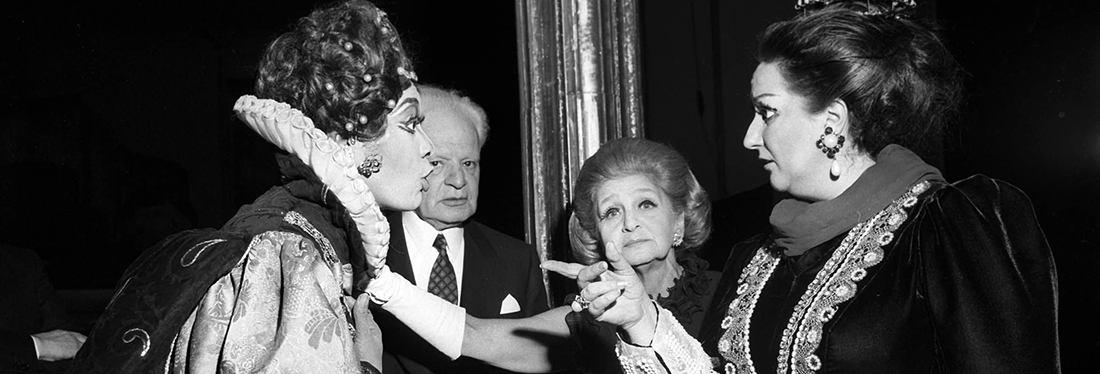
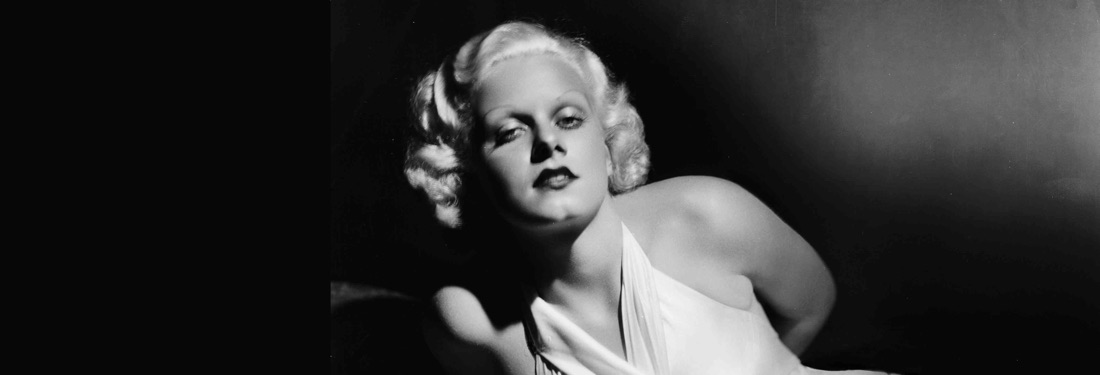
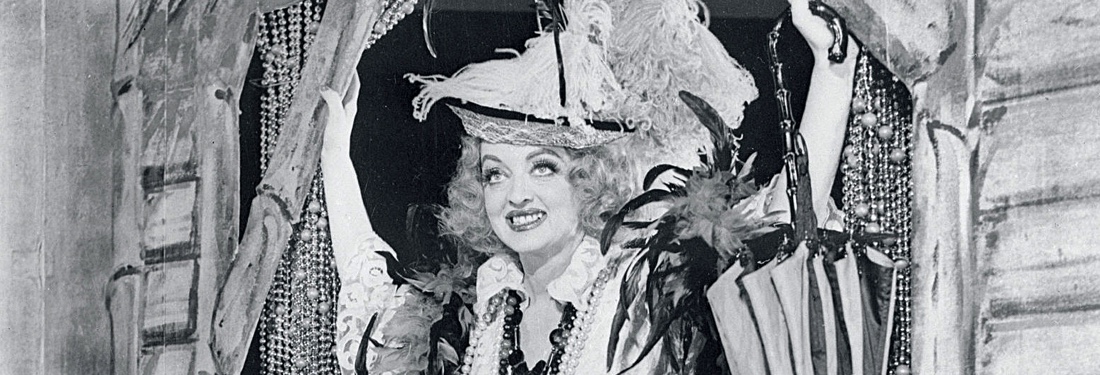
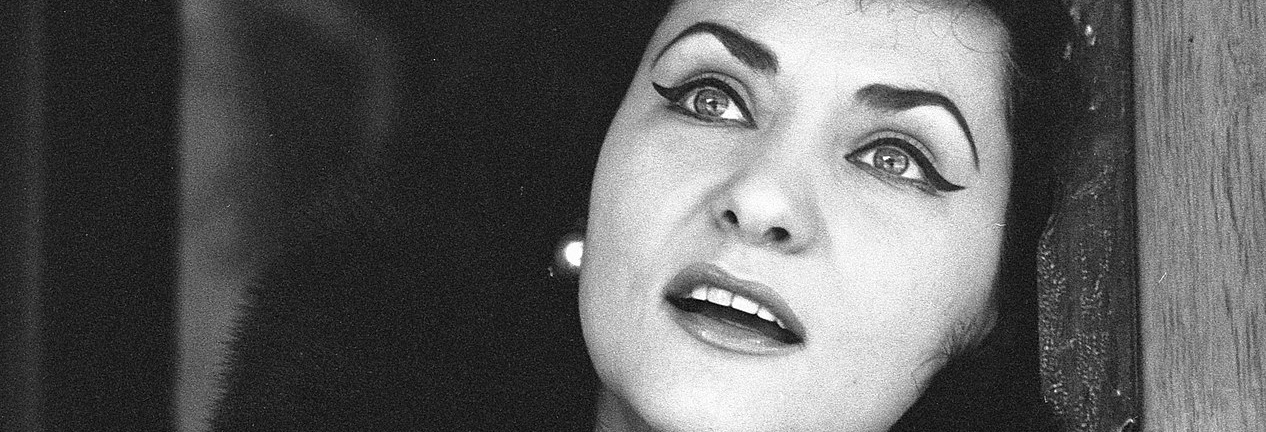
Cher public, in (ahem) honor to Mlle. Gheorghiu’s (ahem) hommage to Mme. Callas, you are invited to follow La Cieca’s example above and introduce the Romanian diva’s face into an iconic photo of La Divina. Then, using the “Upload Files” section of the comments form, attach the image to a comment. UPDATED RULE: Please email your images to La Cieca at lacieca@parterre.com and she will insert them into a forthcoming posting. Prize packages consisting of a selection of recent Sony opera releases will be awarded to winners in two categories: Most Expert (i.e., best, most undetectable Photoshopping skills) and Most Scathing (which should be self-explanatory). The competition begins now and will continue through midnight, Saturday September 17, with the winners to be announced on Monday, September 19.
Here are a few resources that may come in handy:
As usual with these competitions, La Cieca’s whims are final.
Re the Callas not understanding Tosca business, I believe the situation was along the following lines:
Callas expressed the view, I think more than once, that Act II of Tosca would be one of the greatest, most pacy and dramatically incisive stretches of all opera if only Vissi d’arte wasn’t there to make everything grind to a halt and ruin the dramatic thrust of the scene. She said that the opera would be better without it, and that she had read in Puccini’s letters that he thought the same.
Gheorghiu said, in her recentish interview with Opera that she respectfully disagrees with this view, and that she finds Vissi d’arte to fit logically within the narrative and emotional flow of the scene and for the character. That was about it. It wasn’t as if she pissed all over Callas and her legacy.
I’ve expressed my admiration for Gheorghiu’s Tosca quite often on here, and one of the best things about it when I saw it was how well acted it was. I’d like to make clear my unqualified view that Callas is my favourite opera singer, but as far as one can form an opinion of a portrayal one only knows through various recordings and a certain amount of video footage, I did prefer Gheorghiu’s take on the role (which i saw live) from the point of view of the personality she presented and it’s development.
It’s more the BBC interview she gave when the Kent production was new, I think:
‘”To my taste she didn’t understand the role,” she explains in slightly fractured but highly expressive English. “I think she was all the time furious, hysterical.
“I want to be much more feminine and have moments when I make decisions and have power.” ‘
Oh. That’ll teach me to go shooting my mouth off without knowing the full story.
Gheorghiu’s wording you quote there does seem a but unfortunate and over-stated, because surely there is room for both approaches. I do stand by what I said above though- I broadly agree with Gheorghiu, and prefer her interpretation.
Yes, I think it should be allowable for a singer to say ‘I didn’t like Callas’ Tosca’ (or ‘Sutherland wasn’t much of an actor’ for that matter) without the balloon going up. I don’t happen to agree with Gheorghiu but she’s got every right to express the opinion, daft though it may be.
Ange is on crack! Maria’s Tosca was not furious all the time. The scenery chewing only came when the voice went.
Truthfully, I prefer Lee’s Tosca to Maria’s but only because the voice is more secure on high at all dynamic ranges. Otherwise, they are similar because they sing the role with the same “respect” that they brought to Verdi. Even though both must have felt they were slumming it.
Despite her marketing, ange is not at all like Maria. Maria sang with incredible precision. Ange swims. Maria understood the importance of portamenti. Ange does not. Maria was true to herself AND the music. Ange can be as phony as a three dollar bill.
Obviously Gheorghiu is referring to the documented Callas Tosca– the film of Act 2 from Covent Garden in the Zeffirelli production, in which she did arguably play the role “all the time [i.e., unremittingly] furious, hysterical.” It was a controversial take on the part at the time, really quite different from the way Tosca was generally played then. Because of Callas’s magnetism and fame, that “hysterical” approach seemed very valid and very attractive, and so lots of sopranos and stage directors imitated that way of doing the character. Thus was born a tradition: Tosca must be “passionate.”
Gheorghiu is not perfectly tactful in the way she expresses herself, but really she’s not saying much more than “Callas played the role one way, but I see it a different way.”
Swims? That’s too strenuous. She floats instead.
She looked Splendida in her Triviata gowns here a year and a half ago!!! You have to give her that.
Seriously, I am surprised to hear that old term “swims”. Not heard for a long time. Listening to Joan and Geda trilling in thirds in 63 Sleepwalker. Supernal bliss.
Camille, back in ‘the old days’ I remember the term *swim* meant to sing around, but NOT on, the pitch. To float almost invariably referred to pianissimo.
The poor conductor in this clip seems to be telling her to hurry it on up already!. Also those “r’s” those “perches?” Yeesh. Still its worth it for La Bumbarina’s moved expression and by the end I was kind of still in love with her. Oh Ange, how do you do it?
Yes, phoenix, of course that is floating. I was making an oblique joke–which no one ever gets.
The last time I’ve heard the ‘swimming’ was specifically in regard to Lotte Lehmann. Either it was she, Herself, who referred to her singing as ‘swimming’ or it was Richard Strauss and some conductor of hers, referring to her as a ‘swimmer’. Interesting that this term is not used much any more.
I have not looke at the compilation you have prepared as of yet, but I shall and I again thank you! I am going to Khovanschina next year, just for YOU, I’ll have you know, and if you forward your address to Cieca, I’ll send you the programme. Okay? You have convinced me!
Gheorghiu has never done it for me (even the breakthrough Traviata in 1994, before all the hype), but I have to say I was pleasantly surprised by her recent Tosca at Covent Garden. She acted it very well indeed and — though the voice is clearly too lyrical for the role — made it through creditably. I still don’t **believe** in her, though.
Talking of today’s divas, I listened to Mattila’s recent recital from the Edinburgh Festival on the radio yesterday. She sounded astonishingly rough. I remember a late-70s review of Rysanek (Elisabeth at the Met) talking of a ‘fluffball’ of tone, and that sadly seems to apply to Karita these days. And, as usual with her song recitals, it was hard to tell what language she was singing in, even when it was Finnish. (She should certainly leave French song alone.)
Grace, even when simply mouthing ‘Bravi tutti’ is still a diva to be reckoned with. Do you think that she and Ange would have got on if their careers had coincided? How about Ange’s Adalgisa to Grace’s Norma? Or Grace’s Principessa to Ange’s Adriana?
Whatever faults she has, there’s no doubting the La Gherghiu has real glamour, both in her voice and her carriage. That’s why even a decidedly less-than-perfect “Vissi d’arte” can still be captivating.
Aber Cocky, Callas is right about Puccini’s objection. I’ve many times read of this. It (Vissi d’arte) does indeed slow it down and is a RADical shift of gears for the soprano, vocally speaking.
However, I can fully understand her wanting to do Tosca “her” way. Why, how else could she do it? I have had a feeling it was convincing, too, from what little I’ve heard and seen of it.
It makes it all the more amusing that she would go now to Callas as a touchstone reference to create an “hommage”. At least Ange’s flights of fancy are fun. How much longer will she be around?
I don’t see her doing Kostelnicka or the Countess in Pikovaya Dama, somehow. Let her cut her rosebuds while she may.
Camille, I hope I didn’t lead you on a wild goosechase – that I love Khovanschina and War & Peace (and William Tell & Attila & La Battaglia di Legnano & Prince Igor, etc.) are entirely personal matters and have nothing to do with officially marketed mainstream musical criticism (as defined by, let us say, Krunoslav! where are you when I need your academically approved annunications?)
– Don’t go to Khovanschina based on my love for it — everything is entirely subjective & personal with me and my opinions rarely find any support anywhere. My late best friend practically never agreed with me; more often than not we disagreed over and over again, yet we remained friends and traveling companions until he passed away. He even went down (again, without my approval) to the Met one Spring to see Gergiev’s Marynski-on-tour production of Khovanschina. I warned him (and he knew already from having seen Gergiev’s War & Peace) that Gergiev’s conducting was the kiss of death, but he went anyways and hated it.
– I live less than 200 miles from NYC, so if I really wanted to see Khovanschina again I could easily go down myself. I don’t save programs, but I do take them to give away to people here in town who didn’t see the same performance I did. I would rather remember the vocal beauty of Borodina’s Marfa when I saw her do it for the first time 20 years ago. Abdrazakov is an exellent singer but I don’t hear much of a penetrating ring from his even-scaled basso; however sonically he records very well on Sirius as well as on the old TollHouse Cookie network, so the broadcast will be good enough for me.
– Again, if musically you don’t find there is something to it, don’t force yourself to try. That won’t work either. You gotta have a hook to hang your hat on, Camille.
I am so filled with disgust and loathing over this incredibly meretricious project that I scare myself.
If an opera singer releasing a recital fills you with disgust and loathing, there’s a possibility you need to get out more.
[mandryka, please do not read this post - it might be deleterious to your health]
Just back from the Faust dress at Covent Garden (Gheorghiu, Grigolo, Pape, Hvorostovsky). Angela sang like an angel – the low notes not so great, the vowels far too open, but the general enchantment undeniable. There is a captivating quality to her voice which is difficult to describe, and her stage presence is undeniable, even though she sometimes overdoes the winsomeness (you win some…). She was of course blonde (Marguerite is dressed as the barmaid in Manet’s Un bar aux Folies Bergère).
The production has been tweaked a little from the original which is on DVD, but much of it is the same, with McVicar’s casual blasphemy and his inventive perverted Giselle ballet.
All in all, I am sorry that you will have to suffer the Des McAnuff production (which I saw at ENO) instead of this intelligent reading. The only advantage you will have is Kaufmann (Grigolo yet to learn that less is more).
I should also like to point out that the first half lasts exactly 110 minutes (Acts I, II and III) – so Gotterdammerung Act I + 20 minutes.
Have to agree with you, Manou. Once over the shock that she (a) showed up and (b) gave it her all, I thought she was at her considerable best today. She may never be the definitive Marguerite, but I’d hazard that she’s probably the best around just now. Grigolo indeed needs to calm down, but at least he is generous with his art and his odd vocal oddeties didn’t jar with me so much today as they did in Manon last season. Pape I thought sang outstandingly, but I missed the sardonic twist that Terfel gave the role when the production was first outed (rather suspect Mr Pape was quite enjoying his Walpurgis Night frock, though….). Was it just me or was Hvorostovsky sounding a bit constricted (I was front in the stalls circle – acoustics do play tricks on singers there). And will someone please just cut Siebel, the whole bloody role? Orchestra played with a lovely sound, but I felt Pido really needed to kick some direction into things – all a bit shapeless (but then I’m still reeling from how superbly they played Trittico, so maybe a bit spoiled?). I think that’s enough Faust for the next few years, thanks – but how about a Mefistofele, ROH?
Completely with you in missing Terfel (and did he not have a splendid moustache and beard to set off the spangly frock?). They did cut a Siebel/Marguerite scene (“Il ne revient pas…”). I have seen Faust done with a tenor Siebel (in Orange – also coincidentally with Pape), which works rather well.
Yes, Pido was a bit lackadaisical, but it is unfair to compare anyone to Pappano in his present scintillating form.
Last time ROH did Mefistofele was in concert at the Barbican whilst the house was being rebuilt – so quite a while ago.
I’m really surprised that you didn’t comment on the fact that Grigolo knocked himself out in the finale, resulting in no curtain calls!
I wondered why there were none!
Ah yes, with Ramey sporting bright red socks and pocket handkerchief that caused the two gentlemen behind me to speculate as to whether he was also wearing red knickers. I remember that performance as something really exciting- sadly I’ve never quite managed to enjoy the work itself since in quite the same way. Manou, are you able to remind me who the women were?
Loved Gheorghiu in the McVicar/Gounod Faust when it was new, so pleased she’s still on form with it.
Cocky K :
http://www.rohcollections.org.uk/performance.aspx?performance=7824&row=0
“Was it just me or was Hvorostovsky sounding a bit constricted.” I don’t think it was you, stuey. He has about four notes that resonate properly, somewhere toward the top of the voice.
all-knowing Faust authority manou, I think I understand what you mean re: the ‘enchantment undeniable’ of Georghiu. She does create a specifically inviting mood with her tone, something many other singers are unable to do, which also may have something to do with the ‘captivating quality to her voice which is difficult to describe’ you mention. Is it difficult to be more specific? Perhaps the veil of her personal aesthetic mystique blocks further revelation. Does her voice soar to the outer reaches, does she caress her pianissimos, or do these dynamics fall into the ‘less is more’ category?
– I know Georghiu’s vowels are too open to be truly idiomatic, but because of her ability to create a specific atmosphere or aura with the tone of her voice, I would very much like to hear her as Mélisande. After all, my understanding of Mélisande is that she is of unknown lineage & origin.
This has got to be one of the weirdest, and most fascinating, descriptions of a singer I have ever come across!
Is this supposed to make AG repellent or attractive?
Beware of the bewitching, captivating, mysterious Angela, a creature of unknown lineage & origin, under the veil of her personal aesthetic mystique?!
Au contraire, oedipe, this seems to me to be a heroic stab at “cerner l’indéfinissable” (or in English “nailing a jelly to the wall”).
The whole point surely is that it is nigh impossible to define charisma (as discussed in several other threads). Its effects are not universal, and therefore there is, alas, no chemical formula for it than can be analysed, bottled and replicated.