
Le duc d’Orleans, le duc d’Ayen…
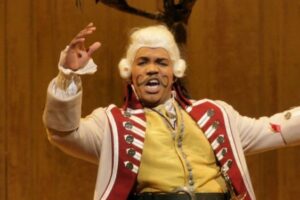
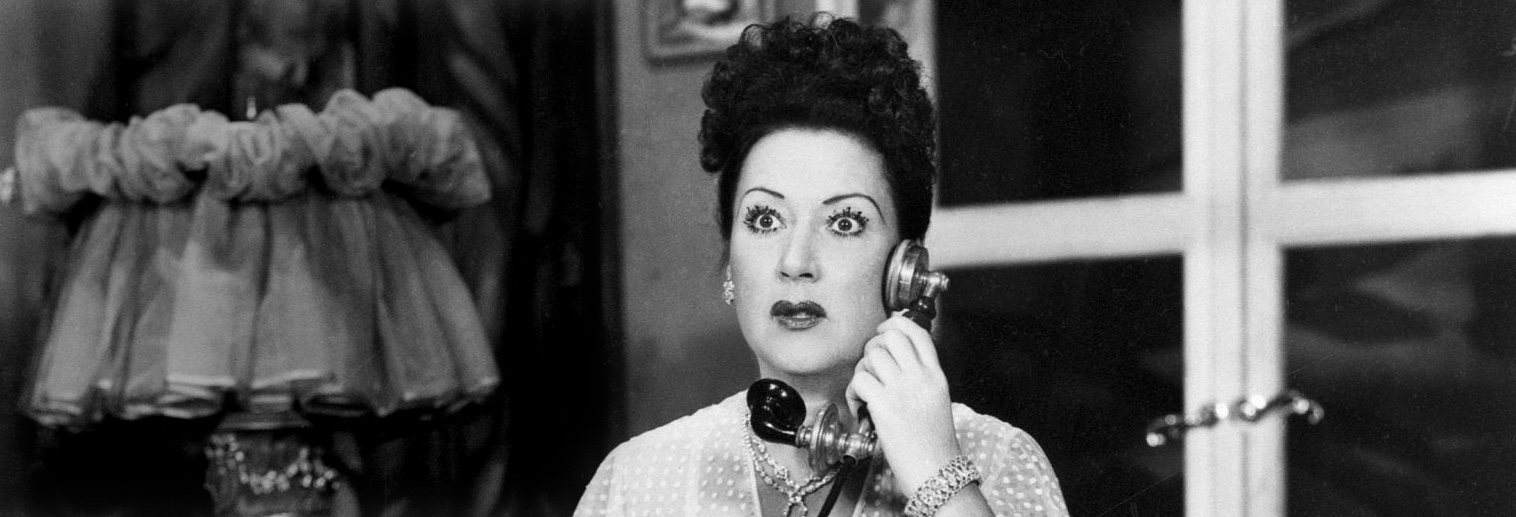
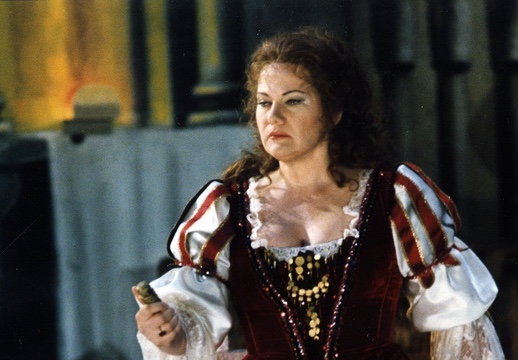
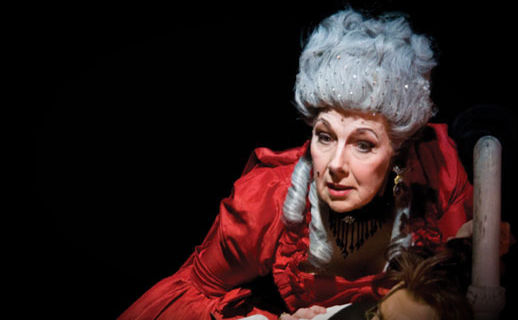
Former Editor of Opera News and Director of Opera-Music Theater at the National Endowment for the Arts Patrick J. Smith (pictured) yearns for the ancien régime: “We used to go to the opera for the voices. Zinka Milanov…” And so, anyone who has serious informed criticism of how Peter Gelb runs the Met now can look forward to getting lumped in with the reactionary prigs. [Musical America]
No one applauds at this moment any longer, because there’s no longer any reason to applaud.
Sure there is, the same reason as always: “I’m in the audience, but yelling brava before anyone else makes ME a part of the performance!”
at least they could wait for the postlude to finish
Always best never to be first -
or if you’re first -- to almost whisper ‘Brava’
from the heart
when it’s sung like Zinka …Note too
beautiful perf. today (03/28/2011) on
the Current Sirius ‘Forza’….
I vote Zinka -- but sure i’d be standing on the seats
and
cheering for both of them….truth be told.
All the while trying not to make a spectacle of myself….
eh?
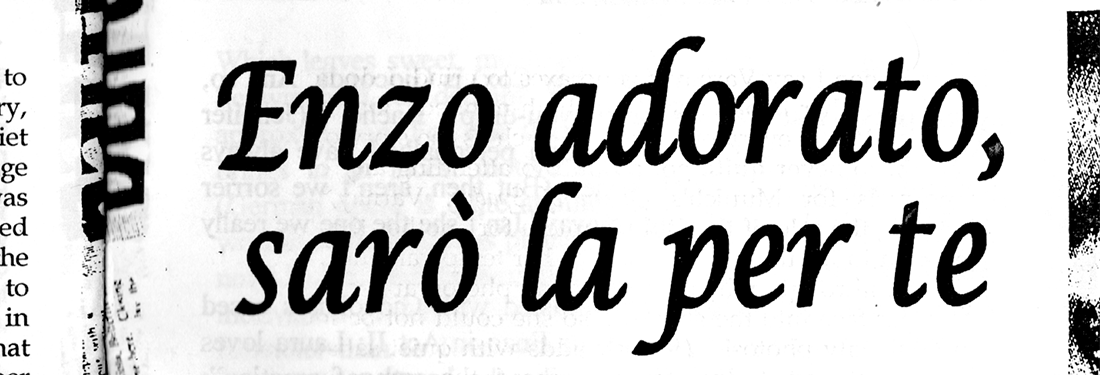
You’ve got it. I was at a Dress Rehearsal at the old Met (Yes I’m older than dirt) when Tebaldi was in the audience. At the end of “Enzo adorato”, Tebaldi stood and called Brava. No, she didn’t wait for the postlude.
Well, Tebaldi also has good ear for great singing….LOL!
Zink deserved it! Yes!
and you find it nice that they applaud over the music? I hate when people do things like that. Sort of the same when one has to applaud the scenery. On the other hand why does everyone need to rush out at the end. That is when you should applaud but that is when many in just run out. I am especially talking about audiences at the Metropolitan.
Don’t forget the dogs. SFO audiences seem to burst into applause any time a dog appears on stage.
They just rollover,eh?
I loathe scenery applause 99% of the time. I don’t mind it if the set does something unexpected (trying to think of a recent example) that is truly brilliant, but I don’t like applause just because they managed to replicate the Farnese or whatever.
I have a very special loathing for the curtain call rush. I make a point of not moving to let people out. My student job was an usher and no matter what was happening on stage, at 4pm all the grandmas in the audience would get up and leave en masse so they didn’t have to take a train in rush hour.
“I’ve just sat through a four hour opera with forty minute intermissions but GOD HELP YOU if I have to wait in line at the carpark for ten minutes!”
What if the grandma was in danger of missing the last bus for a 4+ bus ride home? This could happen with intermissions dragging on and on as they do at the Met these days.
I’m not one either, for applauding the set --
one time I am sympathetic to that is Act II -- Merril and O’Hearn -- Rosenkavalier……
and
they have dogs in Act I!
Gripe -- why oh why did the MET scrap their Frau sets….it wasn’t broke -- don’t fix it.
Regards.
No, they have dog (singular) I believe ever since the performance when the two had a love scene during the levee. The audience roared so much that Boehm (I think) had to stop the orchestra.
‘and you find it nice that they applaud over the music? I hate when people do things like that….
I wish MET Titles would caution people not to applaud over music -- sometime they need some help…..but pack the ‘newcomers’ and ‘old guard’ in ….
always thankful for cold cash toward the MET cause
It depends on the magic moment and the opera. Here it was appropriate.
In Maria Stuarda when Gencer calls Elizabeth a ‘vile bastard’ how could you not applaud?
You’re right. It’s pretty awesome.
The great thing about Gencer’s ‘vil bastarda’ is that it really sounds like it is being pulled out of her in spite of herself. She’s not just angry, but tortured. Must be one of the best moments for any soprano (or mezzo), that! I still can’t imagine Dame Granite doing it, though.
Actually, Enzo, the reason no one applauds at this moment is they hardly ever do this opera any more. Which I deeply regret. But the way the Met did it last time (as a vehicle for La Cieca (TM)) kinda kiboshed it.
Fabulous conducting as well as fabulous floated B flat. Is it true that Zinka would kick her train aside afterwards so she could leave the stage in suitably diva fashion?
Forgive me for nitpicking, but doesn’t the score call for a messa di voce? It sounds like Zinka landed on a gorgeous pianissimo but wasn’t able to to modulate the dynamics. Maybe she could do this earlier on in her career. Of course, a messa di voce on a high b flat is not an easy task.
Even though Callas didn’t have as beautiful a pianissimo as Milanov, her rendition is more faithful (and more moving):
But it’s also rather harsh and wobbly, at least to start with. My eyes are indeed watering a bit (as per the emotive captions on the YouTube video), but that’s my customary reaction to La Divina’s top notes, I’m afraid.
Wonderfully shining (if louder) younger Zinka here …
I vote Callas
I’m sorry but Zinka’s straight white tone on that note makes me cringe.
I prefer Zinka warming up from (gleaming, if slightly sharp)straight white tone to Callas grappling to take control of her wobble. I realise I am probably in a minority and will get chased out of town for daring to question Maria’s supremacy.
Well, I have a problem with zinka’s squeezing and sliding. The 1939 version isn’t quite so bad, at least she is able to release the note gracefully, but the 1957 version has her slithering around the phrases, hiccuping up to the bflat and then
squeezing the note downward.
The whiteness of the note doesn’t really bother me quite as much as the manipulation.
Because there seem to be so many central and eastern Europeans doing an awful lot of squeezing and sliding instead of legato singing today, I find I’m even more immune to zinka’s antics than I was when I was younger. No, I never saw her live, she was before my time, but I’ve never really gotten her and I find it harder and harder to listen to her.
Perhaps I’m being too harsh, it is a nice effect and it was a great trick that Zinka could seem to pull out of a hat at will.
In general, I do love Callas but her gioconda bflat isn’t really the high point of her performance. I do agree with MN that she struggles to control the note, eventually she does get it under control but it flaps around a bit prior to that.
peter -- i agree -- THAT was the TRUTH!
richard, you are right about Zinka’s squeezing and sliding, and her tone could be patchy, but there’s something I love about her -- perhaps because the RCA Previtali Gioconda was one of the first opera sets I bought. She was a bit clapped-out when she recorded it, but even at 18 or so I could spot a diva!
I vote for Maria too! It’s true that the b-flat starts out with a slightly slack vibrato, but I don’t care when the pharsing of the thing is so sublime. It quickly becomes a beautifully secure note and then the portamento off it is fabulously graceful. I’m sorry to say that the younger Zinka clip just sounds very peculiar to me, although you do get a glimpse of why the voice was considered so extraordinary when she fleshes out the colour in the top note. It’s a pity she couldn’t do the diminuendo without dropping the pitch slightly and then correcting it again.
Of course, when Maria sang sharp, it was an expressive effect.
Do you find her sharp in the Gioconda clip? Can’t say I noticed, in which case it was a fully convincing expressive effect for me
We all tollerate and accept different things -- I always freely admit that I have a very high wobble tollerance, in fact it takes a great deal for me to start using the word wobble rather than vibrato. What I can’t stand is randomly occurring straight tones such as afflict nearly all English tenors and an awful lot of light lyric sopranos, and Zinka from time to time I’m afraid. Curiously though, it is also a feature of Dame Gwyneth’s singing where it doesn’t bother me in the least. Maddeningly contradictory bunch aren’t we.
I wasn’t saying Maria was sharp there, but she certainly could be. The problem is that, fundamentally, she has never done it for me, though I can appreciate her artistry and she looked wonderful! The only thing I would rather hear her do rather than anyone else is a descending chromatic scale — she is divine when it comes to that.
I agree about the white note thing. Try having a listen to Dani’s Mozart album of a couple of years ago. Ouf! Gwyneth was a law unto herself and a force of nature; I think that, if you didn’t hate her (and I can see why people would), you had to love her.
can you imagine?
Is it true that Zinka would kick her train aside afterwards so she could leave the stage in suitably diva fashion?
can you imagine?
But can anyone trill any more? And what does a close-up of a trill look like in HD?
I would pay for a throatcam bonus feature.
I know people make fun of some of us finding the trill important, but the trill can indicate whether a singer is fully trained and learned her/his craft fully, in my opinion. There is some debate whether it is something you can learn or not. I believe Marilyn Horne claims she learned it from Bonynge. Tebaldi and Muzio do not seem to have committed a single, real trill to any recordings even when the trill is in the score. So I suppose it could be argued that a singer can be great without a trill. However, there are roles where you totally miss the trill if it is left out. Yes, often the trill is a frill, but on occasion there are so many in the score (like Anna Bolena) and it helps to dramatize anger (Norma), sadness (Ilia in Idomeneo), weakness/illness (Violetta’s trills in the final act when she claims she is feeling better), excitement (Violetta’s trills in her first act cabaletta), etc. Composers write them into the score for a reason. They aren’t always simply an embellishment that is the whim of the star singer. It is sometimes in the actual score and means something specific. I personally don’t think the trill is frivolous in every instance, so when it is not frivolous we want the singer to sing it. I don’t think there’s anything wrong with that.
Bart, you have me wrong, I’m totally Pro-Trill, ain’t no choice about it.
Bart- you’re dead right that trills are in the score for a reason and ideally they’d be there.
I don’t, however, think that they’re so important as to disqualify a singer who otherwise has the vocal and dramatic chops for the part.
Accidentally responded to Olivero with a new comment instead of responding.
amerjacquino, I agree with you. Many roles would get a pass. If there is a good Brünnhilde who can’t trill, I am okay with that. There are some roles that I would walk out of the opera house asking, “Why did she decide to sing THAT role when she can’t trill?” Other roles I give the singer a pass. I love Norma but it is such a difficult role that I am satisfied if someone can sing it half way decently, so the trills in the Pollione/Norma duet can be omitted, especially since that sounds like an almost impossible place to trill.
I agree with this. Trills ARE important (and are often written in the score for a dramatic purpose) and I regret that singers don’t seem inclined to learn it anymore. There used to be a time that even singers without a natural trill would still take the time to cultivate one. Now, it seems like few singers even bother with it.
Having said all that, I refuse to dismiss a singers for a role because of a lack of trill.
Yes, the final scene of Anna Bolena has a lot of trills and it will be a shame if Netrebko can’t even approximate them (though she might surprise us!) but those trills on their own won’t prevent her from doing justice to the role.
Bravo, Bart. The trill is a thrill!
Mostly, it would seem, it is innate, but it can be acquired or approximated by dint of really serious study and plain old hard work.
Thanks again for your defense of the good old fashioned trill. Even Wagner expected his singers to execute them, so it really can’t be blamed on the Bayreuth bark.
Well.
Oh dear, not THIS discussion again.
Bart: I agree completely that as a skill, the trill isn’t merely a frill, can certainly thrill, and even give a chill. So, as you read my thoughts below, please know that I am only trying to instill plenty of good will.
LET IT GO for heaven’s sake.
Hahahaha -- just kidding. I think it’s wonderful that you so vociferously defend the ability to trill, but really, you’re going a bit far. I think it’s unfair to reason that a singer isn’t “fully trained” if he or she cannot trill. After all, very few male singers can trill effectively (yes, I know there are some -- really I do) -- especially in comparison with the women. And I do think it is a skill that can be learned, but some singers just don’t seem to be able to master it -- for a variety of reasons. You mentioned Tebaldi: her vocal technique pretty much precluded trilling by dint of the breadth of sound she generated. The voice was not a flexible one. OK, so there were other good points to her singing. Lot’s of very great singers have tackled roles in which trills appear in the score, despite being flat-out incapable of executing them. It rarely seems a deal-breaker to me.
Would I prefer all written trills to be executed with pristine, goose-bump-inducing clarity? Of course. But it plays a very small role in the overall demands of sound singing technique. Let’s start with some good intonation, stylistically appropriate phrasing, and maybe even semi-idiomatic use of language. I’d be happy to encounter those more often. Trills? What trills?
I love a good trill and you don’t often get one. (One of the best, quite by the way, was Sherill Milnes’s in Act II of Don Carlos.)
What Marilyn Horne said (on a singer’s round table with Sutherland and Arroyo) was that either you have it naturally or you don’t, and she did. “Don’t you agree, Joan?” “No.” So if anyone learned it from Bonynge it was the usual suspect.
The best I’ve heard lately belonged to Devia and Stoyanova.
Now here’s a trill that chills and Thrills!. Frances Alda in Catalani’s Amor Celeste Ebrezza. Listen to the final leap followed by the most glorious exteneded trill with a very controlled ending. Yummy!
Warning: the visuals are very static.
CruzSF:
VERY VERY IMPRESSIVE…. THANKS FER THE CLIP..!!
(I’d love to hear more of this work..and this singer…..!)
Thanks go to Liana for turning me on to this opera. This aria opens the last act. I just love that the second half (of the aria) is a duet between the singer and a violin!
btw… I found this…and some more on youtube ( what did we do before computers-?--lol…!)
Would I love to see this, in its entirety…with this cast!
Incredibly beautiful, impressive blending of the voices. Hossa’s voice soars without being excessively showy. Everyone respects the simple setting.
I think this has been performed recently in the US, although I might be misremembering. Or maybe it was due to be performed but was cut in some company’s downsizing.
Henry Holland might be able to shed some light on this. I know he’s keenly interested in works from this time and place.
Was it in Boston? But yes, it has been performed in the US within the last year- just can’t remember where.
Yes… Boston Lyric Opera did it in February…and I had tickets… but the Chinatown bus was not running, due to the snow…so I missed it….
Crap crap crap. I guess I’ll have to wait 50 years for another production?
Hopefully not, as it seems to have had a bit of a ‘moment’ recently. Didn’t Long Beach do it too, fairly recently, or am I hallucinating? I think it was last year that I had a “holy crap, another Atlantis production?” realisation.
Its moments like that which are probably why I’m single.
Wow. Great memory, ianw2. A Google search turned up LBO’s production from 2009 (?). My late bloomer curse strikes again. So near to me, and yet I didn’t know enough to drive down and see it. I hope the Emperor of Atlantis hot moment hasn’t passed me by.
Would I love to see this, in its entirety…with this cast!
Me too! (Though maybe not in a production that self-consciously looks like a Bergman film.)
Am I hearing an arrangement of Vom Himmel hoch in the melody that runs through it?
Henry Holland might be able to shed some light on this. I know he’s keenly interested in works from this time and place
Thanks for the kind words. I missed the Long Beach production due to my usual poverty + LBO’s pricey tickets, but it was very well received. LAO did Ullmann’s Der zerbrochene Krug and they really shouldn’t have bothered, it’s a trivial, lightweight piece that lasts about 30 minutes, 10 of which is an overture. The following Der Zwerg was excellent and should have been paired with its cousin Eine florentinische Tragödie, which was done in concert at a kick-off concert for the Recovered Voices project. The Zemlinsky/Ullmann double bill is available as a DVD.
http://www.arkivmusic.com/classical/album.jsp?album_id=519509
Now LAO has to release a DVD of the fantastic Die Gezeichneten production, if they even filmed it.
[img]http://parterre.com/wp-content/uploads/2011/03/11.jpg[/img]
HH, thanks for the reminder about the LAO DVD of the Zemlinksy/Ullmann double bill.
Any rumors about when LAO might revive their Recovered Voices series?
CruzSF, all I’ve heard is that the project is still on, they might do Die Tote Stadt next year. From this NY Times article:
http://www.nytimes.com/2010/07/25/arts/music/25franz.html?_r=1&pagewanted=all
Beyond “Die Gezeichneten” Mr. Conlon is keen to put on “Der Ferne Klang” and “Der Schatzgräber” (“The Man Who Digs for Treasure”), another hit in its day.
Obviously, it’s all about the fundraising.
Der Ferne Klang at the Zurich Opera (who puts out a lot of DVD’s, do this one, it got incredible reviews):
[img]http://parterre.com/wp-content/uploads/2011/03/12.jpg[/img]
Love this also! I have the video of the entire opera(only VHS unfortunately, but conducted by Satanowwski) with Hossa -- whom I found extremely impressive.
The Poles seem to do good creamy sopranos — Zylis-Gara, Borowska, this woman. Maybe the language, which always seems soft-grained to my ear, has something to do with it.
Don’t forget the altos:
Bart, I strongly disagree that a trill can indicate whether or not a singer has fully mastered his or her craft. Singers exist who happen to be able to perform a decent, authentic trill but who are seriously deficient in other aspects of the art of singing, such as an evenly supported legato line, optimum physical freedom to allow for the best possible resonance throughout the range etc. A great many singers who specialise in baroque repertoire for instance would fall into this category -- they might well come up with excellent trills in abundance, but every single phrase will have glaring dead notes that don’t vibrate in them, either by chance or because there are specific vowels they have never got around to learning how to free up to the same extent as the others. It also applies vice-versa IMO -- to my mind, Caballe is an example of a singer who could not have had a more sorted technique, her vocal production in her prime was unimprovable, and yet she could not trill.
I think there is an extent to which trills can be learned, but facility plays a huge part in it. The same applies to coloratura in general -- again, a singer can have very impressive coloratura facility but be absolutely dreadful from a technical point of view in general, eg Simone Kermes. I’m a singer too, and when I first started singing I had an ability to sing accurate coloratura and a good trill, but by no stretch of the imagination was I a natural at singing from other points of view.
Cocky, I think I meant to say “could” indicate…..I went on to name Tebaldi and Muzio (two wonderful yet trill-less singers) to play Devil’s Advocate against myself. Personally, I am always disappointed when a singer can not trill, but, like I said, I realize that there are finished singers who can’t trill. I think for me personally it makes me feel like the singer MIGHT NOT have paid attention to details and what other details are they not paying attention to? But you are right there sometimes (in many roles and in many instances of singers) are other elements of singing that are more important in the grand scheme of things.
Caballe’s trill was very sketchy, often just a stutter, but there are a few moments caught live on tape where she managed a trill or close enough. Try her live Parisina d’Este (Opera orchestra of NY ) Act. 2 “Ma fugace lampo….sogno ognor di correre” at the very end of the aria. I’ll try to find other examples of Caballe’s trill in my collection because I have read this comment about Caballe being trill-less before, and I don’t completely agree. If you are looking for a Sutherland type trill or Fleming type trill, you won’t find it in Caballe. Her trill was not a reliable one and not the best trill at all, but she could manage a passable one once in a while.
By the way, Parisina d’Este is one of her best roles, in my opinion. Love the recording.
Thanks Bart -- I guess I failed to notice your devil’s advocate moment because I’ve never regarded Tebaldi as a particularly exemplary singer from any technical point of view, which isn’t to say there isn’t a huge amount about her that I admire -- sorry for taking you too litterally.
I’ve heard that Parisina is a strong piece actually, as well as one of Caballe’s best achievements, so I’ll try to get hold of it -- thanks for the reccomendation.
Bart: If you can find an RCA recital disc where Caballe did the Rigoletto ‘Caro Nome’…you would believe she could do a stunning trill. All 12 seconds of it, long. I even stop- watched the time of it, after first hearing it.!
You see Harry, this is exactly what I’m talking about when I say that on the whole Caballe didn’t seem to be able to trill. What happens at the end of that Caro nome, with which I am very familiar and on which some of my comments are partly based, is not, to my mind, a trill. It is an effect in place of a trill. It doesn’t sound as if the f-sharp is actually involved, I just hear a weird sort of judder on the e-natural.
NB I am not saying the performance of the aria fails because of this -- I love Caballe and listen to the double RCA recital on which this appears often. But I would never put this forward as an example of any kind of real trill, let alone time it and marvel at it and invite others to do the same.
Not forgetting those trills in Brunnhilde’s Walkurenruf that La Cieca gave us chapter and verse on a while back. Did Nilsson ever do those?
I see. I thought you were being dismissive of the trill with the comment you made. I have said this in another posting, but there are some roles that I can accept omitting the trill (although I like it better WITH). I think Violetta is often sung without the trills and so is Norma. But there are some roles that I hate when the trills are omitted (Leonora in Trovatore, Lucia just to name two). Someone did mention that sometimes a faked trill or a sloppy trill suffices, and that can be true too. If I feel that the singer has made an attempt at one and starts it out okay I can be okay, but when the trills are simply omitted altogether in certain roles it is a huge disappointment.
I mentioned the final scene in Anna Bolena before. It is not just the fiery cabaletta, but the cavatina (lovely, lovely, with some soft trilling)…..love it. I am rooting for Netrebko in that role, and I hope she is practicing her trill. In some respects it does feel like nitpicking, but in that role, it really is disappointing if the trills aren’t even attempted.
Another role that requires a trill in my opinion is Margeurite in FAUST. I believe that the trills in the jewel song are what that aria is about.
operacat, it does help make the Jewel song sparkle like the jewelry…..I think that aria is a real let down when the trill is not there. The rest of the role can be done well though without a trill, I think. I think there is a trill in the Poison Aria, but can’t remember right now. But it doesn’t stick out like the trills in the Jewel Song.
OT: Just back from Europe, thank you all for your advice, especially regarding the cafes in Austria, which were amazing. I saw Aida in Vienna, and I was completely blown away by Cecile Perrin in the title role. She was so incredibly loud, I could hear her above the orchestra and chorus the entire time. But she was also expressive, and her pianissimo singing was great. It was obvious that she had studied the Caballe recording quite closely. Does anyone know more about her?
I also saw the AIDA in Vienna on march 20th..and agree with everything you say about Ms Perrin. She was amazing!! I was also surprised that “O Patria Mia” was met with absolute dead silence…esp since the audience had been applauding everything elese all night. I hope they were just “caught up in the moment”.
OT: Was somebody there at the Met for the Urmana Toscas? How was James Morris?
Is Morris a great favourite with Met audiences of something? His voice, even in its prime, seemed to make a bit of a ‘cawing’ sounds to me.
May I suggest that you listen to him on the Haitink Walkure -- he in superb shape for that one IMHO……Marton*(Brunnhilde)
he was very fine in the Met Walkures in 1999 -- Polaski *(Brunnhilde) and 2000 Rings with Eaglen…
though I did not find him to be as good a Scarpia -- with Pavorratti and Vaness in 2000….’cawing’ sound….
But what a Wotan…wow!
Kind Regards.
bobsnane — I actually attended some of the recording sessions for that Walkuere, and he didn’t blow me away then either!
Haitink -- Waltraud Meijer (sp?) as Fricka and J Morris as Wotan = X-T-C 4 me!
You write that you ‘attended some of the recording sessions for that Walkuere’
- may I ask -- how did you get that opportunity?
I enjoyed Patrick Smith’s article because I do feel the Met is giving too much attention to how a show looks on screen, where much can be concealed (or slid aside from) and productions like the ghastly Peter Grimes, the ghastly Sonnambula, the grisly (not quite ghastly) Tosca and the deeply unfortunate Lucia and Fidelio (before Gelb’s time, but so what?) look sort of decent on video. Which may only encourage other impresarios to hire other directors who will feel they have carte blanche to get away with murder.
And the singer who because of her weight has been squirreled into leaving the Met stage before singing any of the great Wagner roles she would do far better than anyone has in years if not decades is Christine Brewer. I hope the Met (and other companies) are not similarly cavalier with the talents of Margaret Jane Wray and Amber Wagner. (Okay, they gave Stephanie Blythe Orfeo — another mistake IMHO — but what about Dalila or L’Italiana?)
Brewer had a chance to sing the Ring at the Met and blew it. Prior to that, where all was she singing? Santa Fe, St. Louis, occasionally in San Francisco. So it’s not like she was burning up the international circuit. Why does the Met always have to be the house to take up the slack on obese divas who don’t sing anyplace else?
And I wish we could get past this childish notion that all Peter Gelb has to do is pick up a phone and Edita Gruberova is booking her flight to New York to sing Linda di Chamounix. It takes two to make a contract, and sometimes even when both parties are willing it takes years to work out the details. (And when one of the parties allows herself to balloon up to 300 pounds, that complicates things too.)
I’d pay good money to see that Linda di Chamounix.
That makes ( at least) two of us!
My understanding is that some singers simply want to stay close to home base to be with family (Malin Hartelius, mentioned in another thread, is based in Zurich and likes to stay close to home). Others don’t like the lowish Met fees, and still others don’t want to put up with the visa hassles (remember that they’re not coming in on tourist visas).
And as for Blythe, why not build a new production of Rossini’s marvelous La Pietra del Paragone around her, instead of just trotting out that ancient Ponnelle ‘Italiana’ production yet again? It’s a perfect piece for her voice and temperment, and provides plenty of co-starring opportunies (three bass roles with, say, Ildar Abdrazakov as the Count) and a role for a young tenor that would be perfect for, say, Alek Shrader).
Moi, aussi moi!
I would like to ask La Cieca though,was it wise for the MET to contemplate putting Christine Brewer in the Ring without her having plenty of experience elsewhere in the role, to start? By having to ‘learn the part’ first? The ‘chance’ offered, on paper alone: would seem to anyone looking on, too scary to think of, if she failed? At the MET -of all places -in so to speak, as a ‘first up!
The mind boggles. As people always maintain -- the MET is not a place ‘to debut’ in such Wagnerian roles.
I fully accept the usual difficulties of managements and singers have when entering negotiations /contracts for projects, far in the future. Based sometimes -- on hopes and and judged forecasts -- that a voice will be then ready in time, to sing some particular role.
Like race horses- singers nalso may eed to be scratched from running -before the big race.
hans, from what the gossip i heard, brewer was dismissed not because of her weight (would it make any sense for the met to engage her in the first place? they knew she wasn’t particularly svelte) but because she had not learned the role by the time rehearsals came.
as for wray, i saw her ortrud at the met and she made not much impact.
Stephanie Blythe as Dalila, I’d pay good money to see that.
Blythe did very well as Dalila in Pittsburgh moving well and even taking part in the dance. Wonderful singing.
That was in 2008- not sure she’d be as convincing now.
The discussion about girth caused me to remember that singers of various size have taken on Carmen in the current Met production. Could somebody please remind me how Borodina(a favorite)managed the physical intricacies of the production?
Probably by singing gorgeously.
Borodina has now cancelled all her Amneris(es) in London. Marianne Cornetti takes over…….
Shame. She was the best thing in it, if never less than imperious. Let’s see how Smirnova is in cast two.
Reportedly, she listened patiently to the assistant stage director, then, where necessary, she replied, “Thank you. I do traditional.”
Good for her (and us)
Hilarioous -- JJ!
‘Not French’? It is after all a French opera.
I was looking back at the Pique Dame perf (03/22/1999)I saw
Boradina sang Pauline/Daphnis (talk about luxurious casting)
Domingo Hvorastovsky, Gorchakova, Soderstrom was the only weak link…
same cast again (04/15/1999)
Then, that autumn -- I saw Berlin Phil at Carnegie -10/11/1999- Ruckert Lieder;Anna Larsson and Bruckner 9th -- but the concert ended early enough (cab)for me to use a pass to get in for the judgement scene -- only in NY -- kids!
She sang Amneris on 10/11/1999 with Debbie Voight (pre-black dress)
unforgettable singing!
Unforgettable, too, was the appearance @ Carnegie Hall, singing La Mort de Cleopatre. Great.
“President Richard Nixon talks to Nancy Hanks, then [the first] head of the National Endowment for the Arts (NEA), about a speech he had recently given about arts funding. Hanks praises him profusely for how well he had done.”
“These people” !
“Just prior to this conversation, Nixon talked to his arts advisor and friend Leonard Garment about the same speech. That conversation can be heard here:”
and some people just can’t trill.
“I don’t give a damn where is your son. Who the hell cares what´s happened to Abe, and it’s none of my goddammned business what´s he done!”
Here is the correction of the text as posted on Youtube:
In the context of current events, it is interesting
to revisit the lyrics of this amazing composition:
“There’s a time in many a life
When it’s do, though facing death,
When our soldier boys
Will do their part that people can live
In a world where all will have a say.
They’re concious always of their country’s aim,
Which is liberty for all.
‘Hip, hip, hooray,’ you’ll hear them say,
As they go to the fighting front.
Brave boys are now in action!
They are there, they will help to free the world.
They are fighting for the right,
But when it comes to might,
They are there, they are there, they are there!
(You bet they’ll be!)
As the Allies beat up all the war hogs.
Our boys’ll be there, fighting hard,
And then the world will shout
the battle cry of freedom,
Tenting on a new campground,
Tenting tonight, tenting on a new campground,
For it’s rally round the flag of the People’s New Free World, shouting the battle cry of freedom!
When we’re through this cursed war,
All started by a stinking gouger,
Making slaves of men (God damn them),
Then let all the people rise
and stand together in brave, kind humanity.
Most wars are made by small, stupid,
selfish bossing groups,
While the People have no say,
But there’ll come a day,
Hip, hip, hooray,
When they’ll smash all dictators to the wall!
Let’s build a people’s world nation, hooray!
Every honest country free to live its own,
native life!
They will stand up for the right,
But when it comes to might,
They’ll be there, they’ll be there, they’ll be there!
(You bet they’ll be.)
Then the People, not just politicians,
Will rule their own lands and lives,
And you’ll hear the whole universe
Shouting the battle cry of freedom,
Tenting on a new campground,
Tenting tonight, tenting on a new campground,
For it’s rally round the flag
of the People’s New Free World,
Shouting the battle cry of freedom!
My favorite bumper sticker of all time -
after Nixon fired special prosecutor
Archibald Cox…
“Impeach the Cox Sacker”
2nd Favorite of all time -
“I love animals -they’re Delicious”
bobsnsane -- my favorite was Nixon was The One in 1968 -- He’ll be an even BIGGER One in 1972!
I’m fond of the one from the Louisiana governor’s race, Edwin Edwards vs. David Duke:
Vote for the crook: it’s important.
Speaking of Moedlrollen, did we know that Dame Gwyneth is singing von Einem’s Claire Zachanassian in a NP in Giessen this Spring?
http://tinyurl.com/4a9mfu2
That’s a role I am sure Famous Quickly could sing TOMORROW (as well as she ever did…)
Bill revealed this back at the beginning of February I believe. I sort of want to go, but Giessen.
Giessen is not that far from Cologne, Cocky, and it is a wonderful theatre, very intimate. I saw Edda Moser there in 1999. Every shop, bar and restaurant had this huge poster up -- a rather hallucinating effect:
[img]http://parterre.com/wp-content/uploads/2011/03/z0149534vwa.jpg[/img]