
Headshot of La Cieca

Cher Public

  • Quanto Painy Fakor: I remember Whitney Houston as La Perichole in San Antonio
  • zinka: httpv://www.youtube.com/watch?v=s0P6umAFG9oIO non sono r...
  • Joe Conda: Reminds me of the day of the Simpson verdict which coincided...
  • zinka: httpv://www.youtube.com/watch?v=kxeoJ3v2TZABut when th...
  • kashania: Agreed about Farnocchia, especially about her Maria Stuarda ...
  • brooklynpunk: httpv://www.youtube.com/watch?v=KzqErV4bjRs&feature=rela...
  • MontyNostry: Serena as Liu. The timbre is a bit like Cerquetti's, maybe (...
  • papopera: She has joined in paradise the Belushis, the Jacksons, the L...
  • MontyNostry: He sounds exciting. I like the ping in the sound. It seems ...
  • iltenoredigrazia: That's an interesting question. I understand there's some e...

blog advertising is good for you

You can ring my bel canto

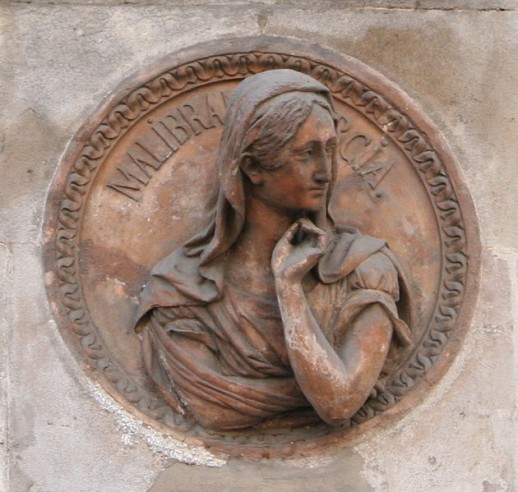
malibranSince last night marked the debut of history’s newest and perkiest interpreter of the role of Norma, and (more to the point) since Bellini’s druid priestess will grace the woods of Katonah, NY during the month of July, La Cieca thought it would be exciting to organize a YouTube competition on the theme of bel canto. The very special prize to the winner of this week’s competition: a pair of tickets (complete with transportation) to the Bel Canto at Caramoor presentation of Norma on July 16.  Your task, cher public, is to find and to embed a YouTube clip that illustrates or embodies the meaning of “bel canto.” Entries will be judged both on the musical quality of the clip and on your introductory paragraph explaining to us why and how this clip is a sterling example of the art of bel canto.

The contest will close on Monday, July 5 at midnight. The commenter who posts the clip and comment La Cieca judges the best (and her whim is final!) will receive a pair of tickets of the July 16 performance of Norma at Caramoor plus a pair of passes on the Caramoor Caravan departing from the Grand Central Station area at 4:00 pm and returning after the opera.

And now, a singer who has been ringing La Cieca’s bel canto for several seasons now, joyous Joyce DiDonato. In this selection, she perfectly balances the technical control necessary to bel canto (long breath, smooth legato, seamlessly blended registers) with the musicianship and emotion required to bring the piece to vivid life. In particular, note the aggressive vocal attacks on the strong rhythms of the main theme of the cabaletta, bordering on the declamatory but always within the context of a breath-supported legato.

So, cher public, let’s hear it from you: what is bel canto and who can show us how to do it?
183 comments

  • Niel Rishoi says:

    And here is a staggering display of virtuosity: Mozart’s “Ah, se il crudel periglio”, one of the most viciously difficult arias ever. Especially at 4:50 on, hear how Gruberova handles the 16th notes with hardly a breath or even effort: it (the music) looks comically ridiculous on the page, but Gruberova makes it sound organic -- and positively exhilarating.

  • Niel Rishoi says:

    And here are 2 clips, ‘Casta diva’ NORMA. Gruberova at 59, Sutherland at 55. Gruberova in G, Sutherland in F.

    I got flamed on opera-l for my comments on Sutherland’s diction and lack of legato, dynamic variety. Here’s what I mean. Gruberova has the ebb and flow of a dynamic line, whereas Sutherland goes monotonously from note to note.

    • Cocky Kurwenal says:

      I’m afraid your Gruberova/Sutherland comparison backfires in this case, as far as I’m concerned.

      I find the brisker tempo of the Sutherland clip gives the whole thing an inevitable forward momentum that is lacking in the Gruberova clip, so although going ‘monotonously from note to note’ is a description of Sutherland which I recognise in some of her work, I actually think she avoids it here. Phrases have clearer direction than is often the case with her. I can also hear the words clearly and, oddly reminiscent of Sean Connery though it is, think her diction is perfectly acceptable.

      I like Gruberova when I’m in the mood, more so since I saw her live in recital about 18 months ago and realised just how amazingly beautiful the timbre is in real life. It is remarkable how well she sings in this clip, but I find it loaded up with mannerisms and rather more about her than the text or the music, which for me adds up to a rather boring performance.

      They’re both great artists, but it isn’t necessary to criticise one in order to big the other one up.

      • Niel Rishoi says:

        I don’t understand what you mean by “backfired.” The tempo for Sutherland is for her shortened breath control. Gruberova is inflecting the line, actually singing specifically about her devotion to the goddess with interpretive touches: it sounds different to you because most sopranos cannot get through this piece: they can only try and sing it as smoothly as possible – which rarely happens – worse, they mangle it up. Sutherland sings it smoothly, but there’s no variation in the phrasing or rubato at all.

        • Cocky Kurwenal says:

          I’m not sure where your insight into the decision making process behind the tempo chosen in the Sutherland clip comes from – maybe shortened breath control is part of it, but whatever the reason, the consequences for the momentum of the piece and the direction of the phrases is positive in my opinion. She’s past her prime in this clip and nobody is going to argue with that. It simply isn’t true that there is no rubato.

          Your comment about why Gruberova sounds different to me is rather needlessly patronising, I think. Just to clarify, I have heard performances of the aria other than the two clips you posted. As I said, I think Gruberova sings it very well, but to argue that it is in any way revelatory or definitive, which is what I think you might be driving at by telling me I don’t understand why it sounds different to me, is an assertion with which I strongly disagree.

        • Niel Rishoi says:

          For some reason your last response did not offer the red ‘reply’ tag.

          Kurwenal, I meant in no way to be patronizing.

          Sutherland’s version to me is just a vocalise. Neither in her phrasing nor in her stance do you get a serious, reverential paean to the goddess. Gruberova, though, IS a revelation: who since Callas puts a dynamic spin on words, caresses the ‘senza vel’ figurations so lovingly, and the stilled hush of ‘tempra o diva’ , the ‘regnar’ variation which hasn’t been used since Raisa, the urgency of her inflections, the body language – there is a specific interpretation here, an intent. What you call “mannerisms” I call it imagination; Sutherland just stands there and sings efficiently, but without any kind of imagination or impetus.

        • luvtennis says:

          Niel:

          I don;t think your comparison is a fair one. Firstly, EG just added Norma to her rep in the last decade. The role is still fresh for her. Sutherland had been singing Norma for almost 20 years by the time she was 55. Second, Casta Diva is tailor made for Edita – she has spent most of her career as a lyric coloratura. Balance the Casta Diva with the finales and ensembles and Sutherland is the more complete Norma.

          BTW, I love EG’s Norma. A perfect late career role for her. For me, Edita is one of the great singers of the last century.

          Ever heard her Bell Song on the early EMI recital. She sounds otherworldy – the high pianissimi are sublime even if the coloratura is a bit slurry.

          And finally, that is why Sutherland was the greater singer for me. EG, despite her phenomenal agility, could be sloppy and slurry in coloratura. Too much sliding around the note when asked to sing wide ranging coloratura with dramatic force. Also, Sutherland had a perfect rythmic sense, EG could be inconsistent and idiosyncratic so that the shape of the line is lost.

          Usually not the case in high-lying lyrical singing – which is just what Casta Diva calls for, of course.

        • kashania says:

          Gruberova’s Bell Song is astonishing, especially the first section. The way she launches that high E followed by the most perfectly placed descending staccati is just incredible. Unfortunately, I can’t find that studio recording on youtube.

          I’m not a fan of her slipping and sliding into notes — too much white sound that disrupts the flow the of the line for me. But she could extraordinary things.

      • Sanford says:

        Neil Rishoi, you say Gruberova IS a revelation as if it’s a fact. It’s an opinion, and while it might be a fact to you, that doesn’t mean it’s a fact to everyone else. We’re not talking about facts here (such as water being made up of hydrogen and oxygen); we’re talking about something as ephemeral as how sound waves strike an individual’s ears. And for every set of ears, there may be a different opinion; sometimes those opinions are the same, but sometimes they’re different. And all are valid.

        • Bluessweet says:

          Sanford:
          Right you are. For example, I think this to be far superior to the Gruberova, but that’s just what I think. If you can dig up a Moffo rendition, I’m sure I might have an argument on my hands but this was not a role for the great Moffo.

          Speaking of which, you destroyed my image of her as the most beautiful opera singer I ever saw with that young, pre-facelift clip. I’ll love her anyway. Sniff, sob.

        • Donna Carlo says:

          Bravississimo, Sanford. I think La Cieca should take all of your paragraph beginning with the words, “It’s an opinion, and while….” And post it permanently on Parterre’s home page, right beneath her awesome likeness.

  • Kilian says:

    That’s all very well but the real glory of bel canto is that one can call one’s monarch a total slapper and do that in the most beautiful and dramatic way imagineable. Listen to Caballé, Coelho, Devia and Gencer:

    • Kilian says:

      And it sounds like this when sung by Gruberova, Miricioiu, Sills and Sutherland:


      (I did not compile these compilations.)

      • Niel Rishoi says:

        That Gruberova on that last clip was a studio recording: here’s what it sounded like live:

        here she growls, allows a nasty edge to the voice

        • it is such a shame that they didn’t record this on video (the whole thing) as they are all on fire.

        • callasorphan says:

          Now this is what makes opera so exciting. The girls are on FIRE. Makes one want to throw one’s panties or jokey shorts on the stage,

      • kashania says:

        I agree. This scene brings out the best in divas. My favourite Gencer/Verret version was not in the compilation. I’ve posted it before but hey, it bears repeating.

        I was actually surprised by the passion in Sutherland’s delivery!

        Anyway, here is La Gencer. What I love is that she doesn’t just spit out the word “bastarda”. Her delivery is full of indignation.

    • drtymrtini says:

      Alain Vanzo singing A Te O Cara, partly in falsetto, as Bellini had wished. Also, a fine legato, a reserved and musical use of portamento, and evenly sung. All of these tricks are used by Vanzo to turn this from an aria into a… caress. :-)