


Headshot of La Cieca

Cher Public

  • erica: Actually, that’s kind of weirdly convincing. 5:19 PM
  • La Valkyrietta: Voigt ain’t Fanciulla, period. I loved her the last time I was happy seeing her live in that... 5:14 PM
  • brunettino: Shucks — AC was my guess too based partly on the French used in the clue, but I got here too... 5:10 PM
  • Camille: Gee, that is bizarre—R 11;I was thinking of you a while back and wanting to let you know I HAD... 4:02 PM
  • kashania: I also checked out the second act finale and agree completely. It’s rare that a moment of hysteria... 3:59 PM
  • Lucy: Like arepo, I’m seeing Andrea Chenier: 1. Courtroom scene, just before “Si, fui soldato.”... 3:51 PM
  • grimoaldo: Hi Camille, you were interested in “Craig’ ;s Wife” with Rosalind Russell.I watched... 3:20 PM
  • Camille: “Inno ad Imene”. Sorry. Just had to try it on for size. Thanks, operaguy. 3:11 PM

Mostly armorless

lohengrin_amazonI’d never actually seen a production of Lohengrin before I agreed to review a new Decca DVD of Richard Jones‘s staging for the Bayerische Staastoper, starring Jonas Kaufmann, so I hope I’ve got this right:

It’s about this architect named Elsa, who lives in an Orwellian steampunk Germany that has videocamera technology but still dresses like it’s the Third Reich. Her brother has disappeared — “MISSING” posters are everywhere — and Friedrich of Telramund accuses her of killing him.  He is rescued at the last minute from being burnt at the stake when a nameless time-traveler arrives, carrying an animatronic swan. After a comical swordfight, he bests her accuser (by using magic powers making the hilt of his sword catch on fire), and introduces the local population to v-necks, trakkies and trainers.

The whole town pitches in to help Elsa build her dream house, and the two lovers get married, on the condition that she won’t ask him his name (SPOILER ALERT: He’s the title character). I mean, she can ask his name, she’s the only person who can, but he makes her promise not to, for reasons he won’t discuss. I have no problem with this, she says, and after a simple Masonic ceremony, for which the hero is dressed in traditional gaucho garb, they move into their new house.

Their happiness is shattered when Elsa  — corrupted by Telramund’s wife, the platinum blonde pagan Ortrud—panics and asks Lohengrin’s name. (WOMEN, am I right guys??) At that moment, Telramund breaks in and tries to murder him! Elsa doesn’t manage to fetch Lohengrin’s sword in time, so he has to take Telramund down using a Dim Mak strike. Crushed by his wife’s betrayal, he sends her away, then brings the empty cradle down from the empty nursery they’ve built together and uses it and a can of gasoline to set the house on fire.

The townsfolk gather to hear Lohengrin reveal his name (i.e., Lohengrin) and backstory — something about a Grail I guess? Apparently there’s more about this in the prequel? — and he then explains that, now that he has told his secret, he is condemned to leave them all behind. Lohengrin reveals that the swan he rode in on, now on its way back, was Elsa’s missing brother all along, and when Ortrud reveals how she changed him into a swan, Lohengrin handily switches him into a kid again. Ortrud despairs, Elsa rejoices, Elsa mourns, Lohengrin disappears, and the chorus retreats into a grim, institutional-looking outdoor scene upstage — I would have guessed “school cafeteria” or “concentration camp.”  However, contemporary reviews of the production identify the scene as a Jonestown-style cult compound, and upon closer inspection, I now realize that on the opera’s final chords, the chorus all sit down on cots and point automatic pistols into their mouths.

Wait WHAT??

Oh, Germany! Okay. So, well, other than that last touch, I have to say (dropping character now) that the production is not so radical, and really makes a good deal of sense. Elsa an architect? Well, it fits in with the 1930s setting of the production — this strong, chaste, braided beauty, carrying bricks to the construction site, could be a poster girl for the Heimat (or the USSR, or for that matter the WPA or an Ayn Rand novel)—and more interestingly, it literalizes Elsa’s duties as a “home-maker” in a way that might earn her more sympathy from a 21st-century viewer. She’s actually building a home for her family, not just sitting around waiting to be rescued by her knight in shining armor. Plus, of course, it gives the piece a visual arc, from act to act, as the marriage and the house comes together before falling apart—plus it makes for some handsome stage pictures and coherent business. (The camera work on this disc is good, not great — mostly the usual telephoto stuff, with some extremely wobbly handheld footage from the wings, an angle I dubbed the SWAN-CAM.)

The business with the swan, always tricky, is also well-handled, although I’m not sure why they decided it needed to be scratching itself when Lohengrin brings it out the first time (Imaginary Director’s Commentary: “In this scene, I wanted to make it clear that the swan is itchy…”). Lohengrin treats it with the same tenderness he shows the missing young Duke when he restores him to her sister, foreshadowing the transformation back.

Even the apparent disjuncture of the time periods — between the mustard-brown uniforms of the locals and swan-totin’ Lohengrin’s contemporary athletic gear — serves the story, to a certain extent. Maybe Lohengrin is a little more modern and civilized than the townsfolk of Brabant: he’s reluctant to kill his enemy until it becomes unavoidable, while their system of laws seems barbaric by comparison. You can work out your own justification for the general time and place Jones has chosen, something about war and crowds and Germany and corruption; me, I’m just relieved they’re dressed neither like the cast of Camelot nor in, say, cowboy hats. (Actually…) Most importantly, it emphasizes Lohengrin’s otherworldliness, as does the most important aspect of this recording: the sensational vocal performance of the leading man.

Now. The cast around him is uniformly strong, all singing actors, closely engaged with the language and the drama, and each one of them steals at least a scene. Michaela Schüster is compulsively watchable as the sorceress—her sneer in Elsa’s wedding procession is classic. Anja Harteros is a moving Elsa with moments of transcendent singing. At one point, I really found myself thinking, “Boy, who is that Herald? I like him!” (it’s Evgeny Nikitin), which I think is a pretty good sign, casting-wise. (And now that I’ve mentioned everybody else, Wolfgang Koch and Christof Fischesser will feel bad if I don’t mention their greasy Telramund and complex Heinrich, respectively, and so, there, I have. You guys were great!)

But all of their vocal performances are essentially earthbound, marked by the characteristic power, weight, and brilliance of Wagnerian singing. Kaufmann’s performance is something else entirely, deep and dark and effortless. His sound is too guarded—too introverted—for so many roles that it’s an immense thrill to hear him in a part he seems born to play. In the context of the cast and of the production, he seems, as Lohengrin ought to, heaven-sent.

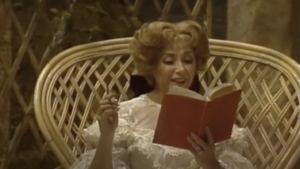
Does his stage presence here at times seem blank, compared to his colleagues, and self-regarding? Maybe. It doesn’t matter. Lohengrin is supposed to be, after all, something of a cipher, and he certainly emotes persuasively enough when it really counts. Here’s his In fernem Land:

I could really rewatch this like twenty times in a row. I love things that are too slow! (For which I guess I should thank Kent Nagano, the conductor here. This aria lasts FOREVER. So great. I only tend to notice the conductor when things go horribly awry, and on this recording I counted maybe one raggedy choral moment.) But: look how Lohengrin’s reverence genuinely seems more intense than his passion. What’s devastating is not the forte but the subito piano that follows that it. I can’t watch this and not be swept up in it. I guess what I’m trying to say is, I hate to disappoint all of you, but JONAS KAUFMANN IS MY BOYFRIEND, HE LOVES ME, AND WE ARE GETTING MARRIED. That is all.
51 comments

  • Will says:

    papopera — if you read a lot of singer interviews in various music magazines, you will discover that a great many singers LIKE these directors and their productions. They like them because they say how the directors take them into consideration, asking them for their view on the character and then rehearsing seriously with them to realize what is actually a shared vision.

    I realize that contemporary productions are not to your taste, but singers don’t want just to stand around and sing straight out at the audience any more. They’ve been raised with movies, rock videos, good theater, and media of all kinds. They expect opera to be a similar experience.

    • CruzSF says:

      One person who made a point of thanking the director for a mostly traditional setting was S. Licitra (in SFO’s Fanciulla). Of course, whether Licitra is still a “singer” is up for debate here …

    • La Cieca says:

      A point that might be considered here is that in general I don’t think singers have any particular bias toward avant-garde or traditional productions on a purely aesthetic basis. What they do look for is a production process that is engaging and challenging artistically: in other words, they want to flex their acting muscles. As it stands now, the directors who offer this kind of experience are mostly “Regie” directors, not the traditionalists.

      This should not be interpreted as my saying that all, or even most “Regie” directors offer a rich rehearsal experience for singers; many of them do not. But I think it’s clear that even in a flawed production like this Jones Lohengrin, the leading singers are are strongly committed to the acting values.

      • Jack Jikes says:

        Cara La Cieca – your Lohengrin comments on Opera L are among the best items I’ve ever encountered on the phenomenon of regie. And yes… the confrontation with Telramund in the bridal chamber leaves any other production in the dust. You have to reiterate the same points to idiotic nay sayers but the flair you brought to the Opera L posts was faceted with the brilliance of a solitaire diamond.

        • La Cieca says:

          Well, thanks. I actually worked up a somewhat fuller response about what I think of as unreasonably hostile reactions to Regie, or anyway began such a response. I’ll see if I can remember where I was heading with that and post it here.

      • Belfagor says:

        The thing I’d like to say about Richard Jones in particular, is, that however initially off-putting some of his concepts, or re-imaginings are, there is a keen MUSICAL intelligence at work. I haven’t seen this Lohengrin, but his ROH Walkure (that Bernard Haitink hated and went public about) had some extraordinarily thrilling moments – the opening storm of Walkure, where Sieglinde conjured Siegmund out of the fire, was a thrilling image that chimed so well with the music – similarly, his Glyndebourne Macbeth, with the Witches as delinquents in a caravan park made so much more sense than any traditional staging I’d seen, and had real danger….I always feel he’s with the synthesis of music/drama and not just highlighting some libretto footnote, or off-beat character view, or superimposing a scenario that doesn’t fit.

        He’s over-productive of course, and uneven, but I have been both infuriated and enthralled in the same evening – and come out of the opera keenly discussing what went on, and discovering things about works I am over-familiar with that hadn’t occurred before – not watching a waxwork show in a mausoleum, as I so often do at the bigger houses……….

  • Maury D says:

    Ok, while I like to go on and on about how I knew Kaufmann was going to be a big deal when I heard him as Cassio in the Fleming/Hep-B Otellos in Chicago (2002 or something?), I am apparently the only one* who finds him pretty thoroughly groinally un-compelling. He looks like Jeff Goldblum playing a West Virginia truck driver. Alternate dig: Johan Botha called. He wants his mullet back.

    *Google confirms this. Search string “Jonas Kaufmann”–> “Related searches: Jonas Kaufmann shirtless.”

    • louannd says:

      For what it is worth Maury, on this site, I agree.

      • manou says:

        Jonas Kaufmann – terminally unsexy, at least for this distaff side. Always looks like he needs a good bath, and has had a radical charm bypass. Often gives good performances but has developed a strangely veiled sound over the years.

        I shall now duck.

    • quoth the maven says:

      that’s fine. Now we don’t have to get in a cat fight over him. (BTW, I kinda think Jeff Goldblum is hot, too. chacun a son gout!)

  • Constantine A. Papas says:

    What a difference! The last time I saw Lohengrin was many years ago. What a mismatch. Hoffmann was Lohengrin to Marton’ Elsa. She was fabulous, real tears in the bridal chambers, he was not. He ended up singing in “Phantom of Opera” somewhere in Germany. JK’s dranatic lyricism is breathtaking.

    • kashania says:

      I had that production on VHS. I found Marton miscast in the first two acts. The virginal (boring?) quality of Elsa did nothing for her or her voice in the first two acts. But boy did she come alive in the third! I still remember her running across the bridal chamber while tossing off a huge high note. This was an Elas who WANTED TO KNOW HIS FRIGGIN NAME!! Of course, that’s the same video that captured Rysanek’s Orturd for posterity.

      • callasorphan says:

        I so agree with you Kashinia dear. Im glad that Hoffman is singing what he should’ve always sung–pop. Plus I’ve always preferred Marton as my favorite aunt Ortrud.

        • Conny says:

          Well, guess you then never heard Hoffmann in the 1980 Boulez Walküre in Bayreuth or the 82 Götz Friedrich production of Lohengrin, opposite Karan Armstrong as Elsa.
          And PH in Die tote Stadt – absolutely superb – of course before he contracted Parkinson’s.

          With regard to anthological Ortruds, – in my (humble) opinion, no one did ever beat Christa Ludwig.

        • callasorphan says:

          Conny, you shut my mouth. I feel very bad about what I said about Hoffman. Christa, to me, could sing anyone under the table–I’ve always loved her. I wish that I could have heard her Ortrud.

      • MontyNostry says:

        Elsa as Judit, clearly.

  • louannd says:

    Dan, I am not in love with Jonas Kaufman, but I always fall for your reviews. SOLD!

  • kaufmannmniac says:

    I actually trekked to Munchen from the US to see this production so I could hear Jonas live – despite the fact that I knew it to be hideous…. the singing was top notch as you all can see…. What you cant tell from the video (I have no intention of buying, once is enough) is that nobody sitting in the right side of the lovely little opera house could actually see “Im Fernem Land” being sung, since Mr. jones had the additional brilliance of staging the most important scenes of the opera on the far right side of the stage. Being one of the unlucky ones, and having sat back and just listen in my seat through most of the second act (which luckily does not have much of our hero in it) since I could not see most of the action anyway, I managed to find a seat in the orchestra during the second intermission, and could only feel terribly sorry for all those poor people up on the balconies right. He was so magnificent to watch, in addition to hear. That deathly stillness, and despair….
    And one more interesting thing, in the video Lohengrin takes Elsa’s hand and holds it through the end of the aria… when I saw it, he gently pushed her hand away, which I found particularly heartbtreaking…. after all, it was over for them!

  • rommie says:

    i feel like a bad Ortrud is like poppers spilled onto your nose. how was the Ortrud in this one?

    • Conny says:

      Having seen and heard this production at the Bayerische Staatsoper, can only tell about my appreciation of Michaela Schuster, scenically a fine and demonic, to some extend even comic, Ortrud, though vocally with some flaws, yet very convincing and satisfying. She certainly doesn’t have a lot of beauty or expression in her voice, and that’s not what’s needed for this particular role, but at moments she lacks power and the required high notes to be more than a pretty good singer and actor.