
Headshot of La Cieca

Cher Public

  • “The Feinstein years coincided with my discovery of opera in highschool and college. Despite doing...” NYCOQ
  • “What’s next? Are the Dodgers going to absorb the LA opera?” havfruen
  • “Was I the only one that picked up on the snarky “sizeR 21; comment by RF. A gracious...” havfruen
  • “Harry, many long-time subscribers regard the Martin Feinstein years as among the WO/WNO̵...” Jay
  • “Was an audio book ever considered? Or a Parterre podcast? I still did not get my copy, by the...” Buster
  • “Wilson sang Turandot at Covent Garden last year. I had been very much looking forward to...” MontyNostry
  • “[Beavis voice] Fire! Yeah Fire! Fire! Heh heh heh heh heh heh heh Fire! Yeah fire is...” Henry Holland
  • “httpv://www.you tube.com/watch? v=lOEn8206xjE&a mp;feature=rela ted” Quanto Painy Fakor

Archives

Bright Lights, Big Ideas

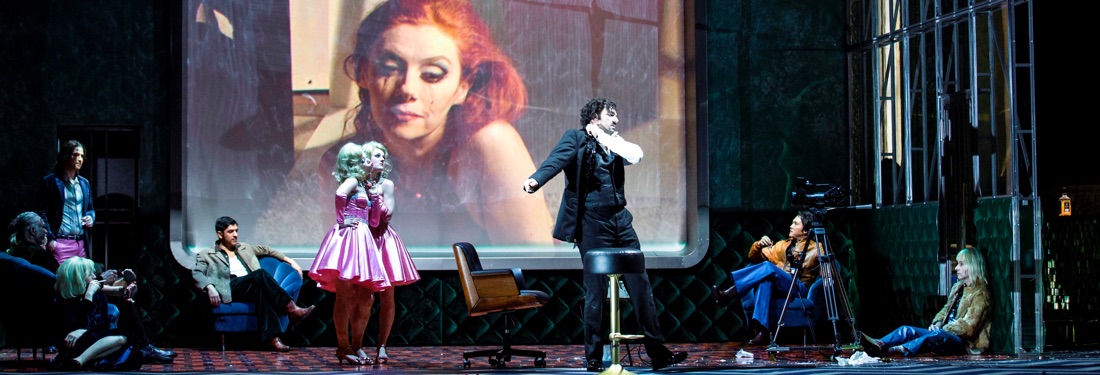
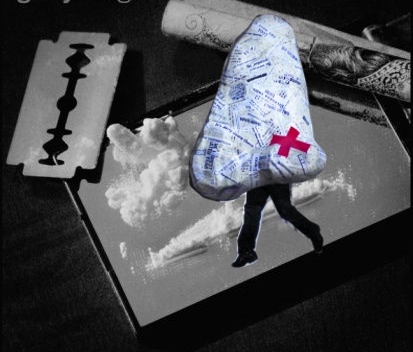
the_noseForget all the others. You need to read this review of The Nose. [New York Observer]

Related:

39 comments

  • 11
    whatever says:

    apologies for going OT: Lincoln Center Festival has announced its line-up for this summer, including the North American premiere of Sciarrino’s la porta della legge. casting:

    Ekkehard Abele, baritone
    Gerson Sales, counter-tenor
    Michael Tews, bass

    anyone know anything about the opera or the principals?

  • 12
    markbargen says:

    May I please weigh in to correct an inaccuracy (in the article) that I’ve also seen show up here a more than once? It’s really inaccurate to equate the use of projected text in McDermott and Crouch’s Satyagraha with supertitles.

    The text projected in that production represented only a small fraction (I’d say, less than 2%) of the libretto — of the text as written, not counting the repeats. Further, in several instances the projected text was more of a loose paraphrasing of the libretto, rather than a translation, even allowing for the great variation one finds in translations for the Bhagavad Gita. Finally, the timing of the projections generally bore little relation to the location of that text in the libretto.

    I’d say that the production made use of the text projection solely for dramatic effect, rather than to convey any substantive information about what was being sung. Note that I don’t find fault what that. I found the dramatic effect appropriate and generally supportive, and not at odds with the sung text, although at times it seemed a bit “pat”, usually drawing on only generally familiar or readily assimilated ideas.

    I think it’s best to think of that production as having not used titles. If one accepts the premise (and noone’s under any obligation to do so) that making titles available, presumably in translation, is a Good Thing, then what does one make of the decision to not do so?

    If one’s familiarity with the libretto is limited to the text itself, such as by following it in the booklet that accompanies a recording, then one will observe that the actual text being sung bears only a tenuous relationship, if any at all, to the action depicted, and if that’s the limit of one’s interest I’d say that there’s no great loss of comprehension if one isn’t following the text while it’s being sung.

    De Jong and Glass didn’t make it easy for us. It turns out that if one maps the text (pretty much stanza by stanza) against where it occurs in the Bhagavad Gita there is something of a relationship between the structure of the story about Arjuna’s dilemma and the understanding at which he eventually arrives, and that of Gandhi’s spritual development, or eduction, during his South Africa years. Personally, I missed having the titles; I would have liked to have been able to use them occasionally as mileposts, to help me keep track of where I was.

    As for Mr. Woolfe’s assessment of this as “the greatest Met production of the last decade,” I think that’s pretty strong language, but I can say that I was and still am grateful to have been able to attend a performance of it. I think it likely that it will not be surpassed as a production of Satyagraha for quite some time.

    • 12.1
      La Cieca says:

      I question your 2% figure. The Met handed out a single sheet with the text, and so far as I could tell the majority of that text was projected on the set during the performance. Isn’t that a translation of the libretto of the work? (I don’t know the piece all that well, and Sanskrit not at all.) It did seem to me that the text included a lot of repetitions, or was I wrong?

      The projected text in Satyagraha seems to me to be a special case anyway since the opera isn’t written to be understood in the way that Otello or Die Frau ohne Schatten were. I do think the Met made the right decision making the titles in The Nose available both on seatback and as part of the spectacle, and I think the idea is very worthy of further experimentation. (I could see some adaptation of the concept in the Ring for example.)

      • 12.1.1
        markbargen says:

        Thanks very much for your reply. I had forgotten entirely about the handout, which provides the entirety of De Jong’s translation of the libretto.

        Your questioning of my figure is well warranted, and I stand corrected. The libretto runs a bit over 1400 words (again, not counting repeats). Two percent would run to only 28 words! Still, when I attended the performance, I had been studying the libretto rather carefully, and I was very conscious of the limited relationship between the projections and the libretto I originally described. Maybe a more realistic estimate would have landed in the 10 to 20 percent range. I will stick to my original conclusion that the production didn’t use titles.

        Again, I’m not faulting it for that; I just missed them. I agree with you entirely that the opera isn’t written to be understood in the conventional manner.

        I won’t get the chance to attend The Nose, so I can’t comment in it, but I really liked the way the titles were projected in FTHOTD. My experience of that work would suffer greatly without being about to follow the text, and I really liked being able to keep my attention focused on the stage and the singers without having to keep shifting my focus back to “reality” in order to read them. That was just one of many of the things that added up to what for me was a truly extraordinary experience.

        • 12.1.1.1
          m. p. arazza says:

          In FTHOTD, the projected texts jumped all around the stage and (while this was obviously more interesting than regulation supertitles), from a side seat I couldn’t see half of them so I had to resort to the MetTitles half the time anyway, which made for even more – and more distracting – focus shifting. And The Nose, I’m told, has some projected titles consisting of several lines of text where the top line is cut off from some (center) locations.

          One of the reasons the Met originally gave for nixing supertitles was that they would not be viewable from various locations in the large house.

  • 13

babya guitar amp pro free download Nero 8 Ultra Edition download guitar music pro coreldraw graphics suite 13 remove trial Guitar Pro 5 MAC download guitar pro torrent for mac nero 6 ultra edition download CodeGear RAD Studio 2009 Architect download free guitar pro 3 software nero ultra edition 6.6.1.4 34 mb ConceptDraw Office Professional 8 download black sabbath guitar pro tabs guitar pro tab downloads MathWorks MatLab R2009b download guitar pro jazz tabs free guitar pro 4.1 CorelDraw Graphics Suite X4 download nero 6.6 ultra edition download