
the end

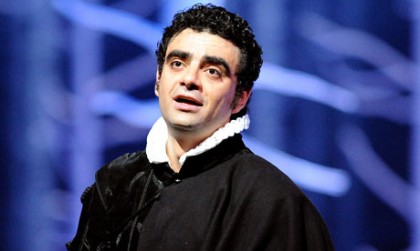
La Cieca really, really doesn’t like to say this, but the truth seems to be staring us in the face, so here goes. We have seen the last of Rolando Villazón at the Met. Even though he’s announced as having canceled only the first two performances of Elisir, it’s pretty clear that he’s just not able or willing (or both?) to get his voice and confidence into solid enough shape to appear in New York.
Nemorino is (as tenor roles go) not a particularly difficult sing, and it’s a role that’s always been central to his repertoire. But now it appears Villazón can’t sing even Nemorino up to Met standards, which means he basically can’t sing anything.
As a friend of La Cieca said on the phone a few minutes ago, “It never happens to the ones you want it to happen to,” and, sadly, that’s the case here.
#260 Opera needs singers who are stars. In other words, the stars should be people who can sing. Just to clarify things have you fallen into the trap of thinking that only the telegenic can be stars or are you sayig that nobody should be a star?
290 – go easy on Dame Ernestine -it seem she has gotten
her head up her own ASS and thinks her farts are music. it makes her deranged if she isn’t already
unhinged which seems to be the case .
Oh hell, go fight by yourselves.
If anyone wants to hear Podles at her best, find the Tancredi with Sumi Jo. Amazing music sung amazingly well.
Congrats, Ernie, you made Podles relevant to this conversation.
@236. And then there was Schipa, who by his own admission never warmed up beforehand so he’d have enough voice left and sang about 20 roles … wicked, right?! Would he–or Pertile with his “ugly” voice–or Gigli, even, have made it in a world where everybody has to sing and look a certain way???
I remember, in finding this site, why opera as it is today turns me off. It has its stars, but they bear no relation to opera as I remember it–and that is why in the sense we have them I feel like opera would be better without stars :/ I love the stars of the 80s (Domingo included), but I do feel like they had something to do with this … :/
@296 alexythymia,
I agree, Opera today is going down the drain, along with the Art of Singing. But guys, I think that making our voices heard on these blogs andother forums like youtube will have an impact.
Villazon called this “Internet terror and impertinent criticism” at the same time that the youtube video of his terrible performance on Lucia di Lammermoor was strangely removed from youtube. If he doesn’t want negative comments, he should focus on his vocal technique. Clearly he is not commited to his art, he is more interested in becoming STAR (and making good money probably).
Gelb wanted to give him a chance to save face so he let him cancel rather than fire him.
So if I’m reading this thread correctly, Pieczonka is supposed to sing Brunnhilde because she sang Leonore and Podles is supposed to sing Brunnhilde because she is Polish. Perhaps we should have Milnes sing the Brunnhilde since he was hung like Grane.
#1. @289 On Podles: I have never really heard anything where I can find fault in the woman. Her singing has always seemed of a very consistent quality to me, and I would certainly cast her in roles that are appropriate. Your insults, Ernestine, are not well-based. I understand if you are upset at Ariel- by all means vent yourself in his general direction, but vituperating Podles or Bezcala -fine artists but of varying appeal to some- simply because it is Ariel who constantly touts them is missing the mark.
#2 alexythymia @296: I have often thought the same thing. Could good old Beniamino have even made it in today’s operatic environment? There seems to be a strange urge to wish for every tenor to sound like Pavarotti or Domingo– just look at Rolando!
I watched the Werther clip posted above and I had to stop halfway through “Pourquoi me reveiller?” because I couldn’t watch what he was doing with his mouth and tongue without wondering how he kept his larynx from seizing up with all that apparent tension. At times I almost expected him to inhale half the set. There is passion, of course, but it is not tempered by intellect (which is an odd thing to say, I know, because we all know Rolando is not dumb, at most just stubborn but intelligent). He is definitely giving more than 100%, but instead of thrilling I find it uncomfortable because I immediately think of what it’s doing to his voice in the long run.
And he does it why? I guess because America (and a growing part of the world) has had a growing fetish with large voices and where there aren’t large instruments, people want them to become large. Rolando definitely hammers his voice all the way to the back of the hall to increase the size of his voice (which is essentially, and pre-issues, a nice lyric), and to boot he adds on all of these ridiculous roles he shouldn’t be singing in the first place (after all, if he’s a large voice, that’s what he should be singing, right?)…
I am all for power when correctly applied, and with good judgment, in voices of all sizes… but call me old-fashioned (at 30, too, which I turned yesterday) but in many ways I find Gigli’s plaintive mixed voice much more moving, specially since you knew that at the appropriate times he would slip into fuller voice and deliver a passionate, powerful line where it was appropriate (true, in his older age he started getting a little… interesting), but try singing like Gigli in today’s major houses and you’ll be laughed right off. Kraus was also a master of progression, of knowing when gentleness could be applied and when to either progress into full force or shatter it unexpectedly with a new emotion — steel hand in velvet glove, I guess.
Nowadays so many tenors want to sing like it’s their last night onstage, and there’s just no way you can sing like that all the time without repercussions. Opera is about passion, but it is also about subtleness and coloring- coloring and subtleness without passion is simple affectation, and passion without nuance is vulgar.
But hey, what do I know? I’ve been 30 for only 24 hours.