
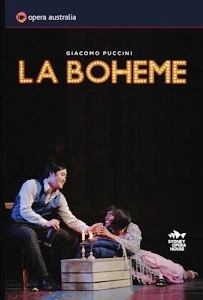
The case for this DVD production of Puccini’s La Boheme from Opera Australia is all about the “inspired concept” of director Gale Edwards to move this oft-told tale from 1840’s Paris all the way to the Berlin at the end of Weimar-era Germany. Hmmm.
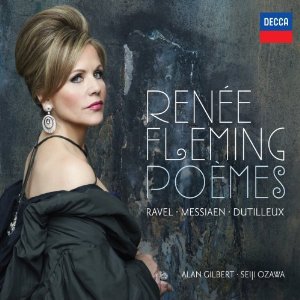
Let’s start with some refreshing news: Poèmes is the finest thing Renée Fleming has recorded in many a season.
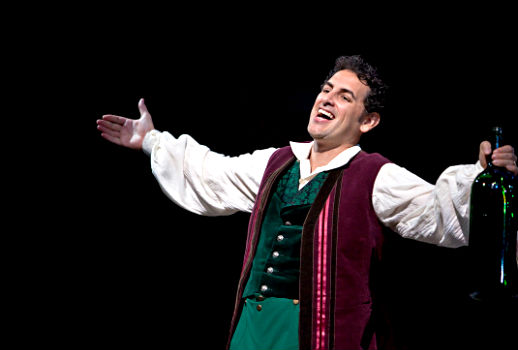
L’elisir d’amore, Donizetti’s evergreen comedy about young love, returned to the Met last night with a strong cast, a high energy level from all the performers, and last but not least, a very full house.
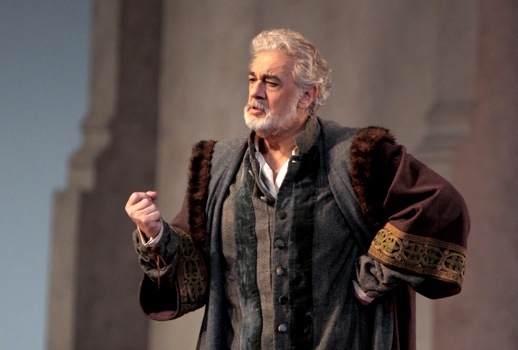
Being an opera lover in Los Angeles is a lot like being a Red Sox fan. As hard as they try we never make it to the World Series, let alone the playoffs.

It is hard to know just who is the intended audience for this release of Pelléas and Mélisande.
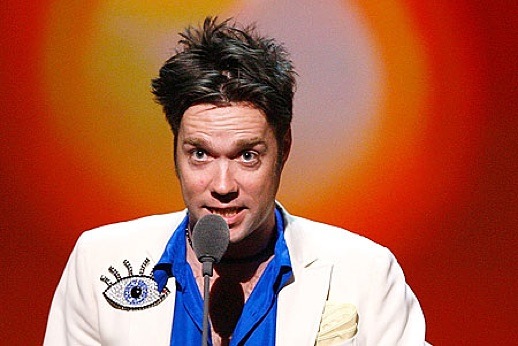
“With Anjelica Huston, Parker Posey and Yoko Ono dotting the crowd at BAM Sunday afternoon, the New York City Opera’s premiere of Prima Donna offered more diva presence offstage than on.”
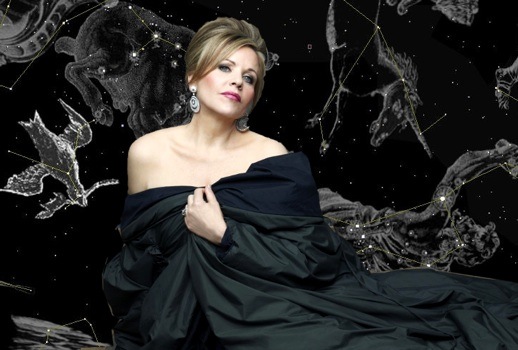
On Saturday I attended the premiere performance of a new production of Ariadne auf Naxos at the Festspielhaus in Baden-Baden, Germany. It was Renée Fleming’s debut in the title role…

This 2010 DVD of Brecht and Weill’s Rise and Fall of the City of Mahagonny from Madrid assumes pride of place among the available video versions of the opera.
“New York City Opera performed La Traviata at BAM Sunday afternoon. That’s who, what, where and when. But this was a performance without a ‘why’.”
“No tenors, no arias, no orchestra pit, no plot. Can You, My Mother really be called an opera?”

Yes, the plot of Luisa Miller is a novella, and a pleasantly juicy one at that.
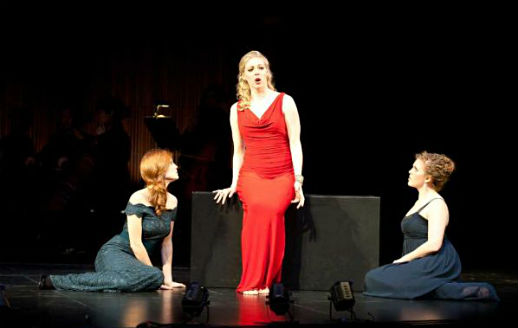
Almost exactly one hundred years ago on March 18, 1912, the Metropolitan Opera gave its final performance to date of Armide.

“A revival of Verdi’s Ernani at the Met on Thursday proved tastefully understated. In other words, it missed the point entirely.”

The Poisoned Kiss derives its plot from the legend of the girl raised on poison so that her very kiss will kill.
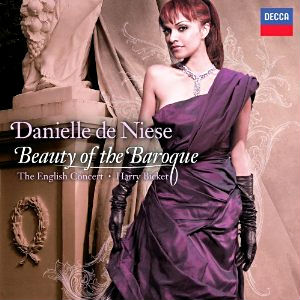
I could feel my face (to say nothing of my spirits) sink as I opened an envelope from La Cieca containing a new Decca CD to review.

Orlando is the first of three Händel operas based Orlando Furioso, Ariosto’s 15th-century adaptation of the 12-century poem, Chanson de Roland, the other two operas being Alcina and Ariodante. This epic tale of heroism, love, reason and madness also served as the basis for operas by Lully, Vivaldi, Haydn and Scarlatti. In fact, Händel based…

The New Year’s Eve gala at the Met ushering out 2011 was the world premiere of the much-anticipated mash-up The Enchanted Island AKA “baroque opera for those who hate (or at least don’t know) baroque opera.
As suggested in Part I of this piece, to experience Glass’s Satyagraha as a purely aesthetic experience is unfortunately to succumb to a romantic ideology promoting detached reflection on art which is wholly inapplicable to such a politically-charged opera. The idea that Gandhi’s action-oriented philosophy would be packaged and sold for the sake of passive…
That Philip Glass’s opera about Gandhi’s nonviolent civil disobedience should be revived by the Metropolitan Opera in 2011—a year marked by nonviolent revolutions and uprisings around the globe—is timely, to say the least. The most recent production of his Satyagraha (1979) was first premiered by the Met in the spring of 2008 as America stood…
Many American opera-lovers take the “Grand Tour”—a pilgrimage to Europe to attend opera at its great houses—Peter Grimes at the Royal Opera in London or Otello at La Scala in Milan, or perhaps for the more well-heeled a visit to the summer festivals of Glyndebourne, Salzburg or Aix-en-Provence.
“In an unlikely venue—a converted gymnasium off Avenue B—one of New York’s newest opera companies is keeping musical tradition alive.” [New York Post]
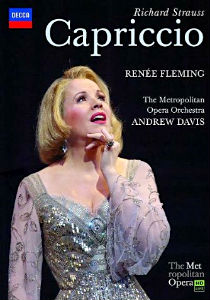
Capriccio skates along on a fine line between a fascinating idea-driven debate about the purpose of art in the wider world and a rather fussy narrow debate about text and music interesting only to those interested in opera as theatre.
The Monday, 12th December, Weill Hall recital debut of Signora Chiara Taigi, a strikingly good looking Italian soprano, who had made her American operatic debut this past March, starring as Selika in the OONY production of Meyerbeer’s long-neglected L’Africaine, was something Your Own Camille had looked forward to with a high hopes and a faintly…
“This is the end of Western culture,” Richard Strauss proclaimed after a rehearsal of his penultimate opera Die Liebe der Danae, in Salzburg in 1944. The octogenarian composer, increasingly on the outs with the Nazis and switched off from contemporary music currents, could well have identified with his protagonist Jupiter, a once-mighty God caught up in an off-kilter…
Tell us: What’s your favorite Verdi performance?
Hasten thee to feed another quarter of conversation for The Talk of the Town!

