Get to the ponto
Mitridate, re di Ponto at the Teatro di San Carlo showcases some energetic performances — and some unfortunate stage busyness.
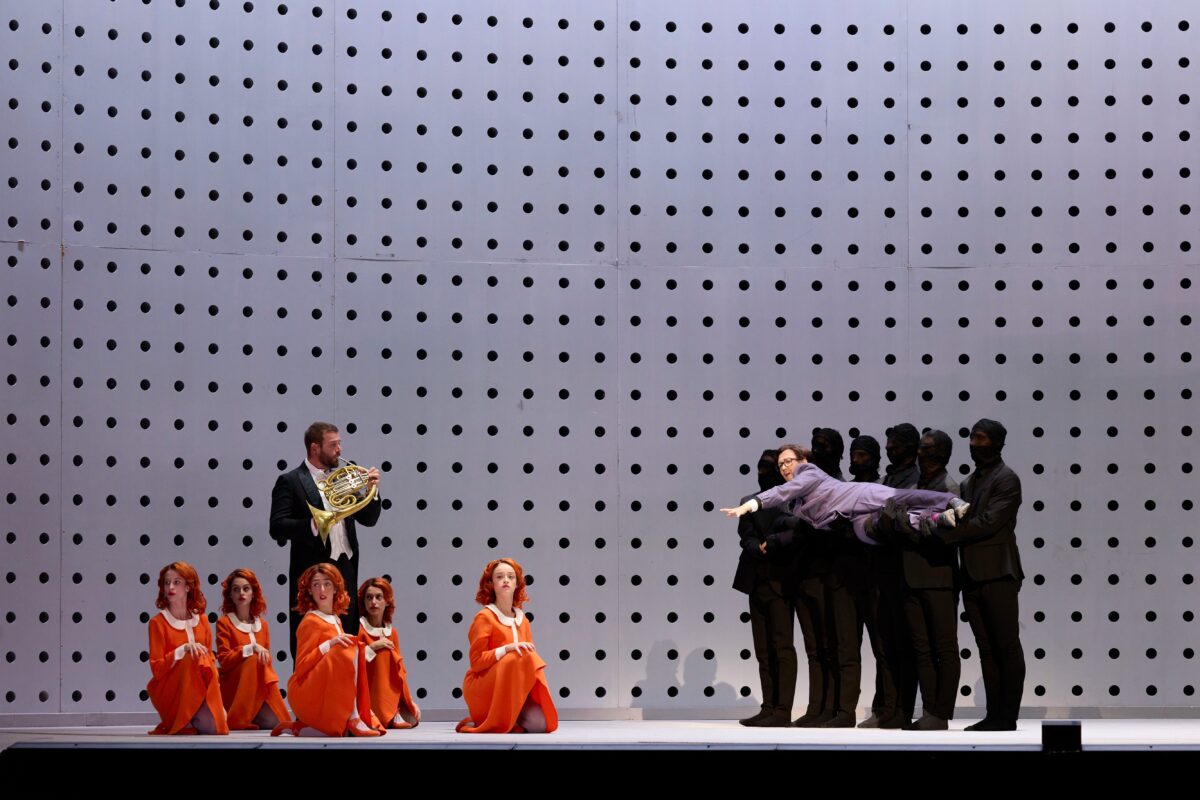
Photo: Luciano Romano
It is a precious experience to see an opera like Mozart’s Mitridate, re di Ponto (1770) today in a theater from the same era. The Teatro di San Carlo in Naples has been in operation since 1737; Mozart had visited it just a few months before beginning work on Mitridate. It is true that the house looks different today than it did in Mozart’s time, but the plan of that unusually large theater has remained similar to the original even after restorations and the fire in the early 19th century.
Therefore, the widespread notion that 18th-century operas are not suited to large theaters has no historical basis. Mitridate marks Mozart’s first major venture into opera seria. He was only 14 years old when he received the commission from the Teatro Regio Ducale in Milan, one of the most important opera houses in the Austrian Empire, which burned down six years later and was replaced by the new Teatro alla Scala. Although the singers were initially skeptical of a teenager’s score, they were later forced to change their minds given the opera’s success.
Its structure is typical of all 18th-century opera seria, with a continuous alternation between recitatives and solo arias, but the forms have by this point been significantly expanded compared with the works of Vivaldi or Handel from just a few decades earlier. In Mitridate, many recitatives are accompanied by the orchestra (rather than just the harpsichord), and the arias move beyond the mechanical regularity of the simple da capo form to incorporate variable internal repetitions, with extremely long virtuosic ramblings that constantly challenge the voices. As a result, half an hour into the performance, we are still listening to only the third aria.
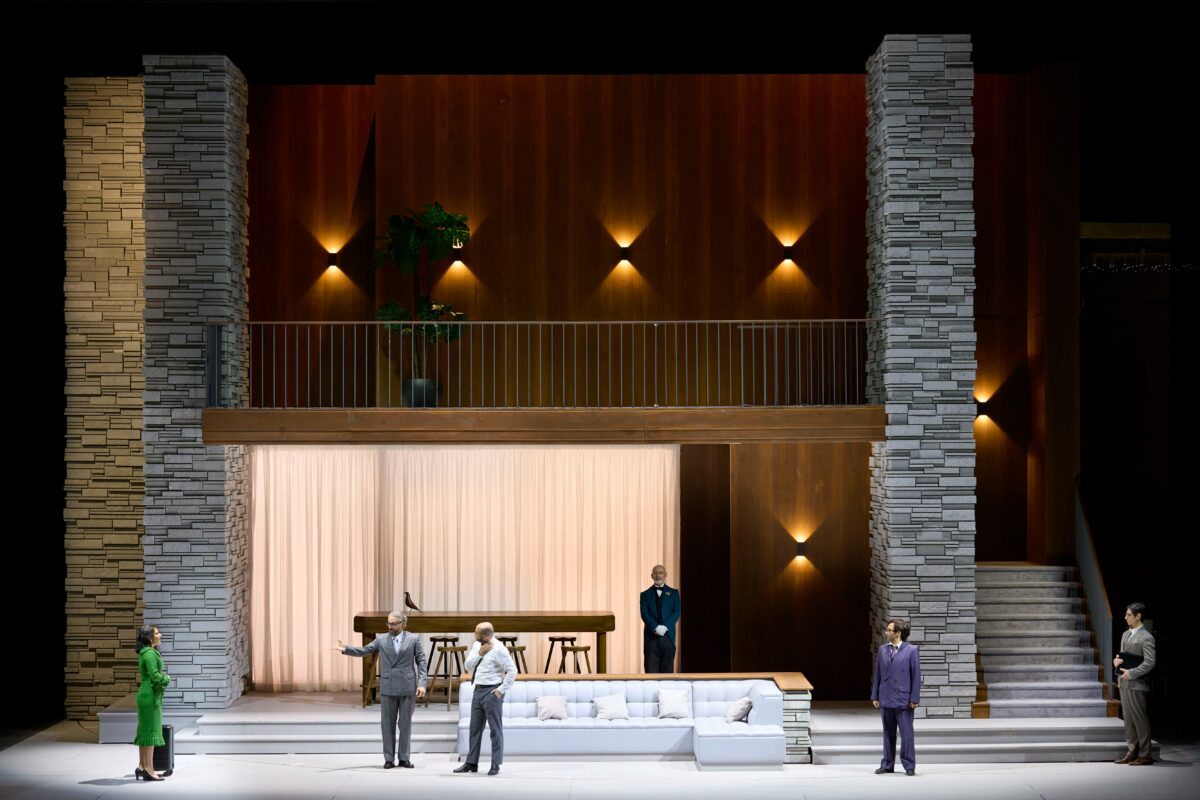
Photo: Luciano Romano
Sustaining such lengths today requires a superb musical performance and compelling direction, even at the cost of significant cuts to the score. But it would have been enough simply to respect the two intermissions intended by the librettist and composer (in accordance with the practice of the time), rather than combining two acts into one (as is all too often done today) to make the performance more accessible to today’s audience.
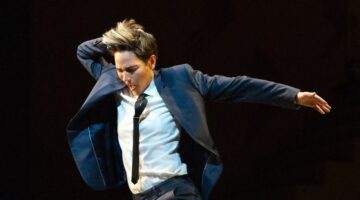
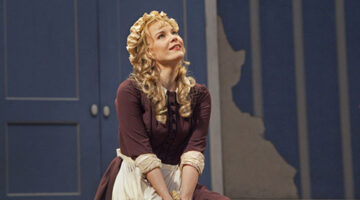
For the occasion, the Teatro di San Carlo has assembled a select group of highly accomplished singers. The three women vie in virtuosity throughout the evening, moving their voices across the entire vocal range at great speed and lavishing the audience with high notes of rare beauty and purity. It is impossible to rank the three sopranos in terms of technical perfection; instead, they differ in their expressive qualities: Sara Blanch (Aspasia) embodied a strong and determined character, Mariangela Sicilia (in the male role of Sifare) expressed the melancholy of the soul, and Giuliana Gianfaldoni (Ismene) gave voice to more frivolous sentiments. It is notable that all three are well-known and highly acclaimed interpreters of the 19th-century repertoire and thus approach the young Mozart with a pre-Romantic sensibility rather than a late-Baroque one — and the result is magnificent!
Opinions differed, however, regarding the countertenor Franco Fagioli (Farnace): He was perfect in his portrayal of the capricious son and the violent lover and widely applauded for some exuberant vocal virtuosity (such as an endlessly long messa di voce at the end of his final aria). But the quality of his voice remains unpleasant — as is the case with almost all falsetto singers — and is exacerbated, in his case, by his calculated emphasis on the differences in tone quality between the high register (with notes that were often opaque or shrill), the middle register (of great quality), and the low register (unnecessarily pumped, with many chest notes in the Verismo style). As for the opera’s protagonist (Mitridate), the tenor Giovanni Sala once again demonstrated great professionalism and absolute control of his voice, even in the most technically demanding passages, confirming himself as the ideal interpreter of this repertoire.
At the helm of the San Carlo Theater Orchestra, Riccardo Frizza conducted the entire performance with his usual precision and firmness, to which he infused a decisive vitality and attention to detail, always in close harmony with the stage. Special praise goes to horn soloist Alessandro Fraticelli, positioned on stage to perform a duet with Sifare in the aria “Lungi da te mio bene”: his intonation and softness of tone were simply admirable.
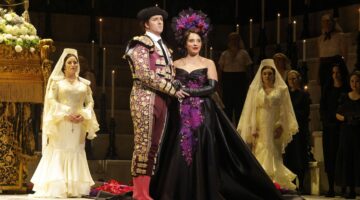
The production, directed by Claus Guth, premiered last year in Madrid, in a co-production with Naples, Frankfurt, and Barcelona. Christian Schmidt’s sets are elegant and refined, transforming a pre-Christian Crimean palace into a mid-20th-century American villa inspired by the television series “Succession.” Positioned upon a revolving platform, the realistic settings alternate with a space outside time and place, into which the characters are catapulted during moments of despair or introspection — that is, during almost every aria. And it is there that they are invariably doubled or tripled by stand-ins, and overtaken by the phantoms of the psyche, portrayed by black mimes (the highly talented dancers of the San Carlo Ballet School), who at every turn remind us — through rhythmic collective movements — just how deeply all the protagonists of the drama are suffering inwardly, thereby diverting attention from the singing toward repetitive, intrusive, and unnecessarily didactic imagery. All of this was indeed executed with great technical perfection; but to what end, if not to declare, for three hours straight, a lack of faith in the theatrical power of Mozart’s music?

Marco Beghelli
Marco Beghelli has been frequenting opera houses for half a century. Today, he is Professor of Musical Dramaturgy at the University of Bologna where he founded the Archivio del Canto in which books and documents on operatic singing and singers are collected
-
Topics: Review, teatro san carlo
-
People: Christian Schmidt, Claus Guth, Franco Fagioli, Giuliana Gianfaldoni, Mariangela Sicilia, Riccardo Frizza, Sara Blanch
-
Works: Mitridate, re di Ponto
-
Places & Organizations: Teatro di San Carlo