Lili among thorns
Tobias Picker and Aryeh Lev Stollman‘s Lili Elbe receives its first recording ahead of its stateside transition.
 By
Dawn Fatale
By
Dawn Fatale
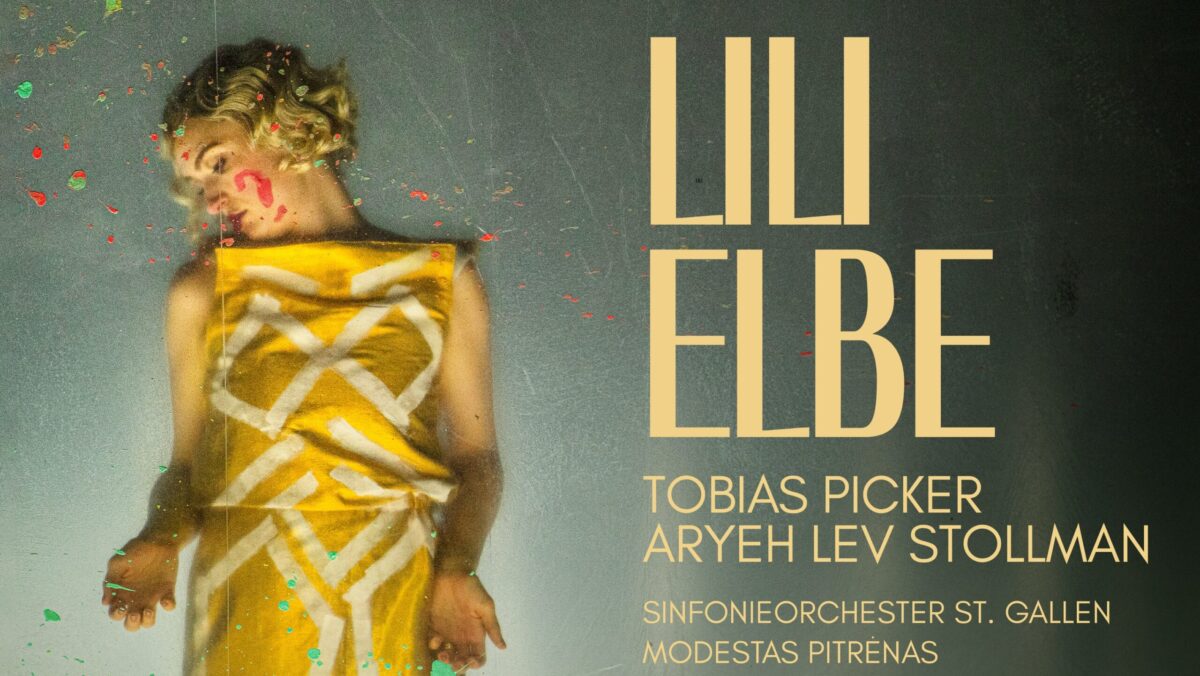
The Danish artist Lili Elbe (1832-1931) was a transgender woman and one of the first documented recipients of gender affirming surgery. Awareness of Elbe’s pioneering role was increased considerably by The Danish Girl, a novel by David Ebershoff that was made into a movie starring Eddie Redmayne. Both book and movie take liberties with the facts of Elbe’s life and her complex relationship with her wife, the painter Gerda Gottlieb.
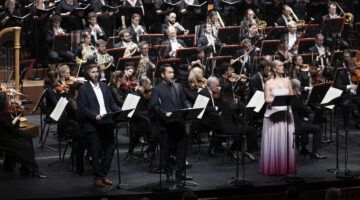
Now, these artists are the subject of Tobias Picker’s latest opera, Lili Elbe, to a libretto by Aryeh Lev Stollman that stays closer to the facts of Elbe’s life. This work premiered to considerable acclaim in October 2023 at Theater St. Gallen in Switzerland. It will have its US premiere in Santa Fe on Aug 1. Happily, a recording of the Swiss production is being released at the end of this month, featuring the transgender baritone Lucia Lucas in the titular role. Lucas served as dramaturg during the work’s development and will headline again in Santa Fe.
This compelling opera treats its subject with great sensitivity. It traces Elbe’s journey without undue histrionics, preachiness, or sentimentality. The libretto covers many important incidents from her life starting from Lili’s first recognition of her true feminine nature. Gerda had asked her to pose as a woman so she could continue work on a painting when the original model was a no-show. This experience awakens something in Lili; the moment is very beautifully realized in the score, both in the duet and the extended violin solo that follows. From there, Gerda slowly comes to terms with the fact that she no longer has a husband, and Lili grows more comfortable with being seen as a woman in public; the couple moves to Paris where Lili starts a relationship with a perfumier. Lili recognizes that she wants to bear children despite opposition from family and the lack of medical precedent. Nonetheless, she receives legal recognition as a woman, has her marriage annulled, and finds a physician, Kurt Warnekros at the Dresden Municipal Women’s Clinic, who agrees to complete the set of surgeries for her sex change. The final operation is a highly speculative and untested uterus transplant. That transplant ultimately kills Elbe because her body rejected the transplanted organ, which was apparently taken from a mother at the clinic against her will.
This is more than enough for a single opera to cover; the rush of incidents doesn’t always let the opera find the time to catch its breath or give the listener a chance to figure out who all the new characters are. Nonetheless, the music is varied and often memorable with particularly effective use of the chorus. The chorus is more than just interested bystanders and art patrons; there’s a striking passage towards the work’s end where the chorus steps in to express Lili’s feelings as she awaits her final surgery.
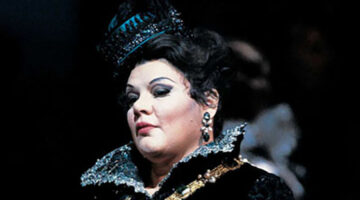
Lucas brings exceptional empathy, emotional range, and authority to the challenging title part. The voice can wobble under pressure, but the performance is still a considerable achievement. She is well-matched by soprano Sylvia D’Eramo as Gerda. Her character must move quickly from bewilderment to understanding and support, all while quickly reconfiguring her own life and relationships. D’Eramo handles this arc very convincingly even if there are moments of vocal stress. There are a large number of subsidiary characters with many of the singers taking on multiple parts. Their performances are vivid, even when a character gets only a brief moment of stage time. Of particular interest is the work’s handling of Dr. Warnekros. Lili may have found him a hero for his pioneering work, but he did not test his ideas before implementing them on Lili and other patients. His role during World War II included performing forced sterilizations and other “research”. The records of his clinic were destroyed in the bombing of Dresden, and the full extent of his work is unknown. The music and libretto emphasize his sinister side. Bass Msimelelo Mbali digs into these ambiguities. Modestas Pitrenas leads the Sinfonieorchester St Gallen and the Choir of the St. Gallen Theater. He captures the cinematic momentum of the work while still bringing out many felicities and recurring motifs in the orchestral writing.
The work definitely deserves a listen (or several as I did). Access to a libretto is absolutely essential. There is an interesting video from Works In Process where the creators discuss the development of the work. Tobias Picker also has a full video of the St Gallen production on his youtube account; that production team is different from the one in Santa Fe.
There’s a larger discussion to be had about the representation of LGBT characters in opera and what considerations should go into choosing singers for those roles. I’m interested in your thoughts on that broader topic and this opera in particular.
Dawn Fatale
Richard Lynn is a New York City based opera lover who writes at parterre box under the name Dawn Fatale. His love of opera started at a very young age when he used to listen to the Met broadcasts and obsessively read back issues of Opera News in lieu of socializing at family gatherings. In college, he majored in Chemistry while taking as many music and theater courses as possible. He worked at the Music Library to get access to the opera recordings that were off limits to undergraduates. Since the early 1990s he has been writing about opera at parterre box and other publications and is particularly interested the evolution of staging and performance practices.
-
People: Aryeh Lev Stollman, Lucia Lucas, Modestas Pitr?nas, Modestas Pitrenas, Msimelelo Mbali, Sylvia D’Eramo, Tobias Picker
-
Works: Lili Elbe
-
Places & Organizations: Santa Fe Opera