Tabor-ing under no illusions
A grandly sung revival of The Ballad of Baby Doe at Central City Opera mines poignance from America’s past and present.
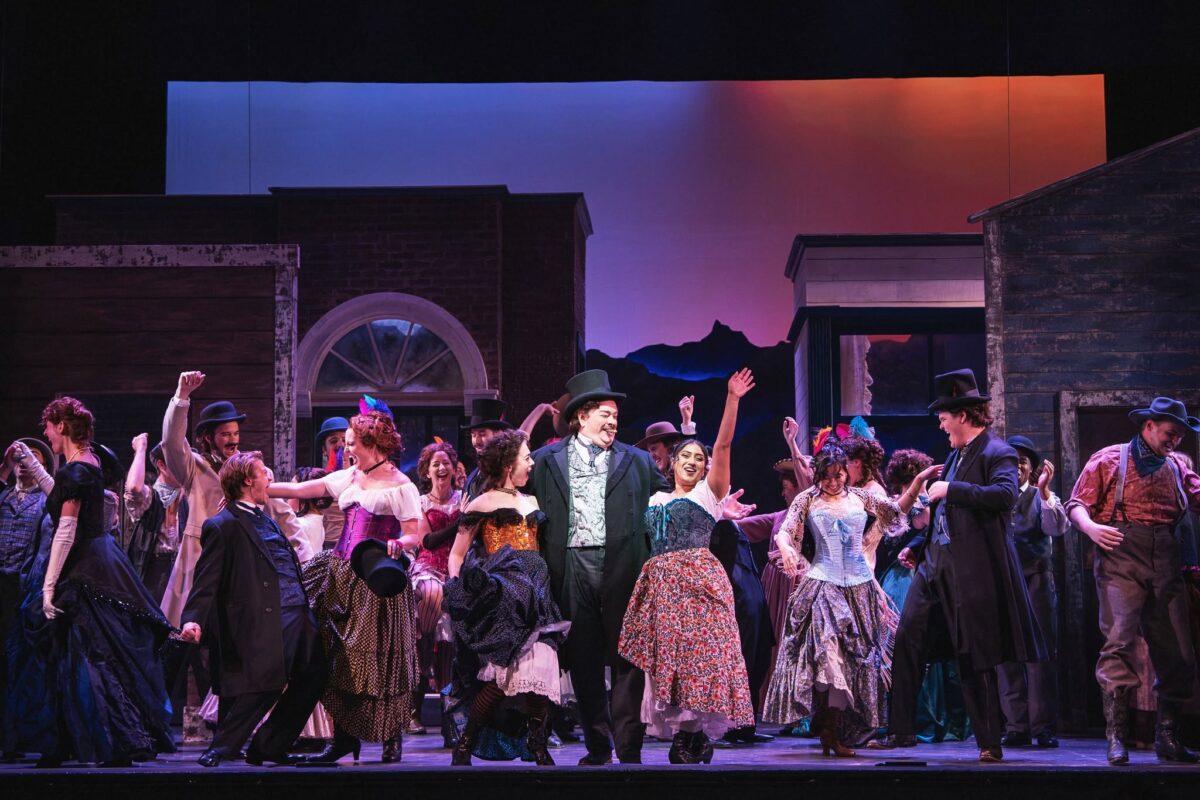
Photo: Amanda Tipton Photography
Is there a more quintessentially American opera than Douglas Moore and John Latouche’s “The Ballad of Baby Doe”? And, as if that wasn’t special enough, the historical resonance of watching The Ballad of Baby Doe inside the stone walls of the Central City Opera House on the 4th of July feels like what the tourism brochures call “an Experience”. A spectacular convergence of anniversaries makes this production less a revival and more a homecoming: America turns 250, Colorado celebrates its sesquicentennial, and the opera itself marks exactly 70 years since its 1956 world premiere on that very stage. The very floorboards of the CCO House were walked by the actual historical figures depicted in the opera. Horace Tabor was an early patron of the theater, and President Chester A. Arthur actually stayed at the adjacent Teller House during his 1883 western tour—the exact historical visit dramatized in Act II.
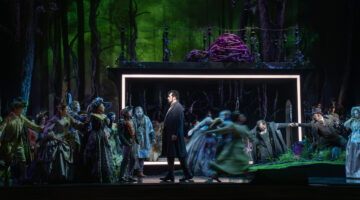
Directed by CCO alumna Cynthia Lawrence, this brand-new production attempts to balance the myths of the American West with the stark, painful realities of the silver crash that destroyed its protagonists. Lawrence E. Moten III’s scenic design attempts to subvert standard frontier clichés, albeit with definite limitations. Alongside romanticized mountain vistas, the staging emphasizes structural weight—wooden beams, iron, and the unimaginative architecture of late-19th-century Leadville and Denver. It mirrors the psychological trajectory of the opera: a literal and figurative carving out of fortune from the earth, which eventually collapses inward. Sadly, the small size of the stage makes the mise-en-scène somewhat challenging, and even Moten’s ingenuity can’t always compensate for the wobbliness of the scenery.
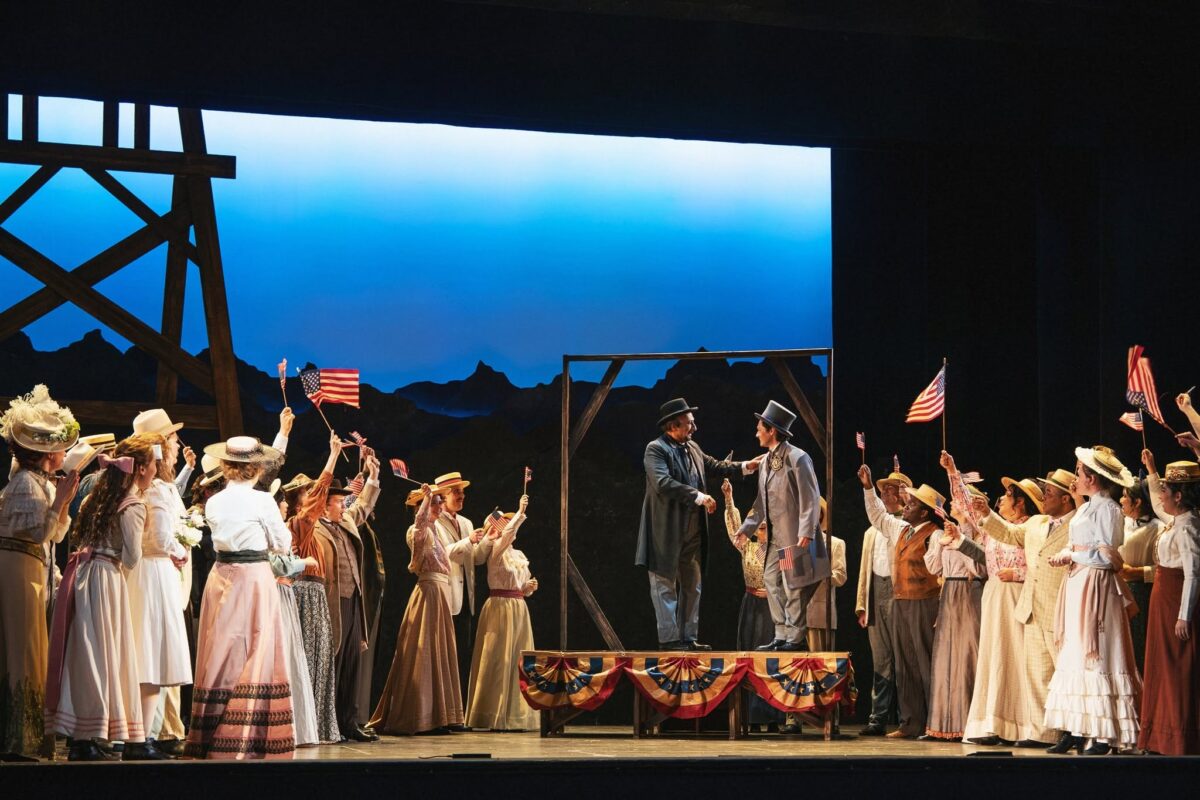
Photo: Amanda Tipton Photography
Under the baton of Aaron Breid, the Central City Opera Orchestra captures the distinctly American color of Moore’s score. About that score: Puccini it ain’t. The parlando is forced and awkward at times, especially when the three Tabors aren’t on stage: the opening scene set in Leadville, for example, is dreary and unfunny, as is the wedding reception scene before the happy couple arrives. Moore had fused ragtime rhythms, parlor songs, and folk hymns into the score, juxtaposing them against a late-Romantic orchestral lushness. Breid is sensitive to the nuances of such a medley, treating the populist melodies not as pastiche, but with the grand operatic seriousness they deserve. However, even he can’t sugarcoat the spectacle of the failed presidential candidate William Jennings Bryan pontificating on gold and silver, as the chorus moves around, singing Bryan’s praises, as if anticipating an immersive production of Hair. The singing, at least, was glorious, and much can be forgiven of a chorus that sings the material so well. Smaller roles such as Mama McCourt and Tabor’s friends, too, were adequately sung.
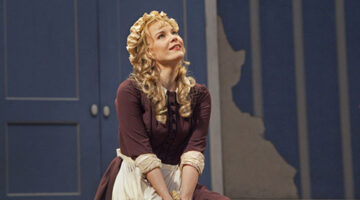
Let us now turn our attention to the three people who make or break this opera – the Tabors. In fact, I am of the opinion that this piece is less The Ballad of Baby Doe and more The Ballad of the Tabors, with silver making an honorary fourth principal. Virginia Mims, in her role debut as Baby Doe, is reminiscent of Ruth Welting and Elizabeth Futral in the role, rather than its most famous exponent, Beverly Sills. She is pert and pretty, her silvery soprano well-equipped to handle the treacherous tessitura of “The Willow Song” and “The Silver Aria”. However, it is not clear to me at which point her Elizabeth “Baby” Doe changes from a slightly common, gold-digging ingenue into a dignified, resilient woman in love, or what triggers such a change. Mims is definitely a better performer in the second half of the opera when the tide starts to turn against the Tabors, and her “Colorado Liebestod”, “Always through the changing”, deservedly brought the house down.
Legend has it that in Knickerbocker Holiday – yet another American show about love and politics – the gruff anti-hero Peter Stuyvesant’s serenading of the young heroine with his “September Song” made audiences root for him over the nominal hero of the piece, Brom Broeck. Horace Tabor – immortalized by baritone Walter Cassel, who had a near-monopoly on the role for many years – is a similar character. Here, Weston Hurt’s robust bass-baritone commands the stage with the booming confidence of a silver king, yet his Act II monologue reveals his vulnerability as the gold standard destroys his silver empire. The glorious music makes us forget for long stretches of time that Horace is a stupid, stubborn man who treats his first wife like dirt, throws his money around recklessly, and refuses to face reality as he drags his second family down with him to penury and ignominy. He is, after all, Our Pioneering American Hero, and the opera treats him kindly, even though it stops short of glorifying him.
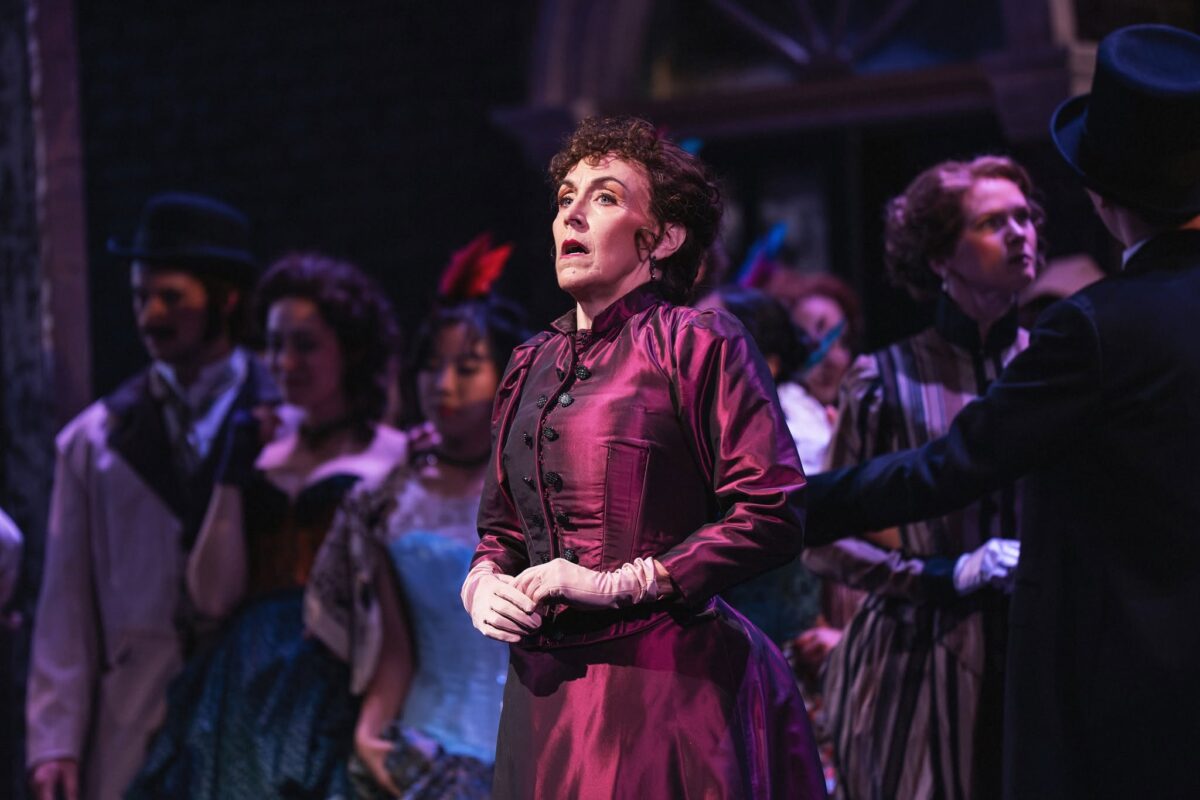
Photo: Amanda Tipton Photography
The moral center of this opera, insofar as it has one, is Horace’s rejected first wife, Augusta Tabor, sung in this production by high mezzo Emily Pulley. Her Augusta is chillingly rigid at the beginning, representing the cold, unyielding societal codes of Colorado’s nouveau riche, but the character is so painfully self-aware that it is easy to forgive her. We empathize with Augusta when she sings of her past and how her struggles have aged her. We cheer for her when she is finally spurred to retaliation by Horace’s attempts to divorce her, the enormity of which action is usually lost on the audience unless they are aware of the implications of being a divorced woman in the 1890s. Her attempts to warn Horace and Baby Doe of the stupidity of Horace’s obsession with silver, and her final scene where she contemplates coming to Horace’s aid despite his rebuffs are masterclasses in vocal tragedy. Pulley sings the material well, like her predecessors in the role (Martha Lipton created it, Frances Bible and Joyce Castle followed her in making the role their own). If I am allowed to nit-pick a little, though, I will say that her slight air of crotchetiness and an intermittent tendency to sharp is reminiscent of mid-career Anja Silja. It is my personal opinion that Augusta Tabor is a falcon role, and historically speaking, we could have done with a Shirley Verrett, a Martha Mődl, or an Anna Caterina Antonacci in the role.
After that brief diversion into the land of operatic fantasy football, let us return to the real world: Colorado in 2026, where, by anchoring the production in real human stakes rather than mythic folklore, Cynthia Lawrence and her cast have stripped away seventy years of dust. This Baby Doe is high-spirited, grandly sung, and profoundly poignant. For a festival celebrating Colorado’s 150th year of statehood, Central City Opera has delivered a towering reminder that our deepest histories are best told through song. Maybe one day we’ll have a similar opera about today’s American electorate, in which the Horace Tabors, motivated by spite and venality, hurtle like a raging animal towards disaster, supported unreservedly by the blinkered Baby Does who can see nothing wrong in such a course of action, while the Augusta Tabors amongst us quietly despair of the outcome of such an experiment.

Ronnie Banerjee
Ronnie Banerjee is an opera-lover and a scientist. Their very first opera was a Salome at the Leipzig Staatsoper. They are a Canadian researcher with a PhD in nanobiomaterials from Saskatoon, where they worked at the Canadian Light Source (a synchrotron), and occasionally scared personnel there with bad renditions of the confrontation scene from Maria Stuarda. They are presently based in Colorado, and look forward to visiting the Met one day.
-
People: Aaron Breid, Anja Silja, Anna Caterina Antonacci, Beverly Sills, Douglas Moore, Elizabeth Futral, Emily Pulley, Frances Bible, John Latouche, Joyce Castle, Lawrence E. Moten III, Martha Lipton, Martha Mödl, Ruth Welting, Shirley Verrett, Virginia Mims, Walter Cassel, Weston Hurt
-
Works: The Ballad of Baby Doe
-
Places & Organizations: Central City Opera