WNO performs a family-friendly opera each December, and this year’s installment was a revival of The Little Prince, composer Rachel Portman and librettist Nicholas Wright’s adaptation of Saint-Exupéry’s story, the second-most-translated work in the world (following the Bible). The opera premiered at Houston Grand Opera in 2003 under the direction of Francesca Zambello, now artistic director of the WNO.
The first female composer to win the Oscar for Best Original Score (for the 1996 Emma), Portman has had a prolific career in film. The Little Prince is her first, and to date, only opera, and the romantic sweep of her score suggests her Hollywood background. Dream-like instrumentation featuring the harp and animated percussion honors the fantasy and humor of the original story. Micah Gleason conducted a subset of the WNO Orchestra in a lyrical rendition of the score. Wright’s libretto is anchored in Saint-Exupéry’s text, weaving in the elements that fans of the original expect with the addition of witty rhyming couplets. The well-loved novella treats young readers as independent thinkers; Saint-Exupéry’s writing is free of patronizing tones. Portman and Wright’s adaptation similarly treats its young audience as capable opera listeners, an approach that may encourage some to return to the opera house in the future.
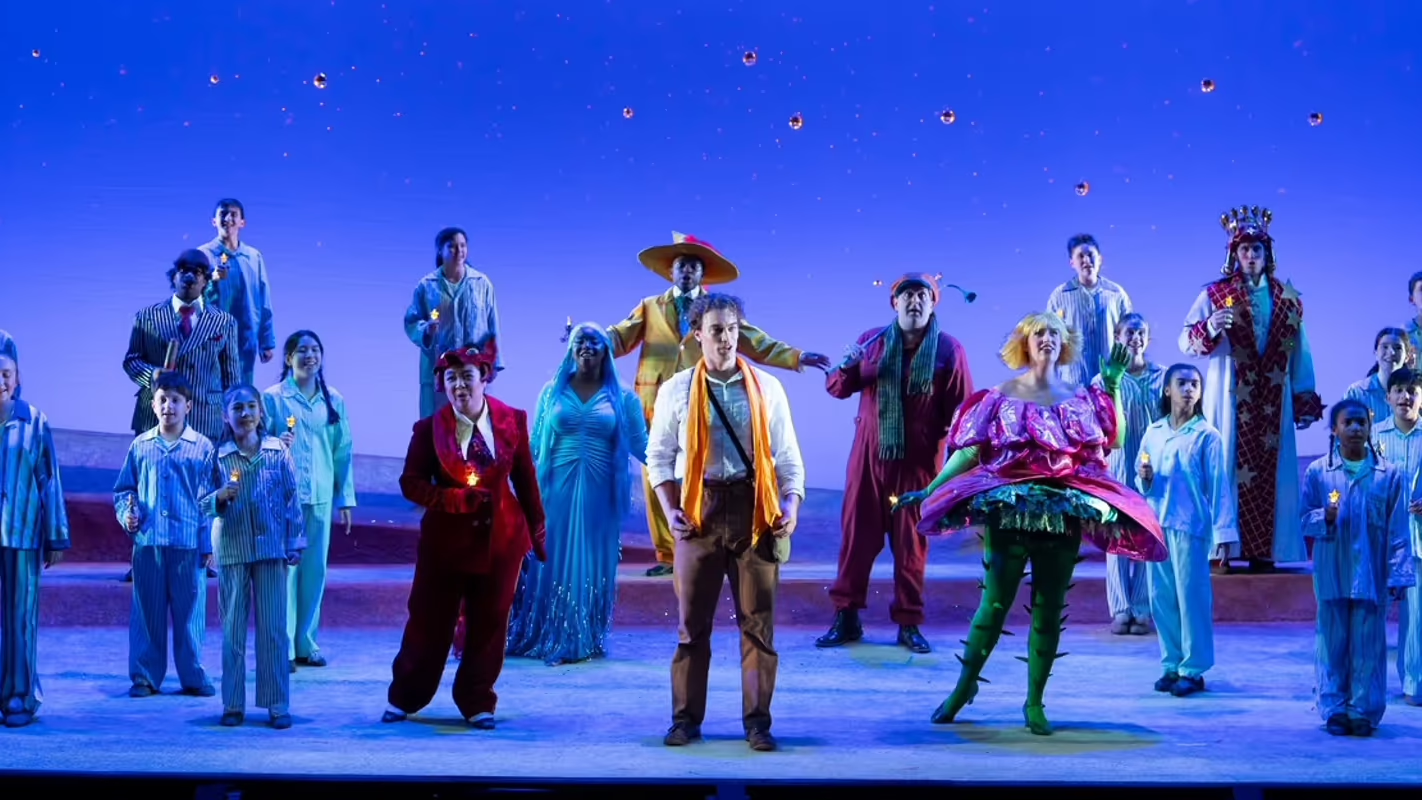
Discussions about the future of opera as an endangered art form are omnipresent. The WNO has adopted a strategy of not only offering holiday operas with appeal to children and families, but also programming works with roles for young performers, as in the cast of The Little Prince. This is an effective way to bring new generations to opera and encourage the artists of tomorrow. Boy soprano Robby Potter III sang the challenging role of the Little Prince on opening night with confidence and gravitas, embodying the character’s wisdom and heart. The Washington National Opera Youth Chorus poignantly created the rich landscape of Saint-Exupéry’s story by portraying roles that included stars and cranes. Director Corinne M. Hayes led a memorable revival of this production that looked as fresh as when it was new.
Members of WNO’s Cafritz Young Artists program filled the rest of the roles. The annual holiday opera is one of the primary performance opportunities for these up-and-coming singers, who also occasionally take on lead roles of a WNO mainstage production for one night of the run, smaller roles in the mainstage operas, and roles in the American Opera Initiative’s 20-minute operas. Chandler Benn’s baritone was warm and stately in the role of the Pilot who crash-lands in the Sahara Desert, befriending the Little Prince and narrating the story. Soprano Lauren Carroll sounded fittingly flighty as the vain and self-absorbed Rose from the Prince’s home planet, Asteroid B-612.
Mezzo-soprano Michelle Mariposa made a big impression as the Fox who teaches the Little Prince what it means to tame (and by extension, to love) and helps him understand the story’s great secret of life: “One sees clearly only with the heart. What is essential is invisible to the eyes.” Mariposa’s clear, plummy mezzo and tender delivery of some of the most philosophical lines of the story, as well as her spirited stage presence, stole the show during her scene.
Tenor Hakeem Henderson gave a delightfully cocky performance as the Vain Man; he didn’t miss a beat with his kazoo solo (the first time I’ve seen that instrument in an opera) and was also a wily Snake, who is responsible for returning the Little Prince to his home. Nicholas Huff lent a nicely wispy tenor to the blitzed Drunkard and sang a delicate, earnest Lamplighter, another of the story’s more reflective characters. Bass Atticus Rego gave a satisfyingly dry, majestic rendition of the solipsistic King. Baritone Thandolwethu Mamba offered audiences a boisterous, self-important Businessman.
The beautiful set design by the late Maria Björnson (who won Tony awards for her set and costumes for Phantom of the Opera) closely follows Saint-Exupéry’s original watercolor illustrations, down to the characteristic angle of his horizon lines. The effect is to immerse the viewer in the pages of the classic book.