
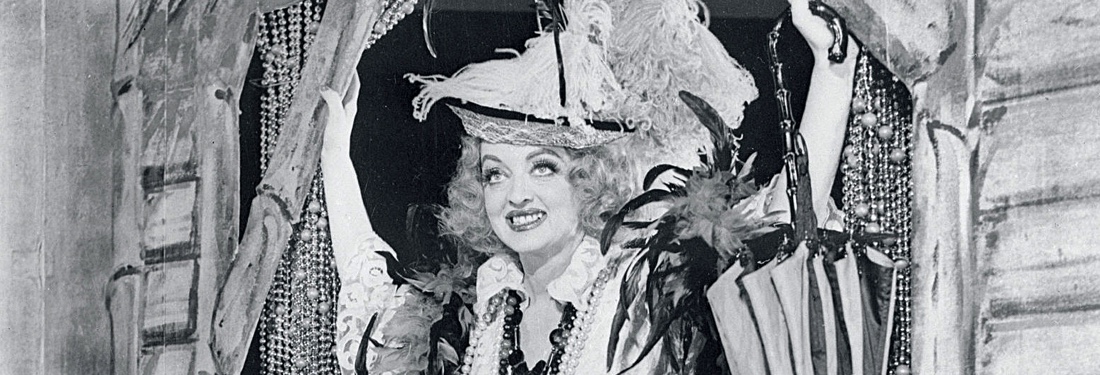
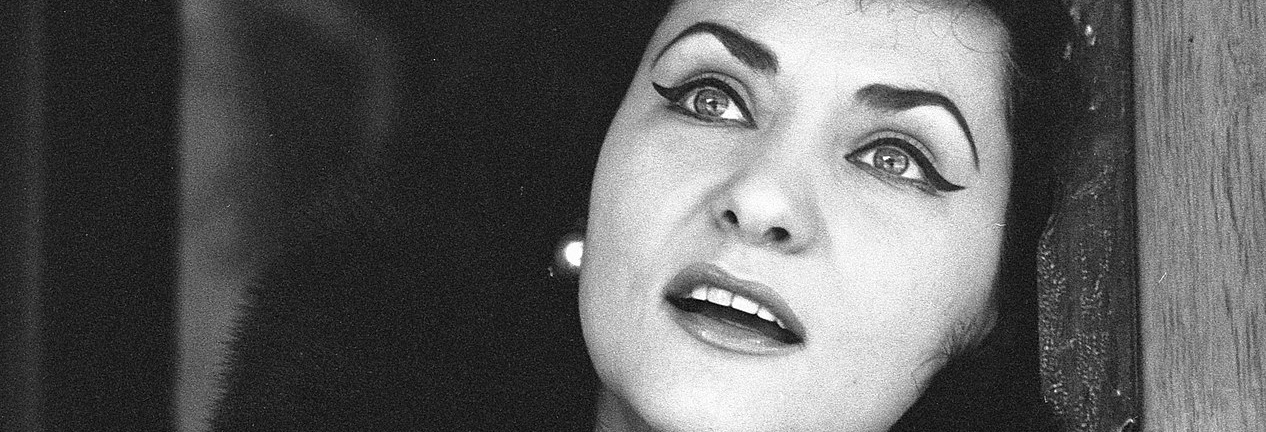
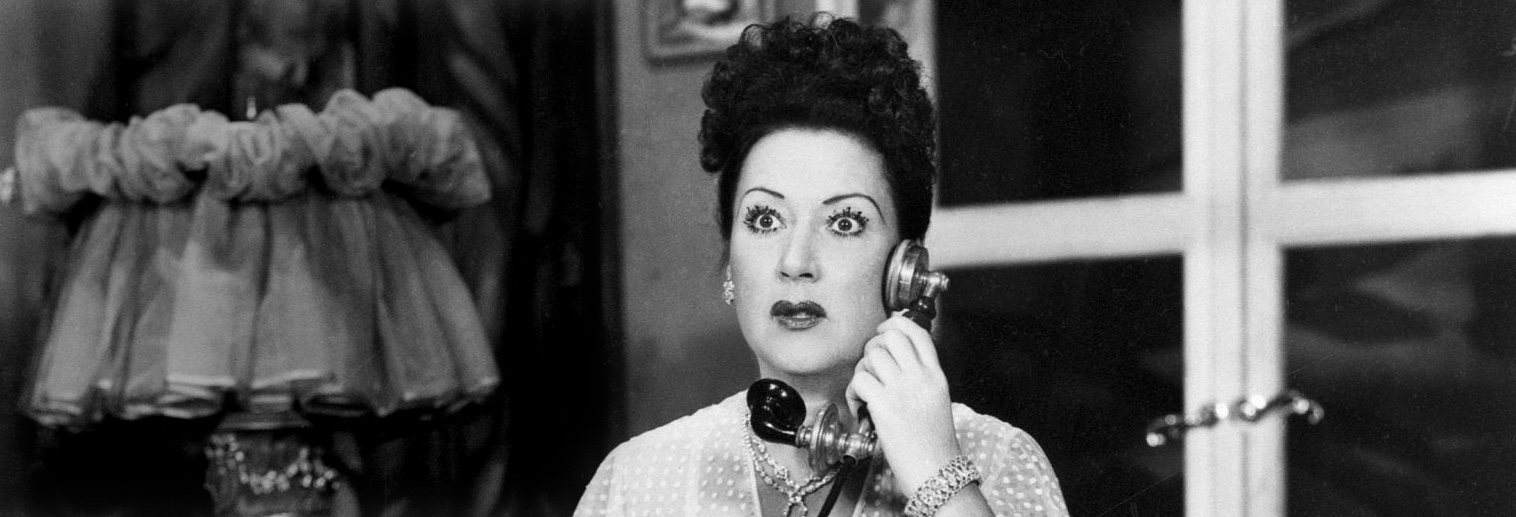
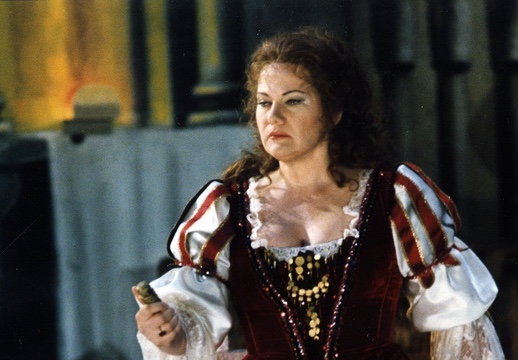

Galina Vishnevskaya 1926-2012
The soprano and political dissident of the postwar Soviet Union died yesterday in Moscow. She was 86. [New York Times]
I was priviledged to attend one of her masterclasses at Curtis. Remarkably, considering her reputation, all of her instruction was techinical/vocal, mostly to do with breath control. When the students returned for their second go, all of the dramatic interpretations had improved. She had freed them.
I never saw Della Casa live, but I did see Vishnevskaja once as Tatjana. Rest in peace.
I saw Vishnevskaya once, as Aida at the Met. I don’t remember much about her performance.
Clita, I found her Tatjana sort of old-fashioned but sincere and straightforward -- she didn’t fake anything. She obviously knew & loved the music and that is the thing I remember most -- she caressed the lines as if she were visiting an old friend.
Was it anything like this?
Now, if Monastryska sang like that!
Unfortunately I too missed Della Casa, but was lucky to see Vishnevskaya, Rostropovich and the National SO in a most memorable Shostakovich Fourteenth Symphony at Carnegie Hall. She was electrifying.
I never saw Della Casa live either, but I did see Raina Kabaivanska once as Elisabetta in Don Carlo.
Thinking of others who have left us here.
A real baritone!
Fabulous, QPF. Bel canto next to Dima’s huffing, puffing and barking. My fav baritone!
Who is it?
Tito Gobbi -- if you click on the YouTube icon (bottom right), you are taken to their site and get all the info there.
Thanks Manou -- he was quite well disguised behind that beard. I saw his last RO performances as Scarpia and Falstaff, so I should have recognised him!
I assumed everybody knew who he was. I saw him as Scarpia, Falstaff and Jago. I could kick myself for not going to his Rigoletto at the Met. I talked to his daughter and she didn’t know that he had had sing that role at the Met.
had sung
Clitters,
are you chatting 2 nite?
I think I’ll give it a listen.
c u later, Del Toro!
Cammiest, we are going to an opening of Kiff Slemmons’ work and maybe to dinner afterwards. Enjoy Alagna!
xoxoxoxoxoxoxo
Good! Have fun…I just want you to know that, based upon your recommendation ALLEIN, I am dragging my sorry arse to hear the last Ballo in town on Friday, just on account of Ms. Amber Wagner.
I’ll give you all the goods on Saturday or Sunday.
Have a cosmo for me, CDelT!
as ever —-
C.
Galina!
at 5:59
This brings it all back -- I had this disc when I was a teenager and played and played and played this track obsessively --
Mind you, she could lighten up too -- there’s a very spirited recording of Falstaff (in Russian) -- terrible sound -- but sprightly conducted by Melk-Pashaev, with Galina as Alice Ford -- and Arkhipova as Quickly.
And there’s a Soviet comic opera based on the Taming of the Shrew by Vissarion Shebalin -- it gets a good mention in the ‘Shakespeare and Music’ book -- and Galina played Kate -- there is supposed to be a recording of that, but I’ve never traced it -- something possibly M. Croche might know about……..
Belfagor, there’s a link to an mp3 of Shebalin’s Shrew with Vishnevskaya on this web page. I can’t check right now to see whether it works.
You are the fount of all knowledge. Alas, can’t get it to work for some reason.
Ok, try this link -- but it will only be for the first half of the opera.
Brilliant it works!
Listening to the prelude. It must have been tough with Prokofiev and Shostakovich at your elbow -- amazingly reactionary stuff -- could have been written 100 years earlier, the odd lop-sided key change aside.
Thanks for leading me to this -- I’ve long wondered what it was like…..
A fresh, complete copy might show up once again in the wake of Vishnevskaya’s passing.
In related news, Opera Omsk this year restaged Shebalin’s Shrew, in honor of the Omskovite composer’s 110th birthday.
Just in case people were wondering, “Hey! What’s happening in Omsk?”
Be it noted that Shebalin left his native city as a young man. The episode is described in his memoir “A Farewell To Omsk”.
Who knew Omsk would be so lively!
It wasn’t. That’s why he was saying farewell to it.
Except that was 90 or so years ago -- doubtless now it’s awash in oil, icicles, luxury limos, sharp men in dapper suits, and for entertainment they have opera, gay lynchings……all of the joys of modern liberated Russia……
Need to smile now:
It should also be noted that African-American soprano Gloria Davy died yesterday. The Times gave her a very nice obit, noting her facility in contemporary music although that obviously is not what she was engaged for at the MET.
Another OT, but WTFF? Now Ravi Shankar, too?
Hey guys, please look both ways before crossing the street. Death is winning way too many chess games at the moment.
I’d never heard of Shankar until I saw Satyajit Ray’s Pather Panchali, which he scored, back in my college days. Speaking of chess games, it holds up way better for me than The Seventh Seal.
That is indeed a wonderful film, as are the subsequent, Shankar-scored “Aparajito” and “World of Apu”. (My favorite Ray film remains “Jalsaghar”, which is also one of the great movies about music.)
While I imagine most of the Shankar obits will mention the Beatles, but it’s also important to remember the impact he had on American experimental music. Terry Riley first got to known Hindustani music through Shankar’s performances and the process of notating and arranging Shankar’s music led Philip Glass to rethink his approach to rhythm and meter. Of course there were other Indian musicians, such as Ali Akbar Khan, Ustad Bismillah Khan and Pandit Pran Nath, who served as inspiration or as mentors for younger American musicians. All of them had an impact on American music that was not merely cosmetic.
I was never been able to warm up to The Music Room, except for the great climactic music/dance sequence, the way I have to the Apu Trilogy, or even Devi and The Big City. But I was still a young man the last time I saw it--I’d barely discovered opera--and no doubt it’s time for another visit.
Ray himself was a musician of considerable talent, and composed stuff for a lot of his movies. Some of his other movies, possibly less well-known outside India, are:
1. The Goopi-Gayen-Bagha-Bayen trilogy: A series of allegorical tales about the adventures of a singer and a musician who can literally ‘freeze’ people with their music, these movies deal with issues such as the Cold War, the Emergency in India, jingoistic propaganda and its effect on people, mass hysteria and mob mentality, and so on. The second movie in the series, “Hirak Raja-r Deshe” (“In the Land of the King of Diamonds”), is the most politically overt, and relates to its time by exploring themes such a “brain-washing machine”, education as a threat to authoritarian governments, and the chaos that usually follows the fall of a dictatorship.
2. The “Homage to Kolkata” trilogy: Three movies (“Pratidwandi”: “The Antagonist”, “Jano Aranye” :”The Middleman”, literally “The Forest of Bodies”, “Seemaboddho”: “Company Ltd.”, literally “Boundaries”) that beautifully portray the day-to-day realities of 1970s Kolkata in all its misery and glory. The first movie is the most under-rated, and also the most “Western” in its conception. A tribute to Italian Neorealism, the movie follows a med school drop-out (the protagonist, Siddhartha, is one of the most appealing characters in the history of movies) as he tries to cope with his sense of alienation from both the violence of his younger brother’s leftist politics and the voraciously materialistic ideas of his sister. His doomed romance with a neighbor is so well-portrayed that it equals the Monica Vitti-Alan Deloin affair in “L’Eclisse”, albeit on a more positive level. Siddhartha’s world-weary understanding of the futility of the political unrest, of romance based on the exchange of things, and of the socio-political change that is necessary but can only happen slowly makes him and this bildungsroman a true tour-de-force. The third movie, “Company Limited”, is also a great one, dealing with issues of Labor Unions, sabotage, corruption, and moral decay, seen through the eyes of an educated young woman who has come to Kolkata to be launched into “high society” by her sister and her idealistic brother-in-law who she is secretly in love with.
Ok, i’ll stop now
Here, BTW, is one of the best scenes of “The Antagonist”, where Siddhartha is interviewed for a botanical job by a board of middle-aged, conservative men who are shocked by his leftist ideas. His answer to the asinine question (“Do you like flowers?”) is the best ever!
(scene starts at 5:30 approx)
http://www.youtube.com/watch?v=1HB10xz9n0A
other Ray movies worth a watch:
days and nights in the forest: http://en.wikipedia.org/wiki/Aranyer_Din_Ratri
the film-star:
http://en.wikipedia.org/wiki/Nayak_(1966_film)
(a deconstructionist version of this was made in 2011, and is a wonderful movie in its own right)
to people who are disconcerted by singing in movies: these are largely free from staged music numbers and so on.
Shock and dismay are all quite warranted, of course, but might I suggest a Christmas card, Greeting card, or just a Thank You card to those who can still appreciate it. The aforementioned Hilde Zadek, Wilma Lipp, Christa Ludwig, thank you! And thank you to Rise Stevens, Magda Olivero, Jon Vickers, Nicolai Gedda, and Licia Albanese.
Wilma Lipp -- I always thought Rothenberger was the definitive Rosalinde, until I found the Stolz Fledermaus, where she is totally gorgeous. Having a Viennese singer works so much better in this part. I am also new to her Martha, she sings it on an excellent radio performance from 1955, conducted by Hans Gierster, and she is really one of the great Marthas on disc. I never knew her nickname was “die blonde Callas” -- given to her because she was one of the rare Viennese singers accepted in Italian roles at La Scala. Merry Christmas Frau Kammersängerin.
“really one of the great Marthas on disc” -- only on Parterre! I love it!
“one of the great Marthas on disc”
Martha Wilma Lipp
George Otto Wiener
Nick Eberhard Waechter
Honey Renate Holm
BTW: Mimi Coertse, who joined the Vienna Mozart ensemble in 1956, is still with us at 80.
Hi Nerva -- saw her a few times (at the very end of her career and in the shops in Pretoria) and this is one of my faves (sung in Afrikaans -- called “Liefste Madelein” -- “Dear Madelein” : https://www.youtube.com/watch?v=HlHZmzUmnoE
Noblessa Regina! -> a revealing ‘only on Parterre’ comment such as that is what keeps us coming back here! -> Bravo Beloved Buster!
- I remember a friend of mine going to Wien in the 1980′s and coming back to tell me he saw Wilma Lipp as Marguerite in Gounod’s Faust. Did she actually sing for that long?
Exactly Phoenix! I’ve never heard the Lipp Recording -- I adore the Rothenberger/Wunderlich highlights, the Rothenberg Gedda slightly less -- though there is the Luxusbesetzung of Fassbaender as Nancy -- and the Popp/Jerusalem set is not to be sniffed at. It’s a charming but obviously dated piece. I’ve seen it only once, an early and very witty production by Nicholas Hytner in the early 1980s which he staged as an indictment of Thatcherism! The Martha was Marilyn Hill-Smith, doubtless a Vicar favourite, and the Lionel John Brecknock, I think.
I think I saw Flotow’s Marta once in Berkeley a long time ago -- it was around the same time I saw Verdi’s Nabucco at the Greek Theater in Berkely with Gladys Kuchta as Abigaille (mid-1960′s).
DISCLAIMER: Never a fan of operetta, I couldn’t believe Marta! I’d never seen anything like it before or since. It was the exact antithesis of what I would consider entertainment -- how could anyone deal with it? They broadcast a performance of it from Wiener Volksoper a few years back. Of course the genre that created it should not be forgotten, along with Die Fledermaus, Gilbert & Sullivan’s works and m.crochetta’s DollarPrinzessin. But then again, to each their own -- there are many around here that view my old favorite Meyerbeer in the same light.
I remember Donald Pippin’s Pocket Opera doing a rather charming Martha in concert about 30 years ago with Ellen Kerrigan and Baker Peeples--I’d love to see it fully staged someday, in an approprately intimate theater. In the meantime, here’s Irene Dunne in Stingaree singing the Hit Number:
SFGuy, I saw that performance too -- funny and charming. Of course we all left the theater humming “The Last Rose of Summer.” On the way out, a cellist from the ensemble passed us, muttering “everybody’s singing that damn tune.”
I saw Martha at the Met with VdlA and Ruby Tucker.
Martha is not strictly an operetta but rather what the Germans call a Spieloper -- most of the Lortzing pieces belong to that category, too -- light-hearted and a bit sentimental, so I suppose pieces like that led to operetta eventually. It would be a perfect Buxton opera. Wexford did it eons ago, so they probably won’t do it again.
Wilma Lipp made her debut at the Vienna State
Opera June 26th, 1945 at the age of 19 in the second month of operation after the first post-war performance there on May 1st, 1945. Her debut role was as Kate
Pinkerton and she sang 1194 performances at the
Vienna Opera alone with her farewell (or last performance) in 1981 as the Leitzmetzerin in Der Rosenkavalier. She was one of those singers who began in smaller roles, gradually took over leading coloratura roles (132 Queens of the Night, 92 Konstanzes plus some Blondchens) and later took on lyrical roles
and late in her career went back to small character roles. 36 years at the Staatsoper
(including 40 Marthas from 1945-55). She did sing Marguerite, alternating with Gueden, but
from 1963 to 1973 not as late as 1980 (even Pilou had stopped singing Marguerite there
by 1980) and there were no productions of Faust at the Staatsoper from 1973 til 1985 when Benackova took over Marguerite in a new
production. Lipp was greatly admired as
Sophie -- some in Vienna thought she was the
best of the lot in that role (and her competition at the time included Gueden, Berger,della Casa, Stich-Randall, Koeth, Popp, Rothenberger, Steffek, Stich-Randall. Loose, Steffek, Streich among others). Schwarzkopf had retired the role before Lipp began to sing
it. Lipp would be about 87 now (Zadek is 95 or so). Christa Ludwig will be 85 in March -- and Kmennt is a year younger having made his
Vienna Opera debut at the age of 22 in 1951 and onstage there until 2002 -- 51 years !!
Bill, Thanks -- you are correct -- my memory is failing. My friend Tom went to Wien every year in summer until his health started to go in the late 1980′s-early 1990′s. I do remember him telling me that Lipp was not scheduled to sing that night, but the original singer cancelled -- so it had to be that 1973 single performance because -- as you say -- the only previous performace of it she did was in 1969 -- I assume Lipp was either the cover or a last-minute substitute for the single 1973 Marguerite.
- Also, I must thank you twice for correcting me because in order to verify your info (not that I didn’t take your word for it in the 1st place) I had to go into the Wiener Staatsoper archives, which I had never visited before -- and once I figured out how to navigate through it, I found it much more user-friendly than the SFO archive.
Thanks Bill, for pointing out that Wilma Lipp sang forty Martha’s in Vienna alone. She sang them before she was recorded, which you can tell the minute she starts to sing. No other recorded Martha I have listened to had the same extensive live experience with the part, except probably Erna Berger.
I’d really like to see this Martha film with Carla Spletter. Spletter also sings on that gorgeous live Night in Venice from 1938:
Sonja Schöner is my second favorite Martha -- talking about underrated singers. Is she still alive? Her husband Walter Dicks died a few weeks ago. Lucia Popp is great too, but the recording with Wallberg is dreadfully dull otherwise, and I doubt Popp ever sang it on stage. Great to read all the other Martha stories here as well!
Buster I am interested in Eine Nacht in Venedig that you keep talking about since it is my favorite operetta. Where did you get this recording? Is it live or studio?
You are in for a treat then, Feldmarschallin. I bought it a while back, on Naxos, and it has been in my CD player almost continually. It is a radio broadcast from Berlin, 1938, conducted by Heinrich Steiner. Really a miracle we have it, and the sound, after a rough start, picks up brilliantly. Each acts starts with a gong strike, and ends with loud cheers and ovations. The atmosphere is incredible, not so subtle as a Viennese performance might have been, but extremely funny nevertheless. Margarethe Arndt-Ober is priceless as Agricola, and Carla Spletter, who died young, is magnificent. Marcel Wittrisch is the main attraction. The original score is followed, more or less, with a few singers changing songs. I have printed the libretto, so I need to find out more about the edition they use; it is not Korngold/Marischka, I believe. The great thing is all the dialogue that is included, and the way it is handled by the cast. Enjoy!
http://www.amazon.de/J-Strau%C3%9F-Gesamtaufnahme-Aufnahme-22-01-1938/dp/B0000267OQ/ref=sr_1_1?ie=UTF8&qid=1355396955&sr=8-1
Hill Smith (no hyphen) was and is a treasurable artist.
Brecknock, of course, is the finest Alfredo in the discography, and a damn fine Werther--a mooning “wet” most unlike an Englishman, but there you are--opposite Dame Janet’s discriminating portrayal, in good, clear English.
All “Martha” needs is singers like these…
thanks will order it…it will be my Christmas present to myself
I don’t know how to reach the others, but Magda Olivero i (at 102) is on Facebook! Her assistant reads her the comments and conveys her replies. How amazing is that?
I am remembering a for-the-ages Tanglewood performance of Tatiana’s letter scene, Rostropovich conducting, and (am I remembering correctly?) it was the day that Shostakovich died, and they announced it from the stage…
The one I saw was with the Boston Symphony also at Tanglewood (1976). Vishenvskaja was still in her 40′s and had her voice intact. Ozawa conducted with Benjamin Luxon as Onegin -- I think the late Lili Chookasian was also in the performance. If I remember correctly, the performance was dedicated to the memory of Shostakovitch who had died the previous year (in 1975).
oops -- she was barely in her 40′s -- 3 months later she turned 50
Was anyone here at Vishnevskaya’s lone performance of Tosca in 1975? That was the year that she and Olivero substituted for Nilsson. Boy, that would have made for a great Parterre headline and discussion.
No, I don’t remember it so I don’t think I went -- but I do remember the standees on the line criticizing Vishnevskaja’s broad interpretation of the role, both vocally and theatrically -- but that performance was only several weeks before the arrival of the very successful Bolshoi Opera 1975 Met tour (with the NY debuts of Obratzsova, Verdernikov, Milashkina, Atlantov, Ermler, Kastrashvilli, Simonov, etc.), an event which radically changed the tastes of NY operagoers and created a greater appreciation for Eastern European/Central Asian performers.
Why aren’t there any Videos of her recitals after her Last opera-Performance? She was still magnificent and even more expressive! !! I only once saw a snippet of a Song in a Ristropovich Portrait ….but there has to be much more!!! Please publish…release!!!