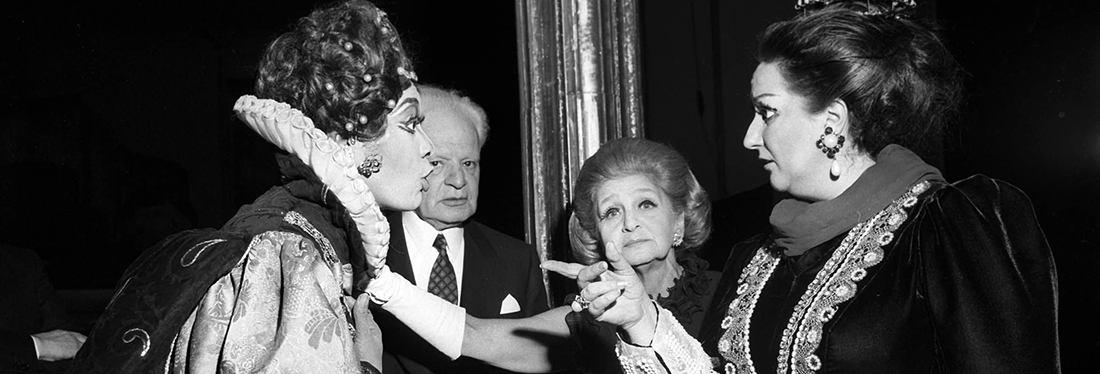
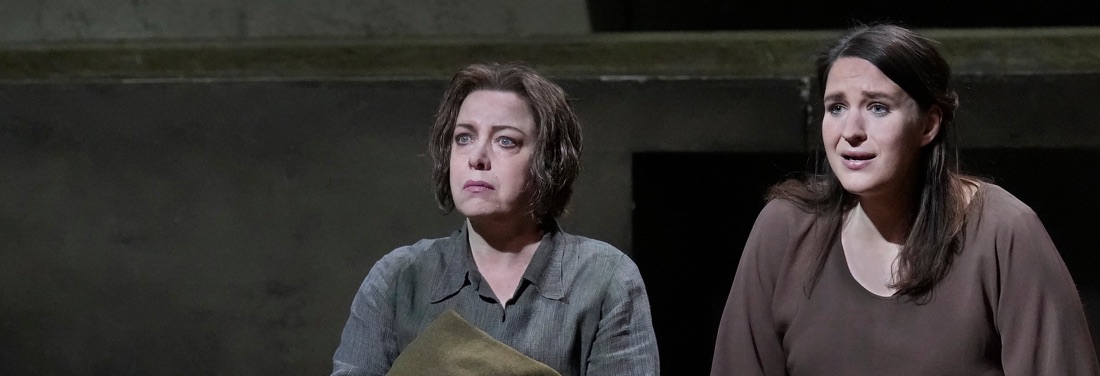
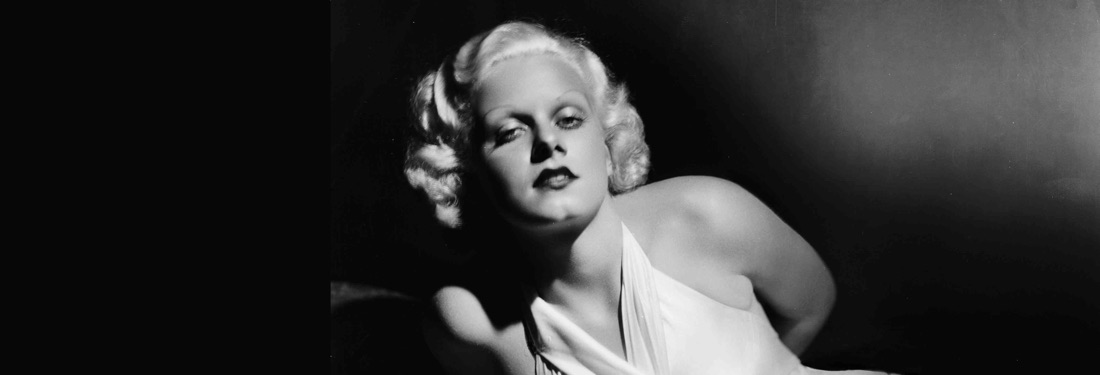

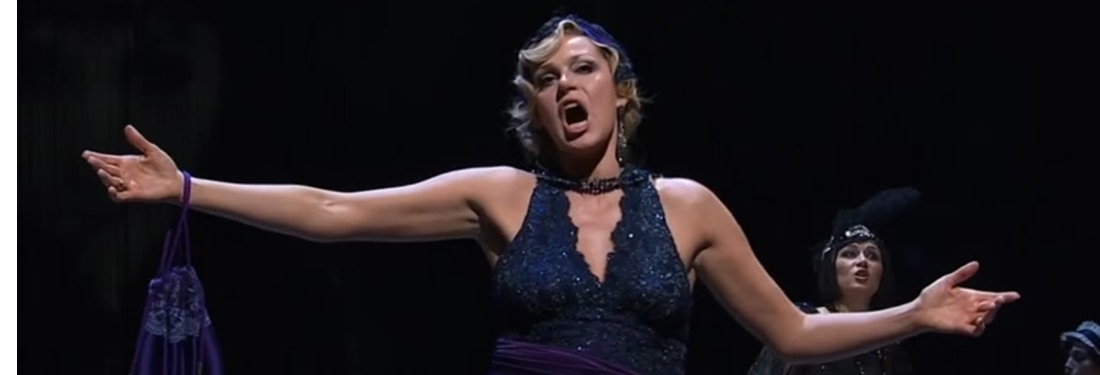
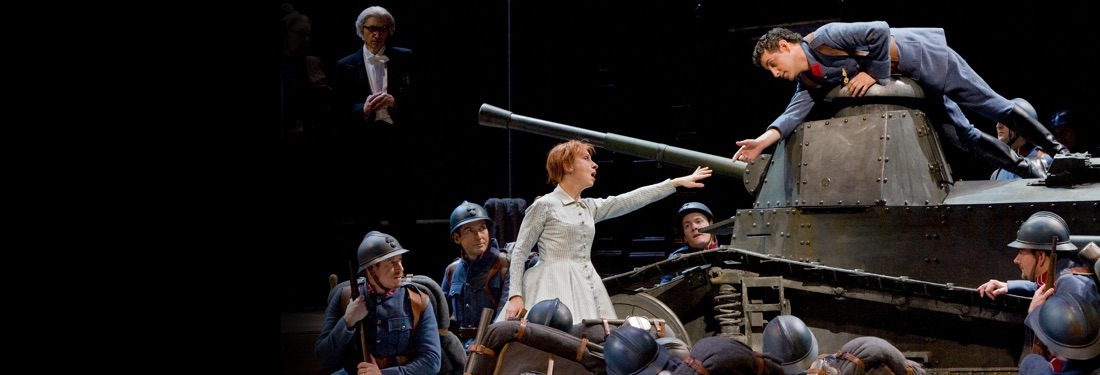
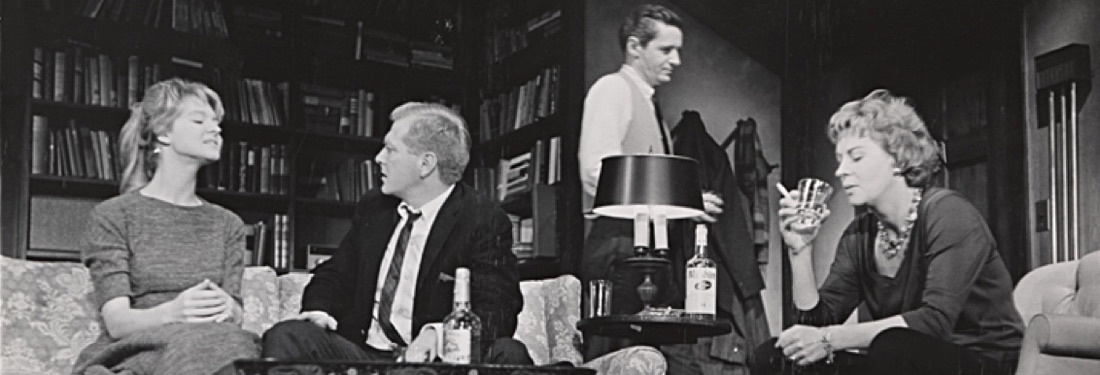
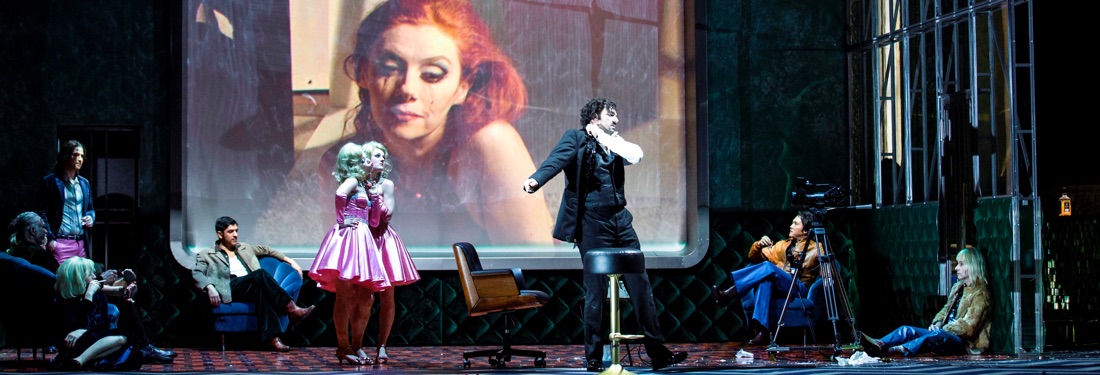
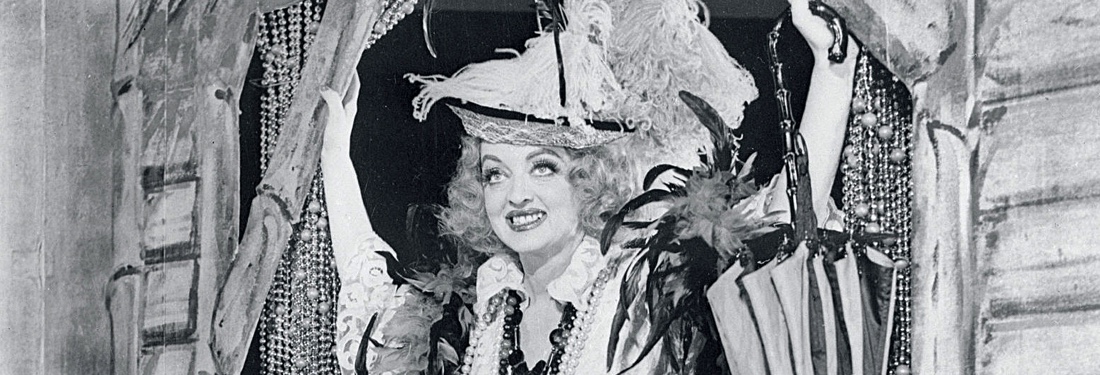
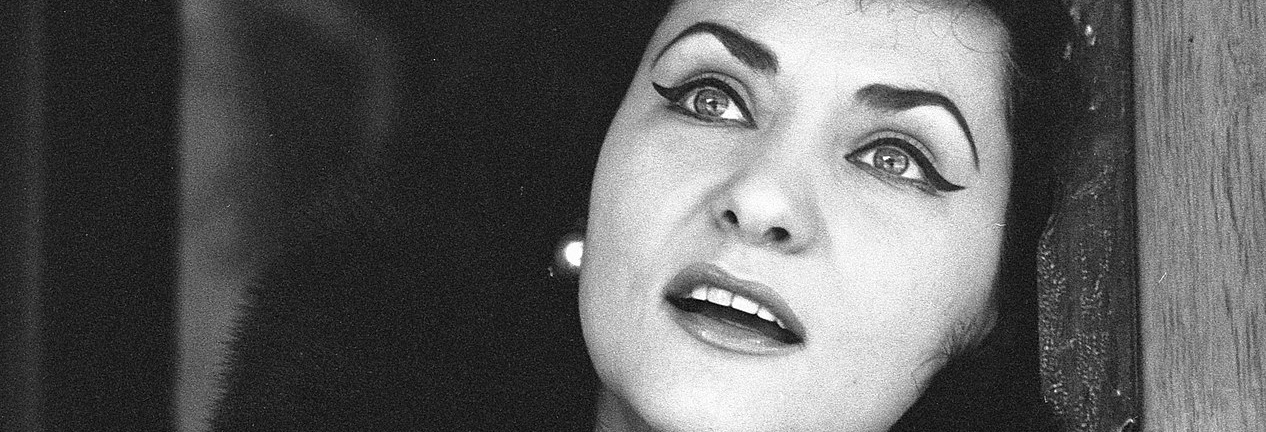
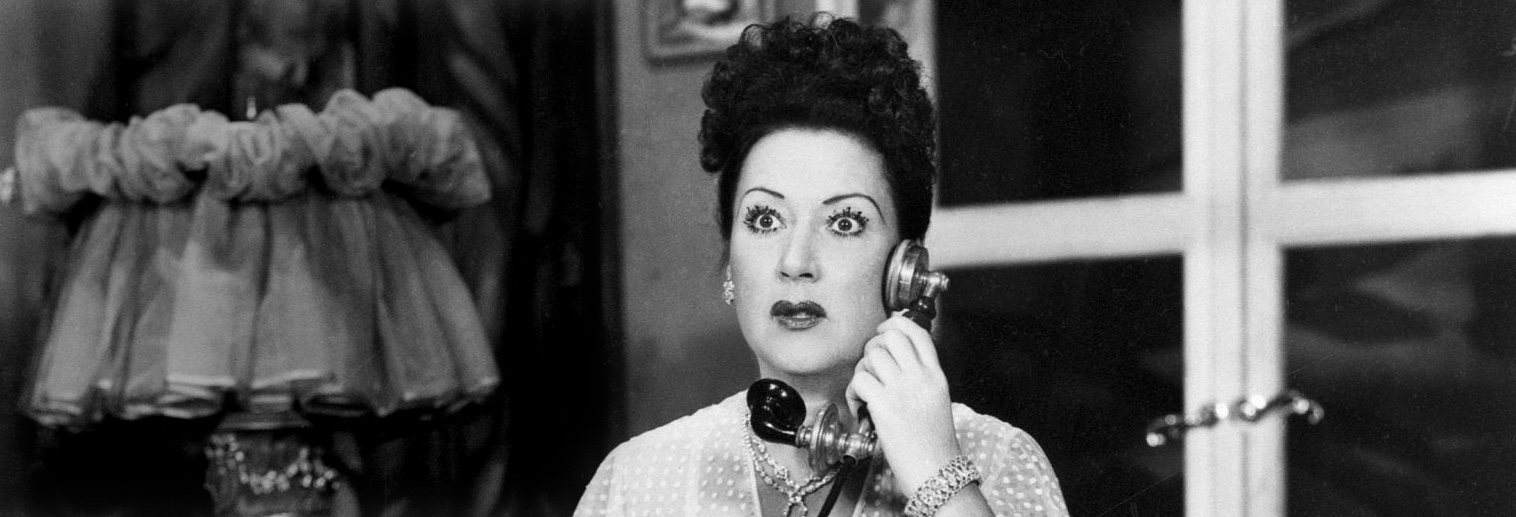
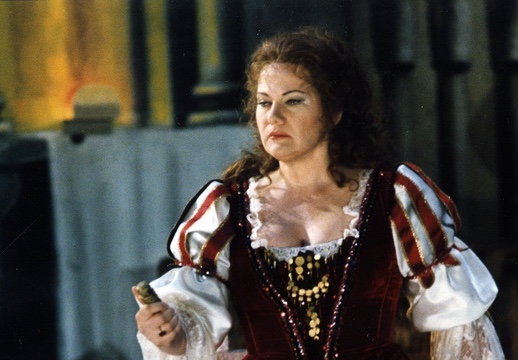
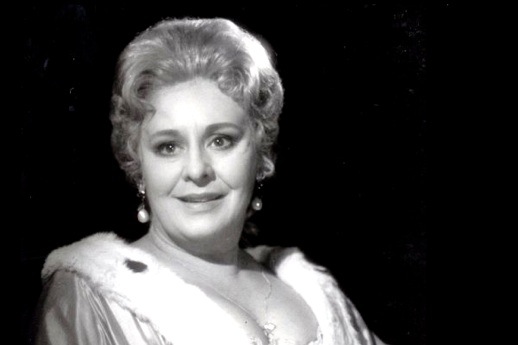
Sena Jurinac 1921-2011
Legendary soprano Sena Jurinac, one of the most beloved artists at the Vienna State Opera, died yesterday. She was 90. [via AP]
Copyright © 2012 parterre box - All Rights Reserved
Powered by WordPress · Parterror Theme by Nick Scholl for DIS Magazine
Monty – charitable, as always. I’m with Grimoaldo on this, I’m afraid. It’s a “joke” that wore thin about three months after I started visiting this site. And the fact that the Vicar often can’t tell the difference between a Brit and someone with a vaguely English-looking name who might have lived and worked a bit in the UK some time in the distant past, says it all, really. At least Susannah Glanville (see Vicar passim) hasn’t been resurrected of late. That’s progress, I suppose.
“the Vicar often can’t tell the difference between a Brit and someone with a vaguely English-looking name who might have lived and worked a bit in the UK some time in the distant past, says it all, really”
The Vicar remembers–as you evidently don’t and have not noticed in any of the Vicar’s posts–the noble Rosenthal and Company concept of “Commonwealth artists”– Vickers, Minton and Kenny, yes, but also the superb likes of John Shaw and Heather Begg– being included within the sacred ranks of “Our Own”.
Certainly when the subject turns to London-based/-trained casting directors–be they British or “Commonwealth” themselves–the tendency to import a Begg or Joseph Rouleau or Peter Coleman-Wright or Sarah Castle is as heartening to the Vicar as, say, these purely British examples of tip-top, unbetterable casting this season from Washington Opera:
Don Alfonso William Shimell
Albert Andrew Foster-Williams
Cavaradossi Gwyn Hughes Jones
Keep the Home Fires burning – The Vicar
London calling…
Here is The Times (of London, of course) on Gwyn Hughes Jones’s Cavaradossi currently at ENO:
“The best thing about this revival, though, is her Cavaradossi. Gwyn Hughes Jones, following his ENO successes as Pinkerton and Rodolfo, is simply one of the best Cavaradossis London has heard in many years. His promise to save Angelotti rings out with true Italianiate slancio; his replies in interrogation are tense with terror; his E lucevan le stelle, exquisitely phrased, has the sob, the squillo, the half-voice — the entire package. And he makes the part very much his own.”
Plus several others in the same vein – so well done Washington Opera!
Interesting: a Welsh singer who sings Cavaradossi in English, in his very own, but true Italianate style…
To be fair, someone else said :
“Gwyn Hughes Jones’ Cavaradossi may be something of a physical lump and his voice less than Italianate, but there’s a steely power to his singing throughout.”
but there is also :
“…This atmosphere is maintained with the appearance of Gwyn Hughes Jones’s Cavaradossi. Cavaradossi’s first aria on the opening night was delivered with power, pathos and colour, and Hughes Jones maintains a beautiful lyricism throughout the opera in what is an excellent, standout performance.”
But he’s… Commonwealth!
We also have Dennis O’Neill – Welsh despite his Irish moniker – who was even more Italianate than Hughes-Jones in his prime. He was called the Welsh Pavarotti in Wales, although Bergonzi would be nearer the mark. Possibly a better singer than Enrico di Giuseppe or Franco Ferrara…..
Um, it’s still bigotry masquerading as artistic standards – Vickers, Minton and Kenny had international careers of varying distinction and were certainly not reliant on help fro, Harold Rosenthal and Opera to further their careers. And who, apart from you, rates William Shimell today, as worth mentioning. He was once a very fine singer, and remains a decent actor, but your paranoid assumption seems to be that there is a world-British conspiracy exists to foist third-rate British artists on US companies – hence your obsession with barely remembered names such as Begg, Shaw, Glanville, Hale. Andrew Foster-Williams is a fine singer, if possibly not tip-top, unbetterable casting as Albert (that would be Ludovic Tézier, but he was presumably busy). Few opera companies, even the most presitigious, seem to want to pay for tip-top unbetterable casting in roles such as Albert – we had Audun Iverson, a not-bad young Norwegian opposite Villazon and Sophie Koch at Covent Garden recently and he’s singing Onyegin in English for ENO at present. Hughes-Jones has long been championed by Matthew Epstein, an American the last time I checked, and has appeared with most of the companies Epstein has associated with, so it would be hard to pin the blame for his casting on a Fucking Brit/Australian/Canadian (we’re all the same, really). I’ve never been much of a fan myself, but he got great reviews across the board for his recent ENO Cavaradossis. You and your snarkey alter ego are actually the American mirror-image of Rosenthal’s Little-Englandism. It’s you who needs to keep the home fires burning with your xenophobic paranoia, not the British contributors to parterre. We have to put up with plenty of third-rate Americans at ENO and Covent Garden, but we shrug our shoulders and move on. I don’t even bother to remember the names of the ones singing now, let alone the ones that sang here forty years ago.
“barely remembered names such as Begg”
Regina I have very vivid memories indeed of Dame Heather Begg, who I saw many many times in my extreme youth, at Covent Garden. She was a comprimaria I suppose and the best one I ever saw. Begg made had a lovely voice and was a superb actress who had the ability to make ciphers of parts like Inez in Trovatore or Flora in Traviata real, warm, sympathetic women. I can still see her in my minds’ eye as Madame Larina, Mamma Lucia,Berta, Marthe. She was the most outstanding example I have ever seen of the fact that it is possible for a true stage artist to make vivid experiences for the audience from supporting roles in opera. She spent years with the Australian opera after her time with Covent Garden and there I think she played some larger roles. “Heather Begg was appointed OBE in 1978 and Distinguished Companion of the New Zealand Order of Merit in 2000. This year the Government ruled that the honour could be reclassified, and Heather Begg’s was formally redesignated a dame on April 17.”
http://www.telegraph.co.uk/news/obituaries/culture-obituaries/music-obituaries/5357543/Dame-Heather-Begg.html
I know I shouldn’t let it bother me but I do find the Vicar’s digs at her upsetting, that her memory should be ridiculed in that way. Maybe it was absurd for American opera companies to import her for the sort of roles she did, I can only say that if I had been in those audiences I think I would have been glad and grateful to have seen and heard her Marcellina, for instance.
Here is the Act One finale from a BBC production of the Mikado with Dame Heather as Katisha, the beautiful Valerie Masterson as Yum-Yum,Derek Hammond-Stroud as Ko-Ko and Ian Wallace as Pooh-Bah.Begg is marvelous.
Grim:
I thank you so very much for that great clip , from The BBC production..!
I am always on the prowl for a well -done video of the Savoy Operas ( they are few and far between, it seems– buried in a larger mass of amateur productions…) of the great Gilbert and Sullivan, and damn, would I love to see this, in its entirety..!
THANKS AGAIN!
Glad you like it bp, thanks for saying so. The person who put this on youtube has only uploaded Act One so far but is planning to put the whole production up, keep an eye on
http://www.youtube.com/user/DancairoOpera
He found a video in a car boot sale of this and a BBC Yeomen of the Guard from around the same time also with Valerie Masterson and is working on converting them so they can be put on youtube, apparently the BBC did not keep films of the productions.
I am really glad you like this bp it shows that out of negative things can come good, I posted that clip to show that Dame Heather Begg does not deserve to be referred to as a worthless third or forth rater and from that you have found something you love.
It’s enjoyable, but this piece always means the 20s ENO production to me- Bottone camping around with his kisscurl, and Felicity Palmer hilarious, flying-helmet and all.
Grim:
I must admit that Dame Heather was only a name I had sometimes come across, before.. but very much enjoyed her Katasha in the clip you have supplied…
And
AJ..
out of all of this , I was able to find a COMPLETE ENO youtube video, with the cast you have named.. and it is an incredible HOOT– with Eric Idle , as Koko..!!– this is so much better then when NYCO produced the Miller “Mikado” a number of years ago!
I think this Commonwealth artist does a rather good in the Mikado too
I’m not going to enter this argument again, so I will limit myself to a factual observation.
If you google ‘Commonwealth singers’ or ‘commonwealth artists’ the only matches which remotely refer to opera are posts from here. It’s a phrase I’ve only ever heard on here.
Anyone with a working knowledge of the relationship between the UK and, say, Australia will know that the idea of one country being interchangeable with the other is absurd and ignorant.
Hughes-Jones alternated with US tenor, Frank Poretta, in Washington and got roughly comparable reviews, although neither was as enthusiastically received by the local critics as Patricia Racette’s Tosca and Alan Held’s Scarpia, which is presumably what you mean by “tip-top, unbetterable casting”.
Its a little known fact that Racette holds a Tanzanian passport. And Held? He’s from Nauru.
Hehe!
The Vicar says he thanks you all, especially Regina who proved unable to tell that Vickers and Minton and Kenny were being praised here and demonstrated perfectly that the attitudes of Rosenthal are still alive, seems to think that conductor Franco Ferrara was a tenor (baritone Franck Ferrari? tenor Franco Farina? those pesky ultra-Calais names!). If the Vicar is really the only person who recalls William Shimell, why then has he been cast in major roles by the Met, Washington and San Fran of late? Does any major national company anywhere have to import an Albert, even if Tezier is not available? Is it only bigotry as opposed to standards when British/Commonwealth singers of the 2nd or 3rd rank are termed as such?
No one on this side of the pond has mentioned a ‘conspiracy’ AFAIK; after decades of hearing the likes of Ashley Holland brought in for Enrico (!) at Lyric Opera of Chicago, we draw our own conclusions about what networks of friendships and loyalties can work.
So good of Armer not to enter the fray- oh, wait he did in not doing so– but as OPERA in the Rosenthal years is not online, little wonder you don’t find “Commonwealth artist/singer” in a Google search.
Still time to book travel to NY for London-based Ann Murray in FILLE and Jonathan Lemalu’s Queegqueeg in San Diego!
Ta!
Networks of friendships and loyalties being such a commonwealth affliction, of course.
As I said before, we can all think of umpteen second and third-rate singers from America and elsewhere who have been cast at ENO, Glyndebourne and Covent Garden, but we don’t use them as an excuse to sneer habitually at American, French, German, Russian artists in general. That you feel the need to mention a singer like Una Hale in the context of a thread on Sena Jurinac says a lot more about you than it does about either Jurinac or Hale – your Vicar persona is a perpetual feast of xenophobic negativity.
And I did mean Franco Farina – thanks!
I am happy to defend The Vicar.
Xenophobia is not the issue here, and never has been. The issue is provincialism.
The running joke—which some probably enjoy, and others obviously do not—is based upon the utterly and insufferably provincial BRITISH MUSICAL PRESS. The Vicar may be mimicking Opera, but he might just as easily choose to poke fun at Gramophone, the BBC Music magazine or the Penguin Guides, all of which are so ragingly provincial that they contain multiple laughs per page. That one pokes fun at the British musical press, without more, does not signify xenophobia
And it is not just Americans that laugh at the British musical press. Germans and Austrians mock the British musical press, too, as do the French.
If you follow the art and dance worlds, you already know that the British art press and the British dance press are derided with even more glee by watchers in the U.S., Germany and France. The issue, once again, is the sheer provincialism of those segments of the British press, not xenophobia.
I want to quote back to you a statement you wrote earlier in this thread, just to give you an example of something startlingly and foolishly provincial:
“If indeed there was a single creator of the post-war Viennese Mozart style, it ultimately derived from the trailblazing Mozart style established by Fritz Busch at Glyndebourne in the 1930s and his influential recordings of Figaro, Don Giovanni and Cosi …”
You surely realize that no one outside the U.K. would make such a bizarre and boneheaded claim? I remain amazed that no one has yet taken you on over such a ridiculous assertion (even Thomas Beecham would be happy to correct you). The roots of both Glyndebourne and the post-war Mozart style in Vienna lie in the pre-war Mozart tradition of Central Europe, significantly evolving since the end of The Great War. The Vienna post-war Mozart tradition owes nothing to Glyndebourne.
Funny. I’ve seen some UK commentators complaining about “Russian and Latvian” artists of late.
But- and I have said this before , more than once– whatever complaints you may have about the occasional Stefano Algeri or Jane Dutton or , the number of such castings– especially given the relative size of the UK vis-a-vis the US- is miniscule next to the frequency and saturation of non international-class UK/Commonwealth artists working in the US. That is merely a fact.
The machinations of the Epstein artistic mespuche are the perfect example of the kind of network I mean– and I can’t think of another American phenomenon like it; his beachhead at WNO seems to have given the UK years of Aldens ( which is good and bad in my view, they have both done some fine work along with the repetitive anomie-fests) and now the Malfitano wave has landed as well. They were all much beloved of Andrew Porter, who may have opened the UK doors to them (and Bad Hair Decade Sellars, also good and bad in turns) in his NEW YORKER years. Sorry!
Nothing against Heather Begg, but we have and have had our own Heather Beggs and Francis Egertons and Eric Shillings, most of whom have never ever gotten *near* a UK stage.
And the Philip Jolls and Anthony Raffells and Paul Charles Clarkes we’ve had regularly here, in minor and major theaters across the country, do not bear defending.
“Funny. I’ve seen some UK commentators complaining about “Russian and Latvian” artists of late.
Is there, at long last, no end to Russo-Latvian perfidy??!?!?
“Song of Riga”, apparently from the Soviet version of “Pan Am”.
The UK media certainly didn’t complain about Kristine Opolais’ Covent Garden Butterfly in the summer – replacing US local heroine Patricia Racette.
Who has been complaining about Russian and Latvian artists, Nerva?
Also, tell me about Philip Joll. I’ve been on stage with him, from which vantage point he seemed really impressive, but I’ve never heard him in the theatre and it wouldn’t be the first time somebody sounded great close up but utterly mediocre or worse in the auditorium, and vice versa.
Eric Shilling was also fab.
Just sayin’.
Or come to London to hear the sensational Anna Christy as Lucia or Tytania in productions by David and Christopher Alden – all three once represented, I believe, by Matthew Epstein. Yes we all know about networks of friendships and loyalties over here, too.
To sum up, Your Honour, Nerva Nelli feels that too many unremarkable British/Commonwealth (thereafter referred to as Britcoms) singers are offered parts in the US because many of the casting directors and staff at many of the US companies are themselves from Britain or the Commonwealth. To satirize this state of affairs, he/she has created the Vicar of John Wakefield whose only raison d’être is to heap encomia on obscure (and long dead) Britcoms (in the style of the late Harold Rosenthal), and to denigrate singers of all other nationalities.
This appears to irk some of the British contingent who sometimes rise to the bait (some more readily than others – and myself at times guilty as charged), and attempt to supply examples demonstrating that this is not always the case. Accusations of xenophobia are bandied about on both sides.
Neither party looks about to desist and convince the other party of the validity of their beliefs.
Basta!!!!!! I submit we declare the case closed once and for all and ask the warring parties to desist from this increasingly tedious debate.
Oh, I’m not accusing anyone of xenophobia.
But to paraphrase Grim, whilst there’s something admirable about the commitment and gusto in which its approached, I’m not alone in finding that the endless parody of a long-gone magazine editor has truly run its course.
Thank you very much, indeed.
NNnnnooooo, Manouuuuu!
The Vicar is one of the most stylistically creative artifices on these pages. I won’t say I want more of him, but less would be inexcusable.
Betsy – think of my poor eardrums. This scream is louder than Tebaldi’s.
Surely this is a running gag that had run its course.
Repetition with mere subtle variations can be mesmerizing: just think of Philip Glass!
It’s time for those Waiting for Guffman clips again: