Madonna col Figlio
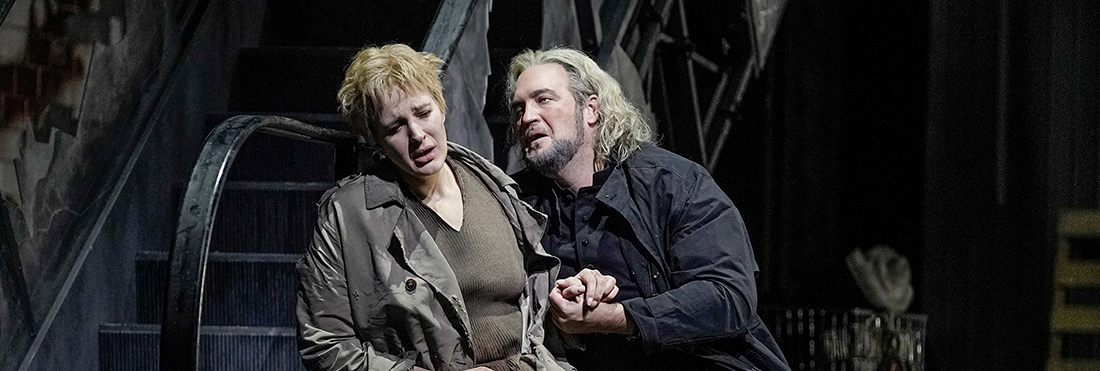
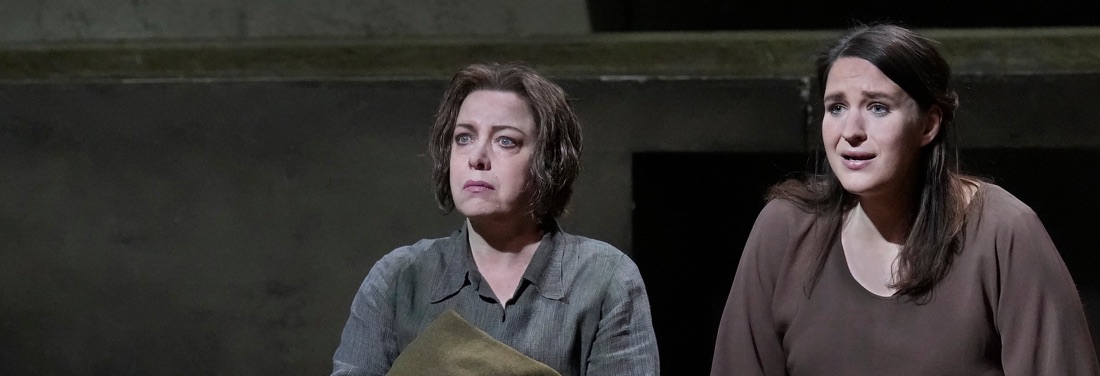
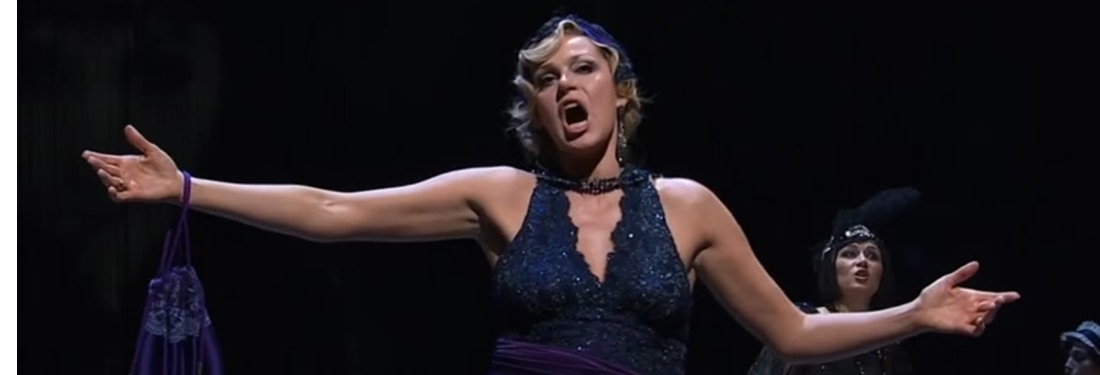
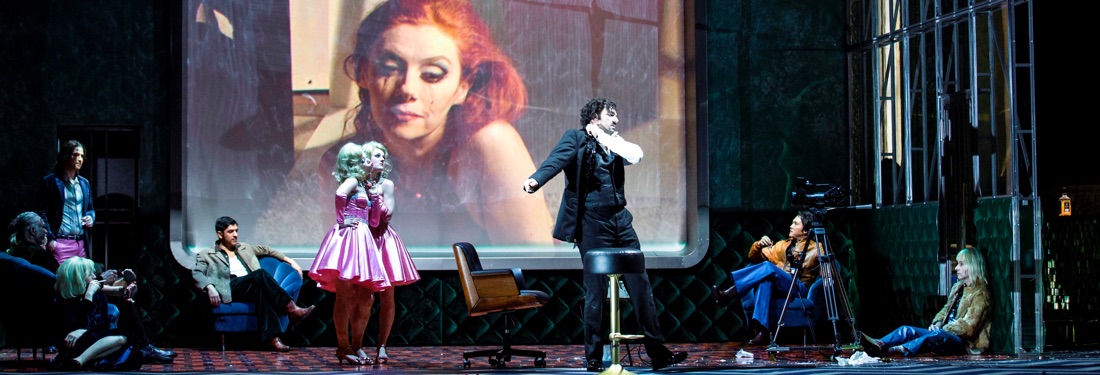
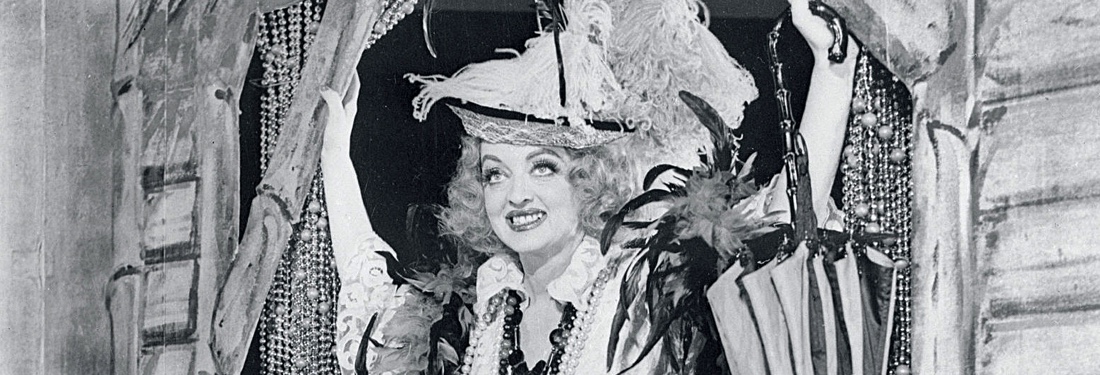
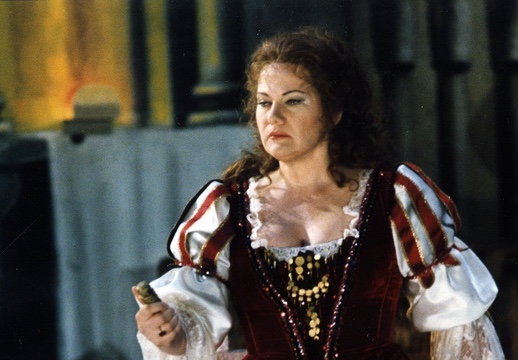
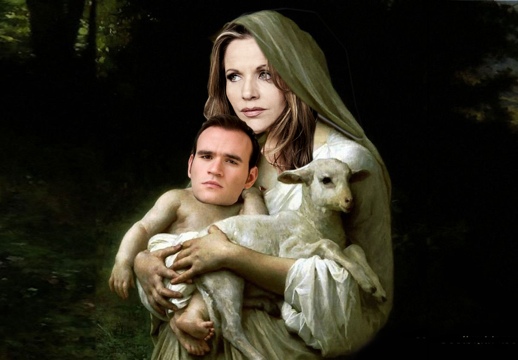
Michael Fabiano and Renée Fleming (pictured, left to right) make up the somewhat dysfunctional family whose drama is recounted in the San Francisco Opera premiere of Donizetti’s Lucrezia Borgia, to be heard September 23 – October 11. More highlights (and a lowlight or two) follow the jump.
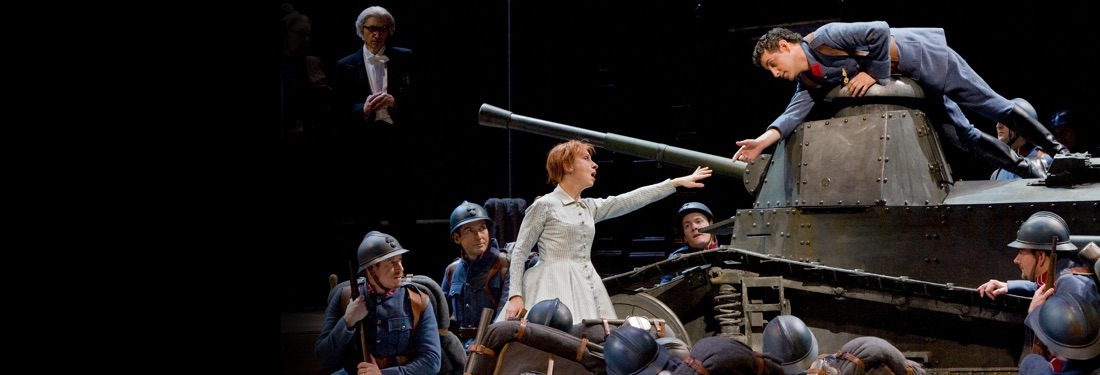
The season also includes Turandot, the world premiere of Heart of a Soldier by Christopher Theofanidis and Donna Di Novelli, a new production premiere of Mozart’s Don Giovanni, the Company premiere of Handel’s Xerxes, Bizet’s Carmen, the Bay Area stage premiere of John Adams’ Nixon in China, a new co-production of Verdi’s Attila with Milan’s Teatro alla Scala, and a new production premiere of Mozart’s The Magic Flute.
Notable in the season press release is this detail about Attila, conducted by Nicola Luisotti: “Lucrezia Garcia and Fabio Sartori replace the previously announced Oksana Dyka and Ramón Vargas, who have both had to withdraw from this production.” It goes without saying, La Cieca guesses, that they “had to withdraw” because maestro Luisotti preferred his singers from La Scala…
CruzSF, post 4.1
I saw Francisco Meli, twice, in the telcast of the new production of Anna Bolena from Vienna. Excelent voice, good stage presence, and looks and physique that tenors need to sing young heros and lovers.
Hmmm. I wonder why he had to withdraw. I’ll poke around here and see what I can find.
Have to disagree with you about Meli. He had a few moments in the Bolena and the basic sound is nice, but most of the time he seemed rather effortful and stretched, and his acting was of a very generic sort. It sounded like a good voice that has run into some problems. I had the same impression when I heard him in the Verdi Requiem, also in Vienna, last fall.
Un-Zerb, this described but exactly Meli’s showing in the MARUA STUARDA DVD in which he is “fine” but (artistically) dwarfed by Devia and Antonacci.
Meli in Bolena:
Costello in Bolena:
looks and physique that tenors need to sing young heros and lovers.
Then we all should most definitely be excited to hear Stephen Costello in the role at the Met.
Non sequitur/Yawn.
But he is from Philadelphia.
LouAnne: I am just back for a minute to urge you on regarding Santa Fe. My real review of Faust will be up in just a few days on http://www.operatoday.com, but I will tell you here it is one of the most complex and elaborate things, maybe THE most, Santa Fe has done. It is never-ending action, plus a scene between Marg. and Siebel that is never done, giving Siebel a second aria (dull), plus about 60% of the famous but never heard these days Ballet — presented here as a series of six historic Courtesans interacting with Faust until he is overwhelmed. There are glitches here and there, and the weather has been so miserable — hot and still smoke; but by August all should be fine. Imagine rehearsing a big complex opera in all this heat and smoky air! Poor opera singers. But they got it all done, and very well.
@Mr. How wonderful! I can’t wait.
Ah, MrM, I loved it too. I had been looking forward to hearing La Perez, and she did not disappoint. I liked the visual elements of the production (though I hated the ending with Marguerite just kind of wandering around among big, churchy organ pipes).
And free with the price of admission was the view of the fires at Los Alamos, truly weird and scene-settingly hellish.
Having seen Costello perform this spring, I am excited. Since this thread starts out with a reference to Michael Fabiano, I have to point out that both are AVA graduates. I know it’s not the water there. I’ve had a drink at the water cooler there more than once and still can’t carry a tune.
His stage presence is like Herman Munster.
Lucrezia Borgia is a decent fit for Fleming’s voice if she sings it straight and drops those ridiculous ornamentation and leaps of the final aria, the one we heard in the infamous La Scala production and the Decca recording of the piece. Yes, the final aria is beyond her but simplicity’s key. In fact if she chooses to drop that aria altogether, which Donizetti didn’t want in the first place, the role is a perfect fit. She opted for little ornamentation in Washington when I saw it if I recall it correctly. I regretted attending not because of Fleming but because of Domingo’s preposterous conducting.
So this “Fleming should leave bel canto alone” sounds ignorant, certainly coming from someone who knows little about the school, which is just not a big beef stew. There are hundreds of different roles written for different voices. Also, Donizetti is not Bellini who’s not Rossini or Mercadante, Pacini, etc.
Donizetti alone wrote different roles for dramatic coloraturas, light coloraturas, light lyrics, heavier lyrics, etc. Lucrezia Borgia requires a dramatic, darker sound with moderately intricate coloratura (except for the final aria, which is brutal, written to punish the soprano who demanded it). Fleming’s coloratura capability is moderate and matches the role. What she needs is a great coach and a great bel canto conductor like Richard Bonynge. Same for Netrebko and Bolena.
Lucrezia Borgia was a role written in, I believe, 1830, for Henriette Meric-Lalande, the creatrix of both Il Pirata’s Imogene and the title character of La Straniera, both of which were the creations of the deathless Swan of Catania.
After the exertions of those roles, Madame M.-Lalande’s vocal resources were apparently somewhat compromised and therefore the tessitura and the vocal writing of Lucrezia was tailored to fit the means that remained to her at that point in her career.
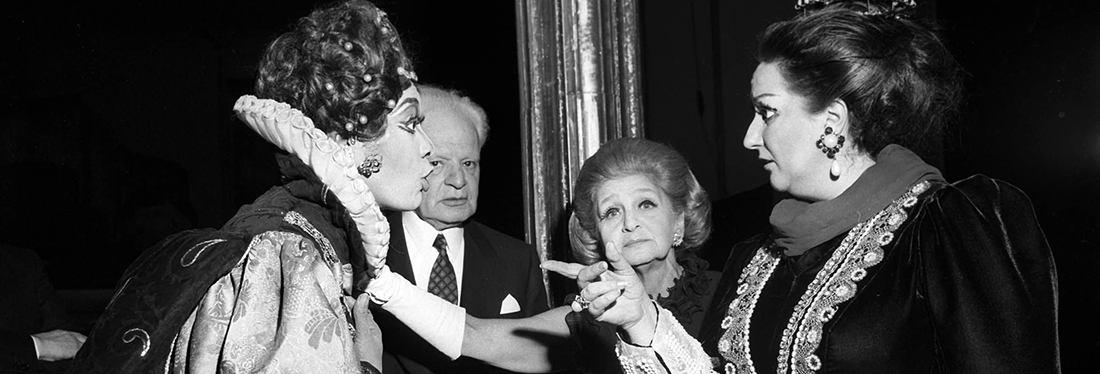
That would indicate to me that it would be, especially if Mme. Fleming does wisely eschew that dreadful showpiece aria at the opera’s conclusion (so much prima donna blathering and anti-climactic!) that, indeed, Donizetti did NOT want — I refer you to his own writings — and sings the other ending, which is shown to be perfectly effective — see Montserrat Caballe’s famous and historic Carnegie Hall debut performance, e.g. — that Lucrezia Borgia would be a fitting vehicle for her at this point in her distinguished — whether you like her or not — career. Also, Lucrezia has got to be ‘of a certain age’ to have a nearly grown son — accommodating, also, the diva of a certain age.
Also, Lucia is written in, I believe, 1835, so it comes quite a few operas down the pike, so to speak, after Lucrezia Borgia.
Anyway, you all may want to google/fact check, as I don’t have the time….
Good reminder, Camille. Back to the books for me.
Glad to see mention of La Straniera, one of my fave Bellinis, esp. in the prime Scotto disc. Of course its plot is preposterous: basically, “Go jump in a lake.” But the music is sublime with a great mad scene at the end. Why doesn’t this get performed more?
Lucrezia Borgia opened at La Scala in December of 1833, only 21 months before Lucia di Lammermoor at San Carlo, a masterpiece no doubt, but not as forward-looking as Lucrezia, an incredible modern score for the time, which greatly influenced Verdi, especially the composition of his Rigoletto. For openers the fluidity of solo pieces and recitative in Lucrezia Borgia is staggering. There’s no conventional love interest, but a strong gay fixation between Gennaro and Orsini, and an Oedipus-complexed relationship between Gennaro and Lucrezia who ends up poisoning him twice.
1833 saw the premiere of 3 Donizetti operas, Lucrezia Borgia, Parisina, Torquato Tasso, all written for different soprano leading ladies. Fleming would be a good fit for both Lucrezia and Parisina, definitely not a good fit for the high flying coloratura role of Eleonora created by Adelina Spech in Tasso. Which proves that bel canto music can’t be categorized, period.
The citation of the 1830 date has troubled me all day long and I’ve finally had the chance to look it up. It seems I have confused Anna Bolena with Lucrezia Borgia. Lucrezia’s prima was 26 December 1933 and Anna’s was 26 December 1930, so I am very sorry to have conflated the two and relayed incorrect information, something I deplore having done as it is never my intention to lead astray.
ACTFIVE:
The Sutherland/Conrad/Horne “Age of Bel Canto” recording was my introduction to La Straniera, lo those many, many decades ago. I felt it was some of the most enchanting music I’d ever heard, and still do. It was an unusual work and a step forward for Bellini and a daring one. Later I bought Montserrat Caballe, in peerless voice, and much much later I discovered la piccola Renata’s marvelous cantilena belliniana in this role. There is much to be cherished in this music but it really belongs to only the top-flight soloists, or to no one at all. I have never listened nor had I the opportunity to hear Renee Fleming’s version w/ OONY in the early/mid nineties, but I understand it is quite good, with a top note at the end that is smudged. Well, so what. A performance is not one note.
Anyway, the broad recitative lines that Bellini dared in this now-pretty-much-forgotten work was a giant step forward in those days. He didn’t continue in that vein all that much. I believe that Felice Romani, the librettist, had to write an explanatory note in the program for the first performances, to explain the back story, so it was convoluted from the get-go.
Anyway, actfive, I am very happy to find another soul that loves this work which has its wonderfully beautiful moments. A kind of ideal beauty that doesn’t properly belong in the degrade world of our world today, hence the mockery and incomprehension and neglect, I conjecture. There is always Caballe and Scotto and Sutherland to listen to — whatever else is said about the risible nature of these operas, WHO, really, are we to judge from the vantage point of the world we exist in, these works from a vastly different and slightly less complexly mechanistic time and culture??? How can it translated into this world, anyway. I don’t know. I think those regie operas are really trying to bring the past into the present and sometimes they succeed and mostly not. I don’t know what the solution is.
I only know my heart seeks that which comes from the heart and in much of this music my heart lies. That’s all.
Sorry -- screwed it up again — that should be EIGHTEEN 30 and 33!!!
Povera Camiole needs to hire a fact checker and proofreader!
Gee, now I can’t even spell Camille correctly. Time to go to sleep.
Hope La Cieca’s review comes out soon.
A lovely post on Straniera, thanks Camille!
Hmmm, I must go take my copy of the “Age of Bel Canto” off the shelf…
Don’t be put off by the weirdness of Richard Conrad’s voice! He was decades ahead of all these other counter-tenors, falsettists, whatever they are supposed to be.
Probably it’s very much closer to the sound they heard in olden times and at any rate, it is Sutherland’s voice when it was minty fresh and green and glorious. Love it to death. Rspecially the harp arpeggi and the opening cadenzas. Out of this world.
Thanks for the comments on Conrad. I have to say that he is the main reason that I listened to the set a couple of times and put it aside. In certain sections, his bel canto skills more than make up for the less-than-glamorous voice. But there are a couple of selections where I felt that any number of lyric tenors could have done a more appealing job. As for Sutherland, the whole set is worth it just for her stunning “Santo di patria”.
I love me some of that ‘Santo di Patria’ too.
My fave Joanie recording along with the ‘Bel raggio’ on ‘Art of the Prima Donna’.
Stunning IS the word.
I remember playing that cut over and over as I couldn’t believe the sound of it. Phenomenal singing.
One of my especial favourites is the E natural in alt that is interpolated in that Bel raggio lusinghier — I am always waiting for it when others sing and if they do dare to, well, it’s never the same.
Sometimes when I listen to Joan now it helps to relax me into a much more happy and innocent frame of mind--carrying me back to those days when I knew nothing and listened gratefully to the wonderful lady singing out of our family high fidelity stereo box.
I still have that stereo even though it no longer functions and just because to look at it or to touch the fabric surface of the front and remember the blissful moments of the discovery of those peerless bell-like tones makes me content. There were Vicki D’s Spanish songs, Joanie’s E’s in the mad scene from Hamlet, and on and on and so forth, you all know whom I’m speaking of — and how I wish I could retrace my wandering steps to those wonderful first hearings.
I am old and tired now. It is never again the same as those miraculous days of discovery.
I suppose that is why I listened to La magicienne today--the thrill of first love all over again.
“Arrestati, sei bello!”
Pas du tout, actfive: so grateful to know there is another Straniera lover out there and please excuse the grammar and syntax and sentimentality of my late-night ramblings.
I guess I really ought to get ahold of the bits of performances from others, as well as the ones I know.
Evviva Bellini — il cigno di Catania!!