Talking head
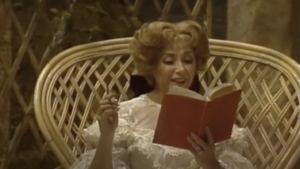
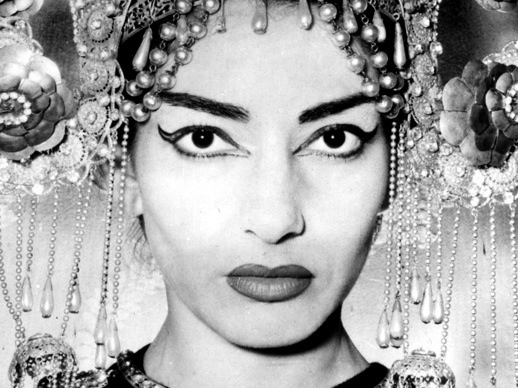
Our Own JJ discusses Maria Callas and her Voice Of Perfect Imperfection with NPR’s Lynn Neary.
Copyright © 2012 parterre box - All Rights Reserved
Powered by WordPress · Parterror Theme by Nick Scholl for DIS Magazine
I agree, Callas was above all a great musician–PERIOD.
BTW, when she first came to the Met in 1956, I was unaware that her voice had ungergone changes from just a few years before. I assume, however, that many fans at the time were aware of these changes, which occcurred between1953-4 and 1956.
One can hear the beginning of deterioration – incipient wobble – in the recording of Gioconda from around 1954.
which gioconda? The first was done for Cetra in 1952. The second in 1958 for EMI. The first Gioconda is of course pre diet, the voice in more or less pristine condition, with the subtlest hint of unsteadiness here and there. Anyway this is for me the supreme Callas achievement in the studio.
This is the original 1952 recording from Torino. This is really her best.
This is the 1958 remake. Notice the very obvious vocal deterioration. But somehow it makes the character more vulnerable. Anyway I prefer the glorious vocalization on Gioconda I.
BTW just listen to the musical genius she is :
by 00:49 there are two identical phrases: Ultima voce / del mio destino.
But they SOUND different when she sings them because she gives each occurence a different colour, they serve a different harmonic purpose.
The finale duet with Barnaba, 1952 (with Paolo Silveri). This is AMAZING singing by any standard, the fioriture so limpid and yet carrying a hint of supreme irony and scorn. And the wonderful colour in “Ascolta di questa sapiente sirena” which nobody does like this
Come the time of the 1958 remake, she sounds tired, though still very much involved. But the magic has gone.
Didn’t Callas say something to the effect that if one wants to know what her singing is all about that they should listen to the final scene of her second Gioconda recording?
Btw, I love her Aida studio recording.
Give me her yummy Rosina in Barber of Seville with Alva. It fits her voice perfectly at that time of her career. From then on we got Carmen, a new rather ratty stereo Tosca at times…….and onwards, heading downhill.
wladek, dear, I hate controversy. I love opera because of all the amore, not the guerra, and I like all the fire, enthusiasm and knowledge shown in your posts. I do detect on them, though, some unfairness towards La Divina and you may know how Valkyriettas are, they take a sympathetic glance at humans who love and it is universally known that Maria “vissi d’arte, vissi d’amore”. Thus I would like to say a few things about Verdi, Maria and the famous E flat, and in no way I intend any disrespect for you or your opinions, of which you are completely entitled, of course.
Verdi did not write every single note in an opera and sealed it there for all eternity. He often revised. We just have seen an extreme example of this in Simon Boccanegra. It was revised decades later. Sometimes his revisions came out of suggestions of librettists, sometimes because of the censors, but sometimes he changed his mind. I gather the first Aida in Italy, Teresa Stolz, did not sing an E flat at the triumphant scene, otherwise it would be in the score, but that note was apparently sang during Verdi’s lifetime. Maybe research will throw light on it and what Verdi thought about it, maybe not, but there are other operas, other arias where changes were made after their premiere. Even some of his most famous operas -Don Carlo, Il Trovatore come to mind- have versions in different languages.
John Ardoin in ‘The Callas Legacy’ has an account of how that E flat came about in the triumphant scene. It is not fair to say that Maria all of a sudden sang it to get applause, there is more of a background to it. Apparently the tenor Kurt Baum was holding on to notes unnecessarily in those dress rehearsals in May of 1950 and the Ramfis, Nicola Moscona, pointed this out to Maria. Reportedly the manager of the season owned a score that had belonged to Angela Peralta, a nineteen century Mexican soprano who had toured Europe many times and had sung Aida for the first time in Mexico and had included the E flat. Callas at first did not agree to sing it, but then changed her mind and agreed to do it only if the Amneris (Simionato) and the Amoasro (Weede) agreed, which they did. She then sang it, and then she did again in Mexico in 1951. As far as I know, she did not sing the E flat in Europe.
Where did Angela Peralta get the idea of the E flat, if we believe the above account? She could not have seen Aida in Europe as she returned to Mexico in 1871, and died in 1883, I think. Perhaps someone knows. In any case, Maria was doing what the Mexican Nightingale had done, apparently. It is not the first time in the history of music that we see singers doing this in opera, it is in the best tradition. I don’t think that such an effective note would have been odious to Verdi, a man of the theatre, but we’ll never know. Certainly Verdi always knew what he was doing, but his operas did not come out of his head complete, entire, and in full armor, as Athena from the head of Zeus. I don’t love Verdi less for that, but more, and was happy to enjoy the Simone recently.
Please enjoy the rest of Mardi Gras. I hear Madona and Paris Hilton went to Rio.
la Vakyrietta -I have nothing against Mde. Callas -she could have
sung all the Eflats she wanted -as long as the Eflat is in the score,when
she adds a note she is tampering
with a work written by someone else
with the added audacity that her
meager talents are on pare with Verdi . Some might say
” he probably would have done the same” well he didn’t ..and for the time left him after the first performance he still didn’t .. so I assume he was satisfied with what he wrote .Your story makes it even worse . you are correct it is not the first time -poor Rossini was heard
to say to a famous diva of the time
Mde. you were wonderful ! even I recognized some notes I wrote .Yes
Verdi did revise , but it was his revision not some shrieking soprano adding her two cents worth for whatever reason .As you would not want any one to tamper with your writing and change your
meaning, grant Verdi the same courtesy. I don’t know how Madona
and Hilton fits in here unless you mean to replace Callas with the two of them. I suppose you could do worse .Best to you also .
Should I say you are inexorable?
I am not too bothered by the E flat in Aida and find it exciting. We do have recordings of Maria in that role with and without the E flat, so we can enjoy both ways.
There is serious tampering with opera that I do find offensive. I remember going to a movie house to see, when it first came out, Zeffirelli’s Otello and I had to walk out of it. I have no idea why Doming put up with all the cutting. I hate that Otello and do not own the DVD, but that has not caused me to hate Domingo or Franco, or anyone else involved.
Why pick on Maria for a little one note excitement on an exciting scene? Why not pick on Carlo Baucardi who put that high C in Di Quella Pira in Rome when the opera was fairly new? Did not Verdi reconcile to that, even if not in his original score? And why not pick on Caruso who sang it all the time?
Why all this Maria bashing? I don’t understand. I remember a long time ago a friend of mine who was fond of Stokowsky kept saying he was a consummate musician and not Callas, who was famous just for dating Onassis. That was so absurd that I had to give the absurd reply that on the contrary, it was Stokowsky who was famous for marrying Gloria Vanderbilt.
There is no one to replace Callas today even though some sopranos have tried that E flat in Aida in the last few decades. I just mentioned carnival as a way of saying cheers. Best wishes.
Walkyretta dear, spare your efforts. A pair of open ears is apparently very hard to acquire, once the older one is set in one direction. You cannot convince the converted. A very useful maxim. He will keep sticking to that poor E flat and regard all the magnificent Callas work done after 1952. Oh well, men will be men.
Oh wow! “Men will be men.” Oh wow! Oh wow! If I’m not careful I may tear off this fragile mask and reveal my true gender. “Men will be men,” huh? Well, pardon me while I grunt, scratch my nuts, and swill my beer. I’ll just let you little ladies sit in the kitchen and chat in your carefree estrogen-laden tones about what a hassle menopause can be. Meanwhile, of course, you can be cooking my meal and putting frilly doilies under all the champagne flutes.
Ah you know what? The open ears question is so beside the point. Despite all the credentials, it seems to me to be a question of fact-waving. Always slightly boring to my mind. By all means, if a person is a trained musician, he will be able to analyse a performance relying on the score. By all means, let him take, for example, some recorded EVIDENCE of Callas’ work, the 1955 studio Ritorna vincitor for example, or even the 1955 live Addio nel passato, and make particular points as to where Callas deviates from the composer’s instructions. Otherwise waving one miserable note is not IRRELEVANT, repetitive and not really interesting or meriting any attention of a serious kind. I have yet to see here serious, informed (beyond mere facts which he could have read anyhwere) musical analysis from this person.
On the contrary, it seems to me that most other Verdi singers (not even worth being called “interpreters”) just do what they can with the notes, most of them lacking the ability to pay close attention to the composer’s markings, because they are lazy / caught in the thrill of the “drama” / or simply unable technically to cope (by this I don’t necessarily mean vocal range or dexterity, but so many other things, for example the ability to colour the sound, so very important in Verdi, cf “Con una voce lontana” in Otello).
No, most singers will get away with “a beautiful sound” or some bag of tricks (cf Caballe’s pianissimi), alongwith a generalized sense of drama. So few of them take the trouble to provide us with an acute musical interpretation. Singers are, alas, supposed to be musicians too, and if somebody like Hilary Hahn would have walked on the concert platform and played Sibelius’ voilin concerto the way Caballe, or Sutherland, or L Price for example have approached and performed an opera, well such a violinist would have been booed off the stage in 5 minutes for odious and ludicrous, vulgar tampering with the music. No matter how sweet their sound and how dazzling their technique. So few singers, like Callas or Scotto or Seefried or Varnay or Farrell, are actually musicians and have respect for slurs, note values, dynamic markings and all the rest of the craft of music making.
But, again, basing a whole critique upon a single, maybe unsanctioned high note is ridiculously easy, irrelevant and speaks of a very dull mind indeed.
Yes you should –it seems it could
be a matter of conditioning -
I was taught to honour and respect
the creative efforts of others . It is not about Maria , it is about deplorable singers who tamper with a work to feed their own egos . That shrieking E flat pulled the scene away
from a grand march to where it was about her and not the scene itself.
Otherwise there would be no writing about it, would there ? The fans do not write about the grand march -
but about the Eflat . What a thrill
to hear it over everybody else . Tell
me she wasn’t a calculating so called
diva .Tampering is tampering -in music one note can mean a great deal -
it is like saying one is slightly pregnant -, this not Maria bashing
I assure you -she is not worth the
trouble . Perhaps . in the world of
opera the audience gets what it deserves .
But of course, conductors NEVER tamper…..YEAH WHATEVER! Still not buying this “purist rant.” You keep saying that people wouldn’t want their work changed – but you don’t know that to be true – people may have other feelings than YOU have. If I were a composer, I might be perfectly happy to have my music heard, even if it is slightly changed. We all don’t think like you…..you cite one comment of Rossini’s to a singer, but nothing of Verdi’s himself. Maybe it bothered Rossini, but not Verdi. I think it may be time to quit presuming you feel what Verdi must have felt. You’re not a reincarnation, you know…Since he’s not here to tell us (and you haven’t yet given me a quote from him saying he didn’t like people to change his work), I’ll refrain from presuming….presuming your way isn’t any more accurate than presuming otherwise.
What people also forget is the published ‘misprints’ in editions of scores that take place when music is put out by the so called respected guardians of music, the publishing houses. Anyone care to remember when the conductor Denis Vaughan poured over the orgibnal scores of say Verdi etc. at Ricordi and found a staggeringly number of flaws, faults and mistakes comparing the originals and the published editons. It created a fuss. How many faults were actually corrected and then placed into a new editions of certain operas?
I wish there was such a thing as the complete works of Andrew Porter in print. He was so knowledgeable and informed opera critic. I am sure he has written somewhere to exhaustion about the high C at the end of the Di Quella Pira in Il Trovatore. Here and there I have been able to maybe ascertain that it was the first Manrico, Carlo Baucardé, who sang that note not in the score. Then it seems later Verdi refused to give him the tenor role in Aroldo commenting this tenor was crazy. Then, it seems, some fifteen years later the first Alvaro in Forza, the same tenor that sang at the opening of Teatro Colón in Buenos Aires, Enrico Tamberlick, obtained from Verdi the sanction to do the high C at the end of Di Quella Pira. Today, anyone that dares not do it in performance is booed, unless, perhaps, Muti is conducting. Of course, this will not make next Tuesday less exciting at the Met.
All the preceding paragraph is just to justify myself that I’m not a lunatic thinking Verdi might have liked the note in the triumphant scene. Had he been alive and in Bellas Artes, one can fancy, he would later in the night tell La Strepponi, “Cara, at one time I would have written that for you and you would have out-Abigaile the Babylonian princess”. We will never know. Angela Peralta did sing La sonnambula for the king Vittorio Emanuele in Turin and got 32 curtain calls; she also sang Lucia at La Scala. Not every soprano can sing Aida and also bel canto roles, but many in the nineteen century did. I look at the E flat in Aida as a remnant of bel canto. I guess sopranos should be glad and thankful to Verdi that he did not write it into the score. Today we have the opposite problem, we have E flats written in scores that are not sung. Now, that is a real reason to gripe about a soprano. I’m not mentioning names, but we all know who they are
“I wish there was such a thing as the complete works of Andrew Porter in print.”
That would surely take up a few shelves. Lovely thought, though.
valkyrietta,
It’s far from everything Porter wrote but his reviews
for the New Yorker magazine (mid 70s-early 80s) were collected and printed in three volumes. Music of Three Seasons, Music of Three More Seasons, etc.
These were probably prime years for Porter’s work . Reading the reviews in sequence he comes off as a bit fussy over some pet peeves such as stage lighting. But he makes many very striking points in how he feels music should be performed. And he sprinkles in lots of performance and musical history.
La Valkyrietta- Why Porter ? can’t you use your own judgement ? I
was making a point about tampering with the score and that one shrieking Eflat can change the composers intentions and if Verdi wanted an Eflat he would have written it in, after all he did
have – 30 — a big 30 years to reconsider
any changes to the opera-but he
didn’t- he was it seems satisfied
with what he had written .And along comes a celebrated soprano
inserts her note to gain applause
from the donkeys in the house .
And they do applaud -because it is about top notes not operatic theatre that the donkeys
have come to hear . One sometimes forgets
when writing in , that there
is here what
I term “The Necropihlia Society”
ever on the watch that a certain soprano- (oh! what the hell- Callas)remains perfectly embalmed
for the ages -they are much like those Boris Karloff movies of old,
the perfect specimen of female
virtue forever sealed in a casket somewhere in cellar- none can touch – worshipped as the
irreplaceable one . But as a lesson to the society Boris does go mad .
They avoid thought at all costs
as they dash off to cemeteries to
dig up other bodies that might or might not have sung a note Verdi wrote, but this is done
only to protect the embalmed one.
The tampering point is avoided as much as possible – “if verdi only
could have heard it ! I.m sure he wouldn’t have been annoyed etc. etc . How do I know what he wanted ? Well I do and any self respecting musician does, since
after 30 years time and countless sopranos he did not alter the score or make a notation to
insert notes at singers discretion .
And Toscanini was his watch dog .
As for figaro – I have worked with many composers and creative artists ,some names you might know and they would have laughed you out the front door with your “purist rant ” comments . You know not of what you speak. C Farrell
it wasn’t about Callas it was about
honouring the creator of a work .
It is Chopin commenting on Liszt
playing his work with added touches -”It was brilliant
but if he can’t play it the I wrote it
then he should leave it alone .”
As for open ears , be sure you are not mistaking open ears for vacum
between them .I don’t give a rats
ass about Callas,but I bow to Verdi
When was Porter’s peak period as a critic? Whenever I’ve read his more recent work I’ve found it verbose and a bit on the pompous side — to self-consciously the Grand Old Man of Opera Criticism.
That’s about you, not him. And it is absurd — not to mention insulting to a major figure who deserves our gratitude– to ask us to tell you about some rise and decline in his powers.
Omitted an ‘o’ there: “too self consciously … “
Wladek,
I love Verdi and Callas, but don’t give hairy rat’s ass about anything you have to say on any topic!
Are you the vile, “Emily Webster”?
Ooooooo, sounds like someone didn’t drink all her “Love-of-Jesus Juice” this morning.
and now the balcony … yawn !!!!!
wladek,
Yes, I use my own judgement and I have expressed it in my posts, but I’m afraid I’m getting too repetitious on the main subject of our interchanges. As to Andrew Porter, I remember all I have read of his has been informative and I have learned many things from him, just as I often learn things at parterre. My judgement will not tell me what is going on in the world of opera, and what went on in the past. For example, I might be curious about a certain performance of Gina Cigna and Porter might just happen to get into it in depth. I always found him instructive, and fun to read. Andrew Porter might have more on the history of that high C at the end of Di Quella Pira that Verdi did not write in the score. If so, I would find that interesting to read. I do like to read about music now and then. Sometimes the reading is tough. Just now I am reading Wagner, and he is a difficult author, not as easy to enjoy reading as his music is to enjoy listening to, but certainly fascinating for those who like his operas.
Richard,
Thanks for reminding me of those volumes -I believe there are five?- with the criticisms of Andrew Porter in the New Yorker. I remember every week in those years in the past reading his criticisms, but I don’t own the collected volumes you mentioned. I will look for them and get them eventually, the Juilliard book store maybe has them. Even if I probably read most of them long ago, it would be a pleasure to re read them and have them for reference.
The ones I know of (yes, five) are: A Musical Season (73-74, I think–I don’t have that one), Music of Three Seasons (74-77), Music of Three More Seasons (77-80), and two titled Musical Events (80-83, 83-86). I wish there were more!
Valkyrietta-Since you are into this
may I suggest the the marvellous
volumes by Bernard Shaw -
Music In London 1890 etc .
He was closer to what went on than Porter – and was quite instrumental
in getting Wagner into the London world . Heard most of the embalmed singers mentioned writes as only
Shaw can and gives you a good laugh now and then . And you will learn more in one volume of Shaw than in five of Porter, though he is
informative to a degree . Remember Shaw is a genius writing on other like talents-nothing escapes his sharp mind .Give it a
try ……..
Spelling patrol -it’s one l – I was doing a Callas.