



Headshot of La Cieca

Cher Public

  • bobsnsane: http://tinyurl.com /3jqnqmr 11:29 PM
  • Liz.S: and I thank LaC for the chat room announcement. It’s an awful lot more fun! :-) See you tomorrow! 11:26 PM
  • bobsnsane: Well, River, the devil is always in the details, ain’t it so ? Sew, weaving in the face of TMI, I... 11:22 PM
  • bobsnsane: http://tinyurl.com /cd24oeh 11:18 PM
  • zinka: httpv://www.youtub e.com/watch?v=fqom -6bQIiA SENSATIONAL instrument..just ruined…so sad…She... 11:15 PM
  • Camille: Yes, THAT Woman, who dragged my name into the hall of shame. 11:06 PM
  • actfive: OMG. Is Sheila Smith still alive? I did YOU CAN’T TAKE IT WITH YOU with her in Cleveland, 1991!! 11:01 PM
  • Camille: Thanks an awful lot for this, Liz.S. i will be there for Act Three. 10:57 PM

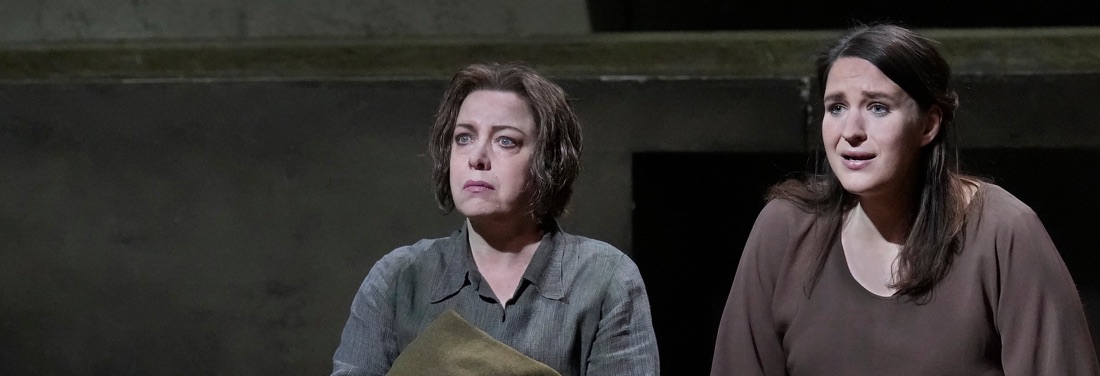
Grey lady meets dark lady

tosca_video

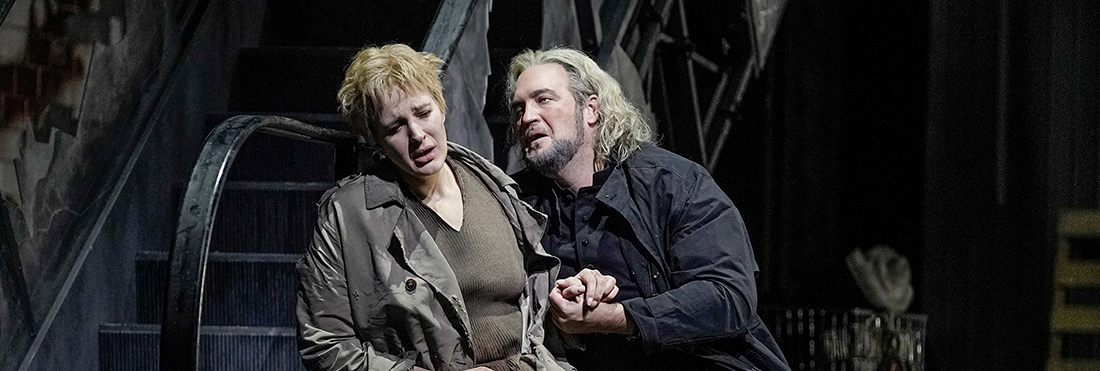
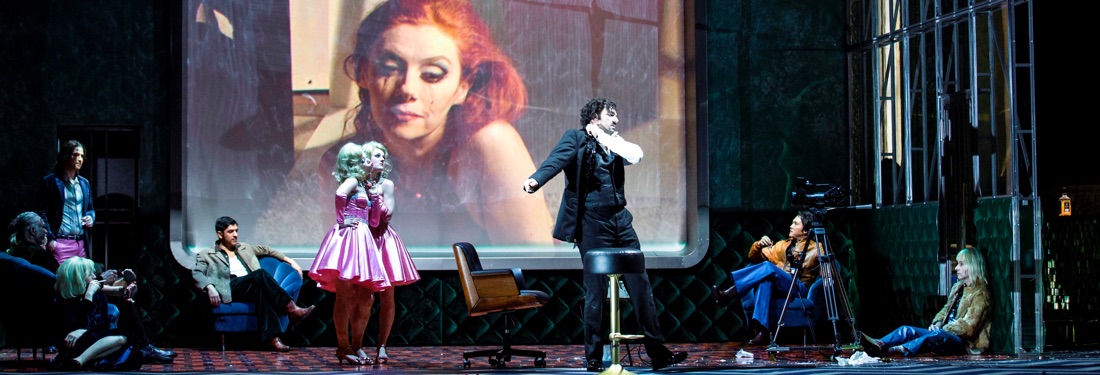
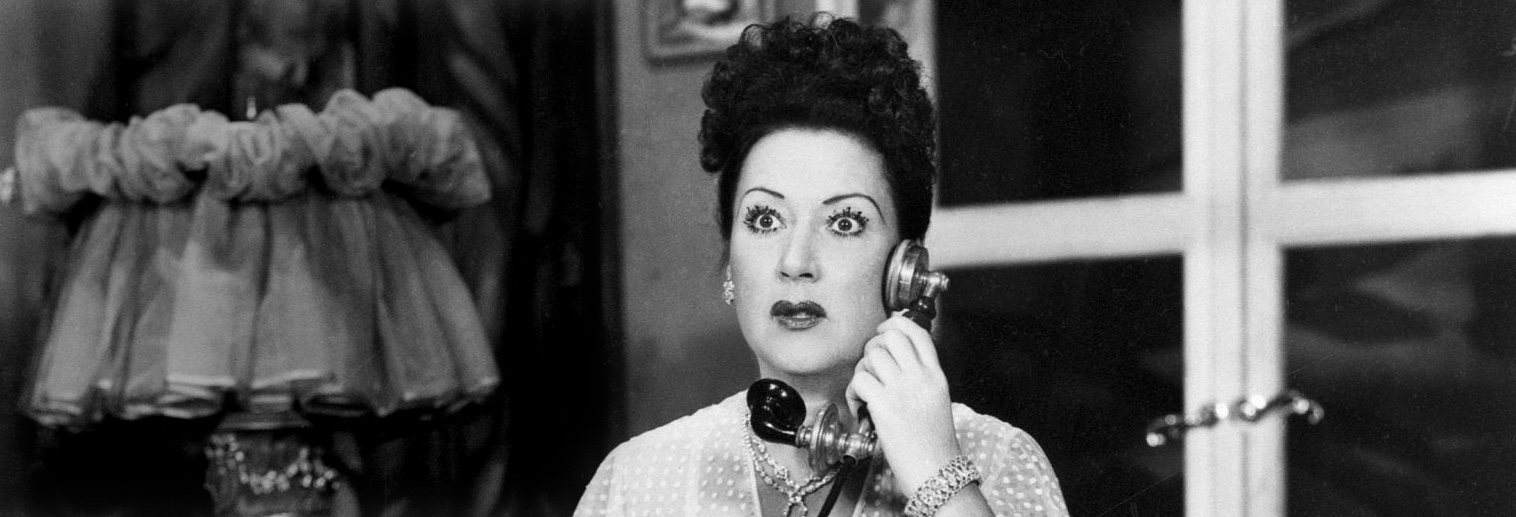
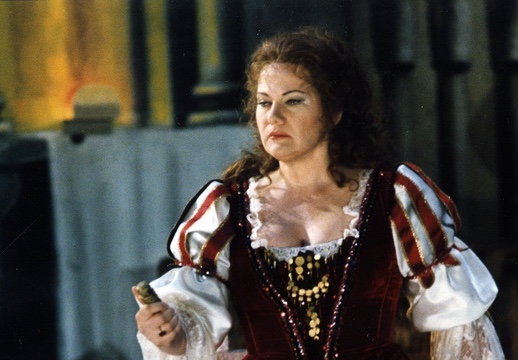
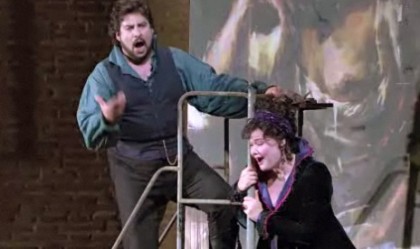
A video glimpse of the new Tosca, from the New York Times.

The wig needs some major cleaning up.

140 comments

  • MontyNostry says:

    Martina seems pretty on the case here …

  • kashania says:

    Personally, I love all kinds of productions. I like modern takes, including concept productions (provided they make sense), abstract (“timeless”) productions and traditional productions. However, this doesn’t mean that I defend a lot of regie that I’ve read about or seen. A lot of these productions seem to substitute outrageous ideas for real direction.

    What I don’t think we see enough of are the kind of production that Tubsinger alludes to. I would love to see more productions that are immaculately directed and not pre-occupied with making a revolutionary statement or turning everyone’s notion of an opera on its head.

    There’s a place for the latter but a lot of what I’ve seen and read about seem to be productions that aim for the controversial/revoluationary without necessarily worrying about whether the radical ideas of the production actually make sense with the work being staged.

  • Sanford says:

    So, annotated books are bad. By inference, Jews must need help with the Old Testament, since the Talmud is a collection of extended annotations about it.

    And Shakespeare does, in fact, survive, including the plays that were based on earlier works by others, such as:

    Romeo and Juliet (from Wikipedia) -Romeo and Juliet belongs to a tradition of tragic romances stretching back to antiquity. Its plot is based on an Italian tale, translated into verse as The Tragical History of Romeus and Juliet by Arthur Brooke in 1562, and retold in prose in Palace of Pleasure by William Painter in 1582. Shakespeare borrowed heavily from both, but developed supporting characters, particularly Mercutio and Paris, in order to expand the plot. Believed to be written between 1591 and 1595, the play was first published in a quarto version in 1597. This text was of poor quality, and later editions corrected it, bringing it more in line with Shakespeare’s original text.

    Othello (from Wikipedia) -Othello, the Moor of Venice is a tragedy by William Shakespeare, believed to have been written in approximately 1603, and based on the Italian short story “Un Capitano Moro” (A Moorish Captain) by Cinthio (a disciple of Boccaccio) first published in 1565.

    And works that may not have even been written by him (see http://en.wikipedia.org/wiki/Shakespeare_authorship_question)

    As for reading, there is no such thing, IMHO, as bad reading; all reading encourages literacy. I have read Dombey & Son, A Christmas Carol, and Great Expectations with great enjoyment, as well as Plato and Descartes. Did I have to read the philosophy for college? Yes. Did I still enjoy it? Yes. But I have also read (and continue reading) Stephen R Donaldson, Stephen King, Melanie Rawn, Anne McCaffrey, Tad Williams, and others. And I have to say that Mr. Donaldson has taught me as much about philosophy in his books as I got from Plato and Descartes. The Thomas Covenant books ask the questions “does the individual have power over the many?”.

    King’s The Stand is at least partly about the need for Community and how societies develop as they grow.

    As for enjoying a night at the opera or the theater… if one expects to go to theater only to have a good time, rather than occasionally being challenged, than there is no future for Beckett, Mamet, Ibsen, Chekhov, Shakespeare, Sondheim, Guettel, Lippa, to name a few. I always enjoy seeing a revival of some glorious musical or play from the past; Boeing, Boeing was hysterical and I enjoyed Blithe Spirit. But I’m also glad I saw Conor McPherson’s The Seafarer and Michael Frayn’s Copenhagen (which I enjoyed as much as Noises Off, but for different reasons. Noises Off made me laugh, Copenhagen made me think).

    There is room in this world (at least in mine) for both so-called “high” art and “low”. It isn’t a question of picking one over.

  • Noel Dahling says:

    Dear Kashania: the kind of production you describe in your second paragraph is exactly what you get in a Stephen Wadsworth production:immaculately directed and not pre-occupied with making a revolutionary statement. I say BRAVO! The differance between his traditional ring and Schenks traditional ring is his looks like someone took the time to direct, rather than just playing traffic-cop for 16 hours.

  • Will says:

    Noel, AMEN. The Wadsworth RING is about something, is great to look at, and is filled with IDEAS. The Schenk RING is about fulfilling a commitment with as little effort or imagination as possible.

    The night of the premiere of the Siegfried production, the lights on stage dimmed out just as the fight with Fafner started, stayed out until Fafner was dead, and came back on when a pathetic couple of tentacles were lying on the stage. Talk about NOT fulfilling a composer’s intentions!

  • Graciella Scusi says:

    I’m going to try not to read any more of paddypig’s posts until after I get my swine flu shot.

  • kashania says:

    Noel Dahling: Everything I’ve read about the Wadsworth Ring leads me to believe that it is my kind of production. THe difference you describe between it and Schenk’s production is what I always imagined (having only seen Schenk’s production).

  • kashania says:

    Well, Zeffirelli is certainly no mincing words when it comes to Bondy’s production:

    “He’s not second rate. He’s third rate,” Mr. Zeffirelli said. “You can’t stage an opera without keeping in mind what the author wanted.”

    http://artsbeat.blogs.nytimes.com/2009/09/21/zeffirelli-heard-from-as-bondys-tosca-takes-the-stage/

  • operabitch says:

    89. I don’t know I think I’d taken sadism over short, fat, and balding.

  • Harry says:

    Just go to the Sardou play of Tosca and the encounter between Tosca & Scrapia ‘before any action of Act 1′ of Puccini’s opera…….Throws a greater dimension of on how she feels, and thinks about Scarpia.