
[Our Own Gualtier Malde (along with a few thousand other people) attended the public dress rehearsal of the Met’s new production of La sonnambula this morning. Here is his report.]
Innocence, rustic naiveté and virginity just don’t get no respect no more. I should know, I grew up way out in central New Jersey and couldn’t get a date (a male one that is) at all in high school. I didn’t get no respect and sadly neither does Vincenzo Bellini and more importantly, Felice Romani these days, at least at the Metropolitan Opera.
These two men, one a poet in words, the other a poet in sound, deeply loved and respected the simple Tyrolean villagers in their opera semiseria La sonnambula a simple tale of love, marriage and misunderstanding. The creators of the current production of La sonnambula feel that the plot, characters, words and music are something that the audience must be distracted from lest their simplicity offend hipper-than-thou sensibilities.Â
The problem with this work since the end of the nineteenth century has been one of genre. Modern directors, critics and audiences understand tragic opera and comic opera but the sentimental genres in between have a tendency to be dismissed as flimsy and inconsequential. “Opera semiseria” is a genre that really got going with Paisiello’s Nina, ossia pazza per l’amore a proto-Romantic work that had a simple heroine in the country who went mad believing her lover had been killed but is restored to love and sanity in the end. It is a type of sentimental drama where we fall in love with the innocent heroine, watch her life and love imperiled by outside forces, weep over her sufferings and rejoice as she is restored to safety and the waiting arms of her lover – usually in a lovely pastoral setting.
All three of the Bel Canto titans had a great success in the genre – Rossini in La gazza ladra, Donizetti in Linda di Chamounix and Bellini in La sonnambula. Felice Romani was a respected man of letters whose poems are still read in Italian universities and his verses for La sonnambula have a tender early Romantic sensitivity – particularly the text of Amina’s arias which are delicate and full of imagery that evokes nature to illustrate her inner world.
Here is the director’s note for Mary Zimmerman’s production of La sonnambula verbatim from the program:
Mary Zimmerman’s new production is set in a contemporary rehearsal room where the cast is preparing a traditional production of La sonnambula, set in a Swiss village. In that rehearsal space, all of the events and relations of Bellini’s characters happen to the performers in their own real lives. (The one exception is the signing of the wedding contract, which is merely rehearsed as a fictional event in the opera.)
Amina and Elvino are played by two singers (also named Amina and Elvino), who are, like their fictional counterparts, lovers. The chorus constitutes the population of the Swiss village, and Lisa, the innkeeper of La sonnambula, is the stage manager.
There is a show curtain of a large reproduction of a nineteenth-century color print of the Swiss alps with a village but a pair of metal doors, scuffed and industrial, are set almost two thirds down right. Lisa with glasses and a notepad rushes through the doors and the scrim is pulled up to show a realistic modern loft rehearsal room with a stairs to the left and a door to the right surrounded by large floor to ceiling windows with a modern city buildings beyond. This is the one unit set for the opera. The change of scene is indicated by the setting being written on a large blackboard (“A Room at the Inn. Night”, etc.)
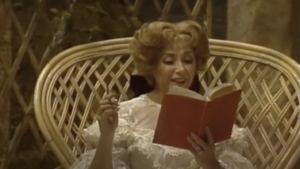
The entire cast is in modern rehearsal clothes, rehearsal skirts, sweatpants, jeans and pullovers etc. Dessay wears a smart black pantsuit number and Florez enters in jeans and leather jacket. Dessay enters in a smart white coat with a red muffler, mittens and cap talking on a cell phone. Immediately this creates a dissonance with the simple rustic heroine of Bellini’s and Romani’s drama. During her rapturous opening cavatina “Come per me sereno” where Amina wonders at the beauty of this day which seems colored by her love and happiness, Dessay was receiving a costume fitting and during the trills mimed being tickled by the wardrobe mistress and getting the giggles. She also tried out and rejected various shoes during the second verse and in the cabaletta “Sovra il sen” expressed disdain for several wigs (including one that I swear was the blonde braids that Angela Gheorghiu and Joseph Volpe fought over at the premiere of the Zeffirelli Carmen production).
The audience laughed and it was cleverly staged and superbly performed by the dexterous and agile leading lady. However, at what price was the cleverness achieved? This opening aria is supposed to make us fall in love with our heroine and wonder at her unspoiled innocence and radiance of soul. Instead we were laughing at a ditzy prima donna taking over a rehearsal. Enter Juan-Diego and we have a little backstage romance that blossoms after they run through the notary scene. It all seems to work fairly well and we almost seem to be in some kind of Woody Allen movie with neurotic actors stuck in a silly show and their neuroses played out against the corniness of the musical they are rehearsing.
The first scene is mainly character introduction and scene setting. However with the entrance of the errant Count Rodolfo (bass-baritone Michele Pertusi) the dramatic conceit started to unravel. Who is this man? He comes in with an entourage in a lovely camel hair or cashmere beige coat and seems to be a wealthy producer – maybe a movie executive or perhaps an ageing movie star or divo like Placido Domingo? Who is he? Why does he have to sleep in a rickety prop bed in the rehearsal studio? – can’t he get a room in a hotel or stay with friends? – the wealthy and powerful don’t have to rough it. Where does Amina sleep that she would wander into the rehearsal room late at night? Doesn’t she have her own apartment somewhere far away where Juan-Diego has an extra key and his own toothbrush in the bathroom? (I have kept a toothbrush for Juan-Diego in my bathroom for years and he doesn’t even know me and hasn’t even met me…)
Why is the chorus so furious at Natalie for having a one-night stand with Michele Pertusi – don’t they all read those singer’s chat rooms where all the sopranos and mezzos swear that though tenors are for romance, you want baritones and basses for sex? Don’t union rules forbid any of this nonsense from happening and wouldn’t all of them be fined for using rehearsal spaces as hotel rooms and then trashing them? At this point the framing device is actually obscuring the plot and making it less credible, not more so.
Dessay’s entrances as a sleepwalker are coups de theatre and I won’t spoil them for you. However, here is a taste of what happens in the last scene. Dessay is seen in a dangerous place sleepwalking and is guided into the room by Lisa. Amina bumps into the blackboard as the lovely instrumental introduction to the recitative leading into “Ah non credea mirarti” plays. Dessay turns over the blackboard and takes a piece of chalk and writes the word “ARIA” on it and the audience laughs before one of the most heart-stopping poignant arias in the bel canto repertory. The room darkens and the chorus disappears leaving Dessay to another coup de theatre that I won’t spoil.
With the aria over and the tenor and Teresa (Jane Bunnell) holding Amina in their arms, she awakens. The chorus all run on dressed in lederhosen and dirndls like refugees from Sound of Music. They throw a silly dress on Dessay and the green shoes she admired in the first scene with a flowered wreath on her head. Florez gets a doofy hat and some green suspenders and the set suddenly gets turned backwards showing that it is a mock-up. The jaunty, lilting introduction to “Ah, non giunge uman pensiero” starts up.
The dancers start doing a hoe-down landler type dance that is reminiscent of the disastrous movie adaptation of The Song of Norway with Florence Henderson and Edward G. Robinson. Dessay does a clunky rendition of this dance with the boys behind her during the first verse of the cabaletta. The whole thing looks seriously like “Springtime for Hitler” in the The Producers – Dessay just doesn’t have big pretzels stuck on her bodice. Dessay is lifted overhead by the male chorus as various formations dance around her. All of this is to tell us that this ecstatic piece of virtuoso writing and the Swiss setting are ridiculous and we can laugh at them and feel superior.
Bellini’s music is entirely without irony and totally sincere. It is reasonably well-served. Dessay’s voice is in good latter-day condition. She doesn’t attempt many very high or difficult cadenzas (her ornamentation of “Ah non giunge” is fairly restrained). That leaves a lot of lyrical singing in the middle and upper-middle register. Her coloratura is agile enough though as I said she is not ambitious with the fireworks. A few high notes do emerge as thready and the loud ones can be a pitched scream. But the basic sound is still attractive and fairly youthful in quality.
A bigger problem is her rather pointilistic vocal approach. Dessay has very strong vocal attacks immediately followed by a kind of diminuendo so the line is continually broken up. The phrasing is usually rather breathy and short-winded but when she attempts a long-breathed mezza voce legato line (not often enough) the voice can float hauntingly. Dessay and Florez both fail to synchronize or even attempt the unison trills in the “Son geloso” duet.
Florez’s slender and bright sound is also used rather punchily at times. Most of his high notes are attempted fairly loudly and brightly when a soft-floated voix mixte would be more romantic and stylish. Both leads needed to use the piano dynamic and contrast loud and soft phrases in their music. The nasality that can afflict Forez’s voice was seldom evident and he cuts a boyish, romantic and very natural figure onstage. He never loses his dignity no matter what happens around him.
Jennifer Black as Lisa has a dark, pliable tone that is more evenly produced and firmer than the prima donna’s. Pertusi has a handsome cantabile tone in his one big aria and solid throughout. Evelino Pido shapes the melodies lovingly and caters to the singer’s better instincts.
Mary Zimmerman did not take a bow at the end with her production team and there was no question and answer after the show. Peter Gelb in his opening comments said that not all operas have librettos that are the equal of their beautiful music and that Bellini’s La sonnambula was one of these. Mary Zimmerman’s framing device was an attempt to find a worthy substitute. Bellini’s music demands honesty and truthful expression and that was not what this production had in mind. — Gualtier Malde