
In less than 10 days two outstanding countertenors, Franco Fagioli and Jakub Józef Orlinski, visited London.
“Trove Thursday” turns for the third of Verdi’s four Schiller adaptations to a recent I Masnadieri with risen stars Lisette Oropesa and Russell Thomas.
The late-mid 1730s were transitional years for Handel, to put it nicely.
The seventeenth-century works of Francisco Cavalli may be easier for modern audiences to accept.
Fans of divas who sing 19th and 20th century opera may find themselves searching in vain for CDs to buy with this season’s gift cards, since their idols so rarely put out solo recitals these days.
Almost exactly twenty years after her auspicious Metropolitan Opera debut as the Fiakermilli in Arabella and a year following what she has claims was her final appearance on the operatic stage, Natalie Dessay returned Sunday afternoon to Lincoln Center—to sing opera.
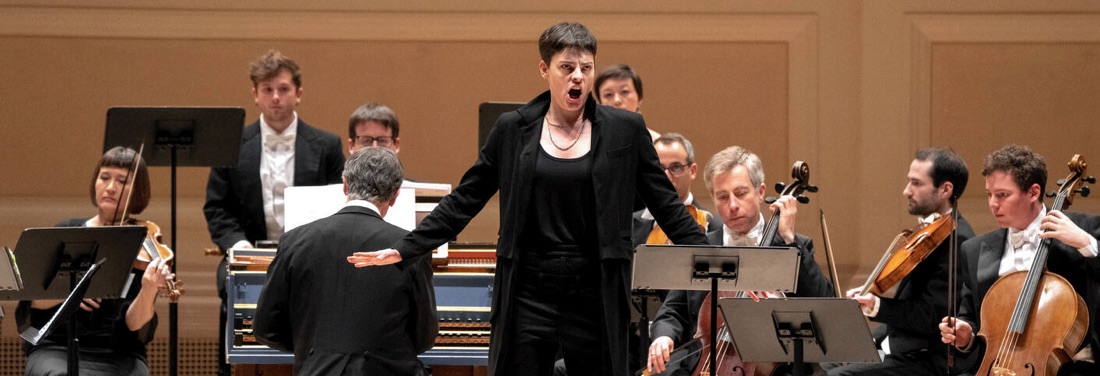
Sunday afternoon’s intermittently involving concert performance of Handel’s Alcina at Carnegie Hall starred an unusually intense Joyce DiDonato as a powerful sorceress blinded by her romantic delusions.
My impossible wish would be to hear one of the great castrati who dominated opera for most of the 18th century.
Giulio Cesare at the Met proved an evening that added up to much more than the sum of its uneven parts.
“Yet the evening’s first words, heard in the set-piece Ombra ma fui—like all of Xerxes’ arias sung with monarchic sprezzatura and amoral relish by Stella Doufexis…”
Sneaking in under the wire during the final week of May were two highpoints of New York’s opera season: the Cleveland Orchestra’s Salome with a stunning Nina Stemme and operamission’s revelatory US stage premiere of a complete edition of Handel’s first opera Almira.
By the end of its 2012-13 season, the Met will have presented four HD transmissions in less than two years featuring countertenors in prominent roles.
Despite baby-steps over the years, America’s musical scene, especially opera, remains decidedly un-HIP. (HIP: “historically-informed performance,” also called “period performance.”) While European opera houses turn increasingly to “original instrument” orchestras and specialist singers for seventeenth and eighteenth century works, this rarely occurs in the US.
Tell us: Filth or dementia?
Hasten thee to feed another quarter of conversation for The Talk of the Town!
Sign up for our free Newsletter.
Support Parterre Box
Donate to keep opera's liveliest publication free and independent. No paywalls, no institutional backing, no bootlicking.
Get our free newsletter
Opera's top reads delivered to your email weekly…ish.
Join over 100k readers.
The best opera magazine on the web.
Reviews, breaking news, critical essays, and brainrot commentary on opera from those demented enough to love it.
Essentials
Copyright © 2026 Parterre Box.
All rights reserved.
Registration or use of this site constitutes acceptance of our Terms & Conditions and our Privacy Policy. Do Not Sell or Share My Personal Information.
Sign up for Parterre’s free newsletter.
Exclusive opera reviews, commentary, and top reads
delivered to your email weekly…ish.