They say you never forget your first.
“Trove Thursday” offers Offenbach’s irreverent La Belle Hélène featuring the beauteous Véronique Gens.
“Trove Thursday” presents Purcell’s remarkably concise Dido and Aeneas in a pair of fascinatingly different interpretations.
In the triumphant American premiere of Orlando Generoso at the Boston Early Music Festival last week, the hippogriff was among the many stars of the show.
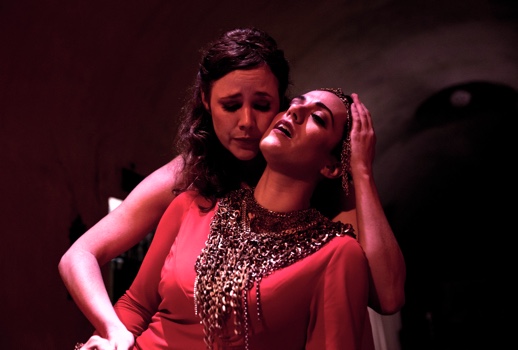
We convoke for Dido and Aeneas in an arched tunnel a city block long, lit by candles in the many recesses.
It’s difficult to reconcile what Schlather writes with what we see onstage, which is a jumble not only of pianos, but of periods and concepts.
Here’s a quick sprint through some recent (and a few maybe not-so-very-recent) Handel CDs that have been stacking up.
The New Camerata Opera performs a double bill of John Blow’s Venus and Adonis, sometimes dubbed the first English opera, and Gustav Holst’s Savitri.
“Trove Thursday” marks St. Cecilia’s Day with two works by Henry Purcell, the composer who often celebrated music’s patron saint.
This program honored the singer, composer and theorist Giulio Caccini, “Giulio da Romano,” on the 400th anniversary of his death.
Although Leonard Bernstein’s Trouble in Tahiti is always categorized as an opera, the piece certainly has one foot planted firmly in his jazzy musical-theater style.
Opera Philadelphia’s O18 Festival continues through the weekend, but Friday represented a finale of sorts with the last two premieres.
Can a surfeit of pleasure become—in the end—unsatisfying?
Endlessly extricating her from existing contracts then negotiating new ones must make being Sonya Yoncheva’s manager the hardest job in the music business.
“Trove Thursday” presents a recording of the rare L’Olimpiade featuring Joan Caplan and Rita Shane in the two leading castrato roles.
Joyce DiDonato’s atest album, In War & Peace: Harmony through music, is more specific than it sounds.
Richard Wagner viewed dance as an essential element of art, though he used it sparingly in his operas.
A semi-staging of Dido and Aeneas starring Broadway divas and frequent collaborators Kelli O’Hara and Victoria Clark seemed a screwy idea at best.
In a striking program at Carnegie Hall last night, the Orchestra of St. Luke’s), with guest vocalist Susan Graham, brought together a wide array of musical proclivities—good and good bad taste alike.
An astute double-feature exposes all the complexities of female suffering embedded within two canonical works.
I’m beginning this new series of “pirate-casts” with a great opera: Berlioz’s Les Troyens featuring the luminous pairing of Janet Baker and Jon Vickers as Didon and Énée.
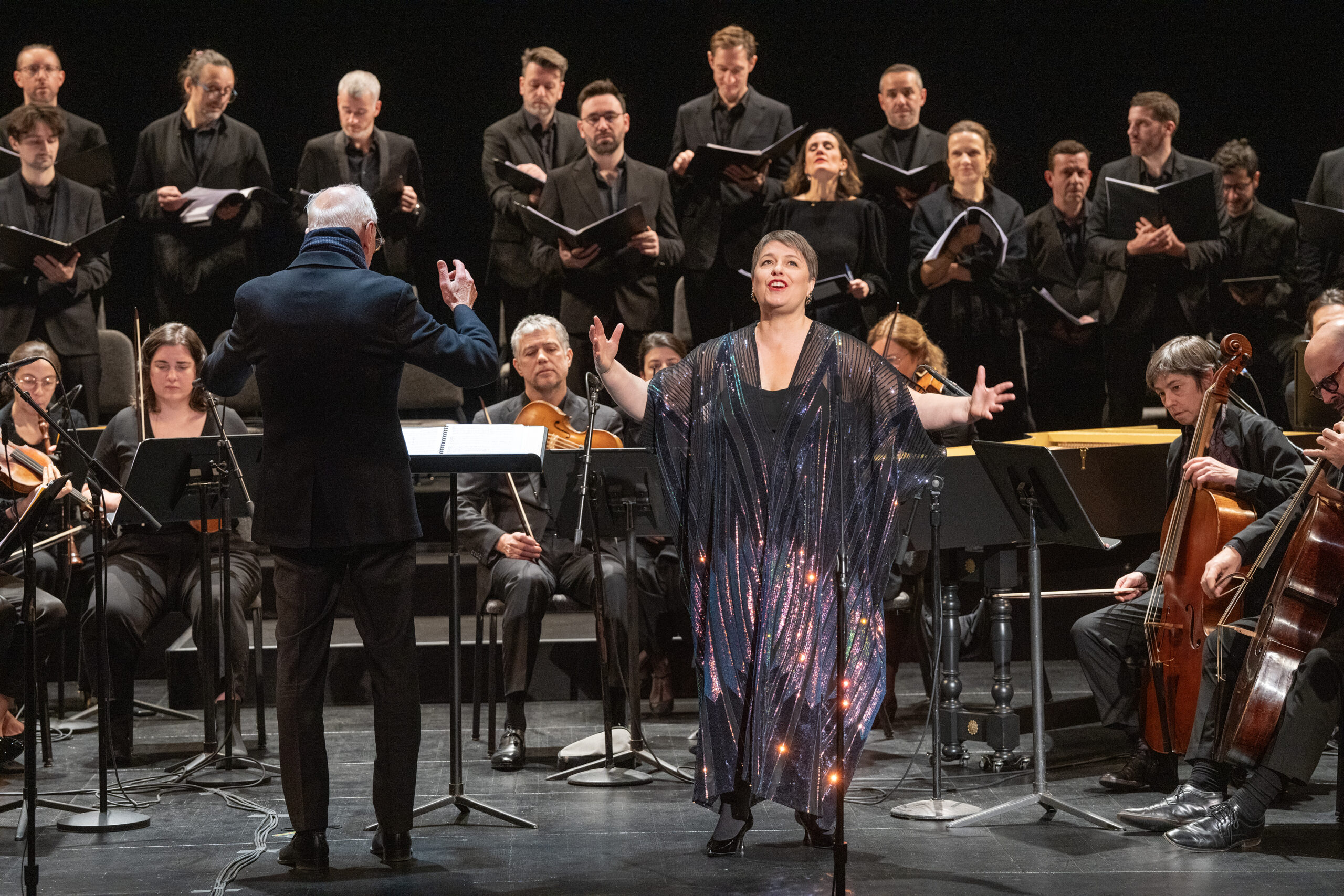
Although she began her career nearly 25 years ago recording and performing lots of baroque music, I was surprised to see German soprano Dorothea Röschmann promoted as the star attraction of an all-Purcell concert Sunday at Carnegie Hall.
Who needs sets and costumes anyway?
At what moment does a “rising star” become simply a “star”?
Tell us: Filth or dementia?
Hasten thee to feed another quarter of conversation for The Talk of the Town!
Sign up for our free Newsletter.
Support Parterre Box
Donate to keep opera's liveliest publication free and independent. No paywalls, no institutional backing, no bootlicking.
Get our free newsletter
Opera's top reads delivered to your email weekly…ish.
Join over 100k readers.
The best opera magazine on the web.
Reviews, breaking news, critical essays, and brainrot commentary on opera from those demented enough to love it.
Essentials
Copyright © 2026 Parterre Box.
All rights reserved.
Registration or use of this site constitutes acceptance of our Terms & Conditions and our Privacy Policy. Do Not Sell or Share My Personal Information.
Sign up for Parterre’s free newsletter.
Exclusive opera reviews, commentary, and top reads
delivered to your email weekly…ish.