

Review

Not quite right
The last of the Strauss-Hofmannsthal collaborations, Arabella, is a real problem child.
Working “Tito”
After an uneven start to the season, the Met brought its A game Friday to a superb revival of Mozart’s La Clemenza di Tito.
The sun also rises
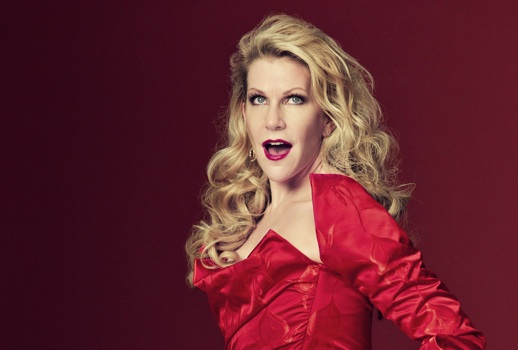
If you’re the sort who prefers his diva to be an unapproachable sphinx prone to infuriating cancellations while radiating ennui, I suspect that the sunny, hard-working, grateful persona of American mezzo soprano Joyce DiDonato will not appeal to you at all.

Who let the Doge out?
Once again, we’re back with the Parmigiani at the Teatro Regio and their Tutto Verdi project marking the upcoming bicentennial of the great maestro’s birth.

Death, warmed over
Kaiser Overall—the name is intended to be sung in English, though the opera is in German—is probably mad, though perhaps no madder than anyone else.
Small scale
In art, less is more — at least most of the time.

Gould standard
Midway through his traversal of Wagner’s 10 mature operas for PentaTone, we’ve learned this about Marek Janowski:
Swedish frisson
Last week’s freak nor’easter set the tone for Thursday’s chilly new production of Un Ballo in Maschera at the Met.
The man in the ironic mask
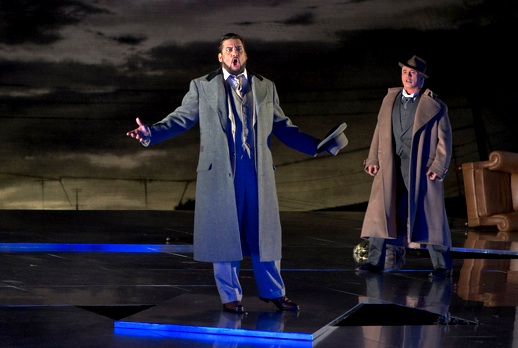
The realization of the opera Un ballo in maschera by Verdi and the librettist Antonio Somma is almost as famous as the opera itself.
Cross purposes
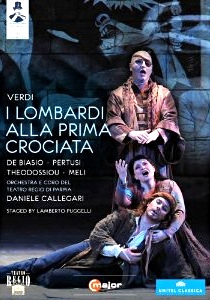
In spite of sounding like an indelicate football injury, I Lombardi alla prima crociata was only Giuseppe Verdi’s fourth opera.
Sachs appeal
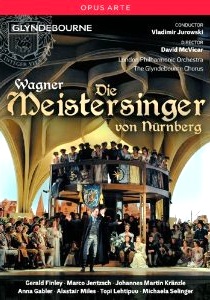
Opera’s Scottish enfant terrible David McVicar has applied his considerable skills in this 2011 Glyndebourne production of Die Meistersinger, the result being a refreshing new take on a familiar warhorse.
Down for the count
The battle of the sexes ended in an upset the other night in Le Nozze di Figaro.
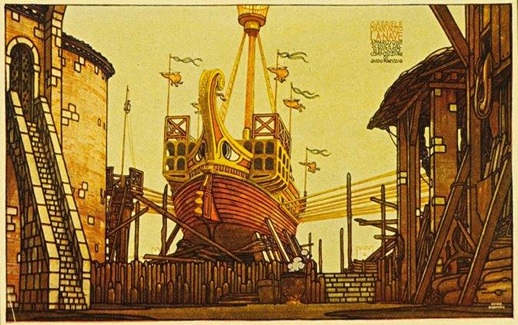
Shipshape
Italo Montemezzi’s La Nave, premiered in 1918 and not performed anywhere since 1938, concerns itself with nautical power, male and female archetypes, love and hate conjoined, sex and death, the eastern and western halves of the Roman Empire — and the visionary future of Old Venice.
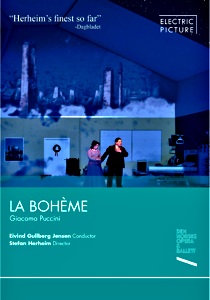
The blood of a poet
Death and its terrible aftermath hang like a pestilent fog over director Stefan Herheim’s fascinating and chilling production of Puccini’s La Bohème for Den Norske Opera.
Rare opera well done
“When the cross-dressing dude is the gifted singer Jeffery Roberson, and the opera is Menotti’s spellbinding The Medium, the result is prime musical melodrama.”
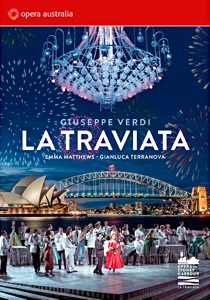
The little people
As an opera, La Traviata is defined by its characters.
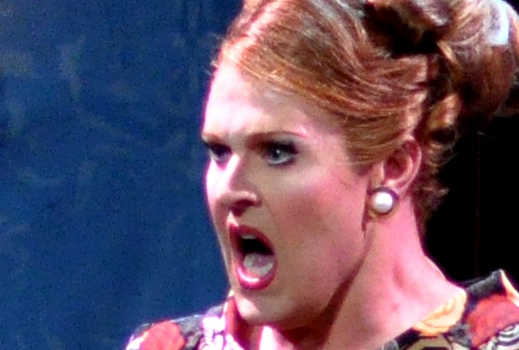
A dude? Am I a dude? Madame Flora, a dude?
It’s just not true that Gian Carlo Menotti composed The Medium as an opera only because he couldn’t get Joan Crawford to do it when his libretto was originally a screenplay.
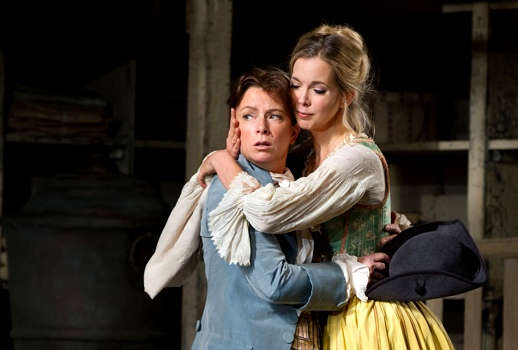
Can this “Marriage” be saved?
The performance at the Metropolitan Opera last night proved that yes, it is possible to kill this opera. I don’t know how they managed it, but they did.
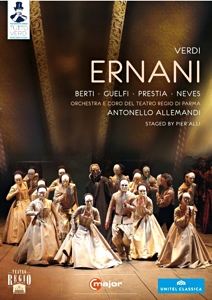
Parma violence
This DVD of Ernani is part of a series from the Teatro di Parma, a “Tutto Verdi” collection recently produced by Unitel Classica.
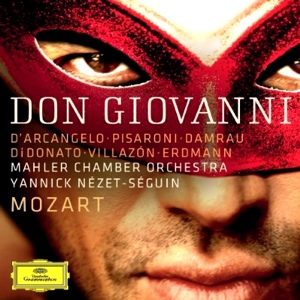
One thousand four
My mother asked me once, whilst staring aghast at my CD collection, why I needed so many copies of Don Giovanni.

Mission statement
Can it be nearly a quarter-century ago that an Italian mezzo-soprano in her early twenties recorded her first recital?
Isle, be seeing you
“Like the Shakespeare play it’s based on, Thomas Adès’ opera The Tempest is set on an enchanted island.”
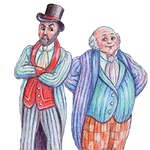
The odd Pasquale
At the age of thirty, Donizetti was already the experienced composer of about eighteen operas, both serious and farcical, but as Olivo e Pasquale (currently undergoing its American premiere run at Amore Opera) makes clear, the comic works were no slight matter.

I’ll take the fall
The days are getting shorter, but you can keep the prattle going this fall’s Talk of the Town! You will, you can, you must join in the discussion about: Great mezzo soprano performances (October),
Gained in translation (November), Teleport me back to… (December).