The Met stage was filled with considerable magic Monday night when its dizzily effervescent revival of La Cenerentola starring Joyce DiDonato and Javier Camarena stirred a bewitched audience to some of the most ecstatic ovations heard this season.
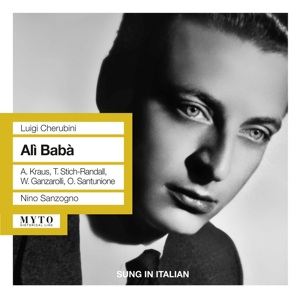
Perhaps there are not that many people in the world who would look at a CD cover and think “Oh, goody, goody! A libretto by Eugène Scribe I’ve never come across before!”
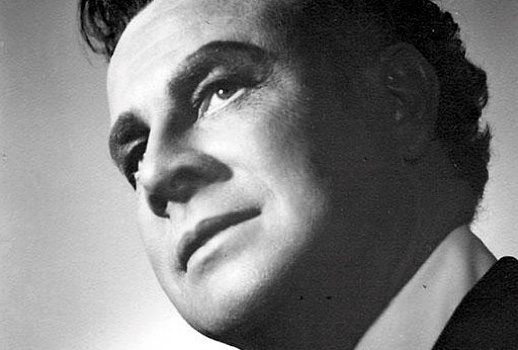
La Cieca assumes, or at least hopes, such an encounter is currently taking place on some other plane. In slightly more mundane terms, though, Mike Richter did “meet” Claudio Abbado, though not in the context of his celebrated CD-ROM series.
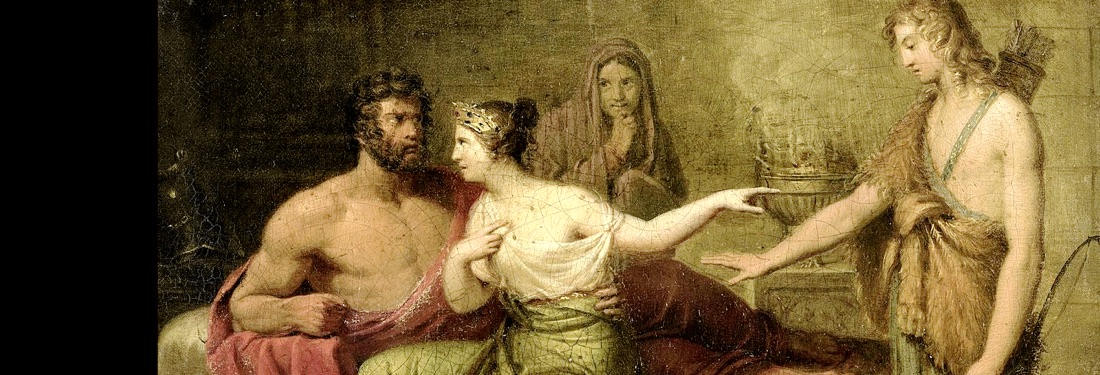
I think we’re all aware by now of the wicked libel that the French dramatist Victor Hugo concocted about the fair Lucrezia Borgia with his depiction of her as a murderous virago.
I suspect most New York City opera-lovers had long since given up hope that the fascinating soprano Anna Caterina Antonacci would ever return to their city.
La Cieca is sort of out of words trying to describe what makes a great performance of the role of Norma, as opposed to the conscientious traversal of the notes.
The Jesi foundation continues its tireless quest of making Pergolesi operas available on video.
It is quite unusual to stage a new indoor production in the middle of summer in Italy when so many outdoor venues are open, but general manager of La Scala Stéphane Lissner – who will leave next year – decided to close the first half of this Verdi-Wagner year with a beloved hit of il cigno di Busseto.
Everything about Aleksandra Kurzak’s new disc is a variation on the term “fioritura.”
Of all of Verdi’s operas. Aida is the one I find least interesting dramatically.
There’s that old joke; What’s the difference between opera and sex? Punchline; you can have good sex.
All of the operas of Giuseppe Verdi contain music that is worth hearing and can be rewarding in good performances.
Verdi’s first operatic masterpiece is well served by this DVD of a performance from the Teatro Regio di Parma.
There’s something charming and almost irresistible about early Verdi opera. I always equate it to seeing a grade school test from Albert Einstein.
In spite of sounding like an indelicate football injury, I Lombardi alla prima crociata was only Giuseppe Verdi’s fourth opera.
To imagine that I have anything new to say about Maria Callas’ 1957 performance of Anna Bolena at La Scala is sheer pomposity.
Beethoven expressed it best when he reportedly threw Rossini shade: “Any other other style than opera buffa would do violence to your nature.”
We approach, beloveds, as unto a shrine, for these are no ordinary performances.
Richard Strauss’s “last romantic opera,” as he called Die Frau Ohne Schatten, is and has always been a problem child.
One of my adolescent pastimes was trolling the classical cut-out bins in record stores searching for overlooked gems or unfamiliar singers.
Being an opera lover in Los Angeles is a lot like being a Red Sox fan. As hard as they try we never make it to the World Series, let alone the playoffs.
Almost exactly one hundred years ago on March 18, 1912, the Metropolitan Opera gave its final performance to date of Armide.
If the Arthaus Musik release of Le nozze di Figaro from La Scala feels like a slouchy revival pulled haphazardly from the video vault, the singers are certainly not at fault. Ildebrando D’Arcangelo and Diana Damrau, starring as Figaro and Susanna, are bankable stars who live up to the hype. At the podium, Gérard Korsten…
Many American opera-lovers take the “Grand Tour”—a pilgrimage to Europe to attend opera at its great houses—Peter Grimes at the Royal Opera in London or Otello at La Scala in Milan, or perhaps for the more well-heeled a visit to the summer festivals of Glyndebourne, Salzburg or Aix-en-Provence.
Tell us: Filth or dementia?
Hasten thee to feed another quarter of conversation for The Talk of the Town!
Sign up for our free Newsletter.
Support Parterre Box
Donate to keep opera's liveliest publication free and independent. No paywalls, no institutional backing, no bootlicking.
Get our free newsletter
Opera's top reads delivered to your email weekly…ish.
Join over 100k readers.
The best opera magazine on the web.
Reviews, breaking news, critical essays, and brainrot commentary on opera from those demented enough to love it.
Essentials
Copyright © 2026 Parterre Box.
All rights reserved.
Registration or use of this site constitutes acceptance of our Terms & Conditions and our Privacy Policy. Do Not Sell or Share My Personal Information.
Sign up for Parterre’s free newsletter.
Exclusive opera reviews, commentary, and top reads
delivered to your email weekly…ish.