
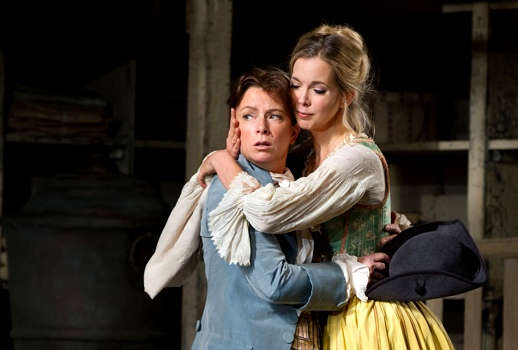
Can this “Marriage” be saved?
The performance at the Metropolitan Opera last night proved that yes, it is possible to kill this opera. I don’t know how they managed it, but they did.
11 pieces since 2010 — in 6 roles, at 2 companies, most often at Metropolitan Opera.
The performance at the Metropolitan Opera last night proved that yes, it is possible to kill this opera. I don’t know how they managed it, but they did.
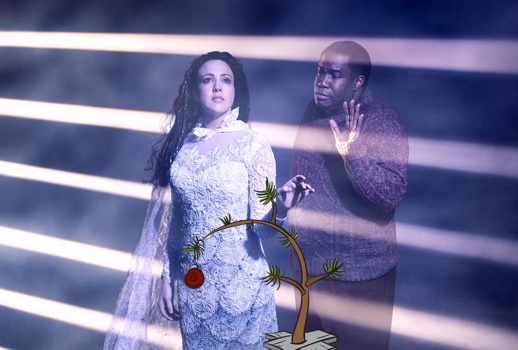
With Christmas Eve 2016 falling on a Saturday, the Met offers contrasting orchestral splendors at noon and 6 p.m.
“I just saw a woman upstairs,” said poet/translator Richard Howard, “wearing a very large pair of sunglasses that made her look for all the world like a great dragonfly.” “Upstairs” was the balcony at the Met; at the time, I was taking Howard’s lecture on the subject of frivolity in literature, and so when I […]
There’s something happening at Zankel Hall. Lieder recitals are not what they used to be. Christine Schäfer threw us for a loop Wednesday night in a recital program juxtaposing just two composers – George Crumb and Henry Purcell – who have what, exactly, in common?
This mostly wonderful performance of Handel’s Theodora opened the 2009 Salzburg Festival in honor of the 250th anniversary of the composer’s death. Written at the beginning of the last decade of the composer’s life, it was a work that he held in very high regard even though he knew its subject matter would not excite. Only […]

In Richard Strauss’s Arabella, the heroine is consumed with finding the right man—der Richtige—but who is the right Arabella?

The days are getting shorter, but you can keep the prattle going this fall’s Talk of the Town! You will, you can, you must join in the discussion about: Great mezzo soprano performances (October),
Gained in translation (November), Teleport me back to… (December).
Exclusive opera reviews, commentary, and top reads
delivered to your email weekly…ish.