Turn on, tune in, drop out
Richard Lynn provides a comprehensive introduction to the surprisingly wide and unsurprisingly wild world of opera podcasts.
 By
Dawn Fatale

With so many opera podcasts going on permanent hiatus, I’ve been on a quest to find some new ones to work into my rotation. I sampled many different shows and have some recommendations for our cher public.
I limited myself to English-language shows that are still actively producing episodes and I did not listen to any of the many (crikey, so many!) podcasts that are produced by opera companies. (I assume you’ve already figured out if the show from a company that interests you is worth the time.)
My Top Three
For me, the best podcasts expose you to new content and perspectives. If a podcast episode is really cooking, I wish I was part of the conversation. I found three podcasts that I’m now hooked on, and you should definitely audition them if you don’t subscribe already.
Decanonized tops my list. Writer and journalist Olivia Giovetti takes as her starting point the list of operas in Henry W. Simon’s 1957 tome 100 Great Operas and Their Stories. Every two weeks, she is joined by a very special guest to discuss one of these works. They examine what the opera is about, what it’s like to experience this opera in performance, how it got into the canon, and whether it deserves to stay there.
I deeply admire how exceptionally prepared the host and her guests are. Obviously, they’re familiar with the work through their own attendance, recordings, and videos, but they’ve also studied the source material for the opera, read articles from contemporary and historical writers about the piece, and created a quasi syllabus for anyone who wants to dive deeper. Check out the page of show notes for the episode on Four Saints in Three Acts. After listening to this episode, I immediately ordered a copy of Steven Watson’s Prepare for Saints.
But this is not to imply that the show is stuffy or academic; it’s smart and funny in all the best ways. Colorful language is used with gusto and precision. The hosts are clearly enjoying their discussions, as I hope you will as well.
This podcast is for you if: Your parents had an opera reference book in the house (Henry Simon, Milton Cross, Gustav Kobbé) and you read it cover to cover; you always read the program notes at the opera and complain bitterly when they are milquetoasty AI-style-summaries; you’ve long awaited a podcast that describes Max in Der Freischütz as an “incel.”
Countermelody is from countertenor and voice teacher Daniel Gundlach. Gundlach has produced nearly 500 episodes, so I am inexplicably late to this party. For each episode, he focuses on a particular singer, composer, or theme and presents a set of very well-curated recordings, most of them live and all of them hard to track down. I am in awe of his music library and ability to locate the most elusive recordings. If anyone is going to unearth the fabled lost recording of Maria Callas in Fedora, it will be Daniel Gundlach.
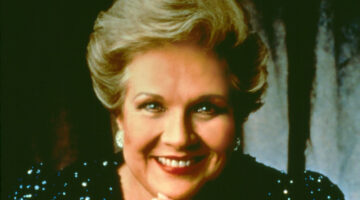
To get a sense of this show, try out his most recent Verdi potpourri episode (with Gundula Janowitz in Attila, Margaret Price in Giovanna d’Arco amongst many others). After listening to his tribute to Alain Vanzo, I had a considerable list of recordings that I had to track down. Obviously, the host has his favorite artists and strongly held opinions, but that’s what makes the show worthwhile. As an added bonus the information pages about each episode have great singer photos (such as the one of Claudia Muzio at the top of this piece). The live recordings all appear to be in the best available sound.
This podcast is for you if: You have a framed, autographed photo of Fiorenza Cossotto as Amneris in your home and you tell unsuspecting guests that it’s a photo of your mother; you miss George Jellinek’s The Vocal Scene and performances by La Gran Scena Opera Company, or you would have liked to have been around for the era of George Jellinek’s The Vocal Scene and La Gran Scena Opera Company; you’ve given up trying to find interesting historical performances on YouTube because search there is so enshittified.
Thrilled to Announce is a triple-threat; an Instagram account, a newsletter, and a podcast. All three were created by the team of mezzo-soprano and writer Perri DiChristina and marketer and social media guru Charlotte Jackson. Both of them are deeply knowledgeable about opera and are part of the generation that grew up with the Internet. This results in content and perspectives that are quite unlike most anything else in the online opera universe.
The core of their presence is their Instagram account where they wryly describe themselves as “Esoteric memers exploring our operatic//philosophical inner Selves.” The content there is characterized as “dreaming/ theorizing/ yapping.” In other words, they post short videos with reactions to breaking operatic news, clips of performers that fascinate them, excerpts from their podcast, and insights about the performer’s life. Everything is designed to be shared and elicit comments. This is intended to help the singer community – especially younger singers – build their network and thrive in an impossibly challenging moment for the profession.
The podcast is a much longer-form version of this, but it comes across as a conversation between two close friends with their own shared history, lingo, and inside jokes. The experience of listening sometimes feels more like eavesdropping on a private conversation, and I had a glimmering of how Nabokov must have felt riding around on Ithaca public transit buses so he could discreetly transcribe conversations between teenagers. (They also literally use the word “literally” way too much and it can be grating.) It’s worth persevering, because the content, especially on the topic of social media and careers, is quite fascinating. Try their episode entitled “Classical Social Media Anthropology – 101”. I’m eagerly awaiting the promised continuation.
Lastly, they have a free newsletter, with a useful listing of NYC events, including some of the less mainstream ones. Their newsletter also has thoughtful commentary on selected news stories. If you are in NYC, I would subscribe.
This podcast is for you if: You want an opera podcast that leans into the weirdness of opera and the strange absurdity of careers in the arts; you want the younger generation of classical singers and creators to succeed in fixing opera after the preceding generation broke it; you believe memes can be a force for good; you already know what YAP Tracker is.
News and Interviews
There are also several news and interview podcasts available. The opera industry is sadly lacking a comprehensive news site with a usable index and I’m not sure that listening to a podcast is how I want to consume my news, but that may just be me. I do enjoy a good interview if there is a genuine conversation between the participants with thoughtful questions and follow-up.
Opera Box Score: They describe their show as one “that took opera content and slammed it into a sports talk radio format.” (Having never listened to any sports talk radio, I can’t judge the veracity of that précis.) Listeners cannot call in, but they can submit written or audio commentary that could be shared on the show. Each episode has a standard set of sections including headlines, quick news highlights, and interviews. The news features are fast paced and I wish they devoted more time to important topics like the strike in San Francisco. It’s a complicated topic, but it’s one with implications for every opera company in the country. It merited more discussion.
The interviews, most of which are conducted by Oliver Camacho, are a compelling listen. I listened to several conversations with singers and found them to be quite candid about their own careers and experiences. They even speak about technique in a comprehensible way. Try the ones with Andreas Scholl and Denyce Graves which they recently replayed.
This podcast is for you if: The idea of a weekly talk radio show about opera is appealing; your favorite character on Frasier was Bulldog Briscoe; you’ve always wanted to call into a radio show; you like a podcast with merch.
Operawire: David and Francisco Salazar, who created the Operawire website, started a podcast in the summer of 2025. Most episodes feature an interview, but some just discuss the news. I listened to their interview with Francesca Zambello of the Washington Opera and the discussion with new General Director and CEO of the Dallas Opera, David Lomelí.
Both discussions had some fascinating content. Francesca Zambello was quite candid about the Trump Administration takeover of the Kennedy Center and I learned some appalling new details. However, the interviewer didn’t even ask if the Washington Opera wants to ever go back to the Kennedy Center or if it’s time to find a new permanent home. They also didn’t question Zambello’s assertion that the opera company isn’t political, this in a season when they are doing The Crucible.
Similarly, Lomelí said some provocative things about diversity, body-type driven casting, and social media. All of this should have engendered additional questions, but none were asked. Instead, the only real discussion was about the use of AI and here the participants talked past each other with the Salazars wanting to complain about the Bayreuth AI Ringand Lomelí wanting to talk about the bigger issue of how opera companies are already using technology and AI and the extreme threat of music generation tools like Suno.
This podcast is for you if: You like candid, provocative statements unencumbered by clarifying follow-up questions.
Opera Now: Then there is the mystery of the Opera Now podcast. This is the new podcast from Opera Now magazine. It is not to be confused with the OperaNow! podcast, which we miss. The podcast has run for one year and the magazine still advertises the podcast on their website, but there hasn’t been a new episode since the end of April. The hosts discuss news from the opera world and interview guests in a range of opera-related professions. I did not find the discussion very enlightening, Does anyone know what’s happening with this show?
This podcast is for you if: You like watching TV shows that end their first season with a cliffhanger and then get canceled. (RIP Invasion on ABC) It’s not really a good podcast without a British accent.
Honorable Mentions
CVH Podcast: I also want to give a nod to bass Christian van Horn’s podcast. He has been regularly podcasting since 2020! The episodes are a mix between discussions of his current work, reflections on the operatic profession, discussions with colleagues, and responses to questions and comments from his listeners. His dedication to the podcast and his candor are admirable, his lack of ego is also refreshing, and he has a great speaking voice. It’s up to you to decide how invested you want to be in his journey as an artist and colleague.
This podcast is for you if: You’re a big fan of Christian van Horn; you need the mellifluous sound of a basso speaking voice to get you through the horrors of the day.
New Classical Podcast: Just as I was finishing my survey, Instagram opera influencer and traveler Opera Bert launched his new podcast – the imaginatively titled New Classical Podcast. Normally, I wouldn’t review a podcast with just two episodes, but he has a large following and he brought out the big guns for his first episode with an interview of Yannick Nézet-Séguin. The podcast is very much a work in progress — a mix of softball and philosophical questions with nothing about the extreme challenges facing the Met and orchestras in the US. There is also an embarrassing discussion of AI that betrays no understanding of AI or the threat it poses to the performing arts.
This podcast is for you if: You already follow Opera Bert and watch his video interviews; you never want to have to understand AI and what impact it will have on opera.
I realize that my overview is very US-centric, but that is where I found the most content. I listen to Primadonnen because it inspires me to work harder on my German and it’s fun, and I wish my Italian was good enough to listen to the legendary Voci in Barcaccia.
My Dream Podcasts
Despite the wealth of podcasts out there, I think there are a couple of new opera podcasts that we could really use:
Regie-cide: Think of it as a DVD commentary track for famous (notorious?) opera productions available on video. In each episode the hosts examine an opera, possibly an act at a time, to answer the following important questions:
- What does the director appear to think the opera is about? Does the production actually make a compelling case for their interpretation and production choices?
- Is it possible to understand what the director thinks the opera is about without reading the program notes?
- Would someone who doesn’t know the opera have any idea of what is going on?
- How are the singers?
- Would you ever want to watch this performance again?
A Blight at the Opera: Singers relate their experiences with truly heinous colleagues while carefully obfuscating the identity of their PTSD triggers. Listeners submit theories on who the nightmares in question are (the more improbable the better). Secret Identities are never revealed unless the individuals are deceased.
Have I missed any of your favorite podcasts? Can you recommend an episode that shows your favorite podcast at its best? Or what podcast would you want to will into existence?
Dawn Fatale
Richard Lynn is a New York City based opera lover who writes at parterre box under the name Dawn Fatale. His love of opera started at a very young age when he used to listen to the Met broadcasts and obsessively read back issues of Opera News in lieu of socializing at family gatherings. In college, he majored in Chemistry while taking as many music and theater courses as possible. He worked at the Music Library to get access to the opera recordings that were off limits to undergraduates. Since the early 1990s he has been writing about opera at parterre box and other publications and is particularly interested the evolution of staging and performance practices.