When we meet in sweet Siberia
Beatrice Venezi may have been exiled to Siberia, but Stacy Jarvis argues that opera’s combination of global economics and local judgments mean that no artist is truly cancelable.
 By
Stacy Jarvis
By
Stacy Jarvis
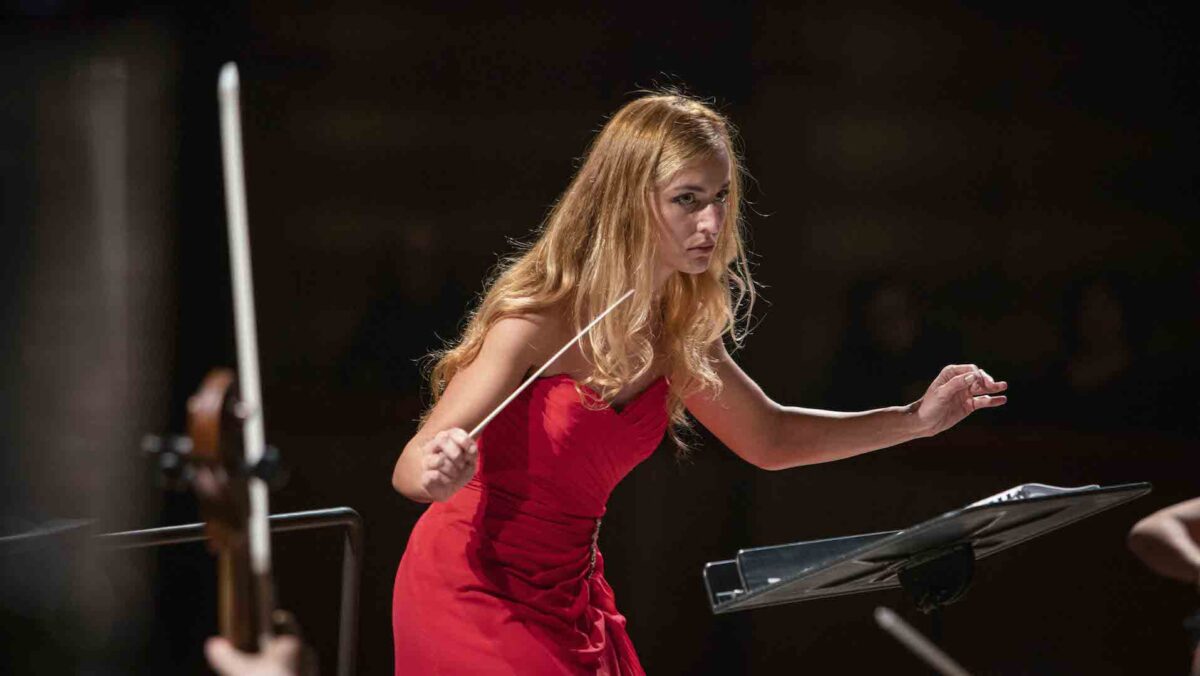
Conductor Beatrice Venezi / Photo: Marco Borrelli
On 7 November, Beatrice Venezi is due to conduct Verdi’s La traviata at the Novosibirsk State Opera and Ballet Theatre (NOVAT). The cast is itself international: soprano Vasilisa Berzhanskaya will sing Violetta alongside Armenian tenor Liparit Avetisyan and Mongolian baritone Amartuvshin Enkhbat and NOVAT’s program lists Venezi on the podium for the closing performance of the Siberian Opera Festival.
The engagement comes after the collapse of Venezi’s proposed relationship with Venice’s Teatro La Fenice. Her appointment as the theater’s next Music Director had provoked months of opposition and protest from both the orchestra and the public before La Fenice announced in April that future collaborations would not proceed.
The dispute was never simply about conducting: Venezi’s appointment was born already entangled with Italian politics. She had served as a music adviser to Italy’s culture ministry after right-wing Prime Minister Giorgia Meloni came to power and had publicly spoken positively about Meloni; critics of the appointment alleged political interference and pointed to her links with Italy’s political right. The orchestra and chorus, meanwhile, stressed a professional objection: Venezi had never conducted a scheduled opera or public symphonic concert at La Fenice before being selected to become its Music Director. Venezi has rejected the suggestion that political favor secured her appointment and has since argued that the controversy itself became political.
Even the language describing the rupture requires care. In a statement provided to Parterre Box, La Fenice clarified that Venezi’s contract “was not formalized” and that the collaboration “never began.” The Foundation said it did not wish to revisit a matter that had already continued for some time and wished Venezi success in her future career. Venezi’s lawyers, however, have challenged the theatre’s position, arguing that the termination of their relationship was invalid.
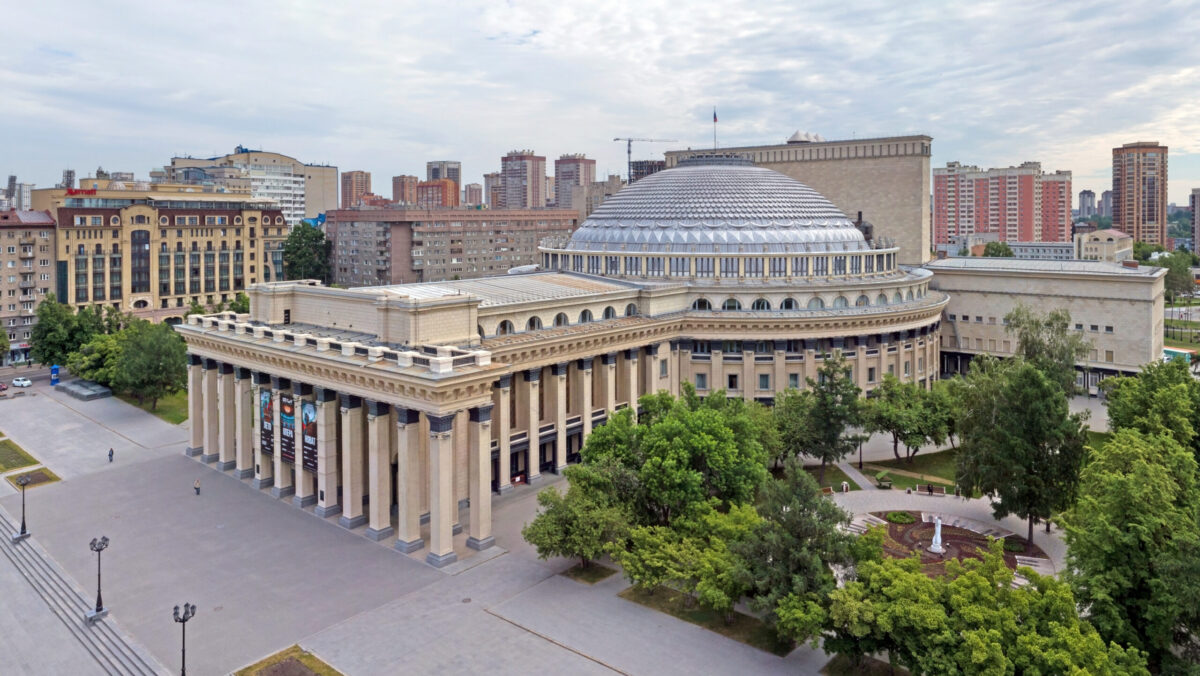
Novosibirsk State Academic Theater of Opera and Ballet / Photo: Ludvig14 – Own work, CC BY-SA 4.0, Link
Whatever its legal definition, Venice is no longer waiting for Venezi. Siberia is. That journey looks extraordinary. Historically, however, an Italian musician travelling to Russia to make opera is anything but.
Russian operatic culture was international long before Russian composers became preoccupied with defining what a national music should sound like. From the eighteenth century, the Imperial court imported Italian composers, singers and theatrical traditions. French culture permeated aristocratic and theatrical life, while German-speaking musicians and musical institutions formed another important strand of St Petersburg’s cultural world.
Russia’s native operatic tradition did not precede its culture exchange with western Europe. Rather, exchange helped construct the institutions themselves. Italian opera companies and traditions, French theatrical culture, and German musical institutions existed alongside the emerging Russian school. By the nineteenth century, musicians, repertoire and ideas were moving repeatedly across these borders.
Simon Morrison, Professor of Music at Princeton University, told Parterre Box that Italian-Russian theatrical exchange was particularly robust in the nineteenth century. He points to the Romanov’s enthusiasm for Italian opera, the Italian ballet stars who shaped the Imperial Russian repertory and, most famously, the 1862 St Petersburg world premiere of Verdi’s La forza del destino. Russian operas, Morrison notes, could themselves struggle for space on an Imperial stage enamored of Italian repertoire.
Seen against that history, Venezi’s defense of culture as a “bridge” between countries belongs to a recognizable tradition. The harder question is whether an old model of cultural exchange retains the same meaning under the political circumstances of 2026. And Venezi is hardly the only artist demonstrating how dramatically an operatic reputation can change at a border.
Several variations on this theme have made the news over the past decade, with Venezi’s Siberian Violetta being only one of them. Plácido Domingo has continued performing extensively in Europe after American institutions distanced themselves from him following allegations of sexual harassment, which he disputed. Daniele Gatti rebuilt an international career after the Royal Concertgebouw Orchestra ended his tenure in 2018 following similar allegations of inappropriate behavior, which he denied. Today, Gatti is Principal Conductor of the Staatskapelle Dresden and Music Director of the Maggio Musicale Fiorentino. And Vittorio Grigolo and Charles Dutoit met similar fates in the United States for similar reasons; the former stars in Faust at La Scala later this month while the latter conducts in Beijing next week.
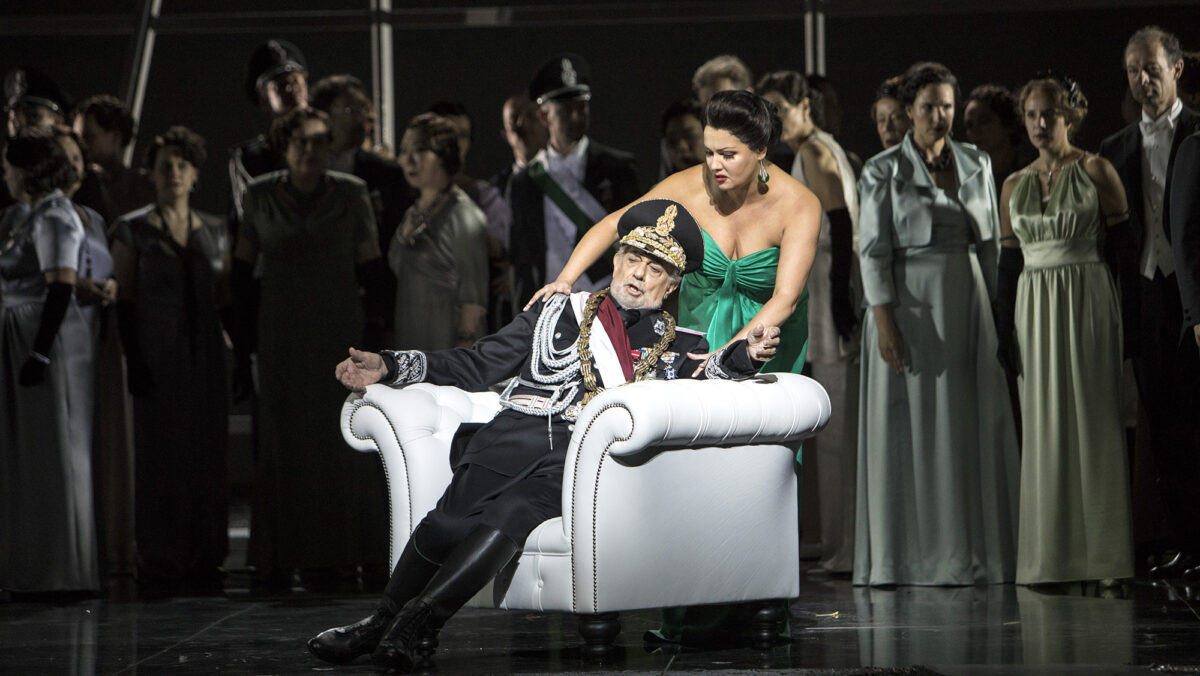
Anna Netrebko and Plácido Domingo in Macbeth at the Staatsoper Berlin in 2025 / Photo: Bernd Uhlig
Anna Netrebko presents a different kind of controversy. Her relationship with the Metropolitan Opera remains broken following Russia’s full-scale invasion of Ukraine. Litigation between Netrebko and the Met continues, although a federal judge dismissed her supplemental defamation and retaliation claims in September, while allowing her until 5 October to seek permission to amend them. Yet last month she sang Aïda in Barcelona, followed by engagements at La Scala and major houses across Europe. These cases are plainly not equivalent, but their similarities point to one fact: despite our globalized world, no artist possesses a single “international reputation.”
What changes at the border is not necessarily the artist’s own conception of who they are, nor simply the politics or tastes of the audience waiting on the other side. Reputation is also institutional. A theatre in New York, Venice or Novosibirsk weighs an artist against different audiences, funders, political histories, and expectations. (Consider how the Putin-adjacent Ildar Abdrazakov no longer sings in New York while Russian soprano Inna Demenkova makes her Met debut next week.) The same artist can therefore carry a markedly different reputation from one institution to another.
Karen Stone, Executive Director of Opera Europa, questions whether opera ever possessed the universal standard such a phrase implies. In a detailed response provided to Parterre Box, Stone explained that different theaters operate within different political and social contexts and individual companies have their own responsibilities and relationships with audiences, funders, and artists.
She also draws a crucial distinction between a guest engagement and artistic leadership. Appointing someone to lead an institution carries a different level of responsibility and visibility from inviting an artist to perform. Nor, in Stone’s view, does the term “cancellation” accurately hold in an industry with no collective mechanism for declaring an artist unemployable. Decisions are instead made by individual theatrers within their particular national, cultural, and institutional environments. The result is that an artist may be unwelcome in one institution or country while remaining professionally active elsewhere. Russia, where the government is more intertwined with the fine arts than almost anywhere else in the world, makes those differences sharper still.
NOVAT is not simply a concert venue that happens to stand in Siberia. The enormous theatre is a Soviet institution and one of Russia’s major operatic centers outside Moscow and St. Petersburg. Morrison describes it as probably the country’s third most significant state operatic brand after the Bolshoi and Mariinsky.
When asked whether cultural exchange could remain politically neutral during the war, Volodymyr Sheiko, Director General of the Ukrainian Institute, rejected that premise. A foreign artist appearing at a Russian state-funded theatre, he argued, supplies more than a performance: Russia also gains “an image of normality, prestige and continued acceptance within the international cultural community.”

Beatrice Venezi and Italian Prime Minister Giorgia Meloni pictured together in 2022
For Sheiko, intention alone cannot determine the public meaning of an engagement. He argues that truly international participation can be used to suggest that cultural relations with Russia are returning to normal despite the war. Culture can indeed be a bridge, he wrote, but “not every bridge leads to dialogue.”
Stone’s analysis is less categorical but helps explain why no uniform response emerges between artistic directors, companies, and countries. Geography and historical experience matter. She points in particular to countries bordering Russia or possessing direct historical relationships with it, where sensitivities can extend beyond individual artists to the performance of Russian repertoire itself. Other institutions may draw their lines elsewhere. This is why the label “cancelled” in the United States or the UK tells us remarkably little about the realities of an international opera career.
Domingo has continued working in Europe after losing opportunities in the United States. Gatti has returned to major positions of artistic leadership. Netrebko can remain absent from the Met while maintaining a crowded European diary. And Venezi can move from an artistic relationship that never began in Venice to La traviata in Novosibirsk. Though the opera industry often publicly prides itself on its international character, the case of Venezi and her ‘cancelled’ peers reveals most clearly that its globalized nature stops at its economics. Perhaps opera has globalized its labor market more successfully than it has globalized judgment.
That contradiction may become increasingly important to the future of the art form. Globalization has made it easier for artists and productions to move between countries, but it has not created a single international standard by which their reputations are judged. If anything, the same networks that connect opera houses now make the disagreements over what their administrators and public will accept more visible. An artist rejected by one institution may remain entirely employable elsewhere. Opera may therefore become more internationally connected even as judgements about its artists remain stubbornly local.
As a historian of Russian-European musical exchange, I find something familiar in that contradiction. Musicians have crossed European borders for centuries while the meanings attached to those movements have continually changed around them. The Italians who travelled to Imperial Russia were not outsiders visiting a self-contained Russian musical culture: generations of foreign musicians helped create the cosmopolitan environment from which Russian operatic culture itself developed. An Italian conductor travelling east therefore has centuries of precedent behind her. But history cannot make the political circumstances of the present disappear.
When Venezi raises her baton over Verdi in Novosibirsk this November, the striking thing will not be that an Italian musician has travelled to Russia. Italian musicians helped build its operatic world. What has changed is what crossing that border says about opera today.
Stacy Jarvis
Stacy Jarvis is a Manchester-based music historian, violinist and culture writer. She writes regularly for UK and international publications and is a frequent radio contributor on classical music and cultural history. Her work explores opera, musical history and the intersections between music, politics and society. She is completing a PhD in musicology at the University of Birmingham.
-
People: Beatrice Venezi, Vasilisa Berzhanskaya