Aria law
Richard Lynn muses on whether the Met can make good on its exciting new promise of “Opera For All” while the goals of its $1.5 billion fundraising campaign remain murky.
 By
Dawn Fatale
By
Dawn Fatale
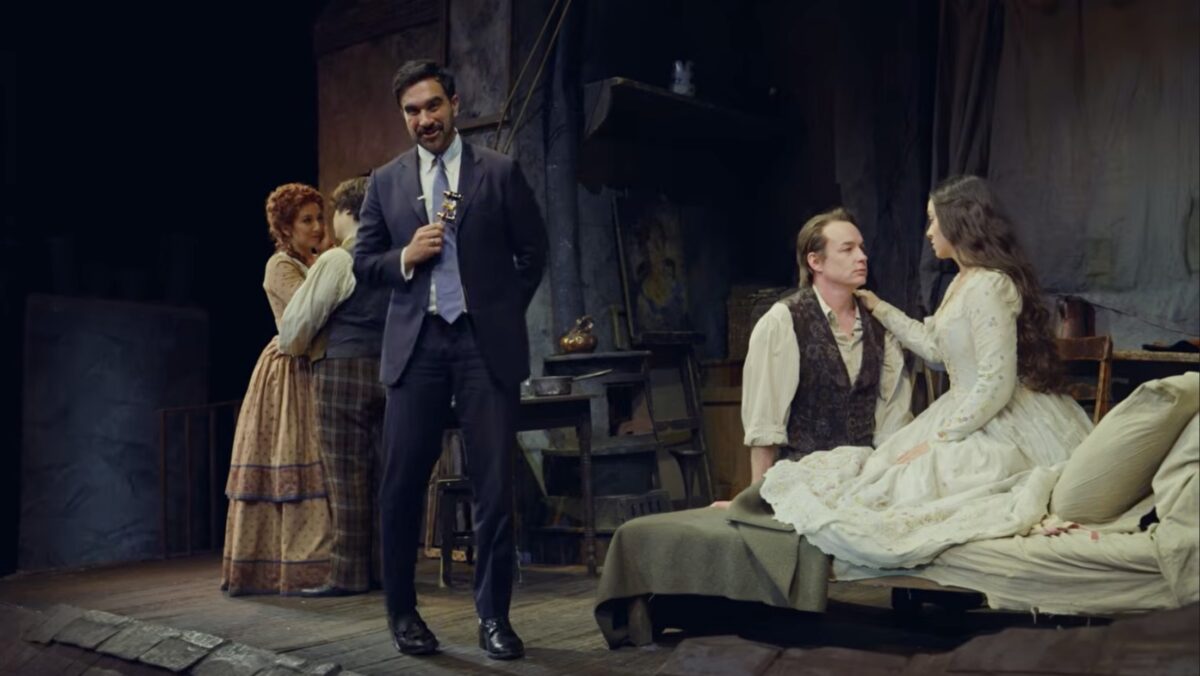
New York City Mayor Zohran Mamdani during the announcement of the “Opera for All” initiative / Photo: NYC Mayor’s Office
On Thursday, NYC Mayor Zohran Mamdani accomplished something that the Metropolitan Opera has tried to accomplish for decades: he made a convincing argument to New Yorkers who had never seen an opera that they should go see an opera at the Met. And this was not just an empty plea for people to go to the opera; he announced that the Met would be giving away 10,000 tickets a month via a lottery.
His video was seen by millions of viewers across different social media channels and it quickly garnered hundreds of thousands of likes, thousands of reposts, and over ten thousand comments. Even accounts that stay far away from opera, like Popbase, reposted the video. Shortly thereafter, people started reporting that there were 70,000+ people ahead of them in the queue to register for the lottery.
This is all great news for the Met and NYC. The Mayor’s video and the photo of Mamdani on the conductor’s podium with the company massed behind him were both top-notch. (Oh, to know what Peter Gelb and Yannick Nézet-Séguin were thinking during the photo shoot.) I read through many of the comments and they were surprisingly positive — even accounts that spend time looking at how classical music organizations use (and misuse) social media had strong praise. Aside from the usual trolling and the robotic Zohran critics, the most common negative sentiment was that the city should not spend money on this. Of course, the city is not spending any money on this at all; the Met is supplying the tickets from the tickets that go unsold each season—currently 25% of total seats.
It’s fun to speculate as to whether the mayor will find time for an opera performance this season. He doesn’t accept free tickets to sporting events, so I assume he adopts the same approach to performances. If he goes, I expect we will see him way upstairs. What opera should he choose? Keeping his overall messaging and potential New York Post headlines in mind, the best choices seem to be La bohème (evil landlord, inaccessible healthcare) or Lincoln in the Bardo (important historical themes, female composer, maybe he read the book).
The mayor’s posting was only the first piece of major news from the Met on Thursday. A little while later, an even bigger shoe dropped (think ‘Into The Woods marquee shoe’ big). The Met announced “Make The Met Forever,” a campaign with the goal of raising the jaw-dropping amount of $1.5 billion. This is the largest fundraising effort by a performing arts non-profit, ever.
The immediate goal is to replace the large influx of money that was to come from the Kingdom of Saudi Arabia. That agreement has been terminated because of the hostilities in the Middle East. At the time, I was not convinced that the money from Saudi Arabia was enough to put the Met’s fiscal house in order, despite the Met’s claims to the contrary.
The size of this campaign makes it clear that the money from the Saudis was never going to be enough, and the effort is clearly something of a Hail Mary without a projected end date. Normally non-profits only announce major fundraising campaigns when they have at least 50% or more of the money already pledges. The Met has commitments that amount to less than one-third of the total, which is still a mind-boggling $407 million.
What is the true extent of the Met’s fiscal difficulties? It’s hard to tell from their published financial statements. We see symptoms of their problem like raiding the endowment, budget deficits, and a worsening credit rating, but it’s difficult to see the bigger picture. The Met used to publish annual reports with useful metrics about their revenue and fundraising, but they stopped doing this in 2021.
I imagine there must be a serious case of donor fatigue for the Met’s board and major donors. They have needed to close sizable deficits for decades now and it must be exhausting to do that with no end in sight. We also don’t know if there are extraordinary upcoming expenses that the company is trying to fund. The house is certainly overdue for some major TLC both in the public areas and backstage.
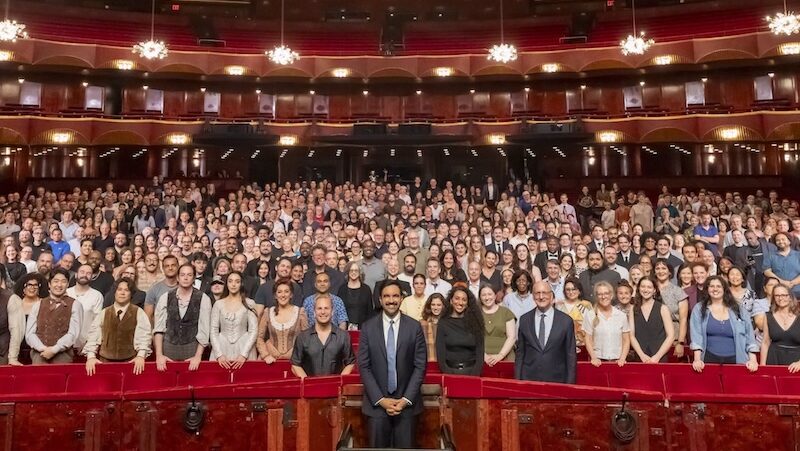
New York City Mayor Zohran Mamdani with the company of The Metropolitan Opera / Photo: Richard Termine/Met Opera
In the Met’s press release about the campaign, they commit $500 million to the endowment and say the rest is for “providing the resources needed to support that excellence through 2030.” In other words, the Met is dedicating most of this enormous anticipated cash influx from now until the 2029–30 season. With the Met typically taking in $125 million in donations each year, the math isn’t making sense to me. Why do they suddenly need double the amount of donations each year? Is the immediate goal to write off their loans and other debts? I will also note that Peter Gelb’s tenure conveniently ends in 2030. How much will his successor have to raise each year? If you’re trying to raise $1.5 billion, a little more transparency is in order.
While an additional half a billion for the endowment is certainly welcome, it’s barely enough. Ideally, an organization of the Met’s size should have an endowment of somewhere between $750 million and $1 billion. The $500 million committed for the endowment will just bring the Met to the lower end of the industry benchmark. In addition, it’s very unusual
The Met made a rather baffling choice by using a photo from the Herbert Wernicke production of Die Frau ohne Schatten for this campaign. It is quite the choice. In an interview with Opera News before the production opened, he said that the production was about the extreme economic inequality in NYC, or as he put it, “The shiny, mysterious realm of spirits and the poor, low-class world of the Dyer, Barak—that’s just like New York’s lofty Central Park West apartments, in their harsh contrast to the underworld of poor people and outcasts and the subways, where the homeless fight over leftovers with the rats.” It’s no coincidence that the wealthy realm of the Emperor literally holds a mirror to the Met audience. This doesn’t exactly jibe with a message of inclusivity and “Opera for All.”
I genuinely hope this campaign is a success and that it finally attracts some significant new money to the company. The Met notes that there are naming opportunities available. Do we think that the Met will actually put someone’s name on the opera house itself? How much should that cost? What would you want to name at the Met? I would give the Millo pole its much-needed official plaque.
Dawn Fatale
Richard Lynn is a New York City based opera lover who writes at parterre box under the name Dawn Fatale. His love of opera started at a very young age when he used to listen to the Met broadcasts and obsessively read back issues of Opera News in lieu of socializing at family gatherings. In college, he majored in Chemistry while taking as many music and theater courses as possible. He worked at the Music Library to get access to the opera recordings that were off limits to undergraduates. Since the early 1990s he has been writing about opera at parterre box and other publications and is particularly interested the evolution of staging and performance practices.
-
Topics: opinion, zohran mamdani
-
People: Peter Gelb, Yannick Nézet-Séguin, Zohran Mamdani
-
Places & Organizations: Metropolitan Opera