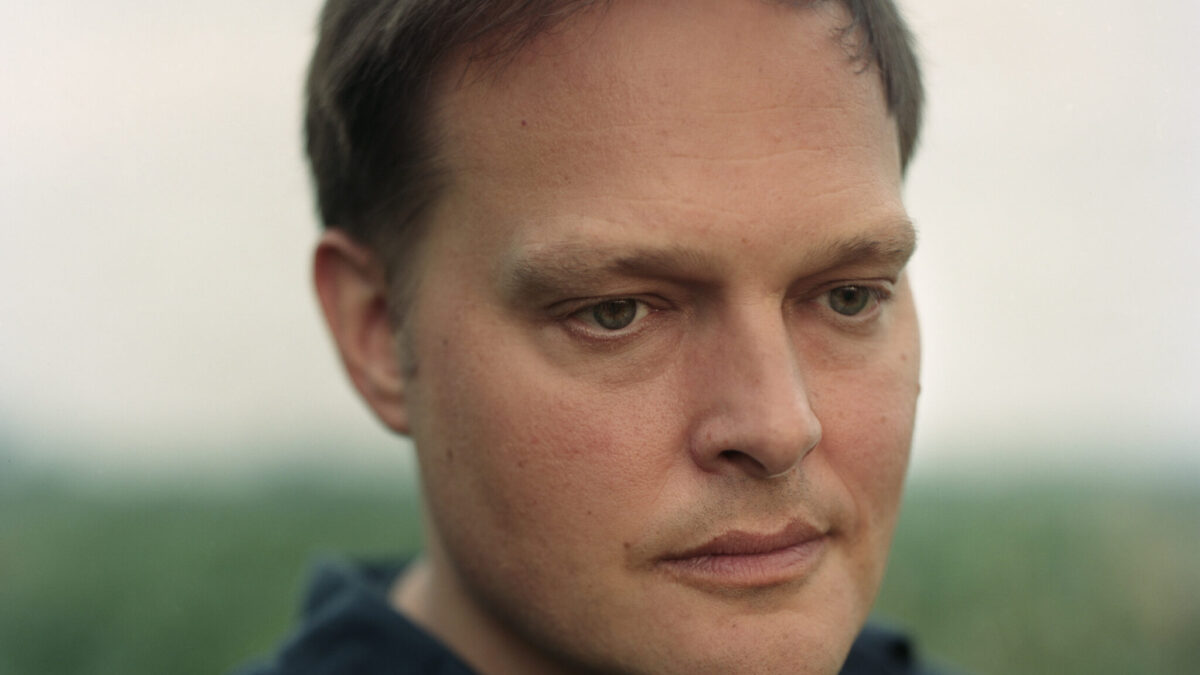
Photo: Bryan Schutmaat
I have a confession to make: I’m not a fan of much of contemporary gay literature. I’ve found much of it overly sentimental or melodramatic, focusing on the petty grievances of the impossibly-attractive bourgeoisie or the gratuitously lurid suffering of the downtrodden. I’ll let you insert your authors and titles of choice for either category.
It was with a certain sense of trepidation, then, that I picked up Garth Greenwell’s debut novel What Belongs to You at my local bookstore during the pandemic. I had been hearing about Greenwell through the literary grapevine since his debut novel was published in 2016, and his second novel, Cleanness, had gotten rave reviews upon its publication in early 2020. Both novels follow the story of an American teacher in Bulgaria, and they immediately impressed me with their structural ambition and lyrical, often rhapsodic prose. Above all, both were astonishingly honest, succinctly capturing both the emotional extremes and mundanity of life without being indulgent or melodramatic.
Greenwell’s third novel, Small Rain, won the PEN/Faulkner Award; his other novels have been longlisted for a number of major literary awards. A recurring theme throughout his novels is opera: Mahler and Delibes pop up when you least expect them. These passages are written with so much obvious care and affection for the art form that it didn’t surprise me to find out that Greenwell has a long history with opera.
“My first [opera] was Così fan tutte,” Greenwell tells me over Zoom, “which didn’t make much of an impression when I was fourteen.” That same year, though, he also saw Britten’s The Turn of the Screw at the Kentucky Opera. “It blew my mind. Britten’s music was really my first literary education. I was not interested in literature as a young person — I’ve told the story many times that I ended up in choir only because I failed freshman English in high school. It was listening to Holy Sonnets of John Donne and Winter Words that really prepared me for a life engaged with poetry, and I do think Britten is an extraordinary reader and interpreter of literary text.”
Greenwell’s combination of lyricism and probing psychology as an author draw heavily upon the influence of Henry James, who wrote the novella Britten based his opera on. “Henry James would become very important to me as a writer a decade after I first encountered Turn of the Screw,” he explains. “Britten was also my introduction to Thomas Mann — I think it was that same year that the Met did Death in Venice with my favorite singer, Anthony Rolfe Johnson. It oriented me towards this whole literary tradition that ended up, more than a decade later, being the tradition I was trying to work in.”
But before his literary career came a stint at Eastman studying opera. “I spent two and a half years there and it was an…interesting experience!” he laughs. He pivoted into studying literature, getting degrees from SUNY Purchase and Harvard. “I realized what the life of a professional musician was like, and I realized I didn’t want that: living out of a suitcase, singing minor roles in a provincial opera house if you were incredibly lucky…”
What opera did give him, however, was a way of engaging with poetry through the study of art song. “My teacher at Eastman was John Maloy,” he explains, “who had some really extraordinary students: Renée Fleming, Anthony Dean Griffey…He was someone who was devoted to Lieder and encouraged an engagement with the text. That was important for me to engage with poetry in that way. My sense of language, my sense of energy, my sense of syntax — all of that comes from singing.”
But opera left as important a mark as art song on Greenwell’s writing. “When I think back to my first books, I think Britten’s chamber operas were really the model,” he recalls. “The recitative-aria structure, for me, is the relationship between narrative and lyric time. I think that in my fiction I’m drawn to structures that allow for very economical disclosure of narrative, which then frees up the text to inhabit a more lyrical, aria-like way. After opera, lyric poetry was my obsession for almost twenty years before I ever wrote fiction. The tools of lyric poetry, the tools of opera are the tools I have as a narrative artist.”
After graduate school, Greenwell taught English in Michigan. “I would teach John Donne’s poems alongside Britten’s settings as a way of trying to help students feel sonnet structure,” he recalls. He then moved to Bulgaria to teach English at the American College of Sofia. Sofia also provided the inspiration for his first foray into prose: the novella Mitko, which dealt with the obsessive relationship between an American and a Bulgarian sex worker. It quickly caught the attention of the literary world when it was published in 2010, and Greenwell expanded the novella into the full-length novel What Belongs to You, counterbalancing the narrator’s fraught relationship with the sex worker with an equally exploitative relationship with his father.
What Belongs to You was published in 2016 to rapturous reviews and was recently adapted into operatic form by composer David T. Little, starring tenor Karim Sulayman and directed by none other than Mark Morris. The whole project was masterminded by Alan Pierson, who conducts Alarm Will Sound, and who had known both Greenwell and Sulayman since their time together at Eastman.
“Alan was so brilliant,” recalls Greenwell. “Seeing how he engaged with music, seeing him open up a Ligeti score and read it in a way that was just so far beyond my capacity — that was amazing to me. It just felt incredibly joyful to be making art with my friends, and to watch my friends make a new work of art out of something I had made. Almost everyone involved I had known since college: Karim and I were voice students together in the same studio at the same time. I think he’s an extraordinary singer, and he really has become the sound of the book for me.”
Greenwell’s prose seems a natural fit for opera, with its rhapsodic, shimmering phrases. “I always did think of What Belongs to You as an opera,” he confesses. “The original title, which to me is still the secret title, is Three Movements. I wanted it to have a musical title, and that was the one thing where my agent said no”. But David T. Little, whose background as a drummer informs his explosive, rock-inspired music, doesn’t seem an obvious fit for the lyricism of Greenwell’s writing. “I was a little apprehensive about that,” Greenwell admits. “I had admired David’s work a lot, but it didn’t sound like I imagined What Belongs to You to sound. But I was just overwhelmed when I heard it. There’s one moment in particular that I’ve always felt a little uneasy about in the book, and that I think David improves. I think it’s more powerful in the opera than it is in the novel. And writers don’t like saying that about their work!”
The opera premiered at the Modlin Center for the Arts in Virginia in 2024, delayed by the pandemic, to positive reviews. “I was really thrilled when it went on to get [the Best New Opera award from the Music Critics Association of North America],” Greenwell enthuses, “especially because Alex Ross was on the jury. I think he’s one of the great writers, certainly my favorite writer on music, and I was really happy for David. And there is a recording that will be coming out, so I hope more people will hear it!”
Cleanness, published in 2020, is a companion to What Belongs to You and revisits the characters and locales of his earlier novel. Although Greenwell rejects the term “autofiction”, there’s an emotional specificity and confessional frankness that undoubtedly piques the reader’s curiosity. It was an immediate critical success; the New York Times called it “scorching.” “You pick up his novels with asbestos mitts,” opined its book critic Dwight Garner, “and set them down upon trivets to protect your table from heat damage.”
Sex scenes aside, what caught my attention most was a short passage where the narrator attends an underwhelming performance of Lakmé in the old Bulgarian capital of Veliko Turnovo with his lover, only known by his initial R:
“I remember falling asleep to the soldier’s arias as sung by a tenor whose voice, which I’ve never found on another recording, was beautiful and light-bodied and pure, embodying my every ambition; as I listened to him I imagined the life my own voice would lead me to, scrubbed of shame. It didn’t matter that the performance in Veliko Turnovo was poor; as I sat beside R. I felt that hope again.”
“I happen to have a long history with Lakmé,” Greenwell explains. “It was one of the first operas I got to know well. I really do think Alain Vanzo is one of the most beautiful voices I’ve ever heard, and it’s fun to put little homages like that.” But other musical references are more oblique. “I think that song cycle feels like a more helpful way for me to think about that book than either story collection or novel,” he says. “With Schubert’s song cycles, I learned how big works of art could be made of little works. I wasn’t reading short story or poetry collections, but I was singing Die Schöne Müllerin. Those are held together by something that isn’t chronology or narrative cause and consequence, but I think of them as analogous to relationships of key, of motifs, of texture. And that can create a sense of satisfaction analogous to the narrative satisfaction of beginning-middle-end. It’s just a different way of organizing our sense of experience, our sense of time.”
Although Greenwell is considered one of the great contemporary writers of sex, he often denies that title. Rather, sex is simply a medium through which to explore the extremes of the human psyche. In Gospodar, one of the most memorable stories in Cleanness, the narrator goes to a stranger’s apartment to submit to BDSM sex. It’s a harrowing read, frightening in its physical and emotional brutality. A later story, The Little Saint, subverts Gospodar with the narrator now playing the dominant role; we witness how years of pent-up rage can emerge in a sudden frenzy of cruelty.
“The song cycle structure made me think a lot about mirroring,” Greenwell explains, “and how you put these autonomous pieces together and suspend them in a charged, meaningful relationship that is not exactly narrative. Gospodar was the first piece I wrote after What Belongs to You. And it was when I finished that, that immediately A Little Saint was conjured up. I knew I had to write a mirror story. And that wouldn’t happen for years, and I didn’t know anything about that story, except that it would subvert the sexual roles and consequences of Gospodar. That conjured the whole structure of the book.”
Sex is, of course, one of the great obsessions of opera. “I am clearly drawn to certain types of work in which sex and sexualness and sexiness are like a medium,” Greenwell reflects. “Giovanni’s Room is a book like that. There’s one paragraph about sex, and it’s very abstract, and yet people always think of it as a very sexy book. One of my musical equivalents of that is Pelléas et Mélisande, which is another work that I was just obsessed with when I was young. That’s a piece where you are suspended in sex. The second Act of Tristan is similar; the opening of Rosenkavalier, which I think is extraordinary writing of sex; the Countess in Figaro, which has those long lines so full of desire. And the Liebestod, which I first encountered with Jessye Norman. Again, it’s desire as contrary motion and suspension and refusal to resolve. All of that was really important for how my sense of how sex is represented.”
Illness is the other great operatic obsession, and Greenwell’s work frequently uses sex and illness to explore the human body pushed to emotional extremes. Small Rain, published in 2024, was inspired by Greenwell’s own medical crisis and provides a meditation on illness, mortality, and the capacity and limitations of art as healing. It also contains some of the finest passages about music I’ve encountered: a reflection on Kathleen Ferrier’s Rückert-Lieder as the narrator faces his own illness.
“Around my navel the pain was intense, I squeezed my eyes shut, and then it faded a little lower down; where she dug her fingers into the top of my pelvis there was hardly any pain. Ferrier leans into the word Ruh, rest, not dramatically but her voice becomes electric with longing and resignation; there’s such intensity and restraint that the note asserts itself, so that Mahler extends the dissonance your sense of harmony is unsettled, or mine is, anyway. The A-flat creates an alternative harmony, just for a moment one can hear a major chord against the minor.”
“I don’t know why I was thinking about Kathleen Ferrier so much at the time,” Greenwell muses. “For the narrator, her recording of Mahler’s Rückert-Lieder plays a central role in his life, and I didn’t come to that recording until much later. For me, Jessye Norman’s Four Last Songs plays that role in my life.” So why did he write about the Mahler? “I don’t actually know why I was drawn to it! Actually, it was only much later that I figured out why. The first time I read that passage at a public reading, I realized that it’s the whole meditation on the relationship between major and minor. I think it’s the whole relationship between negation and affirmation, using major and minor as a dumb analogy for that, but the whole book is about this relationship and how close they are and how profoundly they intermix. It’s a moment where I had experienced that sensation in a particularly visceral way.”
Beyond his novels, Greenwell maintains an active Substack, where he publishes essays on literature, art, and opera. I firmly believe that he is one of the great opera critics of today: he has a discerning ear for technique, a gift for metaphor, and a deep knowledge of aesthetic context. His review of the Met’s Ballo makes me laugh every time I read it: the soprano’s high C reminds him of “large bugs going splat against the windshield”. “There are always good nights and bad nights,” he says diplomatically.
Greenwell views operatic and literary criticism as occupying the same world. “Britten is up there together with Henry James and Thomas Mann and James Baldwin for me,” he says. “Ligeti’s piano and orchestral music is really deeply baked into my DNA. Hugo Wolf, too — I sang so many of those songs. It’s interesting to ask if there are any operas that have been as profound for me as those of Britten. Verdi is someone I’m obsessed with as a narrative artist. He’s an extraordinary psychologist. But I don’t feel a kinship with Verdi. I think of him like I think of Zola — he’s a novelist I admire immensely, and who I feel this desperate desire to learn from. But we don’t have a closeness of sensibility.”
The question of aesthetic sensibility is one that is particularly interesting from the lens of queer history. “I’ve been obsessed with the poet James Schuyler,” Greenwell tells me, “and one of his formative friendships was with Chester Kalman who was W.H. Auden’s lover. And Chester Kalman was such an opera queen! He played opera so loudly that someone, I forget who, said that walking up the stairs into his apartment felt like climbing into Kirsten Flagstad’s throat, which I think is so fabulous. He and James Schuyler used to speak to each other in phrases from opera. Their nicknames for each other were Fiordiligi and Dorabella!”
Does he feel like the opera queen stereotypes have become dated? “So many great queer writers have deeply engaged with opera, from Schuyler and Ashbury to Hollinghurst. It’s a great meditation on queer lineages. But there’s also a whole other tradition of lesbian engagement with opera, and now there’s a new queer tradition that’s forging its own path with opera. A writer I really love is Ty Bouque, who to me is really articulating a new queer relationship with opera.”
“All of these things about opera that feel queer to me: that super-saturation of emotion, radical differentials of scale,” Greenwell concludes, “it feels to me like this repository of resources that feel useful for me for making art. There’s something moving in the fact that this art form provided a language and a way of being for something that wasn’t supposed to exist. The promise of opera — that’s certainly what it meant to me as a fourteen-year-old in Kentucky — was a world that promised me that I could exist somewhere, and that is very moving.”