As always when a production of this work is presented in the opera house, it was the ultimate challenge, and TDO absolutely rose to it. There was the orchestra under Berislav Klobučar, the greatly underappreciated Croatian whose Met and Vienna performances didn’t prepare me for his thrilling command of the music. There was the thrilling chorus prepared by Italy’s legendary Roberto Benaglio, assisted by none other than Donald Palumbo (years before Palumbo’s remarkable tenures at Lyric Opera of Chicago and the Met). There was also the unmistakeable sense of a true collaboration in the Argentine production team, Roberto Oswald (director/set designer) and Anibal Lapiz (costume designer)—their concept for the piece was essentially traditional but always striking.
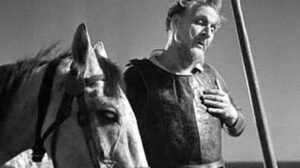
And there was the cast—ah, the cast! Neither on CD, DVD, nor in any live performance since then have I heard a more phenomenal group for this opera. For starters, the company had the most frightening Hagen imaginable. The role was powerfully sung by the veteran bass William Wildermann, sixty-six years old at the time but still utterly committed to embodying his character onstage in depth. His characterization chilled the blood, as did that of Marius Rintzler, the stupendous Romanian bass partnering him as Alberich.
The company also came up with an ideal pair for Gutrune and Gunther. Two years after winning the Richard Tucker Award, here was Susan Dunn, producing one memorably glowing phrase after another, the voice sailing through the house and wonderfully supporting her very sympathetic presentation of the character. (She also sang the Third Norn—luxury casting indeed.) Opposite her, Victor Braun was the very definition of a singing actor, masterful not only in his beautiful singing but also in bringing unique individuality to this famously ungrateful role.
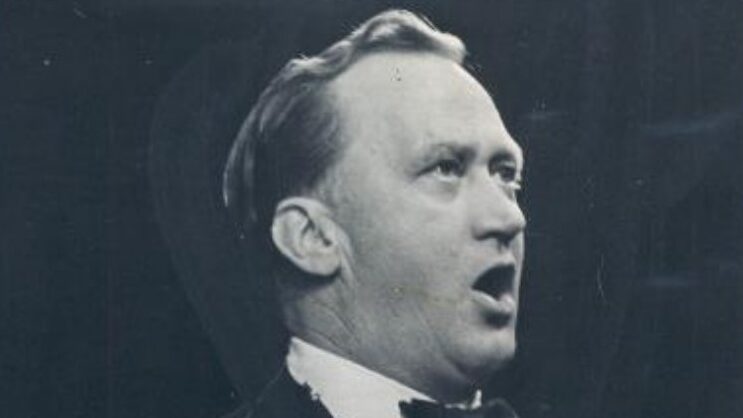
I figured that anyone taking on the role of Siegfried would be barely able to get through it vocally, let alone phrase it intelligently and act it effectively. Not until Siegfried’s death scene did the German tenor Wolfgang Neumann show much beauty of voice, but he had more than enough sound, his stamina was astounding, he knew exactly how to cope in the toughest moments, and he brought vigor and dramatic involvement to the role.
Crowning the performance were the two Meiers, Johanna and Waltraud. The latter, singing her namesake role of Waltraute, made a sensational North American debut. In her character’s single scene, from her agitated entrance right up to the last note of her despairing departure, she had everything. Her voice was marvelously individual in terms of timbre, it carried wonderfully in a big house, and it was at the service of a born “Bühnentier” (a “stage animal,” as Germans would say). The character’s famous narration was delivered with an attention to the words that I’ve never heard surpassed in Wagner. Her physicality was so natural, she could have been an actress in the legitimate theater playing that role.
She shared more than just a surname with her Brünnhilde. Like Waltraud Meier, Johanna Meier was beautiful and a true creature of the stage. Those two were such fabulous communicators in their scene together! And when Brünnhilde must keep silent during the narration, what amazing concentration Johanna Meier had, visibly registering every word and responding to it through facial expression. I’d previously read that she practiced the “Alexander Technique” and you could tell when you watched her: in the way she moved, she had such amazing posture, control, and specificity—like a dancer. In Act I, she was vocally so radiant, and so gloriously feminine in her acting.
The shock (at least, to me, having only seen and heard her onstage in Mefistofele and Ariadne auf Naxos) was Acts II and III, when she seemed to transform into a woman totally possessed by her desire for revenge, with the voice suddenly unfurling the resources of a dramatic soprano. She had such power, such a thrilling “cutting edge” in the voice, and yet not once did she sacrifice beauty of tone to achieve that impact. After all the wonderful warmth and femininity earlier in the opera, she was now the valiant, heroic figure of our imagination! And finally, in her magnificent “Immolation Scene,” she brought Brünnhilde’s emotional journey to an unforgettably moving conclusion. If I’m talking about Wagner I’ve heard in a theater, Johanna Meier’s portrayal is rivaled only by one of Birgit Nilsson’s late-career Met Isoldes as the performance by a Wagner soprano that I’d take to a desert island.
The Dallas audience went bonkers at the end, giving the whole team hugely enthusiastic and heartfelt applause. My father, who’d never heard Wagner in a theater before, turned to me and asked, “Is Wagner always so exciting?” Alas, the answer is no, hence my eternal gratitude in being present at a performance that remains so vividly in my memory.