As my opera addiction exploded during my tween years, the pair of Catholic priests who had become part of my parents’ regular Connecticut Opera intermission social circle morphed into new roles as my “opera whisperers,” guiding me toward scores and recordings to f̶u̶r̶t̶h̶e̶r̶ i̶n̶c̶u̶l̶c̶a̶t̶e̶ m̶e̶ enrich my appreciation. So I paid heed when Fathers Hugh and Joe agreed that I’d been wasting my time wallowing in stereophonic mush ministered by slackers like Tebaldi, Bergonzi and Serafin for my “La bohème” fix.
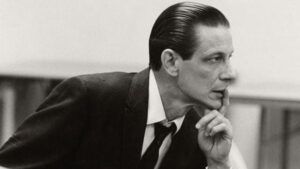
They reoriented my sybaritic young self toward The Gospel According to Toscanini: the classic 1946 NBC Symphony recording commemorating the opera’s 50th Anniversary. I eagerly checked the two-LP monaural RCA set out of our local library, dropped the needle expecting to be transported… and thought instead, “Gosh, but the recorded sound is so boxy, tight and dry. And all these tempi feel so rushed. AND THE MAESTRO’S VOICE IS RELENTLESSLY AUDIBLE THROUGHOUT, SINGING ALONG WITH HIS CAST.” The latter attribute was and still is a non-starter for me: I don’t hear Toscanini’s nonstop sing-along as a gently encouraging exhortation, but rather as The Master badgering and hectoring his charges into staying on a very tight leash. It’s like making love with someone whose rap never ceases—and includes “helpful suggestions” about how you can be improving your game.
As ventriloquist’s dummies go, Licia Albanese and Jan Peerce as the romantic leads have undeniably lovelier voices than their control-freak puppeteer, but there are other recorded interpretations of their roles that offer greater tonal allure and individuality, beginning with Albanese herself, warmer and more spontaneous on a 1938 recording led by Umberto Berrettoni and partnered by Beniamino Gigli.
And other conductors (cf. Carlos Kleiber with Freni and Pavarotti at the Met in 1988) have convinced me that it’s possible to simultaneously uphold the integrity of Puccini’s score while allowing your cast the freedom to express themselves more freely. I recall Albanese stating in an interview that the experience of rehearsing La bohème under the direction of the legendary conductor who had led its first performances was “like a school for us all.” Call me crazy, but an academic atmosphere of strict conformity that requires remaining in the teacher’s good graces somehow doesn’t conjure a likely breeding ground to encourage the imaginations of young bohemians to soar. I’m guessing Mo’ ‘Turo would’ve expelled my “beau idéal” Rodolfo after he’d caught him toking up in the choir room (I’m looking at YOU, Pippo di Stefano).
Yes, I’ve grown to respect the cleanliness of this reading. And I know that Toscanini was A Very Great Maestro and A Great Man in so many ways. And I not only admire, but even love, so many others among his recordings. Just not this one (so I’ll quietly let myself out now).