
Credit: Curtis Brown
Jacquelyn Stucker defies pigeonholing. After a doctorate at the New England Conservatory, she was a member of the Jette Parker Young Artist Programme at the Royal Opera House where her roles included Handel’s Alessandro, Henze’s Aphrodite, and a particularly memorable Frasquita in Barrie Kosky’s new production of Carmen alongside Aigul Akhmetshina’s Mercédès. Following a pandemic-truncated season in Fest at the Deutsche Oper Berlin, she’s had major successes as Poppea and Rameau’s Dalila at Aix-en-Provence, Lucia di Nobile in Thomas Adès’s Exterminating Angel in Paris, Zabelle in George Benjamin’s Picture a Day Like This in London, and Two in Philip Venables’s We Are the Lucky Ones in Amsterdam. She recently made her Met debut as the Countess and returns next season as the Bride in Saariaho’s Innocence, and is currently in Santa Fe singing the Governess in The Turn of the Screw along with a last-minute jump-in as the Countess on opening night of Laurent Pelly’s Figaro.
Kevin Ng: You’re known for the breadth of your repertoire, singing everything from Monteverdi to Adès.
Jacquelyn Stucker: I think there’s a long tradition of amazing artists working on the fringes of the repertoire – singers like Dawn Upshaw, Lorraine Hunt Lieberson, Richard Croft. It’s what my voice likes to do, but I wonder how much of that was influenced by this tradition of a lyric voice with a capability and willingness to take on difficult music. I didn’t start in contemporary music — I started mostly with concert repertoire by Handel and Bach, and I found my way into contemporary music in the Jette Parker Young Artist program at the Royal Opera House. I think there are similarities between baroque and contemporary music, in terms of their treatment of dissonance, use of harmony and form, and I think that’s what my brain likes.
KN: How do you describe your Fach, and how does that inform the roles you take on?
JS: I was briefly in Fest at the Deutsche Oper Berlin, and there was one day where I was singing a performance of Gretel and rehearsing for Tytania in A Midsummer Night’s Dream. Those aren’t necessarily two roles I would put in the same Fach, so I think the definition of it is pretty loose in general. That’s an inefficient preamble to what I’m about to say, which is that I think my Fach is just lyric soprano. I don’t sing too high or too low, and my voice isn’t too heavy or light. I could sing Musetta and Juliette, but I think a lot of what I do also feels directed by what I enjoy singing.
Evan Zimmerman/Metopera
KN: Do you ever have to fight for roles that others may perceive as being outside your Fach, either in standard or contemporary repertoire?
JS: The one thing I don’t really sing is Romantic music, especially the core lyric French or Italian repertoire. So much of that has to do with style; for instance, Amina Edris is a good friend of mine who sings a lot of Massenet, and to do what she does I think you really have to speak French and spend time investing in that style. Immersing yourself in that kind of style is a full-time job, and I’m someone who likes to have a lot of part-time jobs.
For Exterminating Angel, I don’t think I was the ideal voice type for Lucia di Nobile especially given how dense the orchestration was. But because the role was so high and had some key moments of agility it fit my voice, and Tom Adès conducted in such a way that made the balance work. With contemporary and baroque music, the fun of it is finding ways to highlight your strengths and minimizing your weaknesses. So, I’m not fighting to sing things like Musetta because right now there are other things I’m interested in doing. That might change — certainly if there’s a production of Bohème that really explores the intersection between capitalism and public health with a young cast, I’d be very interested in singing that Mimì. There are some characters that I’ve always wanted to do but that always elude me – Blanche in Carmelites, Alcina, Thérèse/Tirésias. I think I just want to get my teeth into these characters so badly that the universe senses my desperation, but I will remain patient and hopeful.
KN: You just made your Met debut as the Countess in Le nozze di Figaro.
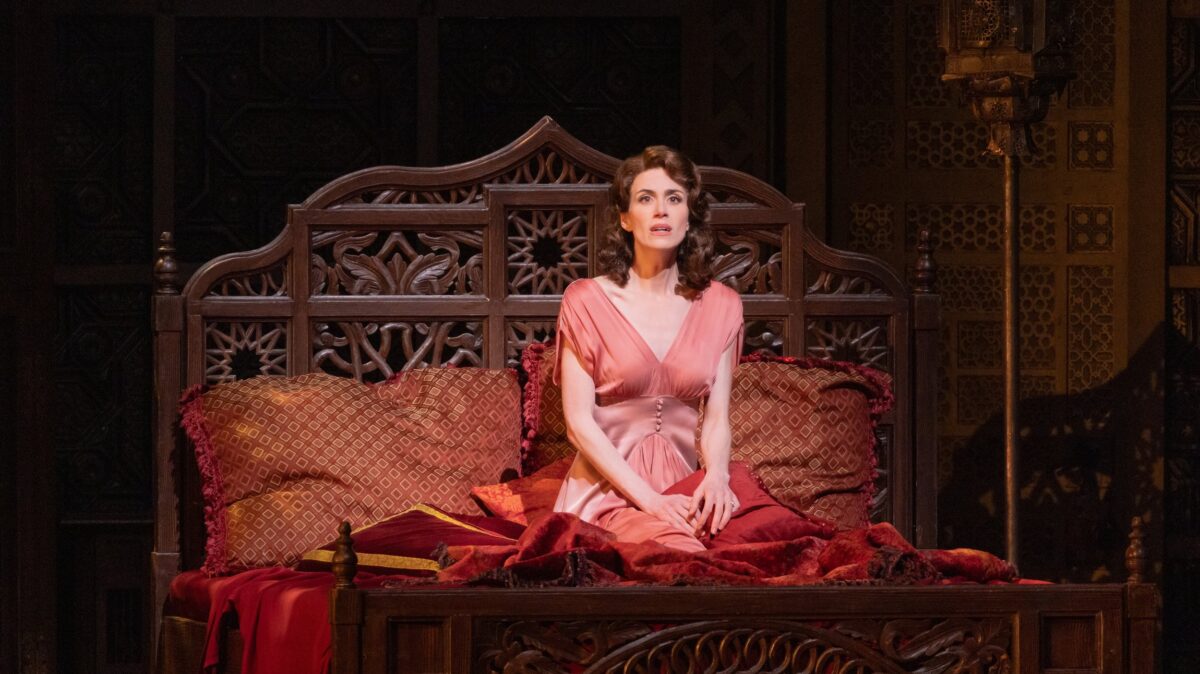
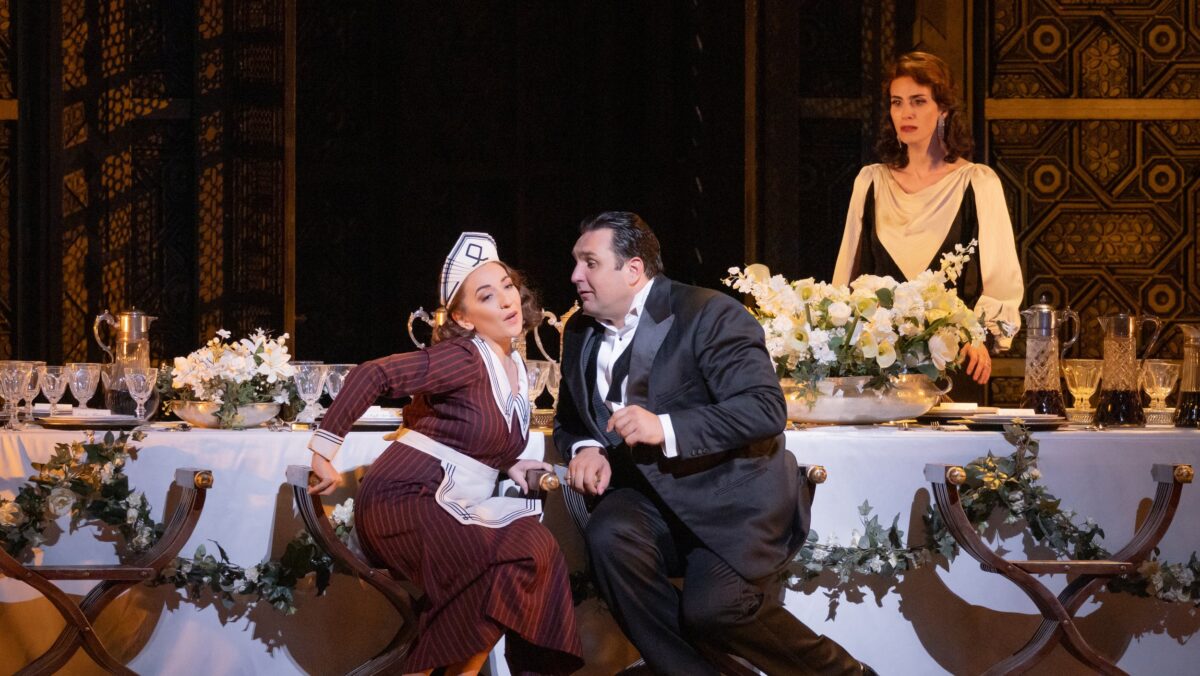
JS: This is a role that everyone told me that I’d sing when I was a young artist, but I definitely had some concern that my voice would not be big enough for the role at the Met. So I had to find my way, and a big part of that, beyond a lot of practicing and ensuring that I arrived singing the role as efficiently as possible, was the dramatic aspect of the character. It’s easy to think of the Countess as a sad sack, but she is just as flawed as the rest of the principal quartet, and the dramaturgical struggle for her is watching her come to terms with that over the course of four hours of music in heroic keys like C and E-flat Major. Working with Adam Plachetka as the Count was great, because we both really benefited from what the other brought to the table in terms of characterization, and Rosa Feola, now a good friend, and I were able to walk that line between mischievous girlfriends and “ride-or-die” confidantes as the two characters.
The Countess might not be the Mozart role that feels like the most obvious role for me dramatically — for that I would say Donna Anna at period pitch, Elettra in a smaller house, Pamina literally anywhere — but it’s becoming a role in my regular rotation, which is exciting. Working on the role really forced me to grow vocally and dramatically, and so I’m also cognizant of fighting for opportunities that will allow me to develop.
What I loved about Richard Eyre’s production is in how much room there is for different characterizations. It’s a production that makes sense of the piece without reducing the characters to archetypes, which is where I feel that many productions don’t quite meet the mark. It really dealt with the darkness of the work in a way that showed both the noble and ignoble sides of each character, all within the context of a period production. I’m a huge fan of The Sopranos, so forgive me for these metaphors: my Countess, living her Carmela Soprano delusions, works in this period production, as would a Dr. Melfi-esque characterization where the character’s strong sense of ethics is at the core of the interpretation.
KN: Just a few years ago, you were covering Susanna at Covent Garden. Your Susanna at the Met, Rosa Feola, is doing her first Countess later this year. Does this reflect an evolution of your Fach, or changing tastes in casting?
JS: That’s a really good question and one I think about a lot, because I think there’s this weird idea of there being a hierarchy of roles to graduate into. I would still love to sing Susanna — I would have so much fun singing that role! Having worked on both roles, I think they’re challenging in different ways. With Susanna it’s more of a stamina game, whereas with Countess it’s scary, exposed singing in all of the passaggi.
With Rosa and I there wasn’t really a massive vocal weight difference, and this allowed us to make specific choices with vocal color and timbre. Dramatically, you can read into that what you like: maybe they’re closer in age, maybe they really are friends, who knows? And with this opera in particular I sometimes find it problematic how we conflate vocal attributes with class, age, and even gender. When Rosa told me she was singing the Countess next season I was so excited, and I think her experience singing so many Susannas is going to be a boon for that production. But I think we, as an industry, probably need to think about purposefully dismantling these preconceived notions of vocal and even physical size for these roles in order to offer a diversity of interpretations to the larger cultural discourse.
Evan Zimmerman/Metopera
KN: Talk to me a little about your forays into German repertoire. You’ve done Rosalinde in Fledermaus, Pamina, and Gretel. All of those roles have been performed by everyone from light coloraturas to young dramatics.
JS: It’s such a shame that the foreign language I know best is also affiliated with the repertoire that I’m not really thought of for. I’ve officially retired Rosalinde – the main thing with that role, more so than vocal weight, is whether you can get through Act I without panicking the whole time. It’s so high and therefore suits more dramatic voices which are comfortable in high tessituras for sustained periods of time! But, somehow Rosalinde is actually the role I’ve done the most number of times to date, although Countess will soon usurp that title, but it’s also so complicated given all of the tradition associated with that style. I really loved singing Gretel, because it’s a role that really suits my voice and I have enough vocal weight to pull it off with the work’s very dense orchestration. I did Henze’s Phaedra and I loved that role, but it was written for Marlis Petersen and I had to find my way into it with my voice.
I’d love to do more Strauss — I think I need to develop more technically for roles like Arabella, but I’d love to do Komponist and Octavian. I’m not a Zwischenfach, but I like those characters a lot and they are perfect for many lyric sopranos. If someone would let me sing Salome just once, in a small house using the reduction that Strauss made, I think I would offer a really compelling portrayal of the character – but, only once in my career in that very specific environment. But I never want to push my voice bigger than it wants to go and I feel like if I were to do something like that, it would be a very confusing choice for both myself and for other people.
I’m 35 now. Even though people still refer to me as an emerging artist I feel like I have somewhat emerged. But I feel at this stage a lot of pressure to do repertoire that makes sense. I think Elsa Dreisig is a really good example of someone who is experimental with her repertoire in a way that still respects the integrity of her instrument. She sings Countess and Donna Elvira and all this lyric repertoire that is just perfect in her voice, and then does things like Salome and the Donizetti Three Queens in very specific settings. I would love to do more of that, but the tradeoff is that if you’re going to purposefully step out of your Fach and the messaging around that has to be exactly right, and you also end up churning through repertoire with the understanding that you may spend months or years learning a piece only to never perform it again.
KN: I’m curious as to how you approach contemporary opera, particularly when a role isn’t written for you. Last season you sang George Benjamin’s Picture a Day Like This in a role written for Anna Prohaska, and Thomas Adès‘s Exterminating Angel in a role written for Amanda Echalaz. Their voices couldn’t be any more different from one another.
JS: I think every composer is different, and I know which ones I can ask for options. What’s the priority here, and what do you need from me musically? Some composers are totally up for that conversation and others want it exactly the way they wrote it, and I respect both points of view. For the latter, I still like to ask the composer why they wrote something in a certain way. Sometimes there’s a dramatic solution to making something work — sometimes I need to alter the staging to make something work vocally, and sometimes just having that insight allows me to intellectualize a solution to a problem on my own. Asking for alterations is a last resort; I always feel embarrassed when I feel I have to do that. Most composers, though, have already written in ossias for particularly tricky moments, but it’s my goal to always perform what the composer originally wanted.
I try not to listen to other recordings because my voice is not going to function the same way as the original performer. Saariaho’s Innocence is a good example where my voice will fit very well with what Lilian Farahani did; it will be different because I’m different, but that’s the great thing with contemporary music. You have as many different interpretations as possible. With Exterminating Angel, I was able to do things that I didn’t know I was able to do. It was extremely technically and vocally demanding, but always in the service of the drama. George Benjamin’s music is organized in a different way, and I don’t find that I’m living in my vocal extremes as much but I am having to think about the musical structure a lot more. It depends on the work, it depends on the composer, but that’s the fun of it.
KN: What are your dream roles, in and out of your Fach?
JS: Like I said, I’d love to do Salome. It’s definitely outside of my Fach and nobody should let me do it, but I love that piece and, especially, that character. There are phrases that I use from that work to practice approaching register shifts and high notes, and from that aspect it’s been very useful. Donna Anna is another one; I lost my father a few years ago, and I have yet to see a Donna Anna that is hysterical enough over her dead father’s body. There needs to be a lot more yelling, and she needs to be absolutely ready to throw herself on her father’s funeral pyre. It would definitely have to be at period pitch, but she’s a character for which I could offer a very sympathetic characterization. It’s the same with Salome – I just saw it at the Met, and I loved how the production highlighted that she’s just a person processing some trauma they don’t understand. I really like that nuance, so I wonder what it would be like to explore that myself. There are roles like Salome which I shouldn’t want but I really want, and then there are roles like Donna Anna which could be possible.
I think Mimì is also one of those characters. It’s a role that would test me dramatically; like, how do you process being that poor and being in a toxic relationship like that? Let’s face it, Rodolfo is an incredibly well-intentioned manchild. I think that would be a really interesting step out of my Fach and it’s likely that nobody would naturally think of me as a Mimì, but I think I would be a really devastating one. That was the main feedback I got from the Countess: that I offered a different take on the character, and for me that’s the most important thing. But, really, if I’m going to justify my presence on any stage, I want to come up with something new. Singing it according to some existing preconceptions doesn’t earn my place up there in front of the pit. Otherwise, why are people paying $400 a seat?