Hun for all
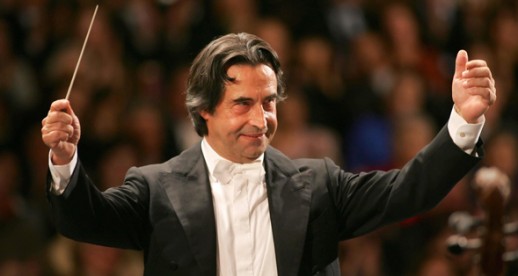
Since Attila is in the forefront of our thoughts right now, and since the prima of the Met’s production won’t be broadcast, La Cieca thought it would be handy to have a Riccardo Muti performance of the Verdi work as a common point of reference.
Attila (Verdi). Florence, 31 December 1972.
Attila: Nicolai Ghiaurov; Odabella: Leyla Gencer; Foresto: Veriano Luchetti; Ezio: Norman Mittelmann; Uldino: Ottavio Taddei; Leone: Mario Rinaudo. Riccardo Muti, conductor.
I guess I’m luckier than most. I’ve seen Attila a few times. Twice at NYCO. Ramey and Roark-Strummer. Complete with embellishments in their cabalettas. And lots of interpolated high notes. The audience loved it. This was when Ramey was strutting around bare-chested like it was The King and I.
Then in Houston with Ramey, Guleghina, Servile, and a tenor. Again. Complete. Embellishments by bass and soprano. High notes. Wild audience enthusiasm, which is not very common in Houston for operas they don’t know. The baritone did the big Milnes-Cappuccilli high Bb at the end of his cabaletta. Of all the Attila pirates, this performance is my favorite because I think it best captures the way early Verdi can whip an audience up to a frenzy. Never a dull moment.
Then I saw it in San Francisco (can’t remember the names of the singers…Ramey again? Connell? Chernov?), but the audience giggled each time Odabella came running onstage.
What bothers me is that the final scene is so rushed. It’s like Verdi realized he had written enough measures to satisfy the contract so he decided to forego a big long hummable trio (like the end of Ernani) and just bring the curtain down as quickly as possible.
In my fantasy world, it would be done complete with embellishments in the cabalettas, high notes, and an encore of each star’s cabaletta. That would make the performance not seem so short.
rysanekfreak,
Thanks for setting my Solera straight. I meant to say I wish they would do an opera he composed to hear whatever music he came up with. Perhaps ‘La fanciulla di Castelguelfo’, I think he composed the music to that.
I saw the Attila of Ramey at the NYCO. I loved it and was probably among the background you might have heard of the audience’s approval. That was a period when I attended the NYCO often as they did many great things the Met was not then doing. I remember some horrible productions as the slapstick Cenerentola, and other wonderful ones as the Attila. Perhaps you saw the ‘I Lombardi’ that had for sets only stairs. I was close to that member of the audience that when the house was quiet for the second act and the music was about to start, screamed, “Thanks a lot, Beverly!”, and then an exchange of phrases in the audience started. Even Callas was invoked by someone. As far as I know, she never sang Odabella.
I like your risorgimento fantasy world. If one has to suffer under a Hun, it is best to sing it with brio.
I Lombardi. Is that the sequel to I Claudius?
I,too, saw it in Houston and had a similar experience. The people I was with had never been to an opera, and became opera fans after experiencing Ramey’s performance. I became an Attila fan.
Two questions if someone would be so kind.
1. Who was the conductor in Houston?
2. Has Attila been performed in Verona?
The Houston production was the Royal Opera House minimalist (and elegant) one.
A little trawl shows that the conductor was Vjekoslav Sutej, a name that trips off the tongue (or trips you up).
Don’t know about Verona’
…however :
http://www.youtube.com/watch?v=s2fORVW1laE
Thanks, manou.
I appreciate the Verona clip. It didn’t occur to me to look because I would have guessed that any performance of Attila at the arena would have been in “ancient” times” ( when things were not filmed)
The reason the final scene seems so short and disjointed is because it was written by another librettist. Temistocle Solera did most of the writing of libretto, but due to some reason (some say he was deeply in debt, others that it was a fight with Verdi), he didn’t or was unable to send the final scene. So Verdi enlisted Francesco Piave to complete it. I’ve always been a big fan of the opera- I love the opportunities it gives low voices- but the last scene always felt, like you said, rushed. If only Mr. Solera had been able to complete it! Alas!
“In my fantasy world, it would be done complete with embellishments in the cabalettas, high notes, and an encore of each star’s cabaletta. That would make the performance not seem so short.”
rysanekfreak, just try telling that to il maestro ai capelli sempre nerissimi.
Monty, ALL operas should be done that way. Or at least all composed before 1870 or so.
I’m not against it, iltenore. Opera can be fun and gladiatorial, when appropriate.
I think you and rysanekfreak have just explained what is missing in the Attilas that Betsy so beautifully lampoons. Perhaps it’s just not fair to speak of works like Attila unless we take into account the kind of performance Verdi, in composing it, took for granted would ensue. He was justified in writing for the sort of performance practice that then prevailed, and he can’t be blamed for performances that go all Toscannini on his ass.
Santo di patria, filmed at La Scala
Liberamente or piangi, filmed at La Scala
best of luck next week to the new team. they don’t stand a fat chance.
Studer is impressive, but — and I saw her as Elena under Muti at La Scala around 1990 — I always felt that her voice was wrong for Verdi. Too silvery, not enough substance or steel.
neither muti or studer know the verdi. he SAYS he does, listen to the opening of the liberamente or piangi. no real verdi line, more symphonic. great melody, i don’t agree that this opera is inferior, just in hands that don’t do it well.
Attila is not inferior, and Muti doesn’t know how to conduct Verdi. Guess that tells us how much value to give OlivePratt’s posts.
yadda yadda yadda. here is Studer again, this time in the Libera me from the Master’s own Requiem, led by Solti and Abbado, none of ‘em presumed to “understand” an iota about said Master’s compositions.
I have no problem with those. Can’t imagine Urmana coming close, but will hope for the best.
I’m sorry, but as impressive as Studer is for her standards, this is still a little messy. Her voice sounds tremulous and the support goes in and out, and to top is all, the extreme notes on both ends are not there comfortably (specially for someone who wanted to sing dramatico d’aggilita roles). The fact that there were a couple of smudged measures is to be expected given the difficulty of the cabaletta.
Unexpectedly fierce!
I am predictably going to recommend Janowitz’s Odabella, either in the ‘Santo di Patria’ on her recital DVD, or in the complete opera from Opera Depot.
Nothing on Youtube, alas.
I have this opera depot version, but the sound is so bad it spoils the fun, I’m afraid.
goodness – who is that, please?
Zampieri
If we’re talking about that video, it’s Chiara.
chiaro – mi dispiace…
That’s Maria Chiara, isn’t she?
Yes it is maria Chiara I think at the early-middle part of her career (1983), but i am not sure since Chiara is a mistery to me. The rest of the cast:
Attila: Nicola Ghiuselev
Odabella: Maria Chiara
Foresto: Veriano Luchetti
Ezio: Silvano Carroli
Orchestra and Chorus: Teatro Regio di Torino
Chiara sounds terrfic. I love this aria.
Royal Opera Odabellas :
Josephine Barstow
Elizabeth Connell
Maria Guleghina
Susan Stacey (me neither)
Dimitra Theodossiou
Which is the Vicar’s favourite
?
Jo and Lizzie shone, but top of the class would be Pauline Tinsley!
Jo sang the whole part in a highly developed stage whisper. Technically impressive but in Verdian terms, meh.
Jo … as in Sumi Jo? A natural Odabella voice by current standards.
Nina Stemme was on BBC Radio 3 this morning — her voice does always remind me of a more attractive and substantial version of Barstow’s.
did anyone catch dimitrova’s odabella live? i have excerpts from an old perf. from sofia with an all bulgarian cast. she’s as usual quite ferocious in the part.
guleghina was exciting in this role? that must have been quite some time ago/????
If the whole Sirius situation of non-broadcasts of Attila was because of Muti, why couldn’t one of the Armiliato-conducted performances be Sirius-cast? One is on Friday and another on Saturday night, so I can see why no Sirius there. But there is an Armiliato-conducted one on a Monday night. Can a conductor really say, “I will conduct the first performances of the run, which cannot be carried on Sirius, and I want no Sirius-casts of the final performances that I don’t conduct.”?
After hearing those Leontyne Price Verdi Requiems on Sirius this week, I would like the Met to do more performances of this magnificent work. That is something for which Muti would have been perfect. And they could show their gratitude to the chorus by showcasing them in that fashion.
My first exposure to any Attila music was Sutherland’s Age of Bel Canto album with her fabulous bel canto rendition of Odabella’s entrance scena. That sort of got my expectations up. Way up. Then, I heard Christoff’s singing of Attila’s big dream aria. Then there was the Milnes recording of Ezio’s cabaletta with that stunning high Bb! I knew I wanted to hear the rest of this opera. When I finally got ahold of the Philips recording (those yodels by Duetekom!), I knew Attila was an opera that deserved frequent revivals.
At one of the NYCO Attilas I saw, Richard Bonynge was in the audience…walking the lobbies during intermission…and I was hoping maybe he was trying to figure out if it was enough of a DivaShowcase that he and Sutherland could revive it somewhere. (Or was he there only to see Ramey’s bare chest?) I could just imagine a Ramey-Sutherland-Milnes-Pavarotti performance somewhere (London? San Francisco? La Scala?).
if it was after 1965 then lets chop off la scala from that list
‘Can a conductor really say, “I will conduct the first performances of the run, which cannot be carried on Sirius, and I want no Sirius-casts of the final performances that I don’t conduct.”?’
If his initials are RM, yes. Muti has had a great career without appearing at the Met, so he in no way needs to conduct there. If he’s going to do so, it will be at his own terms, and Gelb seems enamored with the idea of having Muti’s only Met appearances be under his tenure that he will acquiesce. Not saying this is right, but that’s what I imagine the situation is.
Your scenario, of course, assumes that Gelb had ever heard of Muti.
I just re-listened to the Attila that La Cieca kindly posted. I guess in 1972 La Gencer had more power than Muti, because she cut the daccapo of the cabaletta. I can’t imagine this happening today with Muti….
Some conductors have the pull to make whatever demands they want if they are to appear at the Met or elsewhere. Muti is not the only one. Kleiber also picked his casts and I suspect Maazel and Barenboim also had lots to say before accepting to conduct at the Met in recent years. Bernstein probably did too. And not only conductors… some tenors and sopranos have been known also to make demands…
The only ones who have to take what’s given – no demands – is the public.
Why does Ms Juntwait turn every vowel into an Anglo-Saxon diphthong?
Ariadnay auf Naxohes …
etc
… and those excessivly soft t’s in “Zerbinetta” … Argh.
Here we go.
Oops, that ws supposed to go in the Ariadne thread.