Headshot of La Cieca

Cher Public

  • Camille: Barbara Daniels’ hysteria at the end of Act two is the best take on this difficult ending... 1:30 PM
  • Loge: Since the title references Cole Porter I will guess Kiss Me Kate 1. Wunderbar 2. Brush up your Shakespeare... 1:18 PM
  • oedipe: OT (sorry!): The Salzburgerfestspie le, whose artistic director is Cecilia Bartoli, has announced its... 12:49 PM
  • Tamerlano: I’ve always had a soft spot for Barbara Daniels and she sings Minnie VERY well, with a lovely... 12:40 PM
  • parpignol: rebuke accepted; thank you for being gentle. . . 12:33 PM
  • m. croche: Film version (1970) of the same opera here: httpv://www.youtub e.com/watch?v=dTRx ARL4Fpk&fea... 12:32 PM
  • m. croche: Did someone mention Azerbaijani opera? New to Parterre, extensive excerpts from Fikret Amirov’s... 12:29 PM
  • moritz: But her birthday is January 30, 1951. Most publications get it right, but there’s still sometimes... 12:27 PM

Peak performance

florez_filleIt’s that time of week once again, cher public, the Saturday afternoon chat accompanying the Met’s matinee broadcast. The topic of today’s colloquy? Why, it’s La Fille du Régiment beginning at 1:00 PM!
During the single intermission, Mary Jo Heath will interview Diana Damrau, Juan Diego Flórez and Kiri Te Kanawa. Plus there will be a feature about the passaggio, sure to provoke lively discussion among the parterriani.

The real-time chat is, as usual, over at La Casa della Cieca.

158 comments

  • uwsinnyc says:

    for some one in her mid sixties, I thought Kiri sounded good.
    Though I was perplexed that she would choose such a trivial role for the occasion.
    She should have done Capriccio or the Marschallin (IMO) and gone out with a bang.

    Damrau and Florez, given that they both had colds, sounded pretty impressive, I thought.

    • Alto says:

      Are you under the impression that Dame Kiri gets to choose the Met’s repertory?

    • NYCOQ says:

      Madaeleine in Capriccio was her last “big” role at the Met. She was stunning in those performances. So I would say that she did go out with a bang at the Met. She herself has said that she never planned a “farewell tour”. She just made the decision to stop accepting engagements and that was that. I wasn’t aware that she doing a Marschallin. That is a rather large role for someone at this late stage in the game I would say. I can’t wait to read the reviews.

  • Billys Butt says:

    The legendary Scotto-”Gioconda” with Pavarotti from San Francisco 1979 (after which Scotto refused to perform again with Luciano) is on youtube, at least in parts. Pretty amazing! Don’t miss Scotto’s curtain call at the end! Does anyone of you know if the whole performance is or will be available on DVD? (yes, I know this is supposed to be about “La fille”, but I don’t know where else to post this)

    • CruzSF says:

      Why did she refuse to perform again with him? I’m so curious!

      • poisonivy says:

        He got a curtain call after Act 4. This did not please her. They also reportedly did not get along in rehearsals either. There was a documentary where you can see how visibly angry Scotto is after the performance.

        • Nerva Nelli says:

          Nope! First of all, he showed up way late for rehearsals and then made a joke over it.

          He was coached in his hotel room, and expected her to come along like a servant.

          He in fact took a solo call after Act *2*, in which Enzo has his solo aria, sweeping by her in the process. No solo bows were supposed to happen then and the stage manager did nothing.

        • La Cieca says:

          Let us not forget either that Scotto was originally contracted for Anna Bolena but Pavarotti insisted the opera be changed to Gioconda.

          Nerva is of course correct that Pavarotti sneaked out for a solo call after the second act, when only group calls should have been taken. And when Scotto, in tears, complained to Kurt Herbert Adler, his reply (reportedly) was “What can I do? So far as I’m concerned, Pavarotti owns this opera house.”

          LP was a great singer and a huge star, but apparently a lousy colleague.

        • Harry says:

          I have come across two opera people that remember, coming across Pavarotti. One first met in the late 60′s and the other in the early 80′s. Innocently asking each one separately, ‘What was he like’?…. Among the answers. a common definite thread was voiced : ‘That Pavarotti was a common peasant, both in mind and outlook!. That although he had a undeniable glorious voice: other rival singers they named , were more dedicated to their work, and intellectuals by comparision’.

        • dorion says:

          Who cries over Pavarotti getting an extra curtain call? Please. Did Scotto know who Pavarotti was?

          She’s a minor-leaguer in comparison who should’ve been happy to share the stage with a real star, period. The man was difficult? So what, he could afford it. Though he never pulled stunts like those with Sutherland and Price. I’m sure he tried.

        • MontyNostry says:

          As Scotto recounts it, that curtain-call bullshit was the last straw that broke the diva’s back.

        • Nerva Nelli says:

          Dorion, you again prove your callow ignorance.

          Pavarotti sang exactly one onstage performance with L. Price, the San Francisco AIDA in which she jumped in for M. Price.

          In 1979 Scotto was no minor leaguer but a Real Star, and the whole Three Tenors phenomenon was in the future. Pavarotti was very famous after the Breslin mid-70s (post-FILLE in fact) publicity build-up, but not the money making popular icon he was to become. Scotto was starring at Scala and recording leading roles before he was, but the worked together often in the 60s and 70s– notably in the Scala LOMBARDI in which he failed to read the whole libretto and didn’t realize that his character` had a posthumous song from Heaven.

          They were certainly of equal status as “draws” in 1979; he was of course never her equal as an artist or musician.

        • Cassandra says:

          There is no world in which Rentata Scotto would be considered a “minor leaguer,” and that includes the delusional world of Parterre.

        • La Cieca says:

          Pavarotti definitely pulled the same kind of “stunts” with other colleagues. The Sutherland recording of Maria Stuarda was delayed in release for a whole season because Pavarotti showed up for the sessions not having a clue as to what his music might be. Dame Joan allows herself a rare moment of personal venom in her memoirs when she recalls her annoyance at his unprofessionalism.

          As has been pointed out, Pavarotti and Leontyne Price sang together exactly once in a staged opera, and that was because Ms. Price graciously substituted for an indisposed colleague.

          I’m curious, too, about the kind of moral sense that posits the only time it’s really necessary to behave in a cordial and collegial manner is when you’re terrified you’ll get fired if you don’t. (No wonder Pavarotti ended his opera career in the amoral, thuggish ambiance of Volpe’s Met.)

        • maddalenadicoigny says:

          Whoa! Hey La Cieca:

          I’m curious, too, about the kind of moral sense that posits the only time it’s really necessary to behave in a cordial and collegial manner is when you’re terrified you’ll get fired if you don’t. (No wonder Pavarotti ended his opera career in the amoral, thuggish ambiance of Volpe’s Met.)

          Hey girl, get a life on Valentine’s Day no less! No chockies? What is that whole passage about? Um, Pavarotti was already hindered by issues before Volpe jumped ship. Come on and don’t be lame in your comments as you know better. Also, uncle joe was thuggish to YOU- hello.

        • marcello52 says:

          In regards to LPrice performing for MPrice at the San Francisco Aida, she (LPrice) allegedly told management, pay me at least one dollar more than “the fat man”, which allegedly would have made her the highest paid opera singer at the time… All in all I sort of feel that opera singers, making music from within have to think of themselves as demi-gods at the very least in order to survive in the business. The problem often occurs when they expect everyone else to think of them in that manner as well. Pavarotti’s lack of professionalism is often apparent in his manner on stage. Glorious sound in his peak but he always seems to me to be a very rude and somewhat uncouth man.

        • La Cieca says:

          “That whole passage” was about the point that Pavarotti was a lazy singer with rather low artistic standards, and he was accustomed to having his way due to his fame and clout, artistic standards be damned. Volpe’s Met was the last place willing to put up with Pavarotti’s thuggish behavior, I believe because the management at that time had respect only for exactly those same qualities of fame and clout. Their treatment of Pavarotti sent a clear message to the world’s artists, which amounted to “art be damned; make me money and I’ll treat you with respect.” That’s the philosophy of a thug.

        • poisonivy says:

          “Thuggish” I associate with actual physical abuse or disorderly disruptive conduct. I’d say Volpe’s policy was more “artistically lazy,” “crass and commercial,” etc.

        • dorion says:

          Nerva Nelli, Scotto a real star in comparison with Pavarotti? Sorry, you’re an idiot.

          Scotto’s indeed a minor-leaguer and always lacked the technique to sing bel canto, I’m glad she didn’t get the Bolena she wanted, Donizetti wrote that opera for virtuosi, not soubrettes.

          Her Bolena would’ve been the same pitiful disaster her 81 MET Norma was. Just ghastly.

        • Nerva Nelli says:

          Doron:
          “Nerva Nelli, Scotto a real star in comparison with Pavarotti? Sorry, you’re an idiot.”

          I’m going to call you “Doron” because you clearly are a moron, You lack the brain capacity to process what you read. Maybe from the point of view of today Pavarotti seems like a bigger star than Scotto. But that was not the case always, and in 1979 it was not the case. Try and get out of your pathetically limited frame of reference and understand something for a change.

          In 1963, Gloria Davy and Gianna d’Angelo were bigger stars than Pavarotti. Get it?

          Besides which, as La Cieca said, what the fuck difference does the degree of stardom make in the instant case?

        • m. p. arazza says:

          “Maybe from the point of view of today Pavarotti seems like a bigger star than Scotto. But that was not the case always, and in 1979 it was not the case.”

          Well, Pavarotti was on the cover of Time magazine in September 1979. (Just around the time of those performances?)

        • maddalenadicoigny says:

          La Cieca-
          When you explain yourself, your message comes out…differently.
          Perhaps you should be the author of a book on being a thug, or rather the philosophy of a thug because the term is a bit much.

          What is viewed by yourself as thuggish behavior may be considered by others as just doing business, albeit with a heavy hand. While many would agree with you about Pav’s laziness,
          to frown upon not accepting that kind of behavior by using “thug” is a bit far- but then you would not be La Cieca if you were not that.

        • CruzSF says:

          I’m sure La Cieca knows all about thugs. I imagine she spent time in the Big House as a youth.

      • iltenoredigrazia says:

        Re. Scotto vs Pavarotti
        She didn’t quite “refuse” to perform with him again. Soon after those Giocondas the two of them sang in Ballo in Chicago. I suspect she just tried to avoid it. In the mid-80′s the Met mounted a new production of La Clemenza di Tito with Scotto as Vitellia, her last new role at the Met. Pavarotti was originally announced for the role of Tito, although he withdrew and never sang the role.

        • iltenoredigrazia says:

          I seem to remember that the actual “last straw” was Pavarotti taking the final solo curtain after the Gioconda, when tradition calls for the leading or title character to be last. If anything, Pavarotti’s behaviour was totally ungentleman.

        • armerjacquino says:

          Is that Met Tito recorded anywhere? Would love to hear Scotto as Vitellia.

          It’s funny how that opera draws the great Italians at the end of their careers- Simionato’s farewell to la Scala was as Servilia (???).

        • NYCOQ says:

          I think in Breslin’s book he mentioned that Pav had not learned the role of Tito in time for those performances. Always a recurring theme with Mr. Pavoratti.

  • Cassandra says:

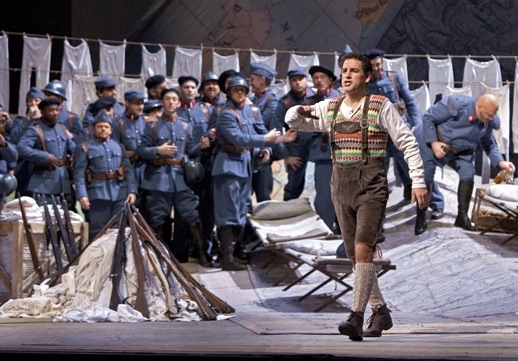
    That picture is hilarious. Juan Diego slays me with the padding he adds for his shoulders and pecs to fill them out.

  • Quanto Painy Fakor says:

    Corelli used to stuff his tights too.

    • Cassandra says:

      Did he have to? The man sounded like he had the most enormous balls on the planet.

      • BETSY_ANN_BOBOLINK says:

        Oh, is that what gave him that strangled quality? Maybe corrective wsurgery might have helped.

        • Harry says:

          Wiil is smack on the mark. Routledge possesses that indefinable magic ‘presence’ to ganter audience attention and a fully trained voice to boot. She could teach a few of the ‘young things today’ what vocal support and proper diction is all about. She represents a lot of the standards, that sadly are disappearing.

    • marcello52 says:

      Interestingly enough, according to his biography, he was impotent, showed way more gum than teeth and his wife definitely wore the trousers. I love his singing always love the passion that he brought to his roles but I always got the sense that he was largely a very insecure man. There was also a very stronger than normal obsession with a dog he and his wife jade but I dare not elaborate for fear of pissing of pet owners. Insecure of not the man was secure in his craft when on the stage though not in the wings.

      • iltenoredigrazia says:

        Corelli was asexual. Very simple.

        • marcello52 says:

          Don’t know about that. However, it was reported that he had a thing for La Bumberina…not sure if they had an actual affair but he decided to sing the minor role of Macduff to La Grace’s Lady Macbeth in Dallas.

        • iltenoredigrazia says:

          Marcello52, Franco may have been intrigued by Grace, but I will repeat, he was truly asexual. In any case by the time he and Grace got to sing together, Loretta would have never given him the time to be alone. (For what it’s worth, I know the Corelli family. Even knew two ladies who dated him before he married. They never went beyond holding hands.) Impotent? Never heard about it and doubt he had an opportunity to find out.

        • Sarah says:

          Jesus, tenoredigrazia. You ‘knew’ the Corelli family? What, did they piss you off? So much confidence in something that can conveniently never be proven.

        • iltenoredigrazia says:

          Sarah, of course I can’t prove anything about Corelli’s sexual life. As we all know, even spouses often know little about each other’s sexuality. Besides, who cares? I just added my two-cents contribution to the discussion. That’s what we all do here, isn’t it? And yes, there was a time when I had social contact with that family. That hasn’t been the case for several years. I mentioned it only because I tend to think that I have a little bit more first-hand knowledge about them, but again, who cares? Guessing about artists’ sexuality is a common pastime, often totally wrong. (I remember the total assurances that Carreras was dying of Aids years ago.) Jesus, have you heard of Prozac?

  • Quanto Painy Fakor says:

    Jane Mansfield to Sarah Palin: “”Eat you heart out!”

  • Will says:

    Concerning potential Duchesses of Krackenthorpe, I think Patricia Routledge in full Hyacinth Bucket mode would be just about perfect.

    • CruzSF says:

      Surprisingly (to me), Ms. Routledge can actually sing. I was astonished (in a good way) at her performance in a Central Park “Pirates of Penzance” (seen on DVD). I don’t know if she can still sing, as the recording was made in 1982 or ’81. Of course, she wouldn’t need to worry about singing as Krackenthorp.

      • Will says:

        Oh yes, she could sing. Leonard Bernstein personally vetted her to do The Old Lady in Candide in London. She is 81 now (hard to believe but true) and the voice may not be what it once ose although to a brilliant comedienne, that would not be a great obstacle.

        • Will says:

          Oy! My typing: “what it once was”

        • CruzSF says:

          Jesus. I hope they recorded that Candide.

        • La Cieca says:

          Routledge had the distinction of winning terrific personal triumphs in a number of Broadway flops, including “Darling of the Day” and “1600 Pennsylvania Avenue.” I think I read that she turned down the London production of “Sweeney Todd” because she found the subject matter repulsive.

        • armerjacquino says:

          I’m amazed we haven’t had a ‘Dyke, ya know’ yet.

        • MontyNostry says:

          I was tempted, armer, but I wasn’t 100% sure. But she is probably viewed as the epitome of British ladylikeness on here.

        • BETSY_ANN_BOBOLINK says:

          Why is “Dyke y’know” so casually accepted, whereas “Fag, y’know” would be leapt on with all claws bared? My tongue is NOT in my cheek and I am NOT being sarcastic. I would like a serious answer.

        • armerjacquino says:

          Betsy- it’s a quote. I think if Ethel Merman had said ‘fag, ya know’ about someone it would be just as casually quoted.

        • CruzSF says:

          All these months of reading Parterre, I never knew it was a quote. What movie is it from?

        • BETSY_ANN_BOBOLINK says:

          Thanks, Armerjacquino. That makes me doubly glad that Rev. Fred Phelps never starred in “Panama Hattie.”

        • La Cieca says:

          The perhaps apocryphal source of the story:

          Ethel Merman and Mary Martin are appearing in the same show, some benefit or other. Naturally Martin appeared next-to-last on the bill, Merman closed. So Merman’s standing in the wings waiting to go on, and Martin’s onstage in particularly luminous form. The audience is adoring her, and the whole rest of the company is holding their breath watching the magic in the making.

          So, as the ovation thunders for Martin, a chorus girl blurts out to Ethel, “Gee, isn’t Miss Martin wonderful?”

          Merman: “Yeah, Mary’s great. Dyke, ya know.”

        • CruzSF says:

          What a dame!

        • Jack Jikes says:

          I saw Routledge on Broadway (c. 1966) in Roger Milner’s ‘How’s the World Treating You?’ wherein she played three roles. My favorite was a too-lively wife called Rover (her dialogues with her imaginary dog Maureen were priceless). All in all, the greatest comedic performance I ever encountered.

      • Baritenor says:

        If you’re into Gilbert and Sullivan (which you seem to be), there are a few Radio Broadcasts made in 1966 for the BBC where Ms. Routledge sings the mezzo roles. I have two of them, RUDDIGORE (as Mad Margaret) and in the title role of IOLANTHE. She is excellent in both.

        • CruzSF says:

          Actually, I haven’t been a huge fan of Gilbert & Sullivan, and rented the Pirates DVD because I wanted to hear if Kevin Kline could actually sing (he can). Baritenor, your previous recommendations to me have all been good ones, so I will investigate G & S further, and Ms. Routledge’s RUDDIGORE and IOLANTHE in particular.

        • Baritenor says:

          Cruz, unfortunetly these recordings aren’t available to the general public; they’re bootlegs. If you still are interested, email me at TtheZ337@gmail.com and I’ll see what I can do.

        • armerjacquino says:

          I’m not the hugest G and S fan either, but there’s a recording available of Pirates of Penzance in German which is a whole lot of fun (Arleen Auger as Mabel and MARTHA MODL as Ruth). There’s a bonus disc of oddities too- Price and Crespin in the Cat Duet, Steber and Thebom doing ‘Bosom Buddies’, Mary Martin singing ‘Un Bel Di’, Marilyn Horne singing ‘People,’ Mae West as Dalila, etc etc etc. Well worth hunting down.

    • Mrs Rance says:

      Routledge would probably be great, or Dame Edna or Sarah Billinghurst.

      • BETSY_ANN_BOBOLINK says:

        Might I suggest a retired diva of superb stage craftsmanship, Mme. Vera Galuppe-Borszhk. Her career at the Met was three times the size of those of Ebe Stignani, Boris Christoff, Sena Jurinac, and Norman Treigle — all put together.

  • The Vicar of John Wakefield says:

    Now that Edith Coates and Rose Hill have passed on, the obvious choice for the Duchess is Ian Bostridge.

  • Brava, Vicar. Your last one had me in stitches!

    Anyway I LURV Routledge. Her Hyacinth is one of telly’s greatest creations, alongwith Gordon Jackson’s (different sphere) Hudson, Glenda Jackson’s ER I, Elizabeth Garvies’ Miss Bennett, and my husband Matthew MacFadyen’s Tom Quinn (well, that’s because he’s my husband, LOL).

  • Baritenor says:

    Seriously, just get Dame Edna to do it.

  • pernille says:

    I heard the performance at the Met yesterday and am looking forward to hearing it on operacast this afternoon to compare live vs. radio “live”.

    Having been in the audience during the season with Dessay and Florez, I was initially dubious about Damrau being able to convince me in this role ( in this production) She was exquisite yesterday – displaying both intelligence and skill in being able to use her voice to project a sweetness in her character that was quite a contrast to Dessay’s Marie who was more feisty. The slapstick didn’t get out of hand, and she did a marvelous job of making Marie her own. Florez was wonderful, and if, indeed, he was suffering from a cold, he had both the skill and good-sense to deliver a careful performance. “Careful” from Florez is still memorable.
    The rather unexpected ( for me) disappointment was the Marquise de Berkenfield. Felicity Palmer managed in her interpretation to make the Marquise three dimensional rather than the stock buffo character she became yesterday.
    That said, this opera seems to endure because people love it. Maybe Donizetti was on to something?

    • aloki miyeyi says:

      Florez in the intermission interview stated that he had a cold, and then said that that was his problem, implying that he should and would be able to give his performance without any indulgence being requested from or needed by his audience. Beverly Sills said in an interview that she never canceled because of a cold because, and mind you this is Sillsiana and not science, “she was always able to sing above the cold.” I think she went on to say that even on days when she could not speak, she was able to sing. GBS writes somewhere of the finest performance of Lohengrin ever by Jean de Reske, who was ill with a cold which his audience knew nothing about, during which he found new depths in the character and felicities in the singing because of the cold. Lilli Lehman writes in her book on singing that she never canceled a performance because of illness, and had certain pre performance routines which enabled her to give her usual perfect performance with no visible signs of stress. All this would seem to suggest that there is a level of development which most of the current vocalists are not reaching, and which they are perhaps unaware.
      As controversial as Dessay is on this site, in her Marie she completely concentrated on character in her singing, using the coloratura for dramatic and comedic effect, while still remaining positioned in a belcanto ethic. I would go so far as to say that the Damrau performance was designed with this subjugation of la la la to the dramatic purpose in mind, and I believe she succeeded completely. Her pushing of the comedy was a bit much from time to time, but not enough to spoil her overall performance.

      On the grand tier level right now are the costumes of Lily Pons and Joan Sutherland in La Fille. Plainly the performances of the opera in which they participated were more like a variety show starring (fill in the blank) as opposed to a valid Opera Comique to be respected and performed for its own sake. This does not detract from my enjoyment (in the case of Sutherland – Pons is too trivial a musician for me to enjoy her performances).

      • iltenoredigrazia says:

        Birgit Nilsson also said that she “learned to sing” when she had to do a Verdi Requiem with a cold. She figured out how to use the head voice and get around it.