Les Papotages d’Hoffmann
Here’s the place for all your chatting needs, cher public, during tonight’s broadcast of Les Contes d’Hoffmann from the Met.
The official chat begins at 7:45 pm for an 8:00 curtain, and La Cieca invites Twitters and whatever other technological frontrunners to contribute their opinions and dish.
Following this performance with a score is going to be difficult, as the Met uses a mix-and-match edition, but if you’re interested, bad old Choudens can be found here.

OT: Sounds like Bartoli may record “Norma” – unconfirmed rumour!
Here’s the link for the real-time chat room for those who prefer it:
http://chat.parachat.com/chat/login.html?room=Parterre_Box_-_Tales_of_Hoffmann_Chat&width=740&height=500
Should be an interesting night!
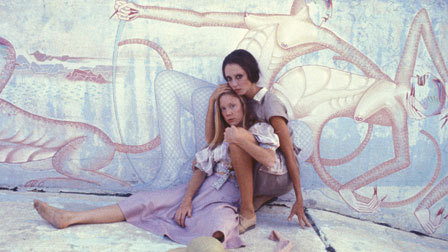
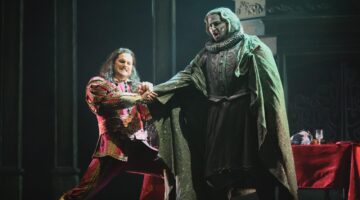
Took me a few seconds. The photo is of Shelly Duvall and Sissy Spacek in Altman’s THREE WOMEN, an allusion to the three heroines of LES CONTES D’HOFFMANN, right?
Quel bon goût to illustrate this thread with a still from Three Women, one of my favorites. This could actually make an excellent opera libretto, not unlike that of Vanessa or Carmelites, as it is concerned with exchanges and transfers between women.
I can imagine the false death of the Sissy Spacek character, and the false birth of Janice Rule’s baby as probing orchestral interludes. The first scene could be all in the rehab pool.
I visualize easily Christine Schaffer as Pinky Rose, Pat Racette as Millie, and Catherine Malfitano as Willie. Maybe Michael Torke for the score?
i;m excited: this is my first full listening to Hoffman
congratulations; I wonder if anyone can recommend a DVD?
I have seen the one on the Metplayer which features Neil Shicoff from 1988.
I cannot reccomend highly enough the new DVD from Paris OPera a FANTASTIC production with Terfel, Shicoff, Rancatore, Swenson, and many more, it is wonderfully done!
A friend of mine has that version. Swenson is fantastic, Rancatore not that much, but the Antonia act done in an orchestra pit is a great set
I love this DVD too–Shicoff is brilliant.
That met telecast is not bad. For me, the Covent garden production with Domingo is the best
Luciana Serra has not been bettered as Olimpia
Thank you. I did enjoy the one on the Met Player.
And let the bloodbath beging
Anyone know how to record this shiznat for free?
Does that mean how do you record from Sirius?
Ask And Record TOolbar at http://applian.com/asktoolbar/
louannd – yes, how to record from sirius?
sanford – thanks much for the link, but unfortunately I use a mac osx and askandrecord is for windows!
I have a mac and I paid for Wiretap and Pulsar – to record and keep XM on. I actually use an XM portal.
Friends, do we all have recordings from wonderful live performances at the Met that we’re not sharing?
I’d love to build my catalogue of live shows. Does anyone have last years Trovatore with Radvanovsky and Hvorostovsky?
louannd, how happy have you been with Wiretap. I’ve used Audio Hijack in the past but it didn’t record streaming media in stereo.
That prologue was endless!!!!!
I think Hoffmann is pretty much endless. I first saw the opera back in 1970 in a heavily cut edition, the old Olympia/Gulietta/Antonia combo that ran about 2 hours. I’ve had a hard time sitting though some of the later editions I’ve heard. The extra music just doesn’t do that much for me and it makes for a long evening.
I suppose it’s just the genre doesn’t work for me..I’m a barbarian I guess…..
No, Richard, I tend to agree with you. The basic story is in the music. Hoffmann does not need that much dialogue.
That said, I think Calleja is surprising us tonight. Beautiful voice, and…Oh my, the role lies sooo high!!!!
Not all cuts are evil, indeed.
I’m enjoying it so far. Calleja sounds very good. I just hope this first intermission doesn’t last 35 minutes! I do want to go to bed before 1 a.m.
I AM going to bed. It’s only Thursday. I hope it runs a little faster on December 19th at the local metroplex.
I think everyone sounds pretty good—Calleja has such a fresh sound–Held has a wonderful dark quality going that I like–Lindsay has a very pretty voice and Kim did fine with the doll aria.
Up here in the Family Circle things are sounding nice indeed. Calleja is a surprise, particularly given the early griping, to say nothing of his recent cold troubles. And the doll aria came off nicely, though her initial “oui” worried me that we were in for a shriekfest. I don’t know what it sounds like via web or satellite, but I’m pleased so far.
I could do without the cut they always take in the closing chorus of that act, though. It always seems so rushed.
Pelleas, I thought Kim a bit shrieky in her final
phrases after the aria — the voice just a tad out
of control; bet she gets better over the run. I did
not hear the aria as such, I was taking some game
hens out of the oven
Yes, those last few phrases as she ran around the stage were a little hectic. The aria was MUCH better
I guess Alan Held is saving himself for acts 2 and 3, but I miss Coppelius’ aria in act I and I’ve heard better Olympias than Kim’s. Her doll has the notes but no soul.
Yes, the profoundly deep, emotional, dark soul of Olympia was missing from this performance. GIve me a break.
All the breaks you need, Messa
No soul is….kind of the point.
Isn’t that the whole point, that she’s a machine? I generally don’t expect or require my machines to have souls.
I can sort of understand what you are saying. While Olympia is an automaton with–presumably–no soul of which to speak, some performances have more character than others.
I’m thinking of Dessay’s performance in 2001 at La Bastille, the one in which she mimes sex with Hoffmann. That Olympia wasn’t just tee-hee-hee amusing. It forced six-pack-sculpting laughter. Dessay’s Olympia in that production had wants, desires, *needs* (hitching a ride on Hoffmann’s disco stick) and, strangely, some sense of a “soul.” It made it all the more funny and grotesque.
But I do agree with above posters that an Olympia without a soul is to be expected. And if she is in possession of some semblance of ontological awareness, it doesn’t need to rival Hamlet’s.
From the first measure I found the orchestra and Levine
very ‘on,’ crisp, clean good ensemble, mainly fine choral work
(and there is lots); this is both an ensemble and a solo opera –
both have to be highly polished, and I think tonight that is
mainly what we are hearing. I am most pleasantly surprised
by Levine — though I agree it never hurts to cut this show!
Calleja has a long night ahead of him; so far I’d give him a
solid B, and I expect he will improve and over the run will
grow in the role and find more ease in singing it. Is there a
more demanding lyric tenor role? If so, I don’t know of it.
Best of luck to all concerned.
The Met hasn’t had the Coppelius in its “edition” since before 1993. I can’t remember the last time I heard it in performance–it’s been a very long time. I did hear it in Berlin several years ago–but it wasn’t Coppelus’ aria—it was sung by Dapertutto in Act 3 with much of the words to “Scintille Diamant”–totally bizarre—I think it was the Michael Kaye edition.
I understand the Kaye edition of Contes will be performed,
somewhat cut, in Santa Fe next summer; it will be very
interesting to compare!
I left a cautionary note about the link to the real time chat on another thread- my apologies. I got hit with a bunch of viruses so be careful.
By the way, as a worshiper at the shrine of Jussi Bjorling, I’m anxious to hear more on how Joseph is doing. First comments are positive. I really like his voice and personality.
Tim
Tim
I have been worshipper of Jussi since I bought my first recording of him in 1960 singing duets with Robert Merrill- it was imported from England and I still have it. It is about 8″ in diameter.
I was astounded last night listening to the Sirius broadcast that Calleja’s voice has a lot of the Bjorling sound in it. If I closed my eyes and thought of Bjorling, I could absolutely hear his voice.
I hope tht Calleja takes care in his choices of roles and that he has a long, long career.
I missed hearing Bjorling live by one year.
In the past roles I’ve heard (broadcast and video only), Netrebko just hasn’t won’t me over, though I’ve granted her ease and charm on stage and her certainly decent (when not tasked by coloratura) singing ; but based on the first aria, I like this a lot. There’s been a lot of talk about her repertory–is this perhaps her truest rep?
She sounds very blowsy in the high fast music. Calleja
is singing with pin point accuracy and she’s flinging her voice around like she’s mopping the floor .
I think that her small role tonight allows her to be extravagant, whereas he has to sing carefully and accurately to get through it.
The dvd of the Carsen production is sheer brilliance. Don Giovanni and drama itself are subtexts. The Antonia act in the orchestra pit is indeed amazing…whew.
Calleja was sounding very fine but the pitch is really wavering now. Take it easy, sweetie. I’m sorry I missed the J’ai des yeux trio. I much prefer that to Coppelius’s aria–
Wowee zow–good for you, Anna!! Held sounds more like a tenor than a deep voiced villain.
Well, Held is a baritone. But baritones can be villains too.
How wonderful it is to hear opera live and so often from my former home house. This generation of opera lovers is indeed fortunate in being exposed to so much that is good about today’s singers. And, in spite of what of my generation so often declares, the successful singers of today are technically often superior to one’s from our era. An important caveat: too often in this period the And, oh yes, I remember the heated arguments on the merits of Tebaldi and Callas in the 50’s and 60’s. One was in one camp or the other. But with the passage of time we realize how special both these sopranos were.
And tonight I find Calleja’s voice intriguing, unique in its strange beauty. What a joy to be still here to savor such an exemplary evening.
Sorry…deleted a sentence. Referring to ‘the caveat’ above is, that aside from technique, today’s singers are often lacking in a signature sound/defined personality/specialness. I know these qualities will be found again. In fact, I’m hearing much of it again tonight. How nice!
Was that a trill or what???
Guys, does anybody out there remembers Lucine Amara’s Antonia? How I miss her!!
I also was just remembering Amara’s Antonia; in her day she owned the role, and she was a much better musician than Netrebka, and with quite adequate voice. Lucine completely commanded the role; every detail was gracefully under control — tonight’s Antonia is a bit clumsy by comparison, though she may well grow in the part. Amara’s slightly acid tone was comme il faut for French opera of this kind. Good for you Nemo — we surely agree!
The tenor must do a lot more work, much much; but he’s got a future in this role from the sound of it tonight; he’s a work in progress.
Bon chance! The hardest part is now over. By the Dec 19 moviecast all should move more easily. I am excited to be seeing it.
And yet I can remember when she was reviled around the House — known as Obscene Lucine.
Odd how these things change.
I think the squillo and point in Held’s voice is exccting. It really cuts through the orchestra. The roles of the Villains aren’t really that “bassy”—they are more bass-baritonish.
Squillo? Held? Ummmm…..let me look that
up in my dictionary of vocal terms
Trill? Remember Sutherland’s final Antonia trill? I liked Netrebko tonight. Calleja showed just a little strain on the high notes, but that’s to be expected. I would suggest a little hot lemon-honey tea during intermission. I’m going to predict enthusiastic cheering for the production team. And the audience DOES love having Levine back on the podium.
Scintille, Diamant is fiendishly high, even for a baritone. It calls for a G# above the staff at the end. And I’m not sure it was even in the original score (which had a baritone Hoffmann. According to Wikipedia, it was added in 1908 by Andre Bloch, based on a tune from Offenbach’s Voyage de la Lune.
I liked Netrebko a little better once she got the turtledove out of the way. I’m not a technique wonk so can’t really speak to that he way others might, but that aria didn’t please me much. She’s got this way of sounding like the voice is placed very far back, leaving it sounding very murky and gargles to my ear. And it sounds a bit like she’s singing Esperanto.
Like I said, I don’t know what I’m talking about!
There are the bells. Bye!
Esperano. I’m ROTFLOLing as I write this. Not really, but I did laugh at that. Interestingly, in the rehearsal on Monday, Netrebko sang about three words in her first exchange with Hoffman. They sounded much different than the other stiff she was singing, and I sat up in my chair and thought carefully. What was it? I racked my brain. Then, it hit me like a shit ton of bricks. They sounded FRENCH.
I’m sure Held will sing the aria in the transposed key–very few, if any, bass-baritones singing all four villains sing the aria in the original key.
And if I remember right from hearing Held sing this before, he doesn’t take the high note at the end of the aria.
My favorite Dappertutos are Bacquier and van Dam. Bacquier took that high note in Scintille once in a Saturday’s transmission. Van Dam never did. Bur who cares: he was brilliant in the role!
It’s a pretty boring aria to sing. And without the high note, it’s pretty pointless. Pelleas, you do fine describing how you feel about how she sounds. Don’t appologize for your opinion; it’s as valid as any of ours, whether we agree with you or not. I also think the voice is too far back. I had a teacher briefly (a former Chorus Master of the Met Chorus as a matter of fact), who kept saying “Cupo, more cupo”. And to me, she sounds as if she’s trying to make her voice more “cupo” than it naturally is.
What does cupo mean? Cupped, covered? Please?
hmm, darkness. Hillis with Chgo Sym Cho used to ask that we put a patina on our sound. Like that?
Yeah, I guess. I have a pretty lyric baritone but always wanted to sing Verdi and when I was with this particular teacher, he said I should make the sound darker, and yes, more covered.
Cupo – Coupola or Cupola — dome, rounded high top.
In voice usually means ‘more room at the top’ more room
over the note. Subjective.
Perhaps that’s it–too much cupo. Cupotissimo, even.
I also always feel as though, had I no idea at all what it was she was singing about, I’d have a hard time telling whether it was a dirge or a love song. Not an overabundance of expressivity.
Giulietta sounded and looked entirely too matronly. Unless this was intended to have it au courant with the whole cougar nightmare the country’s been having of late.
None of the Act III singing seems very interesting to me;
what a case of the wobbles both those Barcarolle girls
had — that famous number went for very little; Levine
did not help either; the Diamant was almost an
embarrassment. Not a role for Mr Held? Surely he
could have ended with the F.
The tenor sounding very pressed. Well, it’s opening
night; I do feel the tenor has this role in his voice with
lots more vocal work with it. Perfunctory applause. I
think if I’d been in the house I would have left by
now to get home early.
Sanford Diamant is not “fiendlishly high” in the lower
key; both keys are used — it seemed a bit low for
Held and he took no chances at the end, but I found
him uninteresting in it tonight.
Gosh, one forgets what a “series of numbers” this opera is.
Ho hum.
I don’t know it in the lower key, so to me it’s fiendishly high.
i was at the dress-Calleja was ill and had to leave after act 1. He still seems under the weather
I liked the production. Levine’s tempi were quite subdued.
The chorus sounded very good at teh dress and tonight. What a great improvement since Palumbo took over.
a young tenor named david pomeroy took over from calleja at teh dress. He was very good. Anyone know much about him??
The only thing I know about new singers is what I hear on youtube, and David Pomeroy is not there.
Leonard Warren always did the four villains…I can still his two (2) high G-sharps in the aria.
Actually, Warren never sang any of these roles at the Met or San Francisco.
Did you hear him do the parts somewhere else, or are you thinking of Tibbett, or are you just assuming that he sang the villains on the basis of his recording of “Scintille, diamant”?
I don’t think I’ve ever heard that particular ending? Where did it come from and who found it? Are those some of the “lost” pages that Offenbach’s heirs were wrapping dead fish in? I’m sure I read that story somewhere. I liked the performance. I liked the tenor. A week without Will and Margaret?–how will we live?
http://www.davidpomeroy.com
I think tonight’s performance was one of the Met’s best this season. Cast changes didn’t make any diffrence, and the orchestra and chorus were tops. Calleja’s diction for a non-French born was good, and it reminded me of Gedda’s. Calleja’s timbre is very interesting, and it moved back to the 40s and 50s; something between Bjorling and Tagliavini. Levine’s physicality may be still restricted due to his recent back surgery that can explain the slow tempo and dragging of the score.
Hearing Calleja tonight brought back memories of the first time I heard Carreras, as a high school kid in 1981. The performance was (my first) Boheme, on a January Saturday afternoon in 1981, with Stratas and Scotto in a TV broadcast available on DVD. I had no idea walking in (given my relative youth) who Carreras was or whether I’d like Boheme, but I was stunned by the performance. Tonight, 28 years and easily 400+ Met performances later, I heard a magnificent new (to me at least) tenor at the Met and I am thankful for it. Other than a handful of early-life Kraus, Gedda Vickers and Pavarotti peformances, by and large for 28+ years Domingo was the only tenor I could count as great on the Met’s stage. This guy tonight had a beautiful, sweet, large voice, and he looked quite fine. I hope he manages his career such that he is around and able to sing for a very long time.
Others in the performance tonight were wonderful also,…..but in my opinion this was Callejs’s
sorry, hit the submit button too soon….this was Calleja’s night. My opinion.
It’s interesting to hear that some people thought the tempo dragged–I found myself thinking quite the opposite. I thought it was, overall, quite lively, and not at all like the oratorio approach that started to become common once everyone decided how serious and important Hoffmann is. (Then again, I most enjoy that old Cluytens recording of a “corrupt” edition, for the spirit of it: a weird fantasy opera, rather than a therapy session.)
I thought Levine struck a nice balance between the comic and the grotesque, without letting one outweight the other too much.
Loving Calleja today. Clearly husbanding his resources at times, but with time he should learn to manage the long evening. But a beautiful sound for the role, I think.
I wish the MET radio had a “listen later” function – I was only able to catch the first 2 1/2 acts, and Calleja had the part down, but he sounded sort of “husky”, like he still had his cold – I hope he takes good care of himself. Oke also sounded really good, and so did the orchestra.
I wish so too, but that sort of thing has enormous contractual and monetary implications.
Which, by the way, is why the BBC Radio 3, which broadcasts the Met radio shows, does not keep them up for 7 days the way they do almost every other thing they broadcast.