The importance of bad art

To cut to the chase: the creation of art is a risky business. There are few guarantees of quality, of profundity or of the longevity of the work’s appeal. The creation of any sort of art is therefore an experiment, and as with a scientific experiment, failure is a possible outcome.
Failure, then, is one source of bad art. But without the possibility of failure, success is at best limited to a narrow variation on what has already worked. But if we hope to see something original and news, we should realistically be prepared for the failed attempt.
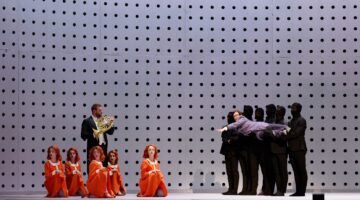
More to to the point, we should not take the product of the failure to accomplish a goal as the intended goal itself. Artists do not set out to create bad art. It seems unlikely that an artist like Luc Bondy, who despite his relative obscurity in the United States, has been directing in the theater and the opera house for over 30 years, should continue in such a career if all he has to offer is shock value and disrespect. This is like a man who hates buildings dedicating his life to architecture; it just doesn’t make sense.
Similarly, even so reviled (by me, I mean) a singer as Renée Fleming surely doesn’t deliberately set out to annoy me or Bellini or Lerner and Loewe. Her conscious goal must surely be to sing expressively.
What is possible is for an artist to have poor taste, or for his talent to fail him when presented with a task that baffles him, or for that artist’s work simply not to appeal to a certain segment of the audience. But for some reason there seems to be a divide in the perception of the seriousness of creative artists like composers, as opposed to recreative artists, like singers or the dreaded stage directors. There are plenty of music lovers who, for whatever reasons, profess to detest the music of Wagner, and perhaps an equal group who cannot abide Puccini. But how many people say, “Wagner was deliberately smearing mud on music” or “Puccini had no talent, so he resorted to shock effects?”
Well, to tell the truth, out there on the interwebs you could probably find a few people who would endorse both these statements and more, but the only reaction I can offer to them is pity, because in their bitterness and prejudice they are missing out on some magnificent music. For the the larger group here and elsewhere who are ready, even eager, to condemn the work of an artist as “trash” sight unseen, again I can only feel pity, alloyed perhaps with a tinge of hope that one day they might have the scales fall from their eyes.
Though, admittedly, it’s perhaps harder to see good intentions when they’re not very well executed.

See above for why I consult and sometimes participate in this blog. Ars Gratia Artis.
speaking of…
why does Anna Netrebko not sing in Italy? I know this sounds like I’m putting a really heavy weight on the Italian audience but since a lot of articles on parterre.com have italian titles and a lot of comments on those articles have italian phrases im only starting to learn, i reckon there’s some gravitas to it.
So, how come the Met divas are not the favorites of the Italian houses as well?
But who are the favorites of the Italian houses, then?
well
there’s Desiree Rancatore
there’s Elena Mosuc
there’s still June Anderson (i think)
there’s Fiorenza Cedolins
there’s Mariella Devia
One other issue should perhaps be mentioned here: did “Whoever-Decides-These-Things” (the Met has no formal artistic director, so God only knows who is responsible for deciding what, any longer) simply hire the wrong director? Bondy has a huge following and vast experience (much of it quite successful) in Europe. But when commissioned to work for the Met, he knew he was facing (and had accepted the responsibility to serve) a more conservative audience than many to which he had become accustomed. Did this knowledge, perhaps lead him to alter (or at least soften a tad) his “vision” of the opera into a “half-vision” that stood little chance of working well from the get-go? I would direct my criticism of the Met’s new “Tosca” production to management’s inappropriate choice of stage director, not to the “through-a-glass-darkly” vision that he actually put on the stage.
Brava, La Cieca! What a great post.
One also should remember that sometimes external forces in a director’s life will affect the outcome of a new production, e.g., if his spouse has left him, if his parent is fighting a terminal disease or has just passed away. Unlike a singer or conductor who in such circumstances can withdraw and be replaced relatively easily, it is not so simple for a director of a new production to step aside and have someone else take over the work.
speaking of bad art, here it is the worst
“So, how come the Met divas are not the favorites of the Italian houses as well?”
Non
What I meant to say before I accidentally clicked the submit button is that none of the current Met divas (i.e. Fleming and Netrebko) are popular in Italy because the Italians don’t want them. We all know what happened to Fleming when she did Borgia at La Scala in 1998.
Renee said that Renata Scotto advised her to sing only recitals in Italy and never to sing a opera there again.
javier how come? with regards to the renee recitals i mean.
i know this may not sound good to some but is there a premier bel canto interpreter today?
what about a premier verdi interpreter? cappuccilli was one of them…
coz so far the ones at the met (i mean the superstars) arent really premier exponents of anything… unless you count mattila for german.. (not even…maybe Salome)
Thank you so, so much, la cieca. This says exactly what needs to be said about the whole issue of directors and opera.
It’s been said here many, many times by sensible people, but apparently still needs to be said- when people sit in the rehearsal room on the first day the instinct is not ‘how can we offend people?’ ‘how can we insult the composer?’ or even ‘how can we do something so controversial that it makes the news?’, it’s ‘how can we tell this story?’
The Zimmermanns, the Dessays, the Mattilas and the Bondys may not always succeed in their aims, and indeed may produce results which are unsuccessful. As such, the results of their efforts should of course be up for discussion. But so often, we don’t get serious discussion- we get talk of desecration and insult and all kinds of emotive terminology which disallows even the possibility that they might have been serious professionals who were attempting the best interpretation of the work that they could offer.
Bravo! This and the “5 Myths” post over at My Favorite Intermissions http://maurydannato.blogspot.com/2009/09/myths-of-traditionalists-or-being.html are the two best things I’ve read about the whole affair.
My favorite production I’ve seen at the Met is the Robert Carsen Eugene Onegin, which didn’t seem to get a good reaction or good reviews when it premiered. It seems like a pretty analogous situation — and I’m glad that they tried something different there. Probably this production will never find its legs in this same way, although I don’t think it is impossible, but I certainly think it was worth taking the risk over resurrecting the dusty old Zefferellis year after year or hiring someone to direct an inoffensive and slightly updated version.
There was definite booing the night of the Carsen premiere, but it’s definitely gained a lot of admirers since. My theory on that one is that a few small touchups to the direction made a big difference in user-friendliness. Also my impression was that Vladimir Chernov was very uncomfortable in this staging and that uneasiness communicated to the audience. He certainly had a very sour “they’re not paying me enough to do this” look on his face during the undressing/dressing setting of the Polonaise.
Are you referring, perhaps, to the ethically and professionally questionable unsigned AP article you posted earlier which referred to the Tosca premiere as “a failure” simply (it was implied) because people booed? If so then you seem to kowtow immediately to the significance and usefulness of this “failure” without arguing the preposterousness of someone making this characterization based purely on the response of a conservative public reaction.
In Paris they boo regularly. The audiences are the same as here. When TRSTAN was staged in rehearsal skirts before a huge Bill Viola video installation, the creators of the production were booed. Mind you, Wal-Trout Meier
was not booed though she caterwauled her way through the piece night after night.
Sure, bad art has a place. But to champion bad art in the service of good is misguided.
I’m reminded of a Hindemith quote which goes something like “this piece was performed, forgotten, and made no impression on anyone… I’ve written lots of bad music but at least it is of some obvious usefulness to other artists, which is the most any artist can really hope for.”
A meagre goal, I say.
“i know this may not sound good to some but is there a premier bel canto interpreter today?”
Michaels-Moore, natch.
Squirrel, that’s a very good question. Like any other work of art, the Bondy Tosca is going to be judged by history as good, bad or indifferent. “Posterity” might even disagree among themselves.
But the idea of experimentation is a good one in itself, whatever the judgment of the product of that experiment. What frightens me is the large number of voices insisting that opera, as an innately conservative art, should shun experimentation altogether for fear of failure.
Please, No. 5, do not try to continue the Gelbite spin that the only possible reason to cavil at the TOSCA of last week is a hidebound conservatism. This is not only insulting but inaccurate. There were many, many people there who patronize the most radical art we have. There were many grounds for disapproval from these that had nothing whatever to do with “conservatism.”
And, by the way, what is the opposite of this alleged conservatism? Any old thing somebody decides to slap up on the stage? Seriously. We keep hearing about the ignorant public. What do we call the enlightened deities who float above the mere public?
Alto, you’re tilting at a straw man here: a re-reading of comment #5 reveals no hint of this “only possible reason” you’re trying to refute.
Alto @ 18
“What do we call the enlightened deities who float above the mere public?”
Um, that’s us who post here on parterre.com
hi cieca – haven’t seen the Tosca, will see it Oct. 6.
absolutely, there should be experimentation. but I think it is naive to expect “experimentation” at the Met… Experimentation, as a term, has always struck me as meaning, essentially, that the director does not entirely know what the result will look like, nor whether his ideas will work. An “experimental” staging is a “workshop” piece.
At the Met there are such high stakes (leave alone even for a moment that this was an opening night Gala!). Should we not know what we are getting, and whether we like it?
Bondy is an experienced, nay benighted, European art-house director and should be capable of delivering his most impressive and engaging product under these circumstances. Did he?
As I often say in the comment field of your lovely Blog, It’s not about whether something experiments or not, whether it’s sparse or modern or abstract or literal – for me, it comes down to “Was there interesting Personenregie?”, “Were the roles well cast?”, “Did the staging convey something both congruous to the meaning of the piece AND challenge our thoughts on it?”.
Every generation could make their own “Traditional” staging of Tosca (ie: Candelstick=Candlestick etc) and every one would look different. A grand, expensive, literal Zefirelli production would STILL have to be remade after 25 years because it just. Looks. So. 80s. And there will always be a Cher Public to boo when you change it, because that’s how opera audiences are.
squirrel wrote: “Was there interesting Personenregie?”, “Were the roles well cast?”
Looking for info: do the directors choose the cast, or are they handed them?
Cruz-
we’re talking about ideals here. the success of a production largely depends on casting. these things matter. No, directors do not choose the cast (assuming your question is in earnest)
ALTO
You’re right. A “Hidebound Conservatism” is kind of like “Vast Right Wing Conspiracy” isn’t it?
And I agree wholeheartedly that we are all too often given a choice between “Traditional” and “Whatever anyone wants to slop onto the stage”. I am no arch-conservative, and yet I fear that we are cowed into accepting any non-traditional enactment of an opera simply by peer pressure from the media and marketing goons.
squirrel: my question was absolutely made in earnest. I know next to nothing about the inner workings of the opera house (although I did just pick up the Gatti-Casazza autobio from the library for some behind-the-scenes history). I do know that singers are often contracted years in advance, but I didn’t know about whether the directors and the singers were a package deal.
Thanks.
Oh, I thought you meant it sarcastically – no harm done! Sorry.
Indeed, conductors and directors and singers are hired by Peter Gelbs and forced together against their will. Which is a big problem. And that’s putting it very, very mildly.
That would explain why some of the singers (as reports went) seemed uncomfortable in the production. They simply might not have bought into the concept …
squirrel,
I think just about any new production is an experiment, to some degree. Even if the Met specialized in recreating successful productions from other (presumably smaller) houses, it would still be experimenting, because things that work in one house on one stage with one cast might not work on another. It’s all a question of degree.
But more importantly, every production has a risk of failure, nobody can be sure what they’re getting. Having big bucks to spend on the production doesn’t solve anything. History is riddled with stupidly expensive train wrecks in all fields of endeavor (look at, say, Hollywood).
It seems to me that the only way for the Met to avoid the occasional flop is to offer only concert performances. Obviously it will never be the venue for off-the-wall things like the Wooster La Didone from last season, but to say that it shouldn’t take risks at all is tantamount to demanding only insipid work.
Zimmerman’’s La Sonnambula has been frequently cited as a recent FIASCO but I seem to recall La Dessay insisting that the production not be conventional, to the point of refusing to participate. I believe she had much to do with this diasaster, but I have seen no reference to her co-conspirator role.
Veloce- that’s because any talk of Dessay’s involvement in the process would have been hearsay. The buck stops with a director, and it’s the director’s name on the production.
Nobody who wasn’t in the rehearsal room can do anything more than speculate on how much influence any individual cast member had over what eventually appeared on stage.
Plus, did you read this place when ‘Sonnambula’ was on? Dessay came in for just as much as a kicking as Zimmermann did.
Squirrel: A “Hidebound Conservatism” is kind of like “Vast Right Wing Conspiracy” isn’t it?
Not sure of your tongue-in-check status on this one, but I presume you mean that, like the VRWC, hidebound conservatism clearly and demonstrably exists and is actively engaged, for mostly selfish purposes, in derailing the cause of reform?
#31 – I was not familiar with this website at that. If it’s still available I will check it out. I will also try to re-cover some comments from Dessay in an interview (pre-performance) that spoke of her involvement (NOT HEARSAY). Thanks for your info
I meant #30 not #31