
Headshot of La Cieca

Cher Public

  • A. Poggia Turra: Aside: The Tosca in the previous Regie quiz is the production in which a scenery wall collapsed... 1:39 AM
  • Camille: Parpignol–I& #8217;ve heard her simg Brünnehilde twice in Wallüre. It was a wonderful assumption of... 1:31 AM
  • Quanto Painy Fakor: DIE MEISTERSINGER 1:28 AM
  • La Cieca: httpv://www.youtub e.com/watch?v=OqbR cEulhos 1:24 AM
  • Camille: Wait a minute, just caught the title of Cieca’s header– is it Kurt Weill’s “Down... 1:12 AM
  • parpignol: point taken; clearly you are right; I’ve just not had much experience of her, since I live in New... 1:08 AM
  • Camille: Hi myster! Did not know Brewer was to have been that Isolde!! Shame. I like Stemme. A LOT. Hope to see... 1:04 AM
  • Camille: Ah, was gonna say Billy Budd until I saw boobies in the third picture, so that’s out. How about... 1:00 AM

disorientation

yuiko

“A music review on Monday about the opera ‘Prima Donna’ by Rufus Wainwright, in which the character Régine at one points asks ‘Who is this woman?’ and thus recalls a similar question in ‘Madama Butterfly,’ misidentified the character in that opera who asks about a woman’s identity. She is Suzuki, Butterfly’s servant — not Butterfly.’ [Corrections, NYT]
5 comments

  • OhNO says:

    butterfly asks it also.

  • dcrazmo says:

    One can only imagine how many screaming opera queens must have called the Times for them to bother with this kind of correction!

  • chacowhacko says:

    @OhNO

    Yes, but the review said that Butterfly asks Pinkerton the question. It is Suzuki who asks Pinkteron the question while Butterly is asleep inside the house. Later, when Butterly is the questioner, she asks Sharpless (Pinkteron has temporarily fled).

    Hard to believe I took the time to write that. I am sure you all know the opera well enough. :-)

  • Will says:

    Actually, no. Butterfly does not ask, although it could perhaps be defended that she implies a question. The exchange with Sharpless is:

    B: Oh, that woman! She makes me so afraid, so afraid.

    S: She’s the innocent cause of all your misery. Forgive her.*

    B: Ah! She’s his wife. Everything is dead for me, everything is finished.

    * In the La Scala premiere version, Kate had this line and many more as well. In her mouth it read: I’m the innocent cause of all your misery. Forgive me.

    I think it’s significant that Suzuki asks and and keeps asking with ever-greater urgency until Sharpless finally tells her. Butterfly doesn’t ask–on some level she, in denial throughout the entire second act, intuitively KNOWS. It’s a small detail, but of such details are good plays and libretti made.

  • Hans Lick says:

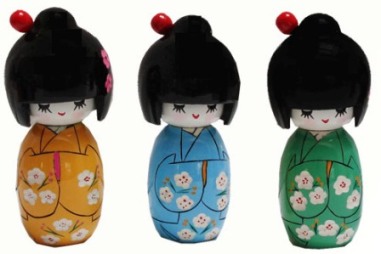
    I think it’s a production of The Mikado from a puppet theater at Tsarskoe Selo in which all the singers are impersonated by nested wooden dolls.

    Or The Rake’s Progress.