
Summer 2026 Opera Travel Guide

The Parterre Box Guide to Bayreuth

After more than twenty years of unsuccessful attempts to secure tickets, I imagined that experiencing a performance at the Festspielhaus would be a singular, once-in-a-lifetime event. Yet that has not proven to be the case. With each passing year, I find myself drawn back to the theater on the “Green Hill.” This season is no…

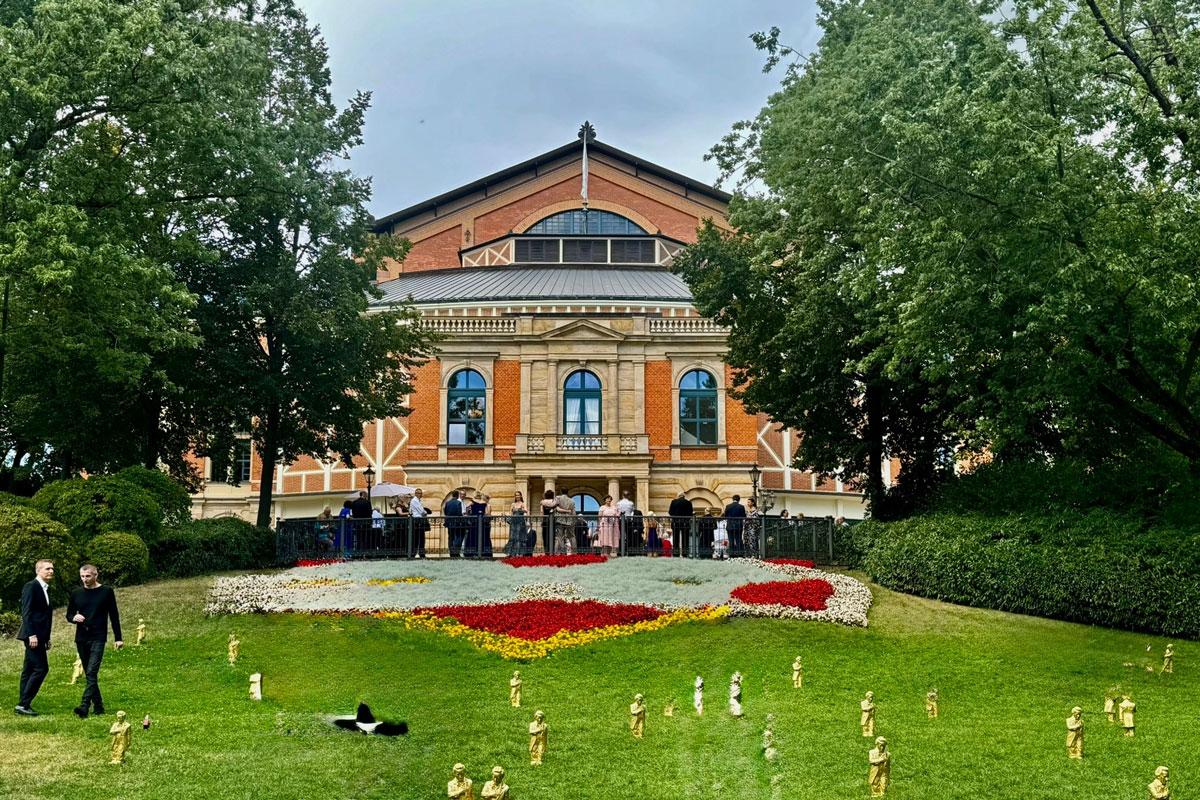
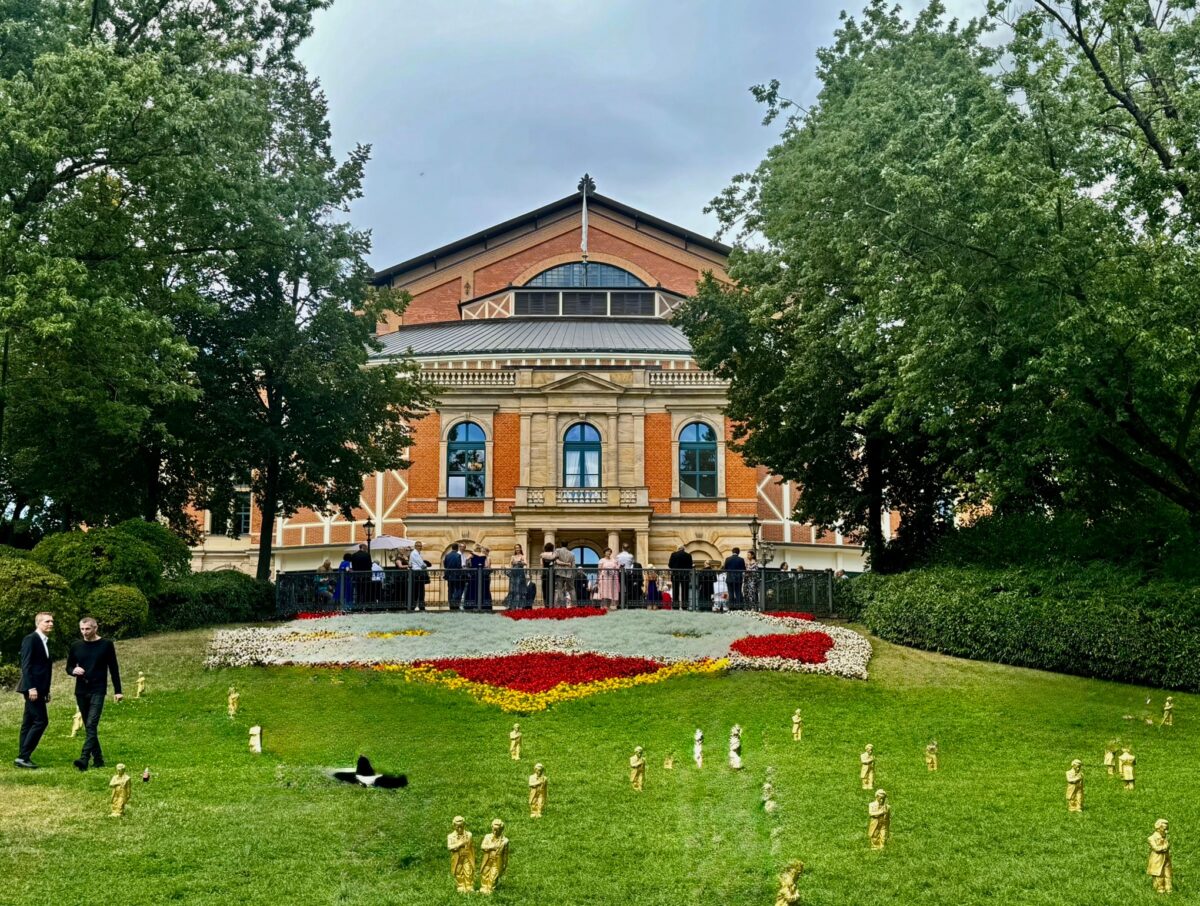
Front lawn view of Bayreuth Festspielhaus
Front lawn view of the Bayreuth Festspielhaus. This and all photos courtesy of Kevin Fullerton.

After more than twenty years of unsuccessful attempts to secure tickets, I imagined that experiencing a performance at the Festspielhaus would be a singular, once-in-a-lifetime event. Yet that has not proven to be the case. With each passing year, I find myself drawn back to the theater on the “Green Hill.” This season is no exception, as I return once again for the Festival’s first performances of Rienzi, and a second viewing of Tcherniakov’s production of Der fliegende Holländer.

After three visits, I am comfortable making the following recommendations.
What to Know

For all its many charms, Bayreuth offers a relatively limited number of rooms, and the annual influx of festivalgoers quickly fills them. Planning ahead really isn’t optional—it’s a necessity.

As most hotels do not allow check-in until 15:00, I strongly recommend arriving at least one day before your first performance. On each of my three visits, I encountered significant train delays traveling from Frankfurt to Bayreuth, resulting in missed connections – and once nearly a missing a performance of Der fliegende Holländer! This year, I’ll be coming from the Salzburg Festival and have decided to spend the night in Nuremberg before heading on to Bayreuth to check in. If accommodations in Bayreuth are tight, Nuremberg is a reasonable backup option, with a direct train ride of about an hour—even if it’s not quite the same as staying in town.

The dress code has relaxed quite a bit since my first visit. While I still prefer the formality of a tuxedo, many men now opt for dark suits, dispensing with formal attire altogether. Women, too, often choose lighter, more comfortable fabrics, though elegant evening gowns are very much in evidence.

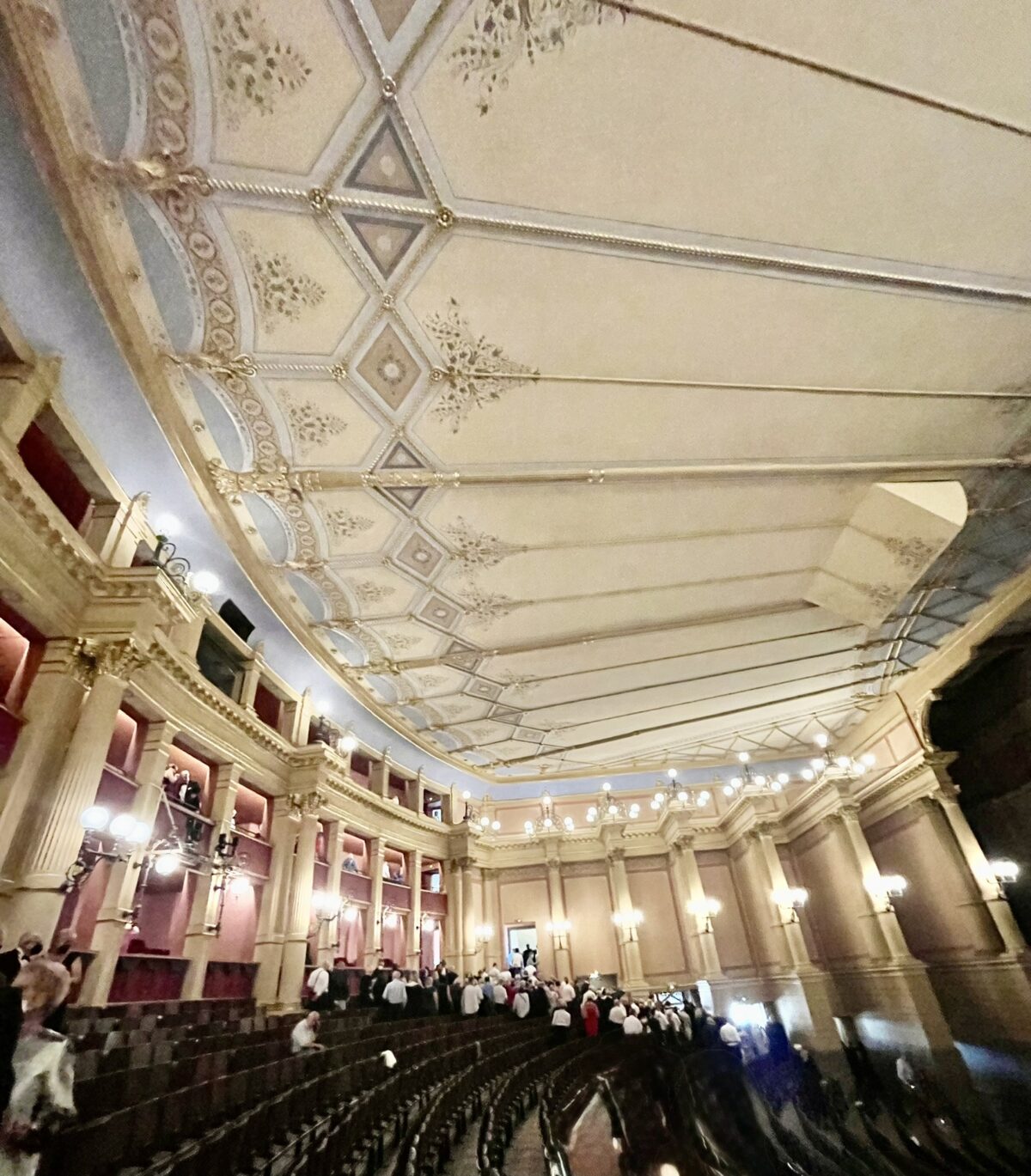
Inside the Bayreuth Festspielhaus

It is worth noting that the theater is not air-conditioned, and it is quite common to see gentlemen remove their jackets before the performance begins. I have done so on two occasions when the summer heat was particularly oppressive. At intermission, all patrons are required to leave the auditorium, with doors reopening approximately fifteen minutes before the next act.

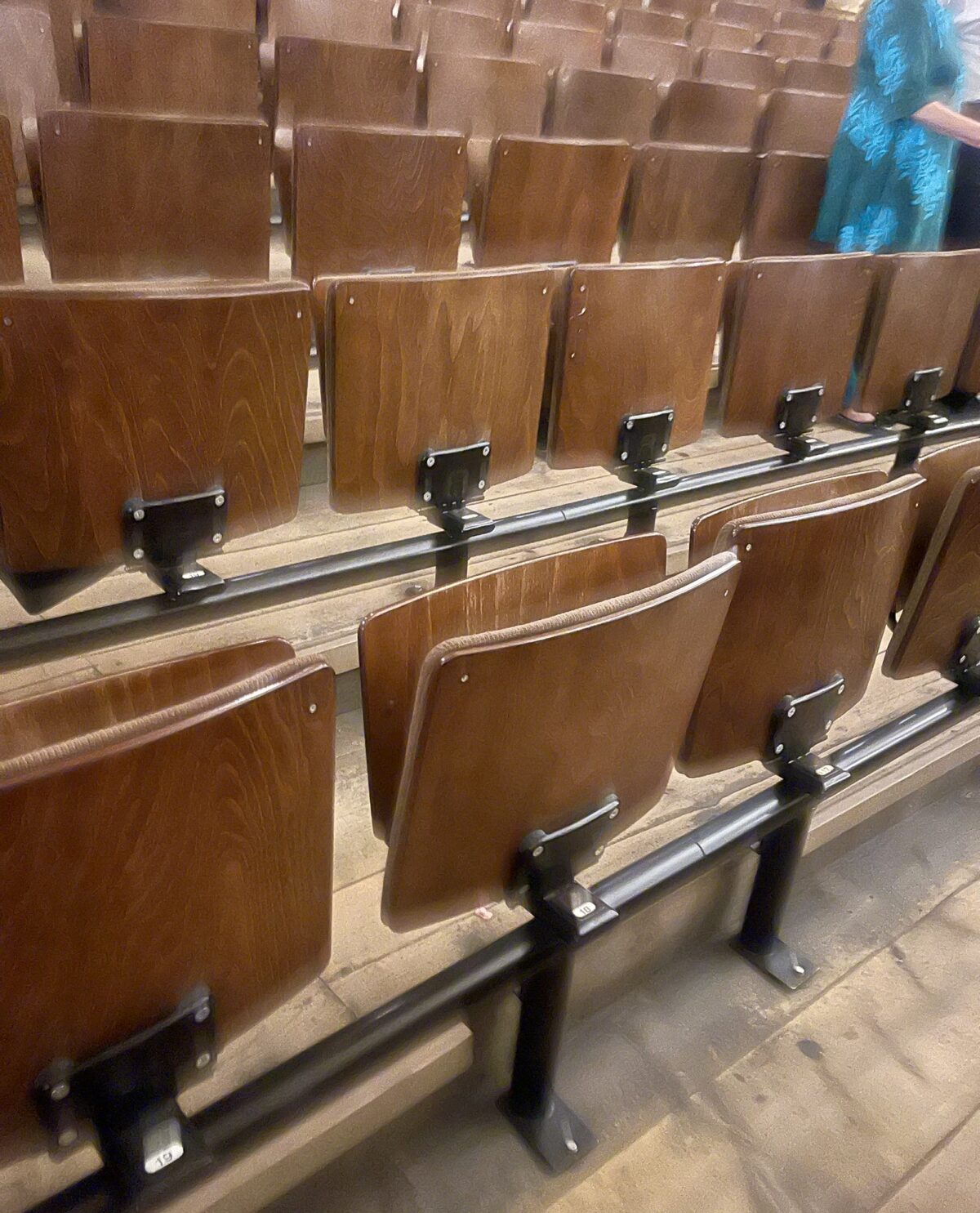
Seats at the Bayreuth Festspielhaus

And the seats? Yes—they are wooden, with only the slightest hint of padding. Yet, surprisingly, I have never found them uncomfortable.

I prefer to arrive at the theater well in advance of the performance. The grounds surrounding it are quite lovely, and there is a particular pleasure in people-watching while enjoying an Aperol spritz or a glass of sparkling wine before the performance begins.

Where to Stay

As mentioned earlier, booking accommodations well in advance is essential. My preference is the Arvena Kongress Hotel (Eduard-Bayerlein-Straße 5a, 95445 Bayreuth; +49 921 7270). It offers comfort and convenience. A robust breakfast buffet is also included.

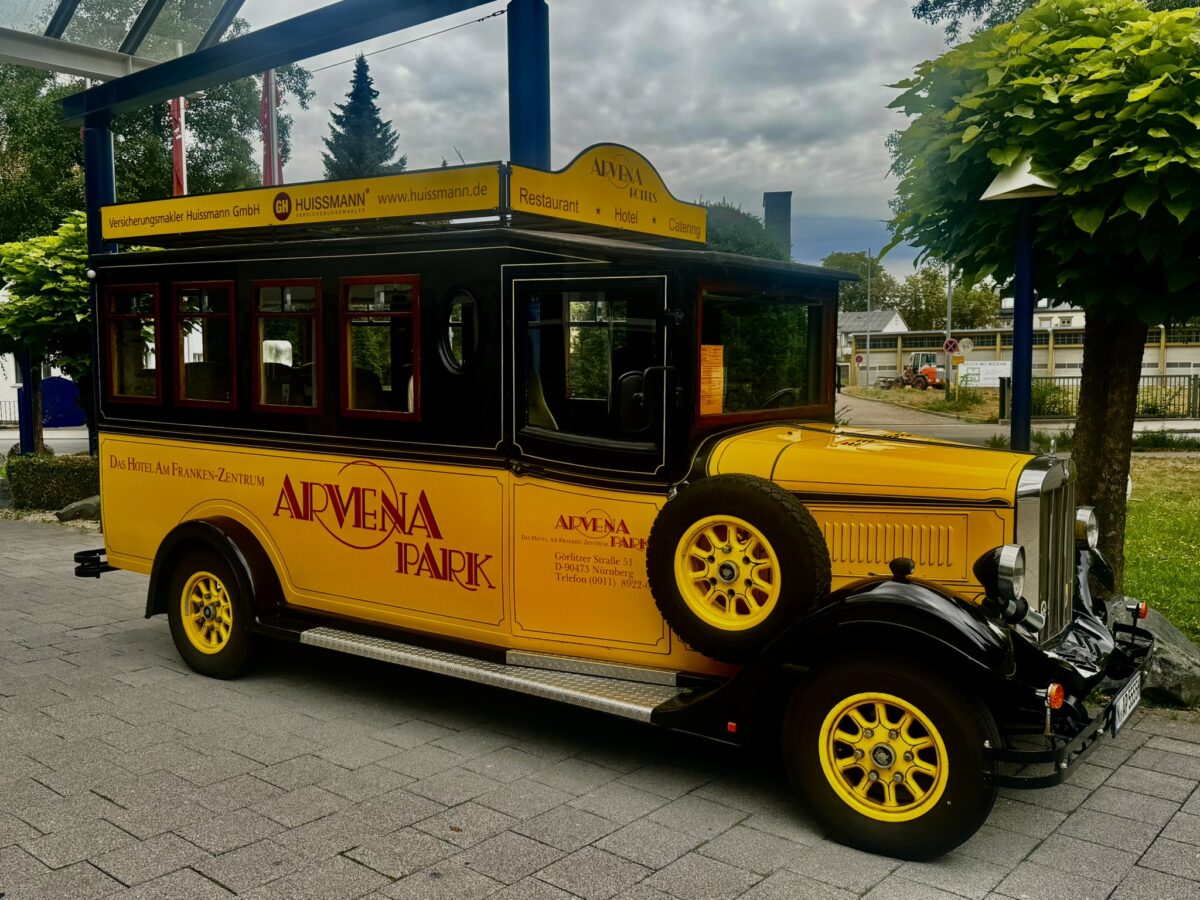
Arvena Kongress shuttle bus

Arvena Kongress shuttle bus

The hotel is located about a 20-minute walk up the hill to the Festspielhaus, a route that many will find quite manageable to walk. For those who prefer an alternative, the hotel provides a charming transportation option: a vintage bus that shuttles guests to the theater. It accommodates roughly a dozen passengers, so arriving early to secure a seat is advisable. The round trip takes approximately fifteen minutes, making any wait quite reasonable.

After the performance, I always walk back to the hotel. The downhill stroll offers a welcome opportunity to decompress and reflect on the evening’s performance.

The hotel’s bar and restaurant tend to fill up after performances and take on a nice, convivial energy. It’s a pleasant spot to unwind, have a beer, and chat about the evening with other attendees before calling it a night.

Where to Eat

For traditional Franconian fare, I tend to return to two reliable favorites in the town’s center.

Restaurant Eule offers a warm, authentic atmosphere and classic regional dishes.

Oskar – Das Wirtshaus am Markt provides a slightly more contemporary take on local cuisine, and the outdoor tables in the square provide an easygoing, more relaxed dining experience.

Bubbles, bier, and wurst on a table at the Festspielhaus

Dining at the Festspielhaus… not the wurst

Dining options at the Festspielhaus itself are both varied and well considered. They range from casual offerings—such as bratwurst and pretzels—to more elevated experiences, including the Flying Dutchman Seafood Bar, Green Hill Kitchen Restaurant, and the refined Gourmet Restaurant 1813, where reservations are essential.

You’ll also see several Geldermann Sektbar kiosks scattered around the theater, serving sparkling wine, cocktails, and beer before the performance and during intermissions. These open-air spots are very much part of the Bayreuth experience—a nice place to gather, chat with fellow attendees, and between acts, reflect a bit on what you’ve just heard.

For more detailed information, the Bayreuth Festival website provides a comprehensive overview of dining and catering options.

Where to Drink

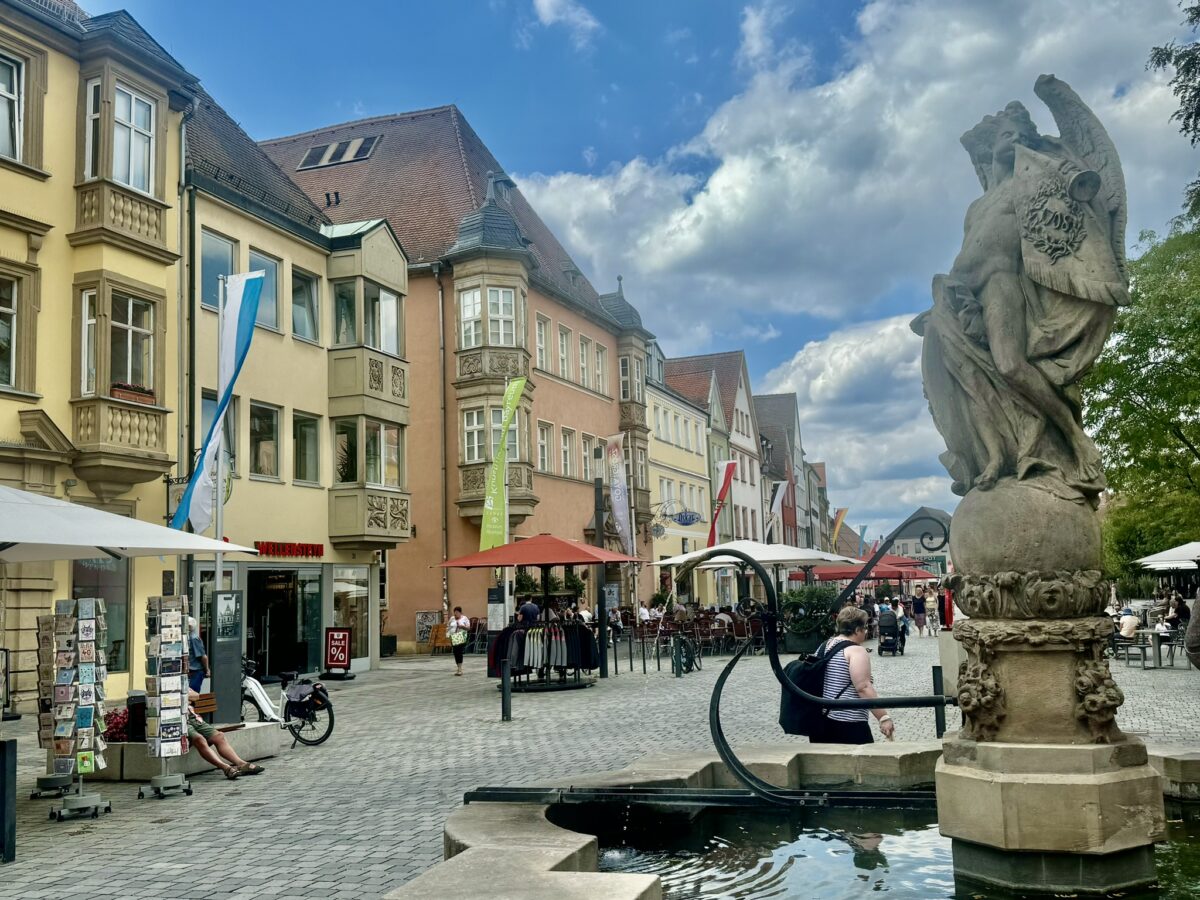
I don’t really have a go-to drinking spot in Bayreuth (apart from the bar at the Arvena Kongress), but Maximilianstraße is lined with establishments, many with outdoor seating. Vibe varies from the laid-back NachTisch to the afternoon-and-early-after-hours thump of AMPERE and everything from coffee to German beer to spirits. Whatever you’re after, there are plenty of easy places to settle in for a drink… or two.

Maximilianstraße

Maximilianstraße: pick your pleasure/poison

What to Do

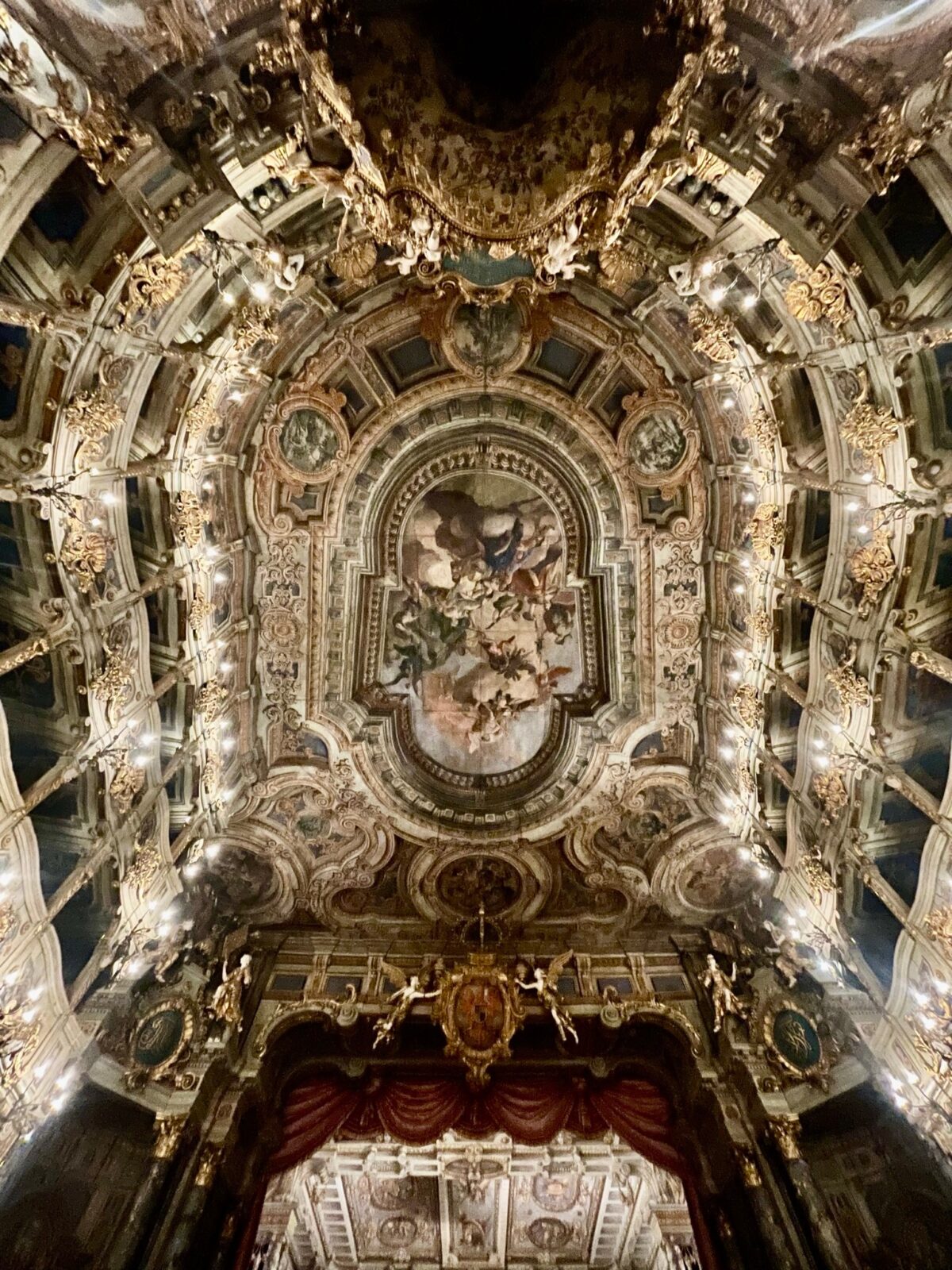
Ceiling of the Margravial Opera House

Ceiling of the Margravial Opera House

The Margravial Opera House is must-see. This UNESCO World Heritage Site contains one of the most extraordinary Baroque theaters in Europe. Stepping inside truly feels like entering into another world.

The theater reopened in 2018, after a six-year restoration, and the results are simply stunning.

The auditorium is constructed entirely of wood and painted canvas, with trompe l’oeil techniques used to remarkable effect. The result is both grand and intimate. The Bayreuth Baroque Opera Festival is held here in the Fall, and I can only imagine how marvelous the acoustics are.

Guided tours are offered throughout the day in both German and English, though audio guides are also available if you prefer to explore at your own pace.

No trip to Bayreuth would be complete without a visit to Wahnfried. The house underwent a major renovation that was completed in 2015, along with the addition of a new museum, built alongside—and partially beneath—the main residence, which now hosts rotating exhibitions.

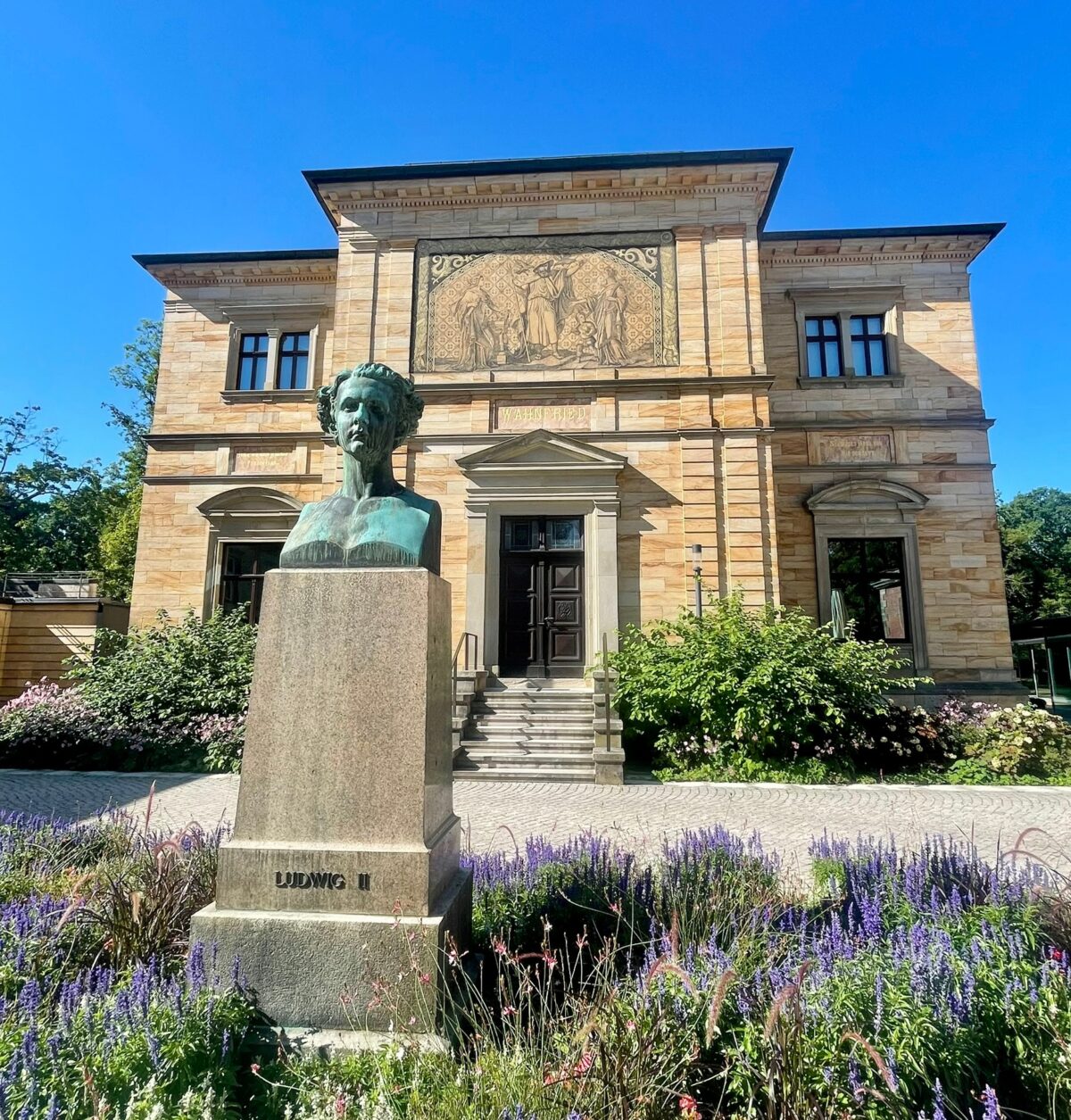
Façade of the Wahnfried

On the façade of the house is the inscription: “Hier wo mein Wähnen Frieden fand, Wahnfried sei dieses Haus von mir benannt”—roughly, “Here where my illusions found peace, this house I name Wahnfried.” (Our German-speaking cher public may offer a more nuanced translation.)

The ground floor has been carefully restored to reflect how the rooms would have looked during Wagner’s lifetime, which gives the visit a particularly authentic feeling. The museum includes everything from Wagner’s and Cosima’s personal belongings, to original scores, to costumes and props from various productions.

Behind the house, set in a quiet garden, are the graves of Richard and Cosima.

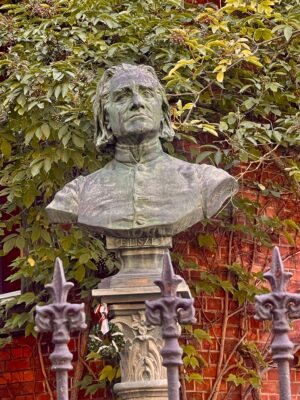
Bust at the Franz Liszt Museum

Across the street from Wahnfried is the Franz Liszt Museum. It is more modest in scale than its neighbor, but no less worthwhile. The intimate house offers a glimpse into Liszt’s world, with manuscripts, portraits, and personal items on display.

It is quite easy to visit all three sites in a single day prior to an evening’s performance. The Margravial Opera House is about a 10-minute walk from Wahnfried, and the Franz Liszt Museum is across the street from Wahnfried.


If nature beckons and you feel like slipping away from Bayreuth’s city center, a visit to the Eremitage Bayreuth makes for a wonderfully unhurried half-day escape. We have Wilhelmine of Bayreuth to thank not only for the Margravial Opera House, but also for transforming the Eremitage into this enchanting Baroque complex.

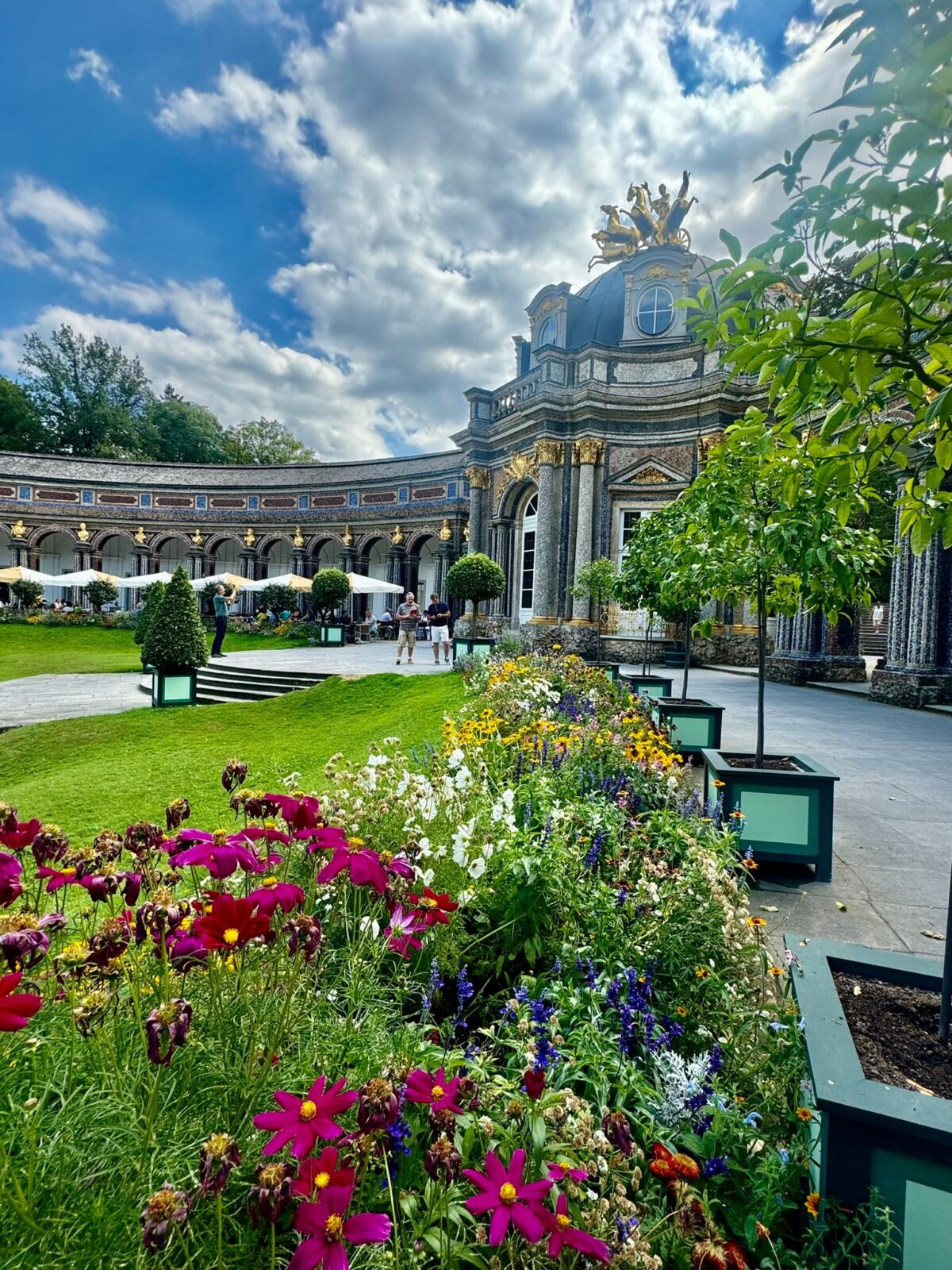
Grounds of the Eremitage

As you wander through the gardens, you’ll come across pavilions, grottoes, and sculptures—but everything gradually draws you toward the main focal point: the semi-circular New Palace and Sun Temple, with its large decorative fountain at the center. The over-the-top grotto stonework is particularly striking.

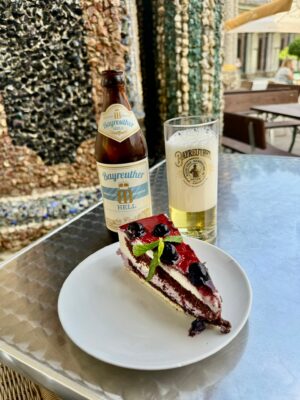
Light snack of beer and cake(?) at Eremitage

Eremitage-essen

After wandering through the gardens, there is a café near the main buildings. It is the perfect spot for a restorative coffee, a pastry, or even a glass of Bayreuth beer before continuing your exploration of the gardens.

Getting there is simple: just take Bus Line 305 and get off at the “Eremitage” stop. The trip takes about 10–15 minutes from Bayreuth’s central bus depot. Tickets can be purchased at kiosks in the station or directly from the driver.

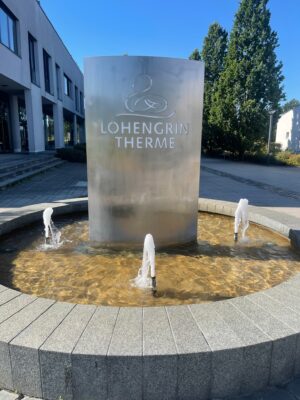
If you’re looking for something truly relaxing and restorative, I’d highly recommend spending a morning at Lohengrin Therme. It’s a wonderful way to reset between performances.

The spa offers a variety of indoor and outdoor pools at different temperatures, along with steam rooms and quiet relaxation areas. There’s also a separate indoor sauna complex (textile-free = nude zone), with multiple saunas and pools at varying temperatures for a more traditional spa experience.

Getting there is easy— You can take the same Bus 305 that goes to the Eremitage—the two are only about half a mile apart. The Lohengrin Therme stop is before the Eremitage stop. Take Bus Line 305 and get off at the Lohengrin Therme stop. The ride takes about 10–15 minutes from Bayreuth’s central bus depot. Tickets can be purchased at kiosks in the station, or directly from the driver.

For me, experiencing opera at Bayreuth is nothing short of magical. The audiences are, without question, the most attentive and respectful I’ve ever encountered, and there’s a real sense of community. The experience feels fully immersive—from the uphill walk to the Festspielhaus, to the moment you step inside its surprisingly austere interior, there’s a reverential anticipation in the air. And once the lights go down and the music begins to rise from the hidden pit, you become immediately aware of the extraordinary acoustics. The sound seems to come from somewhere both distant and intimately close at the same time. In that moment, I take a deep breath and simply surrender to it.

Sign up for Parterre’s free newsletter.

Exclusive opera reviews, commentary, and top reads
delivered to your email weekly…ish.