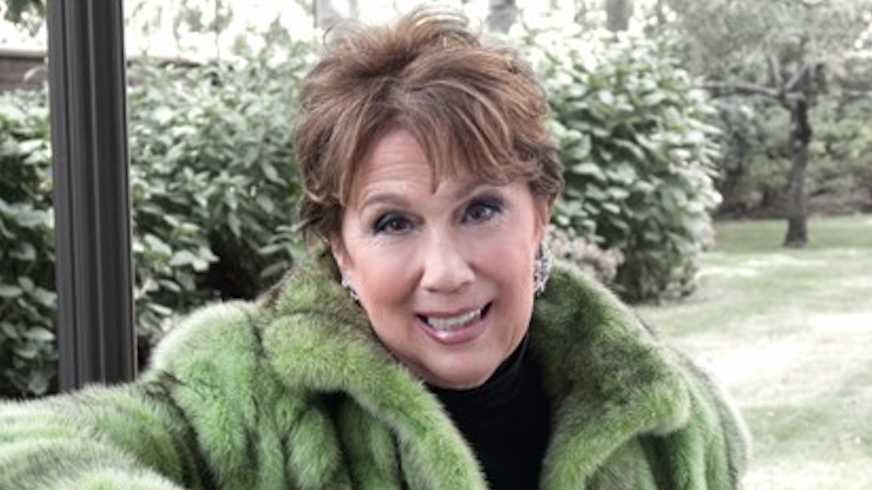
Photo courtesy of Diana Soviero/UIA Talent Agency
During a conversation on Zoom in August 2025, Diana Soviero told me a memorable story about her late colleague, Beverly Sills: “She said to me, ‘The art form of opera is going to die. You will witness it, Diana. I will be dead, but I want you to try to protect it.’ ‘What am I,’ I said, ‘a police officer?’” But Soviero, the risk-taking soprano who never allowed her blazing dramatic involvement to prevent her from doing the vocal side of her roles total justice, has indeed spent her life fighting for the art form to which she’s given her voice and artistry wholeheartedly. When she talks about opera, she makes it live, through her own unique imagination and conviction. In conversation, Soviero’s energy is infectious, her opinions utterly sincere, her spontaneity and total lack of pretense an absolute joy. Five minutes into our interview, we were talking like old friends.
After winning the 1979 Richard Tucker Award, Soviero went on to enjoy a spectacular international career, forging an especially passionate, palpable connection with the music of Puccini (her Manon Lescaut and Tosca were two of the small handful of perfect performances I’ve heard of a Puccini soprano role). She’s more than willing to speak of her achievements onstage, but at age 83, she’s truly living today, retaining her connection to opera as a greatly sought-after teacher and master-class leader. She’s been closely associated with the Met’s Lindemann program, the Florida Grand Opera Studio (which she co-directed for two years with her husband, director Bernard Uzan), and many other opera companies and conservatories.
When did she start teaching? “It happened in a performance. I was singing Pagliacci at the Metropolitan Opera. I looked stage left and saw five young singers sitting on the floor in the wings. There were other people sitting there, too, including Gail Robinson, who was in charge of the Lindemann program. Later I said to her, ‘I hear you made the students come and listen.’ ‘I wanted them to see how you work up close, and I’d like you to do a master class with them,’” which Soviero had never done before. “I said, ‘I’m not a master!’” But James Levine spoke with her and said, “You know what’s right, you know what’s wrong—just tell them.” That was how it began.
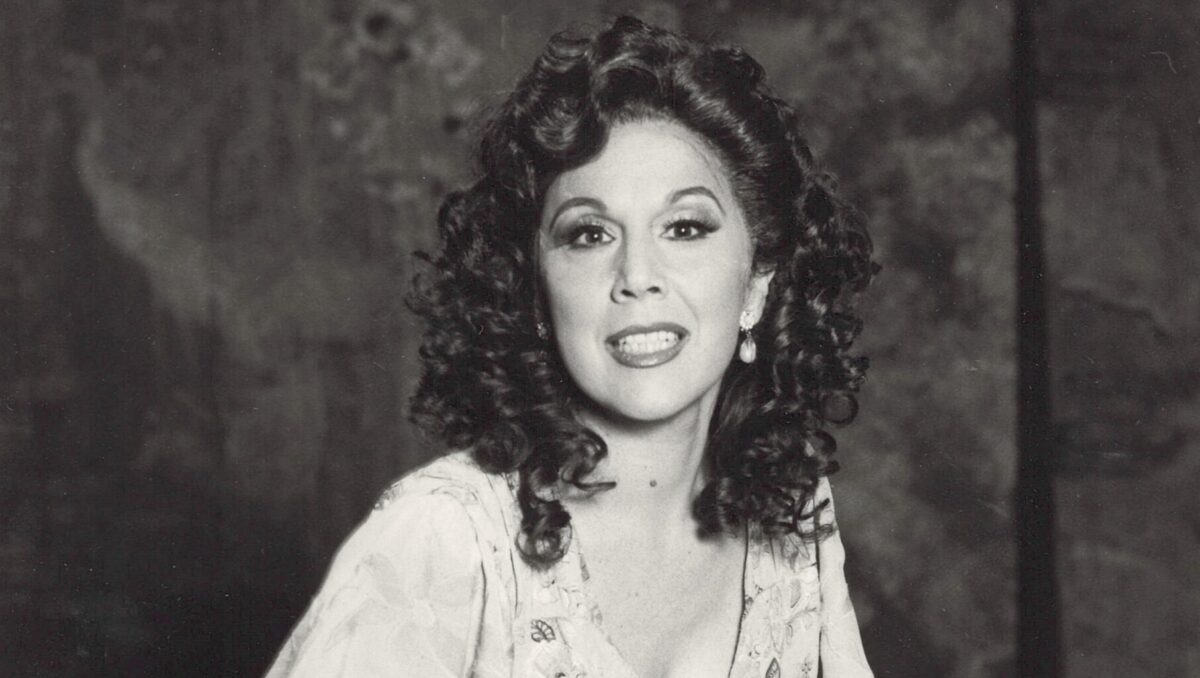
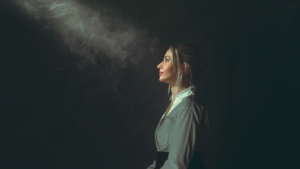
Diana Soviero as Nedda in Pagliacci at Teatro alla Scala / Photo: Lelli & Masotti
A lot of young artists were soon asking to work with Soviero. She eventually developed her own studio (“a little overwhelming for me while I was still performing”). Having never thought she’d teach, she eased into it working one-on-one. “It was repertoire that the singers were doing at the Met at that time, including comprimario roles. I said, ‘There’s no such thing as a comprimario role. You have to sing it as if it’s the most important role!’ Of course, I wanted to educate them regarding the music, the text, and everything else that I’d learned in my life as a singer.”
Soviero is quick to add that when she was studying at Juilliard, students weren’t allowed to use a vocal score. “I said to [legendary voice teacher] Mme. Freschl, ‘You mean to tell me I have to know what the oboe is doing?’ ‘Diana,’ she said, ‘he’s singing with you. If you take a breath in the wrong spot, you’re not together.’ So I had to know every instrument.”
Soviero prefers having an audience in the room for master classes. “I’m stage left or stage right of the piano, so I notice the change in singers—when they see people in front of them, they start to get nervous. But even if something happens that I think is incorrect, I absolutely try to address it as a positive thing: ‘OK, there’s something in the score that we didn’t read, that we may have forgotten.’ I always use ‘we.’ And if that ever happens, in the next phrase we need to be able to correct it in a very intelligent way.’”
As the voice of experience (with everything a young singer may do, she’s been there and done that), Soviero in master classes and private voice lessons can offer reams of valuable advice: “What if you make a mistake and you’re in front of the conductor? Do you aggravate the conductor if you don’t want to do something? If you upset the conductor, he or she is in charge and can do you harm. So, what do we do?’ Soviero truly functions as the full-service teacher: ‘I work on so many things—deportment, education, musicality, vowels, how to double consonants, how to breathe!”
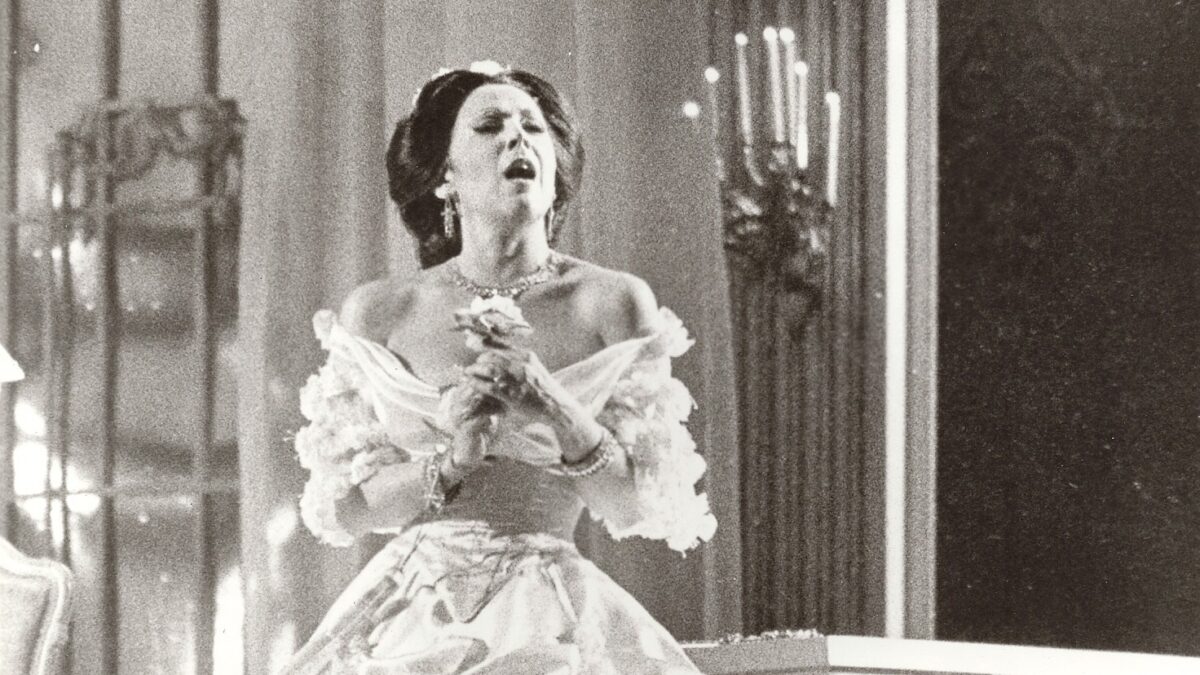
Diana Soviero in La traviata
During the singing, Soviero’s paying attention to every detail: “I make notes—trying not to do it too obviously—and I’m watching the score carefully to see if they know where the breath marks are, whether they know that it’s written piano, col canto, or ritardando. I circle things, and then when they’ve finished singing, I zero in on what I’ve caught.”
It’s always obvious to Soviero when the singer doesn’t know what they’re singing about. “Think of ‘Qual fiamma avea nel guardo’ [in Pagliacci]. The singer will be smiling, so I’ll ask, ‘What has Nedda just said?’ ‘Oh, Miss Soviero, I didn’t translate that.’ ‘Next week, you’d better know what it means!’ Once a soprano started ‘Mi chiamano Mimì.’ I said, “How nice, but do you know what she means by ‘ma il mio nome è Lucia’? ‘Don’t confuse me,’ she responded, ‘Lucia is in the second Act!” After the master class was over, I took her aside and explained everything to her.”
Of course, Soviero is all too aware that every singer she works with won’t have a major career. “I tell them, ‘You don’t have to be at the Metropolitan Opera. Learn to sing well. If you’re in a chorus, you’d better know how to sing! Know your music, know what legato means.’ Let me tell you, Roger, I just wanted to learn to sing well.”
Soviero wishes young singers these days would prepare more thoroughly (“They don’t think it’s important.”) In contrast, as a budding young soprano, she devoured every example of great singing that she could find. “My whole life, I was listening to Renata Tebaldi—she was my dream of dreams!” After hearing Tebaldi’s portamento in “Mi chiamano Mimì” Soviero said to her father, “I’m working on this thing in my singing and I can’t do it.” “Diana, translate the word portamento. Obviously, you’re carrying something, but what are you carrying?’” “Daddy, I know—I’m carrying the ‘o’ vowel!’ I go to my voice lesson, I sing, and my teacher says, ‘What happened to you? Good girl!’ So that’s how I learned portamento – because I had to get that right, like Tebaldi, like Stella, like Stignani. Then I said, ‘Now I have to learn what legato means.’ All you have to do is translate the word—’to tie,’ and it’s not tying your shoelace! And think of appoggiare [the verb most crucially associated with breath support]. My dad said, “What does that mean? It’s to lean. When I sang, my father would keep saying, ‘Lean, Diana!’”
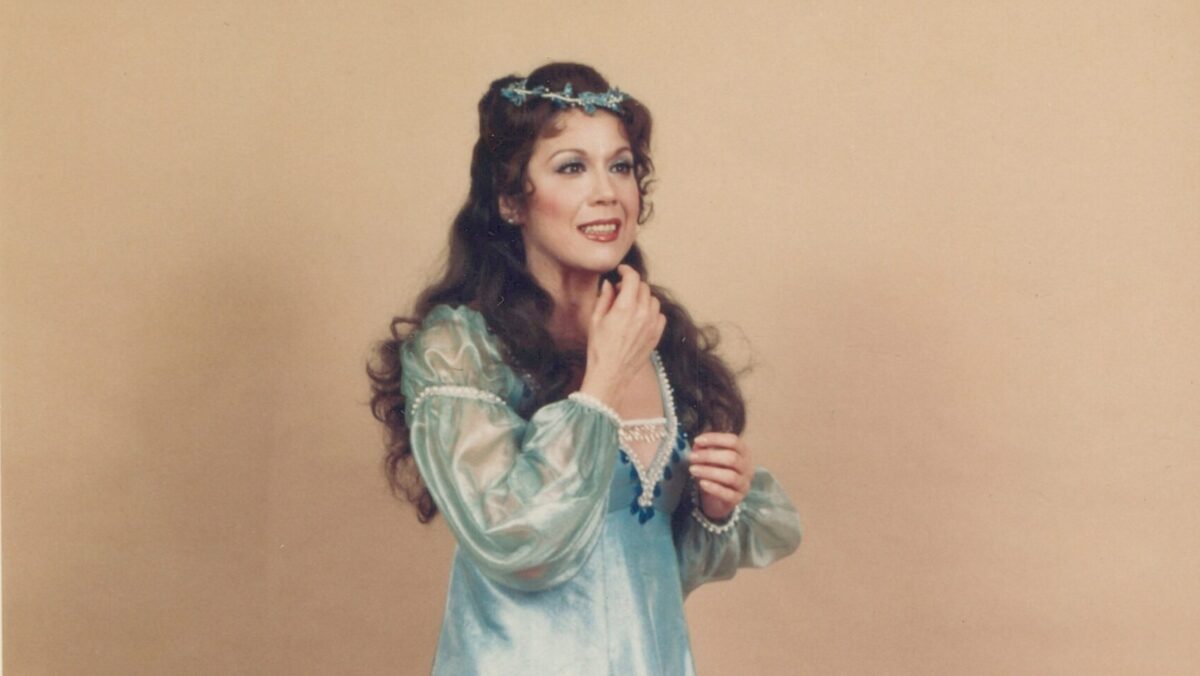
Diana Soviero in Roméo et Juliette at the Metropolitan Opera / Photo: James Heffernan
A native of North Bergen, New Jersey, Soviero was already a serious voice student at Juilliard at thirteen. In her lessons, she had the hugely respected Martin Rich as her pianist and coach (“To this day, I say how blessed I was.”) By twenty-one she was already onstage, debuting as Mimì at Chautauqua Opera.
Luckily, Soviero early on already possessed the sine qua non of a career—a solid technique. Years later, “I’d talk with my colleagues about it all the time. We all studied García technique! I don’t think many teachers today go back to García’s method. Today, in auditions, I hear a lot of people singing simply word to word, and loud is ‘in.’ That annoys me. I get uptight listening, and I don’t understand what their coaches were doing.”
For Soviero, listening to recordings made by legends of singing—Tebaldi, Callas, Olivero, and more—was a voice lesson in itself. “My students are listening to singers of today, but I tell them, ‘Go back and listen to how Callas did this phrase. Listen to Piero Cappuccilli and the other great baritones I sang with my whole life’—the list is, like, forever! The way they phrased, their pianissimi, their legato. That phrasing seems to be passé today, and I don’t know if students even understand it, so I get frustrated! Do they really, really study?”
Soviero’s own learning process was a challenge, in that she was born with ADD and was also dyslexic. “I wasn’t that good in school—I was very smart but couldn’t focus my attention, and everything I wrote down was backwards.” The dyslexia affected the way she worked with numbers: “To be able to count the way I needed to in music, I worked harder than any of my students put together.”
From the start, Soviero had superb theatrical instincts. It’s never just been about singing for her—she’s renowned as a genuine singing actress. Her excitement about creating drama onstage actually began when she was only nine years old: “My father put lights around the garage door and I’d act all over the place. I did all these crazy things, so years later, when I was let loose onstage, I had an imagination that really went wild.”
That imagination has served Soviero brilliantly in her ability to delve deeply into any character and her circumstances. Her infinite interpretive resources have enhanced a wide variety of repertoire, from light lyric at the start of her career all the way to spinto years later. Of course, she’s closely associated with the gamut of Italian and French heroines, but she also scored memorable late-career successes in two demanding character parts: Mme. Raquin in Tobias Picker’s Thérèse Raquin (world premiere, Dallas, 2001) and Mrs. De Rocher in Jake Heggie’s Dead Man Walking (Baltimore, 2006). Given the level of detail that has enriched all of Soviero’s portrayals, it would be instructive to any young soprano to hear her memories of portraying Massenet’s Manon for the first time. The director reminded her that the character was traveling quite a long distance to get to her final destination. With that in mind, “If I were in a coach with other people, what would I have in my purse? An apple, maybe? If I were sweating, would I have a handkerchief? I said to the director, ‘Is there a possibility that I could have water onstage?’ ‘Let me put in a well—you could go and drink some water.’” Also at Soviero’s request, the costume department gave her a straw hat, “and I took it off so I could fan myself. I took the handkerchief and wet it with water to moisten my face, and I was starting to eat the apple when down the steps came Des Grieux! So that’s how I started to decorate the staging to feel the part.”
Soviero has always enjoyed building a characterization through meaningful collaboration with a director. She’s experienced that particularly with her husband of forty-three years, Bernard Uzan, “the greatest director I ever worked with—and I worked with all of them! He’s told me so many things about myself. In Montreal, when I was singing Juliette, he said, ‘Diana, it’s not Tosca!’ I’d do something in the potion aria and he’d say, ‘Calm down! Diana, what are you thinking, what are you feeling? Why are you starting so fast? The potion is not in your body yet!’”
Another director she especially enjoyed working with was the late Bob Wilson. A few months before his death, he wrote to Soviero saying, “I’m going to do the Butterfly production again, but it’ll never be what we did together.” Here’s a rather startling anecdote from that experience: in Soviero’s Paris apartment, “I was cooking and the stove had a stuck shelf. I was making baked apples, and the sugar fell on my arm. Nicoletta Curiel, our Suzuki, said to me, ‘Stick your arm in the freezer.’ Bob then designed the costume so my arms would be covered!”
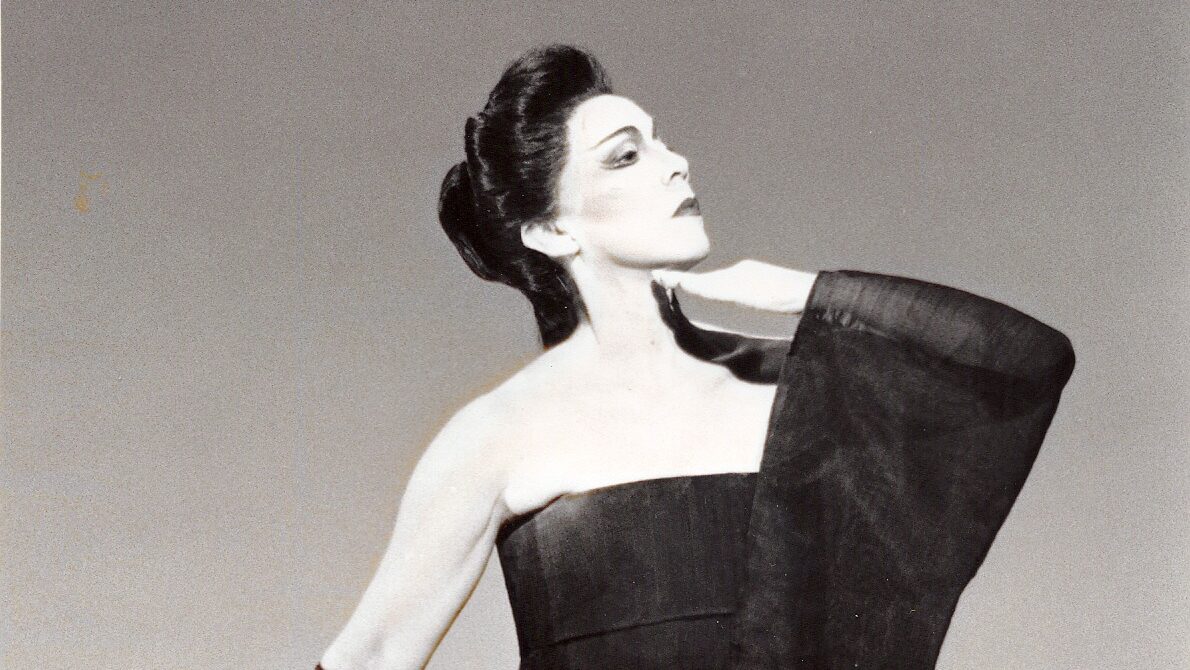
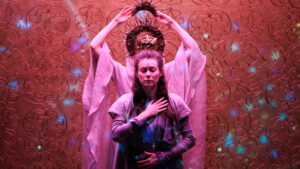
Diana Soviero in Madama Butterfly at the Opéra Bastille / Photo: Kleinfenn
Over the years, other directors haven’t always been as considerate as Wilson. How has Soviero coped with that? This instantly brings to her mind the Met Butterfly directed by Giagn Carlo Del Monaco (son of the great Mario). They were working on the climax of Act Two—“Ei torna e m’ama!”—when Del Monaco said, “I want you to walk upstage with your back to the audience.” Soviero was unwilling to sing the role’s most thrilling phrase with that blocking. “I said to him, ‘Let me ask you something: would you have asked your father to do that?’ ‘That’s not a nice thing to say to me.’ ‘Well, to ask me to face upstage singing that B-flat isn’t nice either!’ I was smart enough not to bug him about it, but I got my way.”
Soviero now confronts the sometimes tricky director/singer relationship when her students complain about having to work in staging created for other artists. “They say to me, ‘I have to do what the soprano did before.’ I say, ‘Who was the soprano? Do you respect what she did, or do you think you could do better?’ ‘Well, she’s a big star.’ ‘OK, that means she has a lot more experience than you, but when you have a rehearsal break, say to the director, ‘I know the soprano did it this way, but could I try something else?’ And that director might say, ‘OK, let me see what you want to do!’ Early in my career, Tito Capobianco would let me experiment. He’d say, ‘If you do this coming in running, can you still sing?’ Or, at other times, ‘Can you sing this lying on your back?’ Today I tell my students, ‘If the director respects you and you have constructive ideas, maybe they’ll let you do what you want. If not, you shut up, you do it, and you take your money. TTMAR, which stands for ‘Take the money and run’—Beverly said that!”
Onstage, Soviero was lucky to have colleagues who gave her everything she needed. She’s been partnered by many of the greatest artists of our time, and they had complete trust in her, as she did in them. With Plácido Domingo, “we would never rehearse. We knew what we were doing, and we knew each other so well—there was such mutual respect.”
While Soviero was singing Nedda at La Scala opposite José Carreras, the tenor was diagnosed with leukemia. “I saw him in the dress rehearsal and he said to me, ‘Diana, I’m so tired.’ For the scene where we have to struggle with each other, I told him, ‘I’ll do all the work—I’ll throw my arms forward.’ We helped each other do everything. It’s just about being colleagues.” She also remains grateful for her partnership at the Met with Richard Leech, “an artist true to the music, who never made a mistake onstage. We would listen to each other’s vowels! If we sang a white ‘ah’ vowel, I would color it. I teach my kids how to do that.”
From the beginning—even though she was singing roles as light as Susanna, Rosina, and Gilda (the latter on the road with Boris Goldovsky’s company at age twenty-two)—Soviero was successful in “full lyric” fare: Mimi, Micaëla, Nedda, Marguerite. Her dream, though, was always Butterfly: “One day I brought the score to my teacher, Florence Berggren, and said, ‘I want to do it one day, and I know I can do it. Can you listen to me sing it?’ I started the entrata, got to the duet with Suzuki, and started to cry. My teacher said, ‘Close the book.’ ‘But I haven’t finished yet!’ ‘Close the book! I’ll give you this advice: you cannot cry. You have to make your voice tell me to cry.’ ‘How do I do that?’ ‘You’re too busy crying yourself. You’ll have to figure it out.’”
Soviero’s teacher felt she was ready to work with someone new: “She said to me, ‘I need to divorce you. I’m going to send you to Marenka Gurevich.’ ‘I don’t want to go!’ But I started lessons with Gurevich and said to her one day, ‘Madame, can I sing Butterfly for you?’ She put the score on the piano, and when we got to the end and I looked up, she had tears in her eyes. She closed the score and said, ‘I want the first two tickets at the Metropolitan.’ After I learned the role, Ed Purrington from Tulsa Opera—where I’d previously done Traviata—said to me, ‘The day you sing your first Butterfly, we will do the production for you.” That was the beginning of an extraordinary musical, theatrical, and emotional journey for Soviero as the geisha, a triumph for her internationally. And she fulfilled Mme. Gurevich’s prophecy, singing the role twenty-four times at the Met from 1992 to 1996.
It’s not just Cio-Cio-San who’s brought Soviero unanimous acclaim as a pucciniana; she’s sung nine of the composer’s other heroines as well (don’t miss her definitive Suor Angelica, viewable complete on YouTube in a 1987 performance from Madrid). Her devotion to his music will forever be a vital element of her life as an artist. She vividly remembers being shown the Butterfly score at Puccini’s home in Torre Del Lago: “I thought I was going to pass out—it was unbelievable.”
Soviero knew when the time came to bring her stage career to a halt. “I was a perfectionist, and that’s how I knew I was going to retire. After a broadcast of Pagliacci at the Met, my husband and I were driving home to New Jersey, and I was very quiet. ‘Honey, are you OK?’ ‘Bernard, tonight I worked.’ ‘Diana, of course you worked! Tonight was amazing!’ ‘Bernard, tonight I worked.’ ‘Diana, you’re repeating yourself!’ ‘It’s time for me to slow down. For the first time in my life, I worked.’” She says today, “My voice was telling me, ‘Furgheddabout it.’ Previously, when I sang, I’d never felt I was working, I loved it so much. I’d come off tired, but it wasn’t a vocal tired, it was an emotional tired.”
The whole operatic scene, nationally and internationally, is, of course, radically different now from what Soviero experienced during her years onstage. ‘The world has changed, the way of singing has changed, education has changed. So many opera companies are now in dire straits, they have no funding, they’re closing. Even the Met is suffering—so I don’t know what will happen. But we have to keep opera alive, no matter what!”
People say to Soviero, “‘Why are you teaching? Don’t you get frustrated?’ Of course I do, but my job now is to teach. I was a teacher when I was onstage, too: I wanted to sing to every member of the audience, whether they’d seen the opera twenty-five times or never! My job then was to teach them what the opera was about. Now, I have to try with all my might to get into each student’s head and ask them where they got their information from. ‘Did you look at the score? Did you look at what the librettist wanted? Did you ask questions?’ This is what I still have to teach, and it’s up to them to do it!”