I hope everyone saved room for one more Salome. For their third live opera production in New York City, Catapult Opera is presenting the first North American staging of Alessandro Stradella’s masterful 1675 oratorio, San Giovanni Battista, about John the Baptist’s divinely inspired mission to visit Herod’s court to denounce the marriage of Herod to his brother’s wife.
With this piece, Catapult Opera once again launches a rarely performed work and a too-rarely performed composer to the forefront. Stradella composed many acclaimed operas and oratorios, but it is his scandalous, operatic life for which he is best remembered. He was born in 1643 and was writing well-received works by his early twenties. Unfortunately, he also conspired with superstar violinist Carlo Ambrogio Lonati to embezzle money from the Catholic Church in Rome and was forced to flee to Venice. There he had a torrid affair with a woman linked to the local royal family. Once the affair came to light, the lovers fled to Turin where they were tracked down by thugs and Stradella was beaten to a pulp in public and left for dead. But he survived and fled to Genoa.
He continued composing for the church and fooling around with well-connected noblewomen until 1662 when he was again beset upon in public by three thugs hired by a local nobleman and he was killed instantly by a dagger thrust in his back. With a bio like that, it’s only fitting that he is the protagonist of multiple operas, including ones by César Franck, Friedrich von Flotow, and Salvatore Sciarrino (Ti vedo, ti sento, mi perdo).
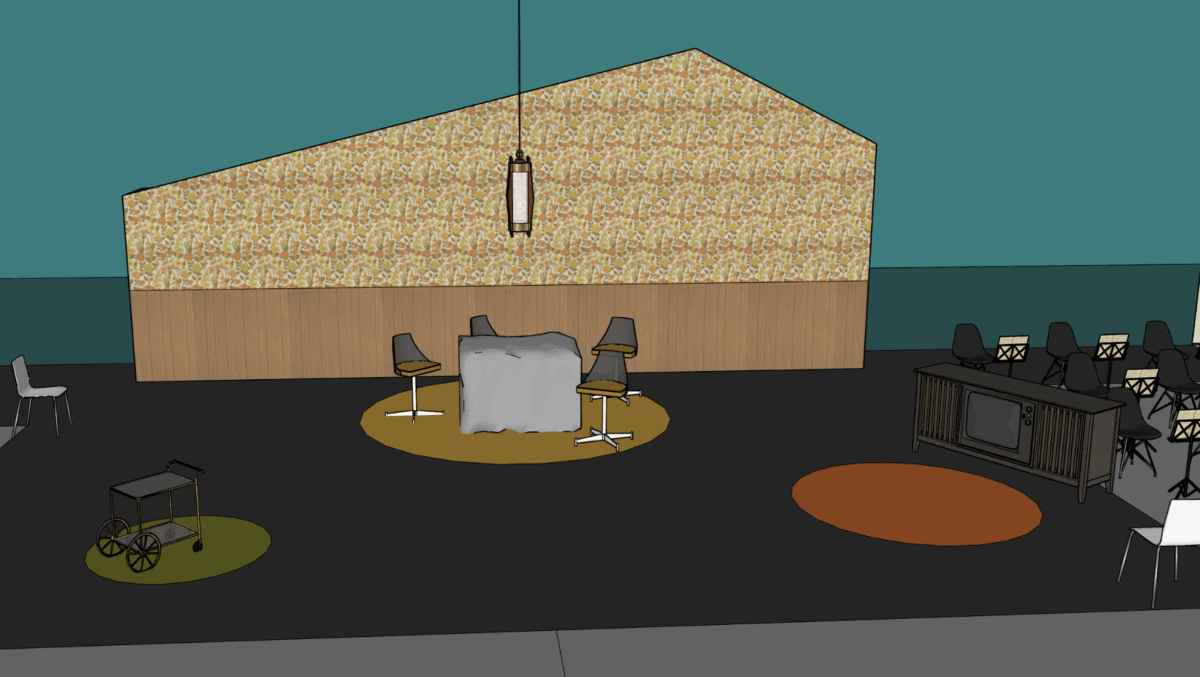
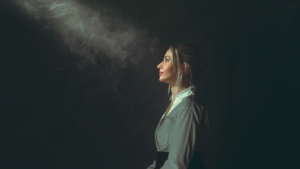
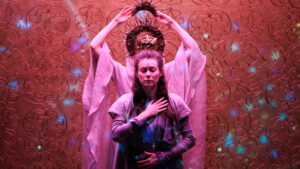
Set design for San Giovanni Battista/Catapult Opera
Naturally, he, too, would choose a scandalous subject matter in the story of John the Baptist. The papal censors would never have approved a staged presentation of such material, but he managed to as an oratorio. The music itself is intensively dramatic with a very distinctive interplay between the singers and the orchestra. This is achieved through its innovative use of the concerto grosso format in which a small group of soloists are juxtaposed against a larger ensemble. Although common in Baroque work, the concerto grosso was exceptionally rare accompanying vocal music. Handel was so impressed by the music that he purchased a copy of the score for his library.
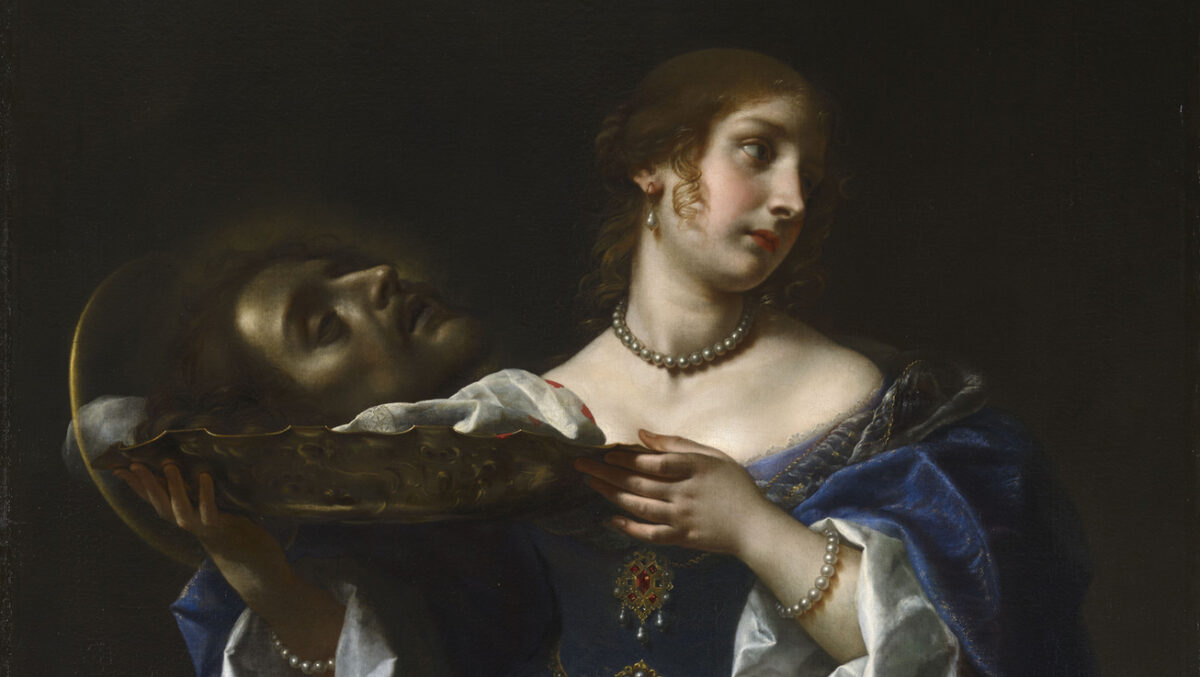
Listen, for example, Salome’s (or as the libretto labels her, “Erodiade la Figlia”) demented music when she “convinces” Herod to give her John the Baptist’s head. It perfectly captures her seductive monstrosity:
John the Baptist’s music provides a complete contrast. Here, imprisoned and knowing death is imminent, he sings of how he would not exchange his fate for any other outcome:
The work concludes with an extraordinary duet between Herod and Salome. He acknowledges his growing torment while Salome exults in her triumph. They sing the word “perché” together as the oratorio abruptly halts on an unresolved chord.
The work was not performed for nearly 3 centuries until its first modern revival in 1949 in Perugia featuring none other than Maria Callas as Salome and Cesare Siepi as Herod. According to an interview 20 years later, this was the first time Callas heard a recording of herself and she said that she was “horrified by myself.” Nevertheless she persisted in continuing her operatic career. The recording has never surfaced.
For these NYC performances, a similarly impressive cast of established and up and coming singers has been assembled including Randall Scotting as John the Baptist, featured here in Monteverdi:
Raven McMillon makes her NYC debut as Salome, heard here in Handel:
Joseph Beutel is the Herod, heard here in Mozart:
The performances will be directed by the Artistic Director of the IN SERIES opera company in Washington DC, Timothy Nelson. This is a work that he has wanted to stage for over a decade. In fact, he was the one who pitched it to Catapult Opera who eagerly signed on to a co-production. Nelson was struck by how Stradella whittled a biblical, epic story into a familial drama — a “parlor tragedy,” as he calls it. “It’s really a family in their living room destroying each other—the Bible meets Edward Albee.”
Goren’s reaction to Stradella’s work was similar to Nelson’s. Goren says, “?I thought the idea was so compelling—a Baroque Salome just seemed so bizarre and perverse. And then when I heard the music, it was so extraordinary both for its time period and outside it, and I was shocked that I didn’t know the composer. We began thinking about him as the missing link between Claudio Monteverdi, the first great composer of opera, and Handel.”
The production will be conducted by Catapult opera’s founder and artistic director Neal Goren. Performances of San Giovanni Battista take place at The Space at Irondale, 85 S Oxford St, Brooklyn on June 11, 12 and 13 at 7:30 PM. Tickets are available here.
This post is sponsored by Catapult Opera.